
Pull to refresh
Logo
EU approves Hungary's defence loan, closing first round of SAFE programme

EU approves Hungary's defence loan, closing first round of SAFE programme

Money Moves

Hungary's request was cut from €16.4 billion to €5.4 billion; roughly €21 billion remains for a second funding round

Overview

Updated 1 hour ago

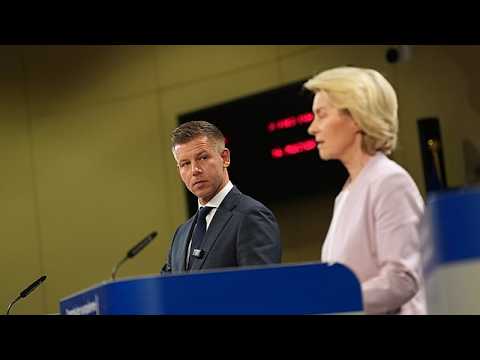
The European Commission approved Hungary's €5.4 billion defence loan on October 28, completing the first round of the EU's €150 billion Security Action for Europe (SAFE) programme. Nineteen member states have now drawn €129 billion from the pool — 86% of the total.

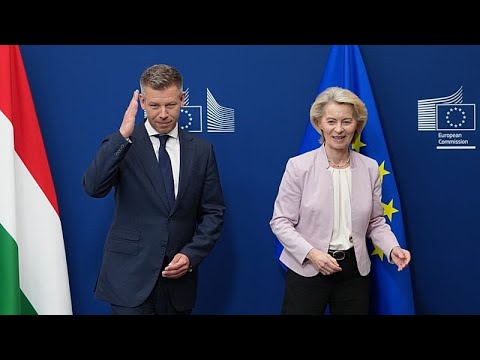
The approval caps a shift in Hungary's position. Prime Minister Péter Magyar, who took office in April, cut the application from the €16.4 billion his predecessor Viktor Orbán had sought, citing alleged corruption risks. Roughly €21 billion remains for a second round, which the Commission will open for expressions of interest by December.

Why it matters

How Europe spends the last €21 billion of its €150 billion defence pool will shape the bloc's military readiness by 2030.

Questions about this story

Free account needed to ask — your question is kept and asked for you right after sign-up. Answers are public.

No questions yet — be the first to ask.

Key Indicators

€129B
Loans committed in round one
19 member states drew from the €150 billion pool.
86%
Share of SAFE envelope allocated
€129 billion of €150 billion committed in the first round.
€21B
Funds remaining for round two
Unallocated balance after first-round approvals.
€5.4B
Hungary's approved loan
Cut from €16.4 billion originally sought under Viktor Orbán.

Voices

Curated perspectives — historical figures and your fellow readers.

Sign up to generate historical perspectives on this story.

People Involved

Organizations Involved

Timeline

March 2025 October 2026

6 events Latest: Yesterday
Tap a bar to jump to that date
  1. Commission approves Hungary's €5.4 billion loan

    Latest Decision

    Approval completes the first round of SAFE allocations, leaving €21 billion for a new round.

  2. Hungary cuts SAFE request to €5.4 billion

    Decision

    Budapest informs the Commission it will seek far less than Orbán's original ask.

  3. Magyar becomes Hungarian prime minister

    Political

    New government begins reviewing the previous administration's €16.4 billion loan request.

  4. Council approves SAFE funding for 18 states

    Decision

    The Council green-lights loans for 18 member states, covering most of the first round.

  5. Commission unveils ReArm Europe plan

    Proposal

    SAFE proposed as a €150 billion loan instrument, part of the Readiness 2030 plan.

Scenarios

1

Second SAFE round opens with new members

Possible Resolves by Q1 2027

Discussed by: Euronews; Ireland's Defence Minister Helen McEntee

The Commission has said it will invite member states to express interest in the remaining €21 billion by December. Ireland, which skipped round one, has signalled it wants in. If enough states step forward, a formal second round could be approved in 2027, distributing the leftover funds and drawing in new participants.

2

Hungary completes loan agreement, draws funds

Likely Resolves by Q2 2027

Discussed by: Euronews; Council of the EU

The Commission's approval is one step from completion, but the Council must still approve and a loan agreement must be signed. If those conclude and pre-financing flows, Hungary joins 18 other states in drawing on the pool.

3

Second round stalls, funds go unclaimed

Unlikely Resolves by End of 2027

Discussed by: European Commission (through its December invitation); Euronews

With €129 billion already committed and large states like Poland (€43 billion) fully subscribed, appetite could be saturated. If interest in the remaining €21 billion is thin, the second round may never launch and funds would sit unused.

Historical Context

2 moments from history that rhyme with this story — and how they unfolded.

October 2012

European Stability Mechanism (2012)

Eurozone leaders created the European Stability Mechanism, a €500 billion fund that borrows on capital markets and lends to member states in financial trouble. It was the EU's first standing crisis-loan facility.

Then

Greece, Ireland, Portugal, Cyprus and Spain drew on ESM or predecessor programs, with conditionality attached to loans.

Now

Established EU pooled borrowing as a policy tool — the 'EU borrows, states borrow back' model SAFE now uses.

Why this matters now

SAFE is the same architecture repurposed: the EU raises funds on markets and relends to member states, but for defence procurement rather than crisis relief.

April 1948 – 1952

Marshall Plan (1948-1952)

The US transferred about $13 billion to rebuild Western European economies after World War II, funding raw materials, machinery and infrastructure through the Economic Recovery Program.

Then

European industrial output surpassed pre-war levels by 1951 and trade recovered.

Now

Set the template for collective financing of European goals and cemented US-European economic integration.

Why this matters now

SAFE's €150 billion is comparable in scale to the Marshall Plan's real value, but aimed at military readiness — a collective pool for a shared strategic objective.

Sources

(5)