Anchor

Hungary expels 10 Russian diplomats in break from pro-Moscow past
Force in PlayNew government under Péter Magyar reverses years of Kremlin-friendly policy
Today: Hungary expels 10 Russian diplomats for 'unacceptable activities'New here? Follow stories to track developments over time. Create a free account to get updates when stories you care about change.
Overview
Updated 1 hour agoHungary ordered 10 Russian diplomats to leave the country on September 8, accusing them of activities "unacceptable" under the Vienna Convention — diplomatic shorthand for espionage. It's the first mass expulsion of Russian personnel since the 2022 invasion of Ukraine, and it comes from a government that replaced Europe's most Kremlin-friendly leader.
The move caps a five-month pivot by Prime Minister Péter Magyar's government, which won the April election on a promise to dismantle Viktor Orbán's power structures. Moscow has promised a "harsh and painful" response, and the question now is whether reciprocal expulsions hollow out both embassies.
Why it matters
Hungary was Russia's closest EU ally for years. If Moscow retaliates in kind, the last pro-Kremlin voice inside the EU goes silent.
Questions about this story
Free account needed to ask — your question is kept and asked for you right after sign-up. Answers are public.
No questions yet — be the first to ask.
Key Indicators
10
Russian diplomats expelled
Ordered to leave Hungary on September 8, 2026
47
Russian embassy staff in Budapest
Total diplomatic staff before the expulsions, per independent Russian site Agentsvo
15 of 47
Embassy staff linked to Russian intelligence
Agentsvo reported 15 confirmed links and 6 more possible
Related Media
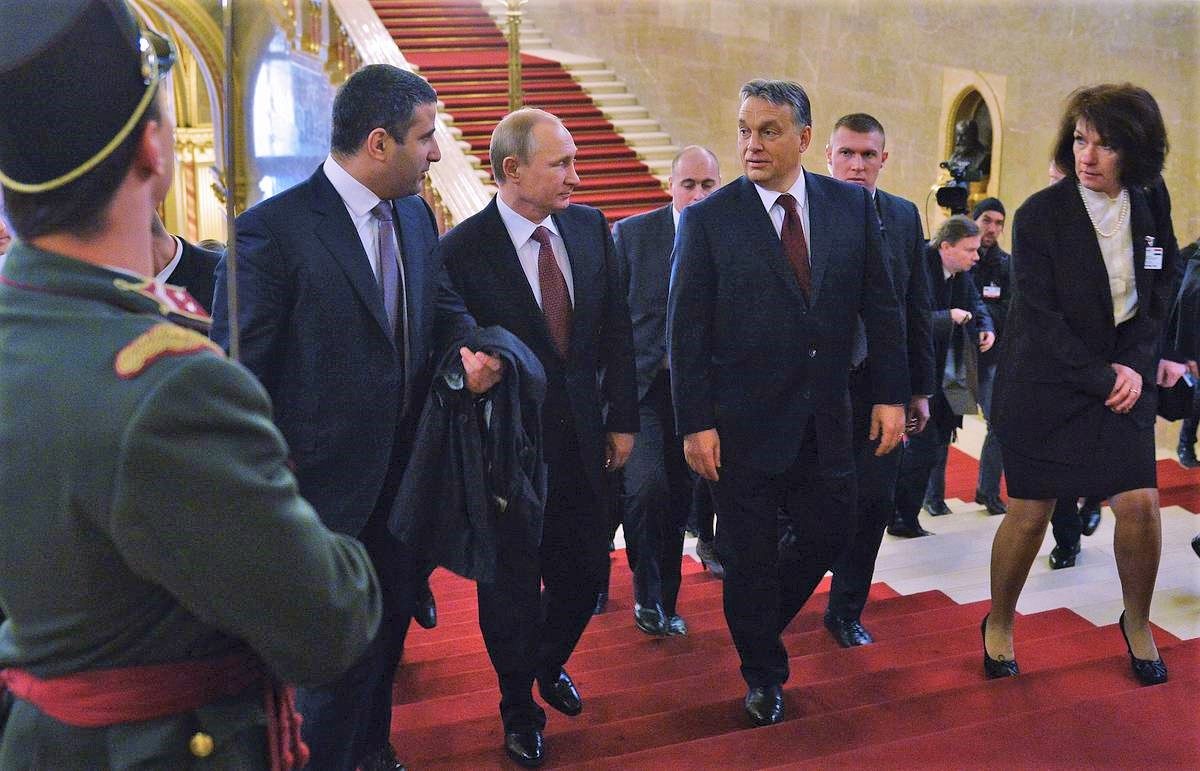
Vladimir Putin, Viktor Orbán (Hungary, February 2015) 01
Low angle view of the Russian flag on a flagpole with a clear blue sky and tree branches framing the image.
6.1K views
9:10
Putin BETRAYED! Once Pro-Russia NATO Nation EXPELS 10 ...
Times Of India
1.2K views
6:26
EU Backs Hungary's Expulsion of Russian Diplomats, Dodges ...
APT
147.9K views
20:28
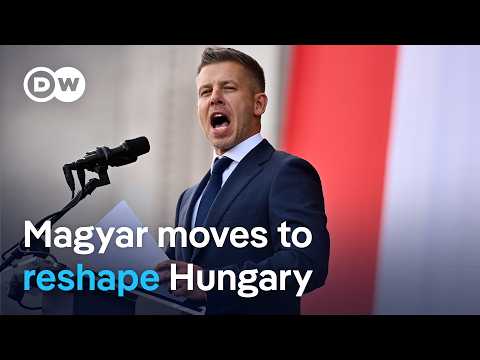
He ended Orban's grip on power — can Peter Magyar change ...
DW News
Images from Openverse under Creative Commons licenses. Videos from YouTube.
Voices
Curated perspectives — historical figures and your fellow readers.
Play
Exploring all sides of a story is often best achieved with Play.
Most of these play right now — no account needed. Sign up to save scores, keep a streak, and unlock Debate and Predict.
Log in
Sign Up
Higher or Lower
A number from this story, against one from elsewhere in the news — guess which is bigger, then keep the chain going. 5 rounds, 3 strikes; a miss costs a strike and resets your streak.
Example
Anchor
EU tariff revenue
$52B
Big for this kind of number
Mystery
Pentagon AI contract
?
Round 1
Streak: 0
Mystery
?
Keyboard: ↓/L lower · ↑/H higher
0 pts
Best streak: 0 · Rounds: 0
0 points — sign up to put that on the leaderboard.
Now try on this story
Timeline
Hungary expels 10 Russian diplomats in break from pro-Moscow past
Order five events from this story, oldest at top. Each in the right slot scores 1 — neighbours within one slot count too. Your previous result — green ✓ for exact slots, yellow ~ for off by one. Cards now in true chronological order.
Loading puzzle…
Tap 💡 Free hint to lock the oldest into slot 1 — that leaves just four to order. Type pills are clues.
0/5
Exact slot
0/5
Within 1
Sign up to save your score and track a streak across stories.
Now try on this story
Connections
Sixteen names from the news. Find the four hidden groups of four. Four mistakes max.
Loading today's puzzle…
0/4 groups
Mistakes
Sign up to keep a daily streak — a new puzzle lands every day.
Now try on this story
Exit debate?
Your progress in this debate will be lost.
How it works
- 1 Two AI personas square off on this story.
- 2 You predict who'll win each round — correct picks earn XP.
- 3 One crossfire question is yours to fire. Pick it carefully.
Couldn't generate a topic
Select Your Champions
Choose one persona for each side of the debate
DEBATE TOPIC
Choose personas with different perspectives for a more dynamic debate.
SIDE A (PRO)
Select debater for this side:
No debate personas available right now.
SIDE B (CON)
Select debater for this side:
No debate personas available right now.
VS
Get ready to make your prediction...
Round of
Claim
Evidence
Stakes
Crossfire Answer
Closing Statement
Claim
Evidence
Stakes
Crossfire Answer
Closing Statement
Your Crossfire Question
Generating arguments...
Who's Got This Round?
Make your prediction before the referee scores
The referee scores both sides on
Correct predictions earn +20 XP
· Press 1 or 2 to pick
Evidence
40%
Logic
30%
Detail
20%
Style
10%
Round Results
Your Pick
Not this time
(%)
Overall Score
/10
Your Pick
Not this time
(%)
Overall Score
/10
Set the Crossfire
Pick the question both personas must answer in the final round
Crafting crossfire questions...
Choosing a question earns +10 XP crossfire bonus
🏆
Total XP Earned
Cred Change
Predictions
Debate Oracle! You called every round!
Sharp Instincts! You know your debaters!
The Coin Flip Strategist! Perfectly balanced!
The Contrarian! Bold predictions!
Inverse Genius! Try betting the opposite next time!
XP Breakdown
Base completion
+20 XP
Rounds played ( rounds x 5 XP)
+ XP
Correct predictions ( correct x 20 XP)
+ XP
Crossfire bonus
+10 XP
Accuracy
%
Prediction History
Round
You picked:
✓
✗
Now try on this story
Keep debating to level up your credibility and unlock achievements
People Involved
Anita Orbán
Hungarian Foreign Minister
Ordered the expulsions
Péter Magyar
Prime Minister of Hungary
In office since April 2026
Viktor Orbán
Former Prime Minister of Hungary (2010–2026)
Defeated in April 2026 election
ES
Evgeny Stanislavov
Russian Ambassador to Budapest
Informed of the expulsions
Maria Zakharova
Russian Foreign Ministry Spokesperson
Threatened retaliation
AT
András Telkes
Former Hungarian Counter-Intelligence Chief
Commentator on the expulsions
Organizations Involved
Hungarian Ministry of Foreign Affairs
Government Agency
Ordered the expulsions
Hungary's diplomatic service, which has pivoted sharply away from Moscow since April 2026.
Russian Foreign Ministry
Government Agency
Threatened retaliation
Russia's diplomatic service, which has promised a "harsh and painful" response to the expulsions.
Tisza Party (Tisztelet és Szabadság Párt)
Political Party
Ruling party since April 2026
Péter Magyar's party, which won the April 2026 election on an anti-corruption platform.
Timeline
April 2026 September 2026
5 events
Latest: Today
Tap a bar to jump to that date
-
Hungary expels 10 Russian diplomats for 'unacceptable activities'
Today DiplomaticForeign Minister Anita Orbán announces 10 Russian diplomats must leave, citing activities "unacceptable" under the Vienna Convention — diplomatic language for espionage. Russia promises retaliation.
-
Magyar formally breaks with Fidesz Russia policy
PolicyNew guidelines state Russia's conduct in Ukraine "poses a threat to Hungary, Europe and the global order." The document also warns of danger to Hungarians in Transcarpathia.
-
Anita Orbán summons Russian ambassador over Transcarpathia attack
DiplomaticForeign Minister protests a drone attack on Transcarpathia, home to a large Hungarian minority. Her predecessor never summoned the ambassador after the 2022 invasion.
-
Magyar promises 'pragmatic' relations with Moscow
StatementNew Prime Minister Péter Magyar says Hungary will maintain "pragmatic" relations with Russia, signaling continuity on energy ties.
-
Tisza party wins election, ending Orbán's 16-year rule
ElectionPéter Magyar's Tisza party defeats Fidesz. Magyar campaigned on anti-corruption and dismantling Orbán's power structures.
Historical Context
3 moments from history that rhyme with this story — and how they unfolded.
March 2018
Skripal poisoning expulsions (2018)
After the Novichok attack on former Russian intelligence officer Sergei Skripal in Salisbury, England, over 150 Russian diplomats were expelled by Western countries in coordinated action. Russia responded by expelling Western diplomats in kind.
Then
Tit-for-tat expulsions reduced embassy staffs but did not sever diplomatic relations.
Now
Established the standard pattern: mass expulsions trigger reciprocal responses, but both sides usually stop short of breaking relations.
Why this matters now
Shows what Hungary can expect — Moscow almost always matches expulsions, but the damage is usually contained to diplomatic staff.
February–April 2022
Post-invasion expulsions across Europe (2022)
After Russia's full-scale invasion of Ukraine, most EU member states expelled Russian diplomats in waves. Hundreds were ordered out within weeks. Hungary was the notable exception, maintaining close ties with Moscow throughout.
Then
Russian diplomatic presence across Europe was sharply reduced, but relations were not severed.
Now
The expulsions became the new normal — a baseline for how European states signal displeasure with Moscow.
Why this matters now
Hungary's September 2026 move brings it in line with the pattern its neighbors followed four years earlier.
1950s–1980s
Cold War diplomatic expulsion cycles
The US and USSR regularly expelled each other's diplomats in cycles of retaliation. The 1986 "spy swap" saw 80 Soviet diplomats expelled from the US and 25 Americans from the USSR.
Then
These cycles became a routine feature of superpower relations.
Now
Expulsions became a calibrated signal of displeasure — rarely escalating beyond diplomatic measures.
Why this matters now
The current situation follows a similar pattern: expulsions are a signal, not a prelude to severing ties.
Sources
(6)Related Stories
Hungary votes in election that could end Orbán's 16-year grip on power
Rule Changes
Updated Jul 19
U.S. and Hungary sign nuclear energy partnership
Rule Changes
Updated May 29
Central Europe's energy ties to Russia become a weapon in the Ukraine war
Force in Play
Updated May 29
Babiš’s comeback: Czechia’s new eurosceptic coalition takes power
Rule Changes
Updated May 10
Russia's systematic campaign against Ukrainian civilians
Force in Play
Updated 6 days ago
US envoys make first Kyiv visit after Moscow talks in renewed Ukraine peace push
Force in Play
Updated Yesterday