



Pull to refresh
Logo
Daily Brief
Following
Why Sign Up
Emerging markets now depend on fast-moving investors for 80% of foreign debt, IMF warns

Emerging markets now depend on fast-moving investors for 80% of foreign debt, IMF warns

Money Moves
By Newzino Staff |

Non-bank lenders replaced traditional banks after 2008, creating new vulnerabilities to sudden capital flight

Yesterday: IMF warns 80% of EM foreign debt now comes from flight-prone investors

Overview

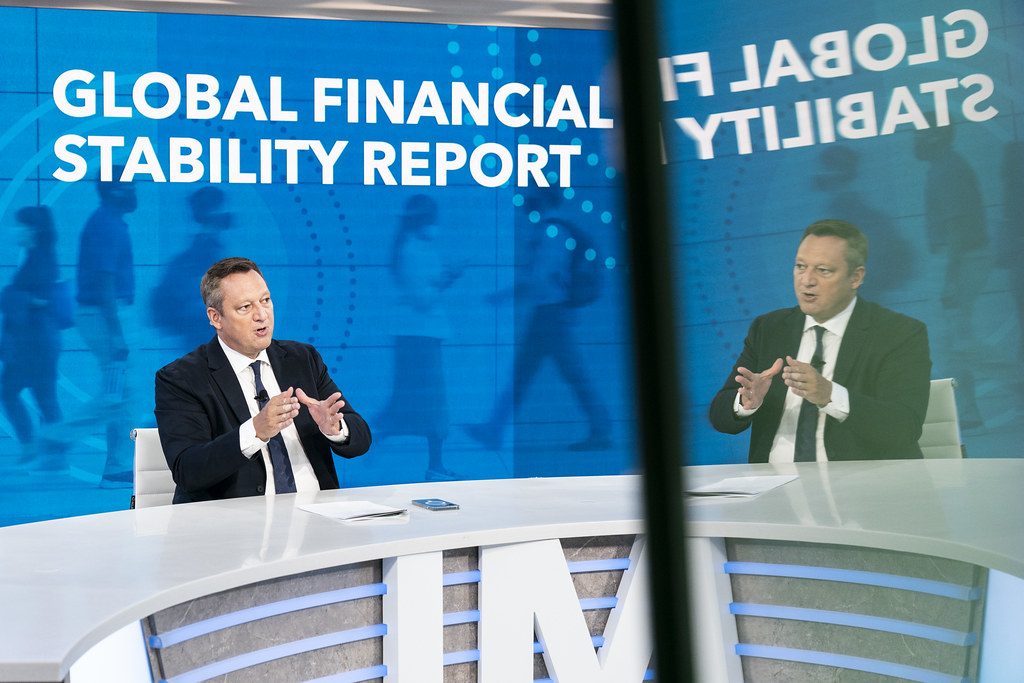
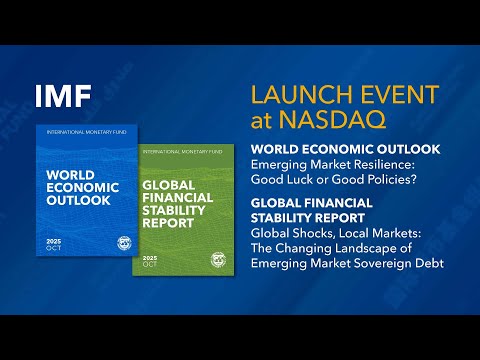
Twenty years ago, when a developing country needed to borrow from abroad, its government or corporations typically got a loan from a large international bank. Today, roughly 80 percent of that money comes instead from hedge funds, pension funds, insurers, and other non-bank investors — entities that can pull their money out far faster than a bank ever would. The International Monetary Fund laid out this transformation in a chapter of its April 2026 Global Financial Stability Report, warning that nearly $4 trillion in cumulative portfolio investment has flowed into emerging markets since the 2008 financial crisis, much of it from institutions with little obligation to stay.

Why it matters

When fast-moving investors replace stable lenders, entire economies can lose access to funding overnight during a crisis.

Key Indicators

80%
Share of EM foreign debt from non-bank investors
Double the share from 20 years ago, as banks retreated after the 2008 financial crisis.
$4T
Cumulative portfolio inflows since 2008
Total capital that has flowed into emerging markets from portfolio investors since the global financial crisis.
5x
Private credit growth in emerging markets
Private credit assets in emerging markets have grown fivefold over the past decade, reaching $50-$100 billion.
$9T+
EM debt maturing in 2026
Record refinancing burden facing emerging markets this year, according to the Institute of International Finance.
15%
External portfolio debt as share of GDP
Average external portfolio debt liabilities across emerging markets.

Interactive

Exploring all sides of a story is often best achieved with Play.

Ever wondered what historical figures would say about today's headlines?

Sign up to generate historical perspectives on this story.

Sign Up

Debate Arena

Two rounds, two personas, one winner. You set the crossfire.

People Involved

Organizations Involved

Timeline

  1. IMF warns 80% of EM foreign debt now comes from flight-prone investors

    Report

    Chapter 2 of the April 2026 Global Financial Stability Report detailed how non-bank investors — hedge funds, pension funds, insurers — now supply the vast majority of emerging-market foreign debt, creating acute vulnerability to rapid outflows. Private credit in emerging markets has grown fivefold to $50-$100 billion, and stablecoin cross-border flows are expanding rapidly.

  2. IMF publishes working papers on stablecoin flows and EM capital dynamics

    Research

    Two IMF working papers provided the analytical foundation for the April GFSR chapter, examining how stablecoin flows spill into foreign exchange markets and how to separate price effects from volume effects in emerging-market capital flows.

  3. IIF warns emerging markets face record $9 trillion refinancing burden

    Report

    The Institute of International Finance's Global Debt Monitor estimated that emerging markets must roll over more than $9 trillion in debt in 2026, a record that heightens vulnerability to any disruption in capital flows.

  4. FSB reports non-bank sector reaches $256.8 trillion globally

    Report

    The FSB's annual monitoring report found the non-bank financial sector grew 9.4 percent in 2024, twice the pace of banking, and now holds roughly half of global financial assets.

  5. IMF warns bank-NBFI ties could amplify financial shocks

    Report

    The October 2025 GFSR introduced stress tests capturing bank-to-non-bank spillover risks. It found that in the United States and euro area, many banks have non-bank exposures exceeding their core capital buffers.

  6. Financial Stability Board publishes final report on non-bank leverage

    Report

    The FSB's report detailed leverage risks in non-bank financial intermediation, focusing on hedge fund basis trades in sovereign bonds and interlinkages with systemically important banks.

  7. IMF GFSR analyzes private credit migration from banks

    Report

    The IMF's April 2024 Global Financial Stability Report examined how credit was migrating from regulated banks to the more opaque private credit world, noting that private credit typically serves small, highly leveraged borrowers with floating-rate debt.

  8. China devalues yuan, triggering massive capital outflows

    Market Event

    China's surprise devaluation of the yuan set off capital flight that drained roughly $1 trillion from the country's foreign exchange reserves over 18 months. The episode illustrated the scale of outflows possible when investor confidence shifts suddenly.

  9. Bernanke hints at tapering, sparking emerging-market sell-off

    Market Event

    Federal Reserve Chair Ben Bernanke suggested the Fed might reduce its bond purchases. Emerging-market currencies and bonds sold off sharply, with the "Fragile Five" — Brazil, India, Indonesia, Turkey, and South Africa — hit hardest. The episode demonstrated how quickly portfolio investors could flee.

  10. Basel III framework published, tightening bank capital rules

    Regulatory

    The Basel Committee on Banking Supervision finalized new capital and liquidity requirements for banks. The rules made cross-border lending to emerging markets more expensive for banks, accelerating the shift toward non-bank financing.

  11. Lehman Brothers collapses, triggering global financial crisis

    Origin

    The bankruptcy of Lehman Brothers accelerated a global banking crisis that led to sweeping new regulations. Major international banks subsequently pulled back from cross-border lending to emerging markets, creating the vacuum that non-bank investors would fill.

Scenarios

1

Global shock triggers synchronized emerging-market outflows

Discussed by: IMF Global Financial Stability Report, Financial Stability Board leverage reports

A sharp rise in United States interest rates, a geopolitical crisis, or a global recession triggers a coordinated withdrawal by hedge funds and other portfolio investors from emerging-market debt. Countries with limited reserves and shallow domestic capital markets — particularly frontier economies in Africa and parts of Latin America — face currency crashes, spiking borrowing costs, and potential sovereign debt distress. The IMF's own language about investors being "far more reactive to risk" suggests this is the scenario it considers most dangerous. The $9 trillion refinancing wall in 2026 narrows the window for this to occur without severe consequences.

2

Gradual regulatory tightening brings non-bank risks under control

Discussed by: FSB final report on NBFI leverage, IMF policy recommendations, Basel Committee

Emerging-market governments and international regulators respond to the IMF's warnings by implementing stronger oversight of non-bank financial institutions, improving data transparency, and building larger foreign currency reserve buffers. Stablecoin regulation catches up with the pace of adoption. The structural vulnerability remains, but better monitoring and policy preparedness reduce the likelihood of a destabilizing sudden stop. This is the outcome the IMF is explicitly advocating for, though it requires coordinated action across dozens of countries with different institutional capacities.

3

Divergence deepens: strong EMs thrive while frontier economies lose access

Discussed by: IMF GFSR April 2026, Institute of International Finance

The two-speed dynamic the IMF identified accelerates. Larger, investment-grade emerging markets like Brazil, Mexico, and India continue to attract capital through deep local-currency bond markets, while smaller frontier economies — unable to borrow in their own currencies and reliant on foreign portfolio flows — face rising borrowing costs and shrinking access. A handful of countries tip into debt distress, requiring IMF bailout programs. This outcome does not require a single dramatic trigger; it unfolds gradually as risk-averse non-bank investors concentrate capital in perceived safer bets.

4

Stablecoin and crypto flows create a new channel for capital flight

Discussed by: IMF working paper on stablecoin spillovers (March 2026), FSB monitoring report

The rapid expansion of stablecoin-mediated cross-border flows — already most pronounced in Africa, the Middle East, and Latin America — creates a channel for capital flight that bypasses traditional monitoring systems. In a stress scenario, residents and foreign investors use stablecoins to move money out of weakening currencies faster than central banks can respond, amplifying exchange rate depreciation. Regulators struggle to get visibility into these flows because stablecoins operate outside conventional financial infrastructure.

Historical Context

Taper Tantrum (2013)

May-September 2013

What Happened

Federal Reserve Chair Ben Bernanke mentioned the possibility of tapering quantitative easing during congressional testimony in May 2013. Emerging-market portfolio inflows, which had surged from $192 billion to $598 billion quarterly during the era of easy money, reversed sharply. Brazil, India, Indonesia, Turkey, and South Africa — dubbed the "Fragile Five" — saw currencies depreciate by as much as 15 percent in four months.

Outcome

Short Term

Central banks in affected countries burned through foreign reserves defending currencies and were forced to raise interest rates despite weak domestic growth.

Long Term

The episode established that portfolio investors in emerging markets act as a herd. It prompted several countries to build larger reserve buffers and shift toward local-currency borrowing — exactly the resilience measures the IMF is now urging more broadly.

Why It's Relevant Today

The Taper Tantrum occurred when non-bank investors supplied a smaller share of emerging-market debt than they do today. The IMF's 2026 warning is essentially that the same dynamic exists at much larger scale, with non-bank investors now supplying 80 percent of flows versus a lower share in 2013.

Asian Financial Crisis (1997-1998)

July 1997 - December 1998

What Happened

Thailand's forced devaluation of the baht in July 1997 triggered a chain reaction across Southeast Asia. Capital outflows from five affected countries reached approximately $80 billion. Indonesia, South Korea, and Thailand required IMF rescue programs. The crisis exposed how quickly foreign capital could leave countries with fixed exchange rates, weak banking regulation, and short-term foreign-currency borrowing.

Outcome

Short Term

GDP contractions of 6-14 percent across affected countries. Mass unemployment, corporate bankruptcies, and political upheaval, including the fall of Indonesia's Suharto government.

Long Term

Asian economies rebuilt with larger reserves, more flexible exchange rates, and stronger domestic banking systems. The crisis led to the creation of the Financial Stability Forum (later the FSB) and the Chiang Mai Initiative for regional financial cooperation.

Why It's Relevant Today

In 1997, the flight-prone capital was mostly short-term bank loans. Today, the IMF warns that portfolio investment from non-bank institutions has replaced bank lending as the dominant — and equally volatile — source of foreign capital for developing countries.

China capital outflows (2015-2016)

August 2015 - February 2016

What Happened

China's surprise devaluation of the yuan in August 2015 triggered capital flight that drained roughly $1 trillion from the country's foreign exchange reserves in 18 months. Reserves fell from approximately $4 trillion to $3.2 trillion as the central bank intervened to prevent a sharper currency decline. Corporate deleveraging, offshore asset diversification, and carry trade unwinding all contributed.

Outcome

Short Term

China imposed aggressive capital controls, restricting overseas acquisitions and tightening rules on moving money abroad. Global markets sold off repeatedly on fears of a hard landing.

Long Term

China's capital controls remain tighter than pre-2015 levels. The episode demonstrated that even the world's largest reserve holder could face dangerous outflows — and that the tools to stop them (capital controls) carry their own economic costs.

Why It's Relevant Today

China's experience showed that the scale of modern capital flows can overwhelm even massive reserve buffers. The IMF's 2026 report warns that smaller emerging markets, with reserves a fraction of China's, face similar dynamics from an even more reactive investor base.

Sources

(9)