

Pull to refresh
Logo
Daily Brief
Following
Why
India opens private aerospace manufacturing to global partners

India opens private aerospace manufacturing to global partners

New Capabilities
By Newzino Staff | |

Tata-Airbus H125 Helicopter Line Marks Private Sector's Entry into Complete Aircraft Assembly

4 days ago: H125 Helicopter Assembly Line Inaugurated

Overview

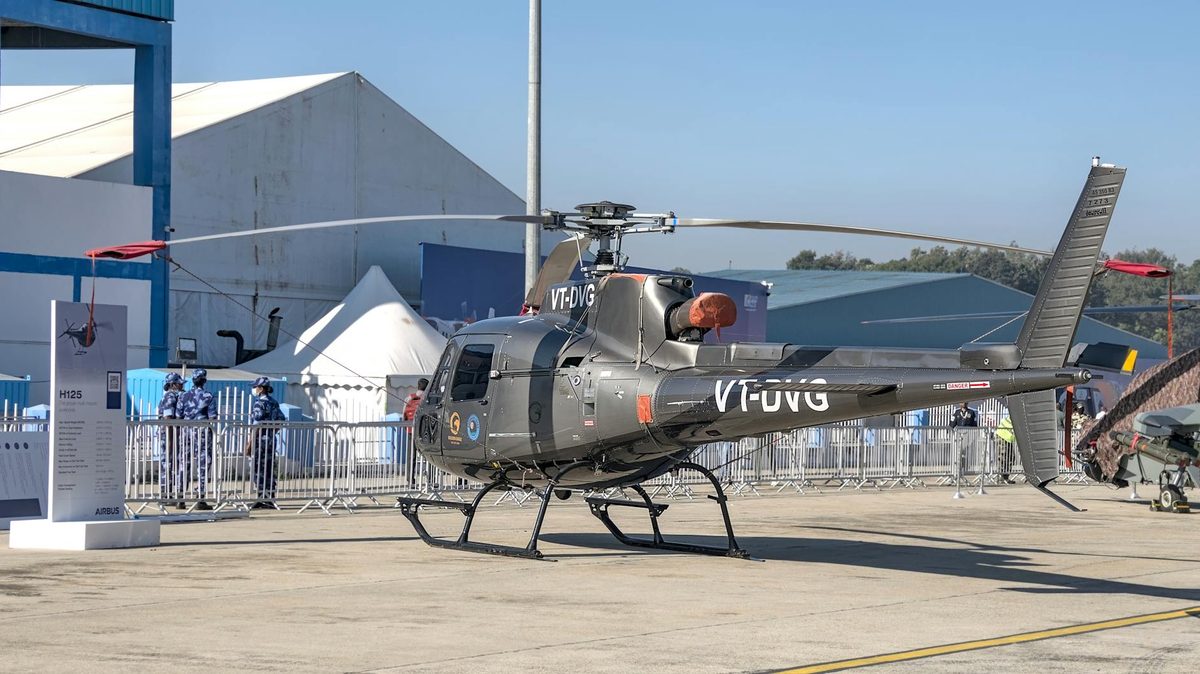
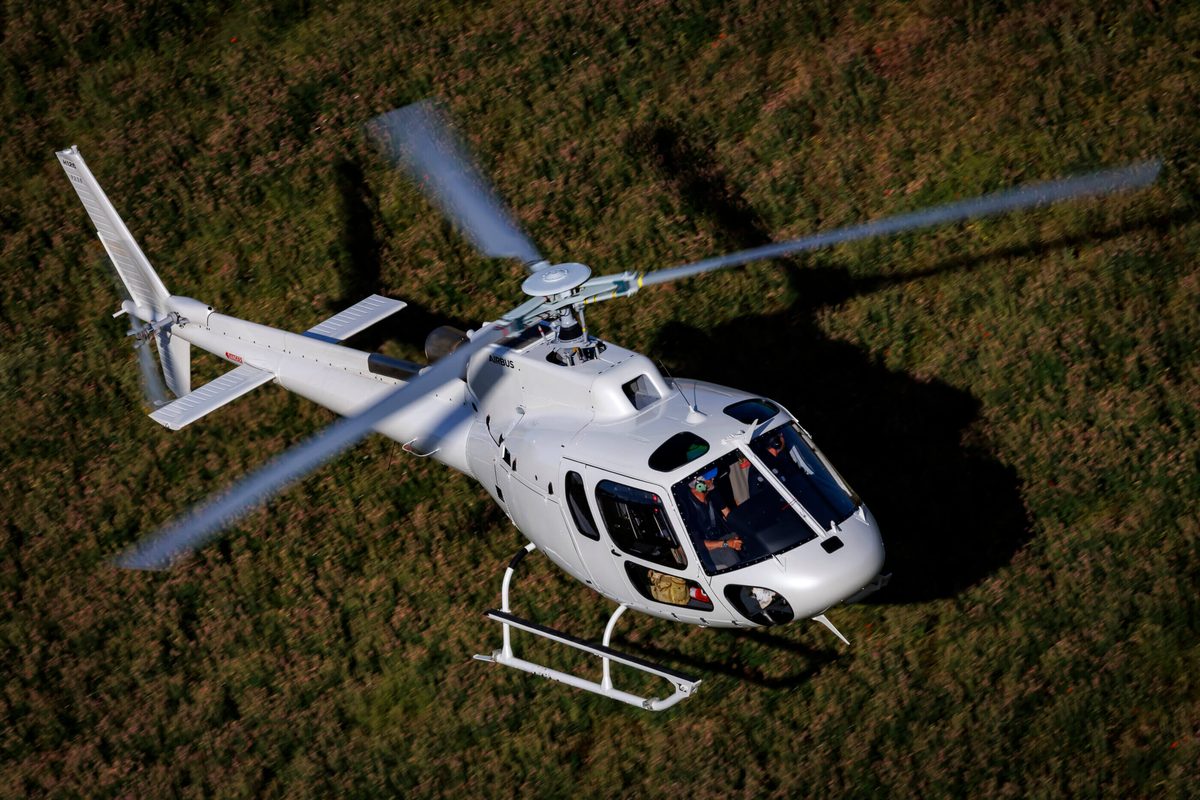
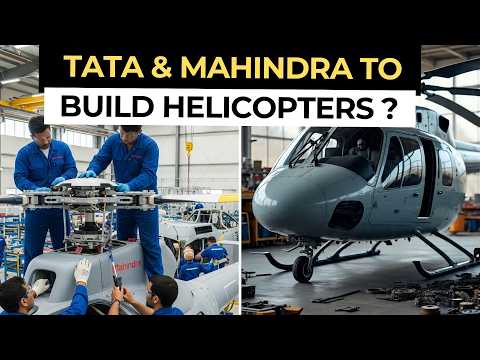
For decades, India's aerospace manufacturing remained almost entirely in government hands. Hindustan Aeronautics Limited, the state-owned monopoly established in 1940, built every military aircraft and helicopter on Indian soil. On February 17, 2026, that era effectively ended when Prime Minister Narendra Modi and French President Emmanuel Macron inaugurated India's first private-sector helicopter assembly line—a Tata-Airbus facility in Karnataka that will manufacture the H125, Airbus's best-selling single-engine helicopter.

The Vemagal plant joins only three other H125 production sites worldwide: France, the United States, and Brazil. With the first 'Made in India' H125 expected by early 2027 and plans for a military variant, the facility represents both a manufacturing milestone and a strategic bet that India can replicate what Turkey and Brazil achieved—transforming from aerospace importer to producer and eventually exporter.

Key Indicators

4th
Global H125 Production Site
India joins France, United States, and Brazil as the only countries manufacturing this helicopter model
500
Projected Regional Helicopter Demand
Estimated helicopter units needed in the region over the next 20 years, the target market for Indian production
79%
Public Sector Share of Defense Output
Government enterprises still dominate India's defense manufacturing; private sector accounts for roughly 21%
$39.7B
Defense Package Approved
India's 3.6 trillion rupee defense spending authorization announced ahead of Macron's February 2026 visit

Interactive

Exploring all sides of a story is often best achieved with Play.

Ever wondered what historical figures would say about today's headlines?

Sign up to generate historical perspectives on this story.

Sign Up

Debate Arena

Two rounds, two personas, one winner. You set the crossfire.

People Involved

Narendra Modi
Narendra Modi
Prime Minister of India (Third consecutive term; architect of Make in India initiative)
Emmanuel Macron
Emmanuel Macron
President of France (Fourth state visit to India; leading major defense sales push)
Ratan Tata
Ratan Tata
Former Chairman, Tata Group (deceased October 2024) (Legacy project realized posthumously)

Organizations Involved

Tata Advanced Systems Limited
Private Aerospace and Defense Manufacturer
Status: Lead Indian partner for major foreign aerospace joint ventures

The first Indian private company to establish complete aircraft and helicopter assembly lines through partnerships with global aerospace giants.

Airbus Helicopters
Airbus Helicopters
Global Aerospace Manufacturer
Status: World's largest helicopter manufacturer by revenue

The helicopter division of Airbus, expanding global production footprint with India as its fourth H125 manufacturing location.

Hindustan Aeronautics Limited
State-Owned Aerospace Manufacturer
Status: India's largest defense company; monopoly position eroding

India's government-owned aerospace giant, now competing with private entrants after decades as the sole domestic aircraft manufacturer.

Timeline

  1. H125 Helicopter Assembly Line Inaugurated

    Manufacturing

    Modi and Macron virtually inaugurate India's first private-sector helicopter final assembly line at Vemagal, Karnataka—only the fourth H125 production site globally.

  2. India Approves $39.7 Billion Defense Package

    Policy

    India clears 3.6 trillion rupee defense spending authorization including 114 Rafale jets, submarines, and missile production ahead of Macron visit.

  3. Mahindra Wins H125 Fuselage Contract

    Supply Chain

    Mahindra Aerostructures secures contract to manufacture main fuselage sections for the H125 helicopter, expanding domestic supply chain.

  4. 300th Apache Fuselage Delivered

    Manufacturing

    Tata Boeing Aerospace Limited delivers its 300th Apache helicopter fuselage from the Hyderabad facility, demonstrating sustained private-sector production capability.

  5. C295 Military Transport Assembly Line Opens

    Manufacturing

    Modi and Spanish President Sánchez inaugurate India's first private-sector military aircraft production facility in Vadodara, Gujarat. The plant will build 40 of India's 56 C295 transport aircraft order.

  6. Tata-Airbus Helicopter Deal Announced

    Agreement

    During President Macron's Republic Day visit, Tata and Airbus announce plans for India's first private-sector helicopter final assembly line to manufacture H125 helicopters.

  7. India Raises Defense FDI Limit to 74%

    Policy

    Government revises foreign direct investment rules, allowing up to 74% foreign ownership in defense manufacturing through automatic approval, up from 49%.

  8. Tata-Boeing Opens Apache Fuselage Plant

    Manufacturing

    Joint venture facility in Hyderabad becomes the exclusive global manufacturer of AH-64 Apache attack helicopter fuselages—India's first major private aerospace production capability.

  9. Modi Launches 'Make in India' Campaign

    Policy

    Prime Minister Modi unveils industrial policy placing defense manufacturing as priority sector, signaling intent to shift from importer to producer.

Scenarios

1

India Becomes Regional Aerospace Exporter by 2030

Discussed by: Government of India press releases, defense industry analysts at Mordor Intelligence and Grand View Research

The optimistic trajectory: India successfully scales private aerospace manufacturing, develops domestic supply chains with 80%+ indigenous content, and begins exporting helicopters and aircraft components to Southeast Asia, Africa, and the Middle East. This path requires meeting production targets at Vadodara and Vemagal, training sufficient skilled workers, and navigating quality certification for export markets. Turkey's transformation from 80% foreign dependency to 20% in two decades provides the template.

2

Production Delays Stall Domestic Manufacturing Ambitions

Discussed by: Observer Research Foundation analysis of India's defense manufacturing gaps, industry skills shortage reports

Technical challenges, workforce skill gaps, and supply chain bottlenecks delay production targets. The first 'Made in India' helicopters and aircraft arrive years late, cost overruns mount, and foreign partners grow frustrated. HAL's historical pattern of delayed indigenous programs—the Tejas fighter took over 30 years from conception to squadron service—repeats in the private sector. India remains predominantly an assembler of foreign designs rather than a genuine aerospace producer.

3

Private-Public Competition Reshapes Indian Defense Industry

Discussed by: Ministry of Defence production data, business press coverage of Tata-HAL dynamics

Private manufacturers like Tata Advanced Systems and Adani Defence gradually capture market share from Hindustan Aeronautics Limited, forcing the state enterprise to improve efficiency or cede ground. The government navigates politically sensitive questions about supporting private capital versus protecting public-sector employment. Defense procurement decisions become increasingly contested between incumbent state firms and emerging private players.

Historical Context

Brazil's Embraer Transformation (1969-2000s)

1969-Present

What Happened

Brazil established Embraer as a state-owned aerospace company in 1969, privatized it in 1994, and watched it grow into the world's third-largest commercial aircraft manufacturer. The company now exports regional jets globally, employs 18,000 workers, and has spawned a domestic aerospace supply chain. Helibras, Airbus's Brazilian subsidiary, operates an H125 assembly line in Itajuba—the model India is now replicating.

Outcome

Short Term

Privatization in 1994 led to near-bankruptcy before successful restructuring and new product development.

Long Term

Brazil became the only developing nation to compete in commercial aviation manufacturing, proving emerging economies can build globally competitive aerospace industries.

Why It's Relevant Today

India's Tata-Airbus partnership follows Brazil's playbook: foreign technology transfer, domestic assembly, gradual indigenization, eventual export capability. The H125 line explicitly replicates Helibras's Brazilian operation.

Turkey's Defense Industry Transformation (2000-2025)

2000-2025

What Happened

Turkey systematically reduced defense import dependency from 80% to 20% over two decades through state support for Turkish Aerospace Industries, Baykar, and other domestic firms. By 2025, Turkey exported $8.5 billion in defense equipment annually, including fifth-generation fighter jets and combat drones. Baykar acquired Italy's Piaggio Aerospace and signed European co-production agreements.

Outcome

Short Term

Initial programs faced delays and cost overruns, but sustained investment built manufacturing capabilities.

Long Term

Turkey became a major defense exporter and secured strategic autonomy in key weapons systems, reducing vulnerability to sanctions and supply disruptions.

Why It's Relevant Today

Turkey demonstrates that a middle-income nation can transform from defense importer to exporter within a generation through consistent industrial policy—the explicit goal of India's Make in India defense initiative.

India's HAL Tejas Development (1983-2020)

1983-2020

What Happened

India launched the Light Combat Aircraft program in 1983 to develop an indigenous supersonic fighter. The Tejas finally achieved Initial Operational Clearance in 2013 and Full Operational Clearance in 2019—a 36-year development cycle. HAL faced persistent engine dependency on foreign suppliers, avionics integration challenges, and production rate limitations.

Outcome

Short Term

Massive delays left the Indian Air Force operating aging MiG-21s longer than planned, contributing to high accident rates.

Long Term

India eventually produced a functional fourth-generation fighter but revealed the difficulty of indigenous aerospace development without foreign partnership.

Why It's Relevant Today

The Tejas experience shapes India's current approach: rather than purely indigenous development, the government now emphasizes technology transfer partnerships with Western manufacturers like Airbus and Boeing to accelerate capability building.

10 Sources: