
Pull to refresh
Logo
Daily Brief
Following
Why
India and France expand defense manufacturing ties

India and France expand defense manufacturing ties

Money Moves
By Newzino Staff | |

From Buyer-Seller to Joint Production Partners

4 days ago: HAMMER Missile MoU Signed at Defence Dialogue

Overview

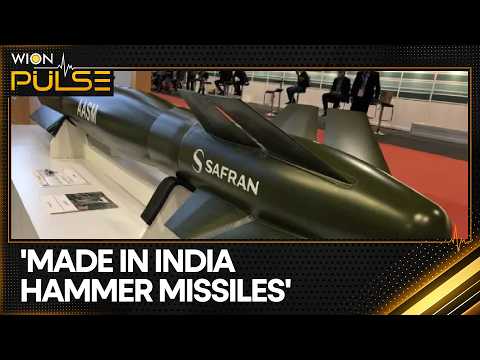
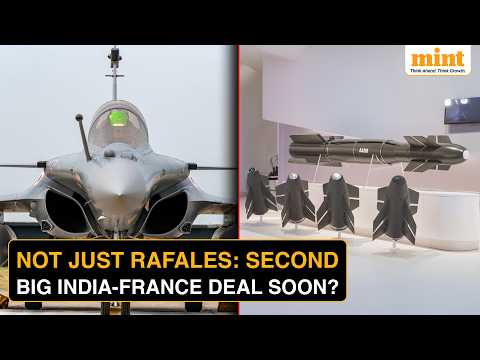
India has depended on Russia for weapons since the Cold War. That dependence peaked at 76% of arms imports in 2009-2013 but has now fallen to 36%—while France has surged to become India's second-largest supplier, accounting for 33% of defense purchases. On February 17, 2026, the two countries signed an agreement to manufacture HAMMER precision-guided missiles in India, marking a shift from France selling finished weapons to both nations building them together.

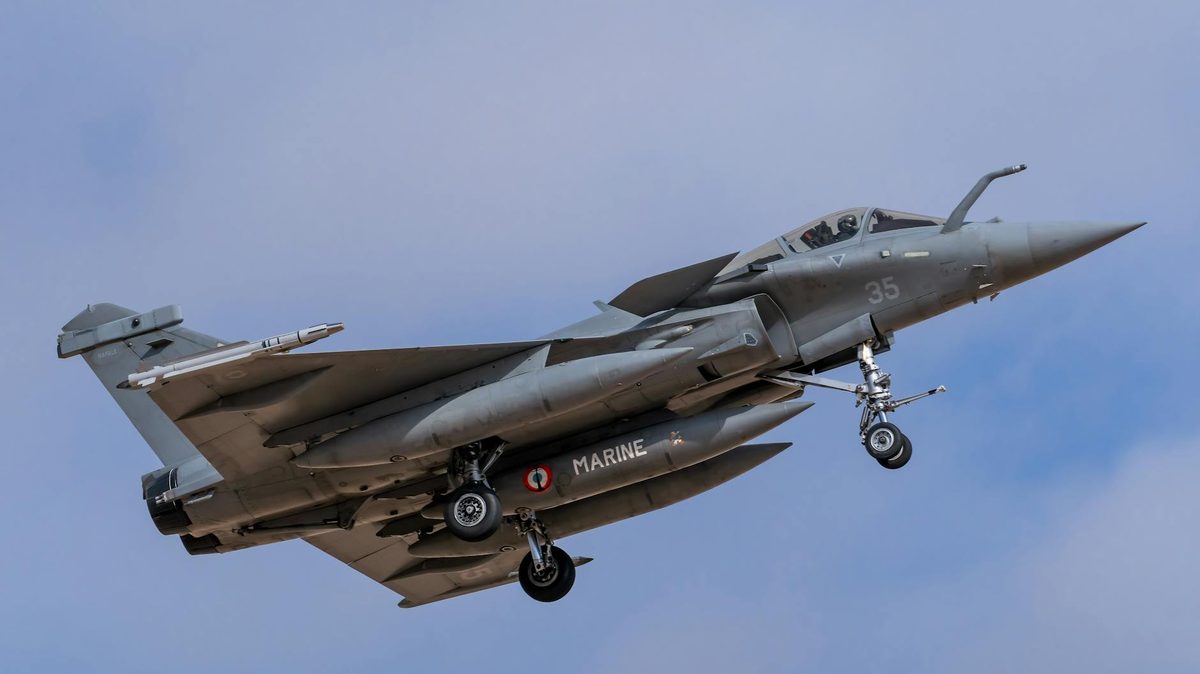
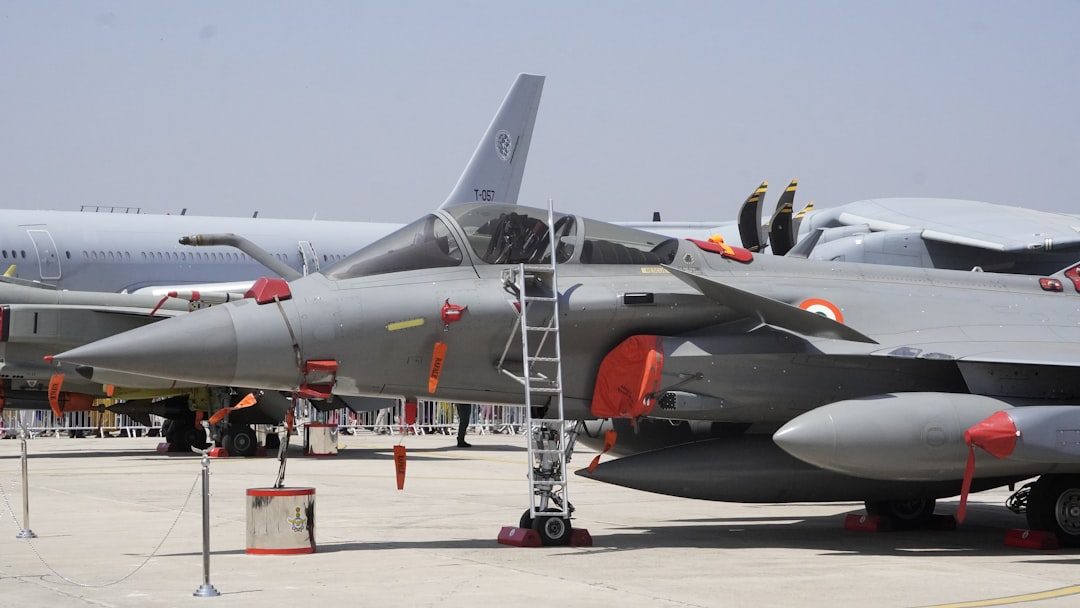
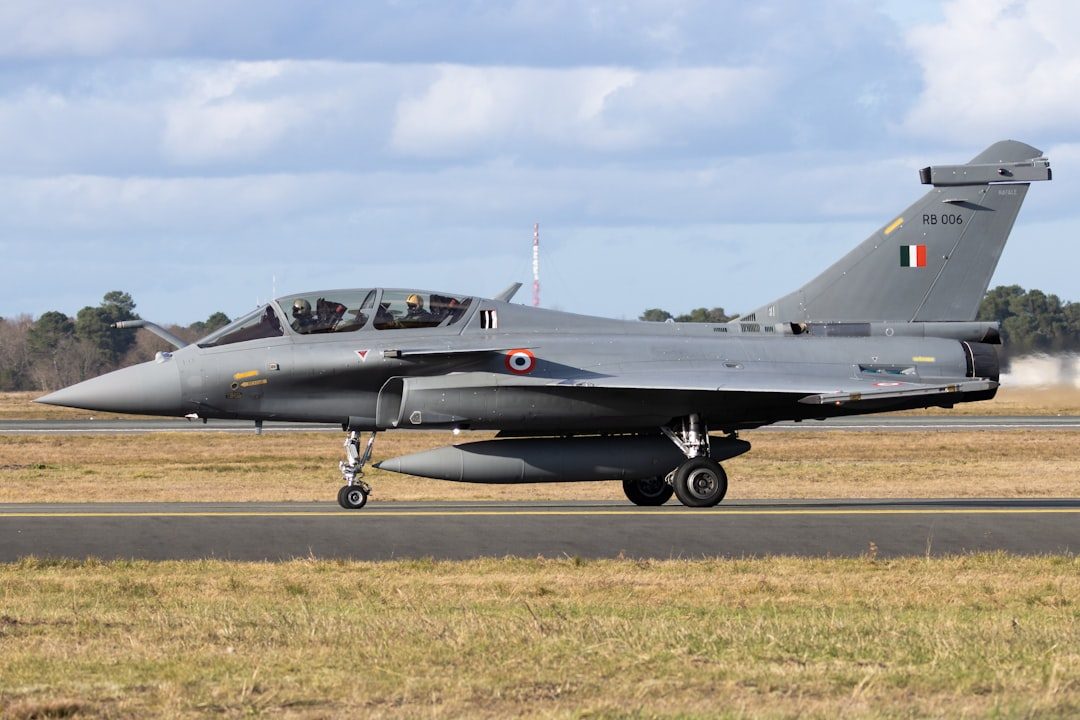
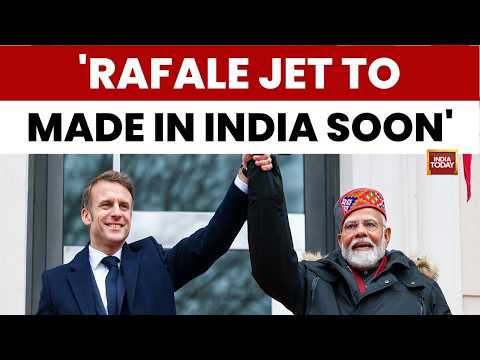
The HAMMER deal coincides with negotiations over a potential $28-40 billion purchase of 114 Rafale fighter jets—India's largest-ever arms procurement. If finalized, 90 of those jets would be manufactured domestically. For India, the stakes are existential: its Air Force operates just 29 combat squadrons against a sanctioned strength of 42, a shortfall of roughly 200 fighters. For France, India represents both a massive export market and a strategic partner in the Indo-Pacific, where both nations are pushing back against Chinese expansion.

Key Indicators

36%
Russian arms share
India's arms imports from Russia, down from 76% a decade ago
33%
French arms share
France is now India's second-largest defense supplier
29/42
IAF squadrons
Indian Air Force operates 13 squadrons below authorized strength
$28-40B
Rafale deal value
Estimated cost of 114 additional Rafale jets under negotiation

Interactive

Exploring all sides of a story is often best achieved with Play.

Ever wondered what historical figures would say about today's headlines?

Sign up to generate historical perspectives on this story.

Sign Up

Debate Arena

Two rounds, two personas, one winner. You set the crossfire.

People Involved

Rajnath Singh
Rajnath Singh
Defence Minister of India (Co-chaired 6th India-France Defence Dialogue)
Catherine Vautrin
Catherine Vautrin
Minister of the Armed Forces and Veterans Affairs, France (Making first India visit as Defense Minister)
Emmanuel Macron
Emmanuel Macron
President of France (On three-day visit to India during dialogue)

Organizations Involved

Bharat Electronics Limited (BEL)
State-owned defense manufacturer
Status: 50% partner in HAMMER joint venture

India's leading defense electronics company and primary partner for domestic manufacturing of French HAMMER missiles.

Safran Electronics & Defence
French defense contractor
Status: 50% partner in HAMMER joint venture

French developer of the HAMMER precision-guided munition, now partnering with India for domestic production.

Dassault Aviation
Dassault Aviation
French aerospace manufacturer
Status: Negotiating 114-jet Rafale deal

Manufacturer of the Rafale fighter jet, centerpiece of India-France defense cooperation.

Timeline

  1. HAMMER Missile MoU Signed at Defence Dialogue

    Agreement

    Defence Ministers Singh and Vautrin sign MoU formalizing HAMMER joint production at 6th India-France Annual Defence Dialogue in Bengaluru.

  2. DAC Approves 114 Rafale Purchase

    Procurement

    India's Defence Acquisition Council approves procurement of 114 Rafale jets estimated at ₹3.25 lakh crore ($28-40 billion), the country's largest-ever defense buy.

  3. BEL-Safran Joint Venture Agreement Signed

    Partnership

    Bharat Electronics Limited and Safran sign 50:50 joint venture agreement to manufacture HAMMER missiles in India with 60% local content target.

  4. Rafale-M Naval Deal Signed

    Contract

    India and France sign intergovernmental agreement for 26 Rafale-M naval fighters for Indian Navy, worth approximately $6 billion.

  5. Modi Guest of Honor at Bastille Day

    Diplomatic

    PM Modi attends Bastille Day celebrations as guest of honor, signaling the depth of India-France ties.

  6. Strategic Partnership Turns 25

    Milestone

    India and France adopt 'Horizon 2047' roadmap to strengthen the partnership for the next 25 years.

  7. First Rafales Arrive in India

    Delivery

    First five Rafale jets land at Ambala Air Force Station, beginning India's fourth-generation fighter upgrade.

  8. Supreme Court Upholds Rafale Deal

    Legal

    India's Supreme Court dismisses petitions alleging corruption in the 36-jet deal, finding no irregularities in pricing or partner selection.

  9. MRFA Request for Information Issued

    Procurement

    India issues new RFI for 114 Multi-Role Fighter Aircraft, reviving the abandoned competition with eight aircraft responding.

  10. 36-Jet Rafale Contract Signed

    Contract

    India and France sign €7.87 billion (approximately $8.7 billion) government-to-government agreement for 36 Rafale jets.

  11. Original MMRCA Tender Withdrawn

    Procurement

    India officially withdraws the 126-aircraft MMRCA tender, ending years of negotiations over technology transfer and local production.

  12. Modi Announces 36-Jet Rafale Deal

    Announcement

    During Paris visit, PM Modi announces India will acquire 36 Rafales in flyaway condition, abandoning the 126-jet tender citing 'critical operational necessity.'

  13. Dassault Rafale Wins MMRCA Bid

    Procurement

    After technical evaluation, India selects Rafale as winner of 126-jet competition due to lower life-cycle costs, but contract negotiations stall.

  14. India Launches MMRCA Competition

    Procurement

    India issues tender for 126 Medium Multi-Role Combat Aircraft, inviting bids from six manufacturers including Dassault, Boeing, and Eurofighter.

  15. India-France Strategic Partnership Launched

    Agreement

    India and France establish their first-ever strategic partnership, predating India's partnership with the United States by seven years.

Scenarios

1

114-Jet Deal Signed, Largest India Arms Purchase Ever

Discussed by: Defense News, CNBC, Bloomberg report DAC approval as clearing the path; price negotiations remain

India and France finalize the $28-40 billion Rafale deal, with 90 jets manufactured domestically and the remaining 18 delivered in flyaway condition. This would cement France as India's primary Western defense partner and create a long-term industrial relationship spanning decades of production, maintenance, and upgrades.

2

Deal Scaled Back or Delayed Over Price

Discussed by: The Wire, Indian defense analysts note price negotiations typically reduce quantities from initial approvals

Contract negotiations stretch into 2027 or beyond as India pushes for lower per-unit costs and higher technology transfer. The final order may shrink from 114 to 60-80 jets, with remaining purchases deferred pending indigenous fighter development. France may need to offer additional offsets or technology sharing to close the deal.

3

HAMMER Production Hits 60% Local Content Target

Discussed by: BEL, Safran announcements cite 60% indigenization goal; Indian defence publications tracking supply chain development

The BEL-Safran joint venture successfully establishes HAMMER manufacturing in Pune with 60% Indian components, reducing dependence on French supply chains and shortening maintenance turnaround times. Success could make this a template for future defense co-production deals.

4

US Competition Complicates French Deals

Discussed by: Second Line of Defense, ORF analysis discuss US push for F-15EX and F/A-18 in Indian competitions

American pressure to sell competing aircraft—particularly the F-15EX or F/A-18—and recent US-India defense technology initiatives (including F414 engine co-production) create friction. India may hedge by splitting purchases between French and American platforms, complicating the partnership.

Historical Context

BrahMos Joint Venture (1998-Present)

1998 - Present

What Happened

India's DRDO and Russia's NPO Mashinostroyenia formed a 50.5/49.5 joint venture to develop the BrahMos supersonic cruise missile. The partnership started with $250 million in capital and has since produced missiles for India's army, navy, and air force, with 65% of components manufactured in India by 2018.

Outcome

Short Term

BrahMos became operational in 2006 and was successfully deployed in Operation Sindoor in 2025, demonstrating combat effectiveness.

Long Term

The joint venture established a template for India's defense co-production model, with over 200 Indian companies now in the supply chain. BrahMos exports to the Philippines marked India's first major cruise missile sale abroad.

Why It's Relevant Today

The BEL-Safran HAMMER partnership explicitly follows the BrahMos model—50:50 joint ventures targeting high local content. BrahMos's success after initial skepticism suggests joint production can work if India commits to long-term industrial integration.

HAL-Rolls Royce Adour Engine Partnership (1990s)

1990s - Present

What Happened

Hindustan Aeronautics Limited (HAL) licensed production of Rolls Royce Adour engines for the SEPECAT Jaguar strike aircraft operated by the Indian Air Force. HAL manufactured engines domestically with technology transfer from the UK.

Outcome

Short Term

India achieved licensed production capability for a modern turbofan engine, reducing import dependence for Jaguar fleet maintenance.

Long Term

The partnership demonstrated India could absorb Western aerospace technology, but indigenous engine development (Kaveri program) struggled despite the experience gained.

Why It's Relevant Today

This earlier UK partnership shows both the promise and limitations of technology transfer deals. India can manufacture with foreign know-how but has found it harder to develop fully indigenous capabilities—a key question for HAMMER and Rafale production.

Indian MMRCA Competition (2007-2015)

August 2007 - July 2015

What Happened

India issued a tender for 126 medium multi-role combat aircraft, the largest fighter competition of its time. After Dassault's Rafale won in 2012, negotiations collapsed over technology transfer terms and local production by HAL. India withdrew the tender in 2015, eventually purchasing only 36 jets off-the-shelf.

Outcome

Short Term

India received 36 capable Rafale fighters but forfeited technology transfer and domestic production.

Long Term

The Air Force's squadron shortage worsened as aging MiGs retired without replacement. The controversy became a major political issue in India's 2019 elections.

Why It's Relevant Today

The current 114-jet negotiation is a direct sequel to this failed tender. Both sides appear determined to avoid repeating the impasse—hence the explicit 'Make in India' provisions with 90 jets to be manufactured domestically.

10 Sources: