
Women drive most new enrolment in India's expanding higher education system
Rule ChangesFemale gross enrolment ratio hits 31.2 percent against 28.9 percent for men
Today: Female growth caught in spotlightNew here? Follow stories to track developments over time. Create a free account to get updates when stories you care about change.
Overview
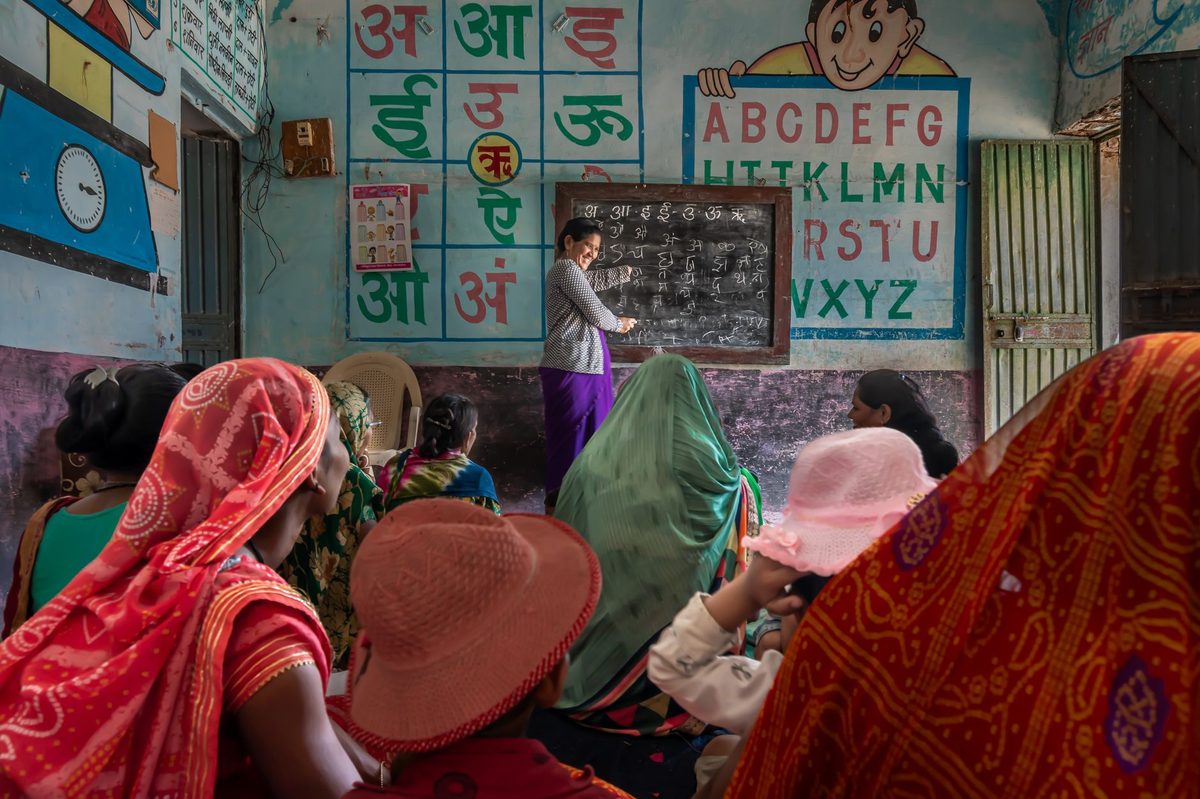
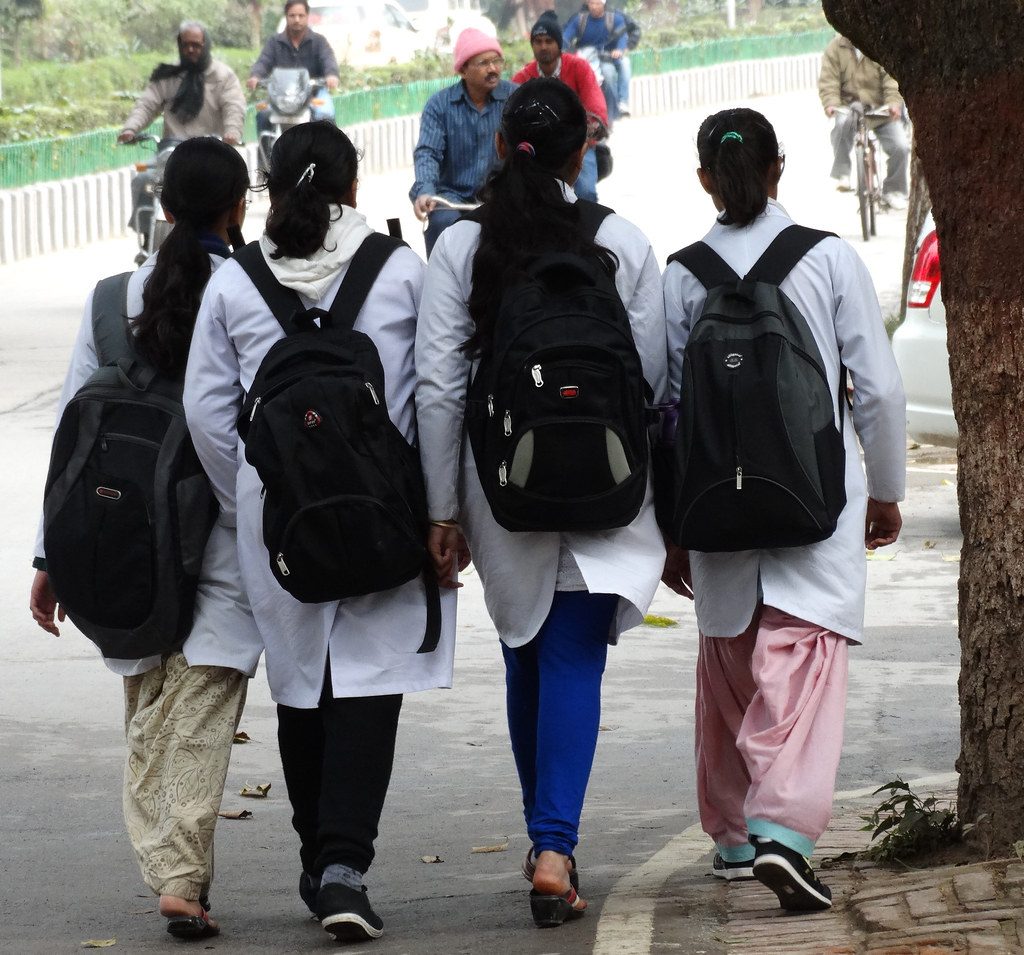
Updated 1 hour agoIndia's higher education system added 289 universities in a decade. The bigger change is who is filling them: female enrolment grew 42.2 percent since 2014-15, from 15.7 million to 22.4 million students.
The female-to-male enrolment ratio reached 1.08 in 2023-24, the seventh straight year above parity. Women's participation rate now leads men's — 31.2 percent of women aged 18 to 23 are enrolled, against 28.9 percent of men. Whether these graduates reach the workforce will determine how much India's economy gains from the expansion.
Why it matters
Women now outnumber men in Indian higher education — if those graduates reach the workforce, India gains millions of skilled workers it has historically left out.
Questions about this story
Free account needed to ask — your question is kept and asked for you right after sign-up. Answers are public.
No questions yet — be the first to ask.
Key Indicators
Voices
Curated perspectives — historical figures and your fellow readers.
Play
Exploring all sides of a story is often best achieved with Play.
Higher or Lower
A number from this story, against one from elsewhere in the news — guess which is bigger, then keep the chain going. 5 rounds, 3 strikes; a miss costs a strike and resets your streak.
Keyboard: ↓/L lower · ↑/H higher
0 points — sign up to put that on the leaderboard.
Connections
Sixteen names from the news. Find the four hidden groups of four. Four mistakes max.
Sign up to keep a daily streak — a new puzzle lands every day.
Exit debate?
Your progress in this debate will be lost.
- 1 Two AI personas square off on this story.
- 2 You predict who'll win each round — correct picks earn XP.
- 3 One crossfire question is yours to fire. Pick it carefully.
Couldn't generate a topic
Select Your Champions
Choose one persona for each side of the debate
DEBATE TOPIC
Choose personas with different perspectives for a more dynamic debate.
Select debater for this side:
No debate personas available right now.
Select debater for this side:
No debate personas available right now.
Who's Got This Round?
Make your prediction before the referee scores
The referee scores both sides on
Round Results
Set the Crossfire
Pick the question both personas must answer in the final round
Debate Oracle! You called every round!
Sharp Instincts! You know your debaters!
The Coin Flip Strategist! Perfectly balanced!
The Contrarian! Bold predictions!
Inverse Genius! Try betting the opposite next time!
XP Breakdown
Prediction History
People Involved
Organizations Involved
India's federal education ministry, which conducts the annual All India Survey on Higher Education.
A Cato Institute research project that documents long-term improvements in human well-being.
Timeline
July 2014 September 2026
-
Female growth caught in spotlight
Today ReportHuman Progress highlights female enrolment growth outpacing overall growth.
-
AISHE 2023-24 shows record enrolment
Data45 million students, GPI 1.08, female GER 31.2 percent, STEM crosses 10 million.
-
Gender Parity Index hits decade-low 1.01
DataAcademic year 2021-22 records the lowest female-to-male enrolment ratio of the series.
-
NEP 2020 sets 50 percent target
PolicyNational Education Policy 2020 targets a 50 percent gross enrolment ratio by 2035.
-
Baseline year for the expansion
Data34.2 million students, 760 universities, female GER 22.9 percent.
Scenarios
Female GER climbs past 32 as male GER stalls below 30
Discussed by: Education for All in India analysis, Education Times
The current trajectory holds: female GER keeps rising above 32 percent while male GER stays near 29. Women continue to drive nearly all net enrolment growth, pulling overall GER up roughly 0.8 points a year and widening the gender gap to about three points. The Education for All in India analysis found every point of national GER growth in 2023-24 already came from female enrolment.
Male enrolment revival narrows the gender gap
Discussed by: Policy analysts citing the stalled male GER
A policy push or economic shift brings men back into higher education, lifting male GER past 30 percent and within one point of the female rate. Reaching the 50 percent GER target by 2035 would require exactly this, since female enrolment alone cannot close the remaining 20-point gap. Male GER has been flat for two years, making a rapid revival hard to envision.
Overall GER stalls below 31 as institution count keeps climbing
Discussed by: Education for All in India analysis
Enrolment growth decelerates while registered institutions rise past 66,000, widening the gap between seats and students. Overall GER stays below 30.5 percent, pushing the 50 percent target further out of reach. Institutional capacity already grew 10.4 percent over two years while enrolment grew only 4 percent, and the Education for All analysis projects GER landing at 34-39 percent by 2035 on current momentum — far short of 50 percent.
Historical Context
3 moments from history that rhyme with this story — and how they unfolded.
US women overtake men in college (1979)
In 1979, women made up more than half of US undergraduate students for the first time. Title IX, passed in 1972, had barred sex discrimination in federally funded education, and female college participation rose steadily through the 1970s.
Women's share of US college enrolment kept climbing, passing 57 percent by 2000.
The female lead became durable and self-reinforcing — women now earn a majority of US bachelor's and master's degrees.
Shows how a female participation lead, once established, tends to persist and widen rather than reverse.
China's university expansion (1999)
In 1999 China's State Council ordered a sharp increase in university admissions. Higher education enrolment roughly quadrupled within a decade, and the gross enrolment ratio rose from single digits to above 40 percent by 2013.
China's GER passed 50 percent in the late 2010s, creating a large skilled workforce.
The expansion lifted millions into college-educated jobs and became a pillar of China's manufacturing rise.
India set the same 50 percent GER target for 2035 — China hit it with state-driven expansion, a pace India is not currently replicating.
South Korea's tertiary education expansion (1980s-2010s)
South Korea's tertiary gross enrolment ratio jumped from under 40 percent in 1990 to above 100 percent by 2010, crossing 50 percent in the late 1990s. Female participation grew alongside, closing the gender gap completely.
By 2015 Korea had one of the world's highest tertiary enrolment rates, with women matching or exceeding men.
The expansion fed Korea's shift from agriculture to high-tech manufacturing and services, a model of education-led growth.
Shows a country can push gross enrolment ratio past 50 percent, but Korea's pace required sustained state investment India's trajectory has not yet matched.
