



Pull to refresh
Logo
Inform launches spatial AI that turns a phone video into a building record

Inform launches spatial AI that turns a phone video into a building record

New Capabilities

The Helsinki company is selling auditable property data to U.S. appraisers first, with insurers next

Overview

Updated 47 minutes ago

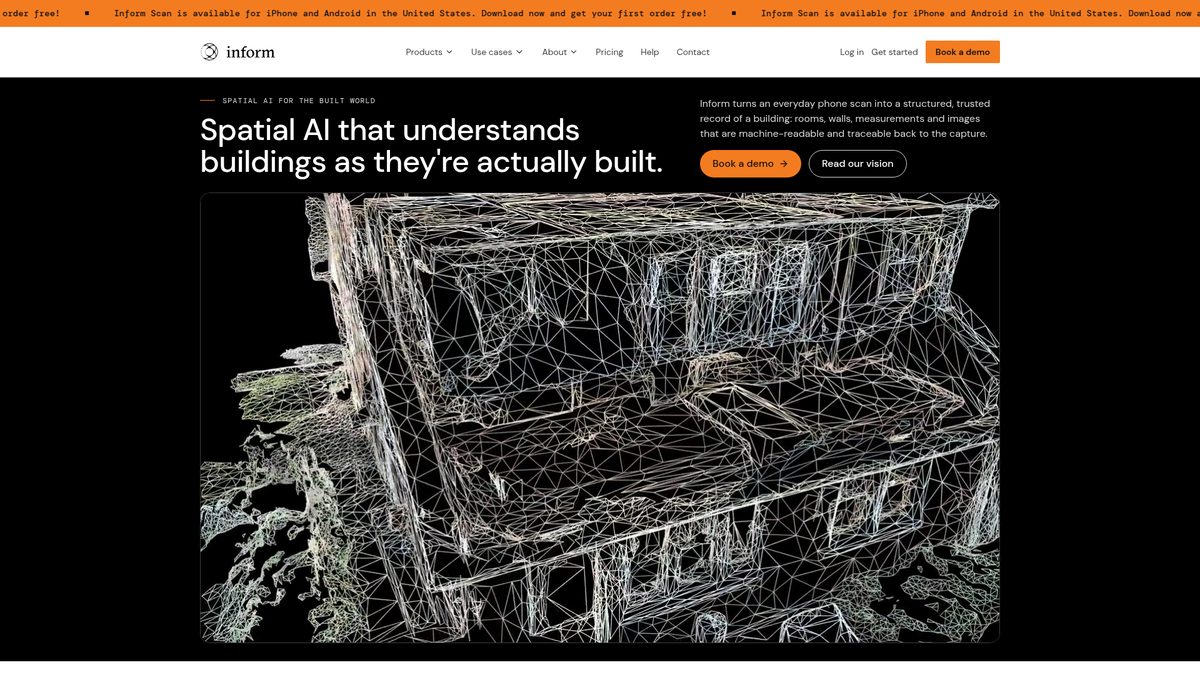
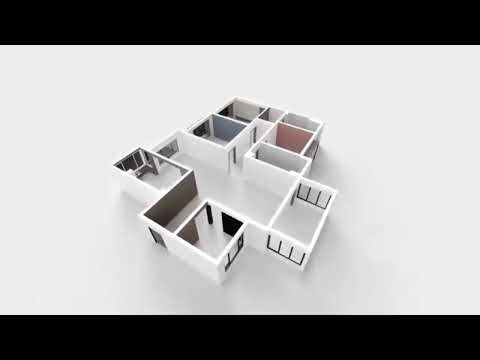
An American home appraisal usually starts with a person, a tape measure and a camera. On November 17, a Helsinki company called Inform launched software that takes one phone video of a house and rebuilds it in 3D, pulling hundreds of property data points out of the footage.

Each data point links back to the video frame that supports it, so a room count or a square footage figure can be checked rather than trusted. Inform is selling to U.S. appraisers and property data collectors first, with insurance underwriting and inspection work next.

Why it matters

If lenders and insurers accept video-derived records, the repeat inspection of the same house for every loan, policy and claim becomes unnecessary.

Questions about this story

Free account needed to ask — your question is kept and asked for you right after sign-up. Answers are public.

No questions yet — be the first to ask.

Key Indicators

Hundreds
Data points per property from one video
Inform says a single capture yields structured facts on rooms, measurements and visible features.
3
Products in the launch
Inform Scan for iPhone and Android, an SDK for partners, and early access to the Cortex engine.
Thousands
U.S. properties already captured
The company says its technology was used on thousands of homes before the public launch.
1
Videos needed per building record
Later captures add to the same record instead of replacing it, which allows change detection.

Voices

Curated perspectives — historical figures and your fellow readers.

Sign up to generate historical perspectives on this story.

People Involved

Organizations Involved

Timeline

2025 November 2026

2 events Latest: Yesterday
  1. Inform launches Scan, SDK and Cortex early access

    Latest Launch

    One phone video becomes a 3D building record with hundreds of data points, each linked to its source frame.

  2. Inform founded by repeat founders

    Company

    The team behind an earlier floor-plan scanning company starts again, aiming at building understanding rather than drawing.

Scenarios

1

Appraisal management company ships Inform scanning inside its own app

Possible Resolves by Q2 2027

Discussed by: Inform's launch materials, which name appraisal management companies and property data collection providers as the SDK's intended users

The SDK exists so partners can embed capture without building reconstruction themselves. The first proof would be a named appraisal management company or data collection firm putting Inform scanning into a production app rather than a pilot. That would move Inform from a standalone tool to plumbing inside the appraisal workflow.

2

A U.S. insurer signs on for underwriting or claims capture

Possible Resolves by End of 2027

Discussed by: Insurance Innovation Reporter, which reported insurance as Inform's next market after appraisal

Inform says insurance and inspection workflows come after its U.S. appraisal push. The insurer case is a persistent property record that gets updated rather than rebuilt for each policy, inspection or claim. A named carrier using it in live underwriting or claims would show the record survives contact with a regulated buyer.

3

A rival matches single-video capture structured to UAD 3.6

Uncertain Resolves by End of 2027

Discussed by: No public analyst has framed this yet; the risk sits inside Inform's own claim that its reconstruction beats approaches it has seen

Inform's differentiation is device-agnostic reconstruction plus per-point visual evidence. Property data is a crowded field, and a competitor shipping a comparable pipeline would compress that lead. The test is a public product announcement, not a research paper.

Historical Context

3 moments from history that rhyme with this story — and how they unfolded.

2018-November 2021

Zillow Offers (2018-November 2021)

Zillow moved from estimating home values to buying houses outright, pricing them with algorithmic models and light inspection. The models misjudged what the homes were worth, inventory piled up, and the company shut the unit in November 2021, writing down unsold houses and cutting staff.

Then

Zillow retreated from buying homes and absorbed losses on the inventory it held.

Now

Lenders and investors came away warier of automated property decisions made without verifiable condition data.

Why this matters now

Inform's pitch is that traceable visual evidence, not just a model's output, is what makes automated property decisions acceptable to the people who fund them.

November 2026

NIST's INSIGHT pipeline (2026)

The National Institute of Standards and Technology's public safety communications division tested an automated pipeline that turns building scans into structured, interoperable indoor data for pre-incident planning and incident command.

Then

The work is in testing, with no national deployment reported.

Now

It establishes a public-sector demand for machine-readable building interiors that can be shared between agencies.

Why this matters now

The same conversion problem, scan to structured data, is being worked from the public-safety side, which suggests the output format matters as much as the capture.

2020s

Scan-to-BIM's correction problem

Construction firms have spent years trying to turn laser scans of buildings into usable digital models. Investor Foundamental's analysis of the field concluded that no off-the-shelf product reliably converts an arbitrary building scan into a production-ready model without significant human correction.

Then

Scanning firms kept humans in the loop to fix geometry and label elements.

Now

The gap between a raw scan and a trusted model became the place where most of the labor and cost sat.

Why this matters now

Inform's design choice to route uncertain data points to a person for confirmation is an answer to that gap, and the reason it sells auditability rather than full automation.

Sources

(6)