
Pull to refresh
Logo
Daily Brief
Following
Why Sign Up
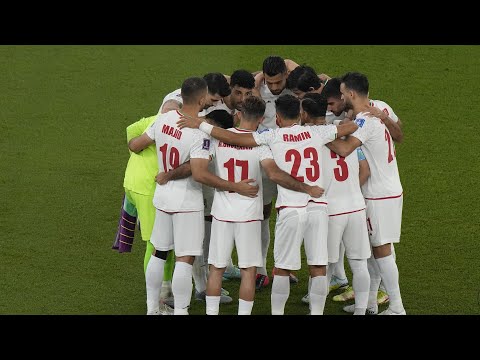
Iran withdraws from 2026 World Cup after U.S.-Israeli strikes kill supreme leader

Iran withdraws from 2026 World Cup after U.S.-Israeli strikes kill supreme leader

Force in Play
By Newzino Staff |

First politically motivated withdrawal by a qualified nation in modern World Cup history

3 days ago: Iran officially withdraws from 2026 World Cup

Overview

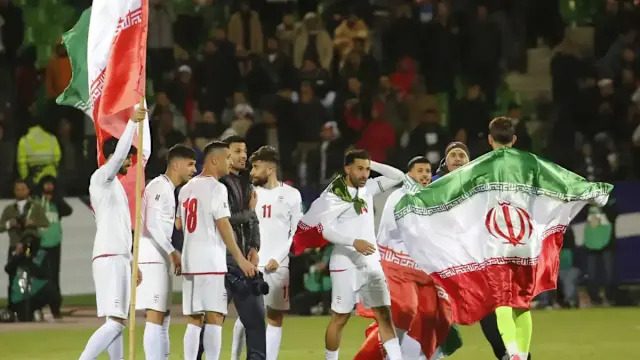
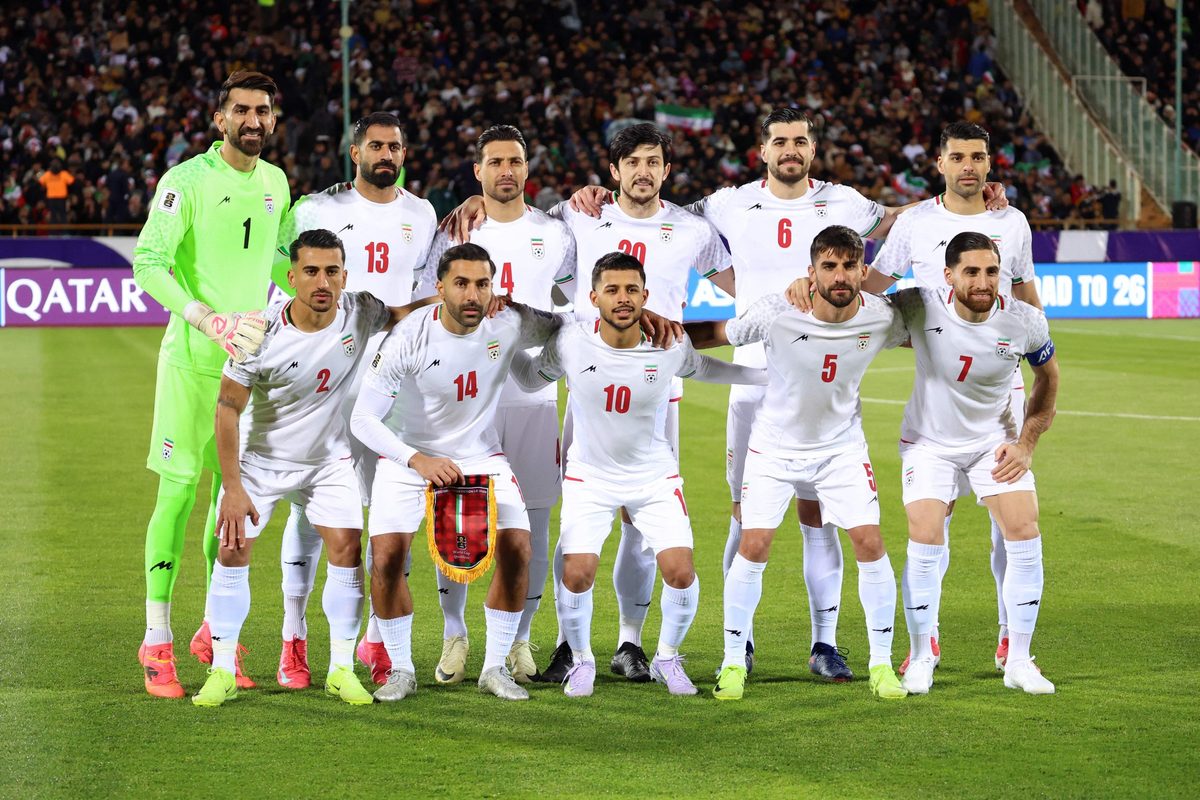
Iran became the first non-host nation to qualify for the 2026 World Cup. A year later, it became the first qualified nation in the modern era to pull out for political reasons. Sports Minister Ahmad Donyamali announced on state television that Iran will not participate in the tournament hosted by the United States, Canada, and Mexico—three months after a joint U.S.-Israeli military campaign killed Supreme Leader Ayatollah Ali Khamenei and devastated the country's military infrastructure.

Key Indicators

$10.5M
Prize money forfeited
Minimum payout Iran would have received for participating in the group stage
6th
World Cup appearance lost
Iran had previously appeared in six World Cups (1978, 1998, 2006, 2014, 2018, 2022) without ever advancing past the group stage
3
Group G matches affected
Games in Los Angeles (vs. New Zealand, vs. Belgium) and Seattle (vs. Egypt) must be restructured or reassigned
12 days
From first strikes to withdrawal
Operation Epic Fury began February 28; Iran announced its World Cup withdrawal on March 12

Interactive

Exploring all sides of a story is often best achieved with Play.

Ever wondered what historical figures would say about today's headlines?

Sign up to generate historical perspectives on this story.

Sign Up

Debate Arena

Two rounds, two personas, one winner. You set the crossfire.

People Involved

Organizations Involved

Timeline

  1. Iran officially withdraws from 2026 World Cup

    Sports

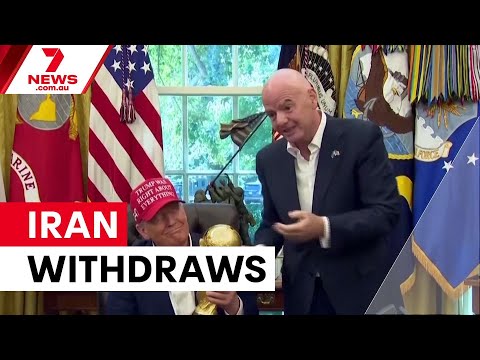
    Iran confirmed its withdrawal from the tournament. Trump posted on Truth Social that while Iran is welcome, they should stay home 'for their own life and safety.' FIFA must now restructure Group G.

  2. Infantino relays Trump's 'welcome' message; Iran immediately rejects it

    Diplomatic

    FIFA President Infantino said Trump told him Iran was welcome to compete. Hours later, Iran's sports minister Donyamali declared on state television that Iran would 'under no circumstances' participate.

  3. FIFA says World Cup postponement is unrealistic

    Organizational

    FIFA chief operating officer Heimo Schirgi said the scale of the tournament makes postponement impractical, while the organization stated it was monitoring the situation.

  4. Five Iranian women's soccer players granted asylum in Australia

    Sports

    Australia granted humanitarian visas to five Iranian women's team members who expressed safety concerns about returning to Iran. One player later changed her mind and revealed the others' location to the Iranian embassy.

  5. Iraq's coach asks FIFA to delay World Cup playoff

    Sports

    Iraq head coach Graham Arnold asked FIFA to postpone his team's March 31 playoff in Monterrey, citing closed Iraqi airspace and logistical disruptions from the neighboring war.

  6. Mojtaba Khamenei named new supreme leader

    Political

    The Assembly of Experts elected Ali Khamenei's son Mojtaba as Iran's third supreme leader, ten days after his father's assassination. The IRGC reportedly pressured the assembly to expedite the selection.

  7. Iranian women's team refuses to sing national anthem in Australia

    Sports

    At the Women's Asian Cup in Australia, Iranian players stayed silent during their national anthem in what was interpreted as protest or mourning. Multiple players subsequently sought asylum.

  8. Operation Epic Fury launches; Khamenei killed

    Military

    The United States and Israel launched joint strikes on Iran, killing Supreme Leader Ali Khamenei and dozens of senior officials in the opening hours. Nearly 900 strikes were carried out in the first 12 hours.

  9. World Cup draw places Iran in Group G

    Organizational

    FIFA's draw assigned Iran to Group G alongside Belgium, Egypt, and New Zealand, with all matches scheduled for the U.S. West Coast.

  10. Iran qualifies for 2026 World Cup

    Qualification

    Iran secured its spot with a 2-2 draw against Uzbekistan, becoming the first non-host nation to qualify for the expanded 48-team tournament.

Scenarios

1

Iraq replaces Iran in Group G after winning March 31 playoff

Discussed by: ESPN, CBS Sports, Sky Sports, and multiple FIFA analysts identify Iraq as the leading replacement candidate

Iraq defeats either Bolivia or Suriname in Monterrey on March 31, and FIFA formally awards Iraq Iran's Group G spot. This is complicated by Iraqi airspace closures and the logistical strain on Arnold's squad, but it follows the cleanest procedural path under FIFA's regulations. The United Arab Emirates would then take Iraq's vacated spot in the intercontinental playoff. FIFA's Congress in Vancouver on April 30 would ratify the replacement.

2

FIFA bypasses playoff and directly slots next-highest-ranked Asian team

Discussed by: CBS Sports, Sports Illustrated, and WION News explore whether FIFA might skip the playoff entirely

Under Article 6.7, FIFA has sole discretion to handle withdrawals. If logistical chaos prevents the March 31 playoff from happening—or if FIFA decides speed is more important than process—it could directly assign Iran's spot to the highest-ranked eligible Asian team. This could trigger protests from other confederations, and some reports suggest FIFA has even floated replacing Iran with a European team like Italy to maximize commercial appeal, though this would face fierce opposition from the Asian Football Confederation.

3

Other nations join boycott, forcing FIFA into broader tournament restructuring

Discussed by: Al Jazeera, Saudi League media, and some European politicians have raised the prospect of solidarity boycotts

Several nations have hinted at withdrawing in solidarity with Iran or to protest the tournament being held in a country at war. If multiple teams pull out, FIFA faces a cascading logistical crisis that could force schedule overhauls or even a partial postponement of certain groups. The 1966 Africa boycott, when all 15 eligible African nations withdrew, is the closest historical parallel. So far, no nation beyond Iran has formally committed to withdrawing.

4

Iran reverses course and participates in the World Cup

Discussed by: ESPN sources and some FIFA officials have expressed confidence the situation could resolve itself

A ceasefire or diplomatic shift before June could create conditions for Iran to reverse its withdrawal. The FFIRI has not yet filed formal withdrawal paperwork with FIFA, leaving a narrow procedural opening. However, with a new supreme leader consolidating power, the Iranian government would face enormous domestic political costs from reversing a decision explicitly framed around the assassination of the previous leader. This scenario becomes less likely with each passing week.

Historical Context

Africa's boycott of the 1966 World Cup

October 1964 - July 1966

What Happened

All 15 eligible African nations withdrew from qualifying for the 1966 World Cup in England after FIFA allocated zero direct qualifying spots to Africa. The continent was told to compete against Asian and Oceanian teams for a single shared slot. Ghanaian football administrator Ohene Djan led the boycott effort through the Confederation of African Football.

Outcome

Short Term

The 1966 tournament proceeded without a single African team, making it the only World Cup boycotted by an entire continent.

Long Term

Two years later, FIFA unanimously voted to give Africa its own dedicated World Cup qualifying slot. Asia received one as well. The boycott permanently changed the tournament's structure.

Why It's Relevant Today

Iran's withdrawal, like Africa's, turns a sporting absence into a political statement about power and representation. The key question is whether other nations follow—Africa's boycott succeeded because it was collective.

Yugoslavia expelled from Euro 1992 under United Nations sanctions

May - June 1992

What Happened

Yugoslavia won its Euro 1992 qualifying group, but ten days before the tournament, the United Nations Security Council passed Resolution 757 imposing sweeping sanctions on Belgrade over its military campaign in Bosnia. FIFA and the Union of European Football Associations (UEFA) expelled Yugoslavia from the European Championship and all international competitions, including 1994 World Cup qualifying. Denmark, the runner-up in Yugoslavia's group, replaced them.

Outcome

Short Term

Denmark, given less than two weeks to prepare, won the entire tournament in one of football's greatest upsets.

Long Term

The expulsion established that international sports bodies would enforce United Nations sanctions, creating a precedent for using sports isolation as a geopolitical tool.

Why It's Relevant Today

Yugoslavia was expelled by outside authorities; Iran is withdrawing by its own choice. But both cases show how active military conflicts can knock qualified teams out of major tournaments—and how replacement teams can emerge with little notice.

Uruguay and Argentina boycott the 1938 World Cup

1938

What Happened

Defending champion Uruguay and South American power Argentina both refused to enter the 1938 World Cup in France, protesting FIFA's decision to hold a second consecutive tournament in Europe after promising to alternate between continents. Uruguay became the only defending champion to not defend its title.

Outcome

Short Term

The 1938 tournament went ahead with a reduced field. World War II then suspended the World Cup for 12 years.

Long Term

FIFA eventually adopted rotation and bidding systems intended to distribute the tournament more equitably across continents, though controversies over hosting decisions have persisted.

Why It's Relevant Today

The 1938 boycott was a protest against the host selection itself. Iran's withdrawal is driven by a military conflict with the host nation—a more extreme version of the same tension between sports and geopolitics.

Sources

(16)