Pull to refresh
Logo
Daily Brief
Following
Why Sign Up
US and Israel wage sustained air campaign against Iran's nuclear infrastructure

US and Israel wage sustained air campaign against Iran's nuclear infrastructure

Force in Play
By Newzino Staff |

A three-week offensive has struck Natanz four times, killed Iran's supreme leader, and drawn retaliatory fire across the Middle East

Today: Fourth strike on Natanz; Iran fires missiles at Diego Garcia and Arad

Overview

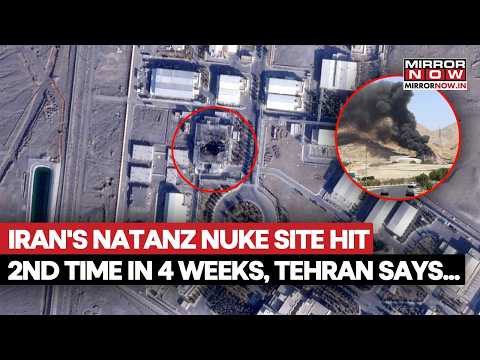
Iran's Natanz uranium enrichment complex has now been struck four times since February 28, when the United States and Israel launched a massive air campaign targeting Iran's nuclear program, missile infrastructure, and military leadership. The March 21 strike — timed to the Persian New Year — drew immediate Iranian retaliation: two intermediate-range ballistic missiles fired at the US-UK base on Diego Garcia, roughly 4,000 kilometers away, and a warhead strike on the Israeli city of Arad that destroyed three buildings and wounded 64 people.

Why it matters

A war to prevent Iran's nuclear capability is reshaping the Middle East's security order and threatening global energy supplies through the Strait of Hormuz.

Key Indicators

4
Strikes on Natanz
The enrichment complex has been hit four times since February 28, with entrance buildings destroyed and the underground facility rendered inaccessible.
~900
Strikes in first 12 hours
US and Israeli forces launched nearly 900 strikes on Day 1, hitting missile sites, air defenses, and leadership targets.
2,300+
Estimated deaths across region
Casualties span at least a dozen countries, including 165 killed at a girls' school adjacent to a naval base in Minab.
4,000 km
Range of Iran's Diego Garcia strike
Iran fired intermediate-range ballistic missiles at Diego Garcia, demonstrating long-range capability it had previously denied possessing.
0
Ceasefire negotiations
Iran's foreign minister has stated: 'We never asked for a ceasefire, and we have never asked even for negotiation.' The US has rebuffed mediation efforts.

Interactive

Exploring all sides of a story is often best achieved with Play.

Ever wondered what historical figures would say about today's headlines?

Sign up to generate historical perspectives on this story.

Sign Up

Debate Arena

Two rounds, two personas, one winner. You set the crossfire.

People Involved

Organizations Involved

Timeline

  1. Fourth strike on Natanz; Iran fires missiles at Diego Garcia and Arad

    Military

    US and Israeli forces struck Natanz for the fourth time on Nowruz, the Persian New Year. Iran retaliated by firing two intermediate-range ballistic missiles at Diego Garcia (~4,000 km away) — neither hit the base — and striking the Israeli city of Arad with a 450 kg warhead that destroyed three buildings and wounded 64 people.

  2. Iran rejects ceasefire but offers to dilute enriched uranium

    Diplomatic

    Foreign Minister Araghchi told CBS that Iran was ready to dilute enriched material to lower percentages but rejected ceasefire negotiations, demanding a permanent end to strikes and compensation as preconditions.

  3. Mojtaba Khamenei named Iran's new supreme leader

    Political

    Ali Khamenei's son was appointed supreme leader eleven days after his father's death, consolidating leadership amid ongoing bombardment.

  4. Iran fires 500+ missiles and 2,000 drones; attacks all six Gulf states

    Military

    By Day 7, Iran had fired over 500 ballistic and naval missiles and nearly 2,000 drones — approximately 40% at Israel and 60% at US targets. For the first time in history, Iran attacked all six Gulf Cooperation Council countries, hitting energy infrastructure and civilian airports.

  5. IAEA confirms Natanz entrance buildings destroyed

    Assessment

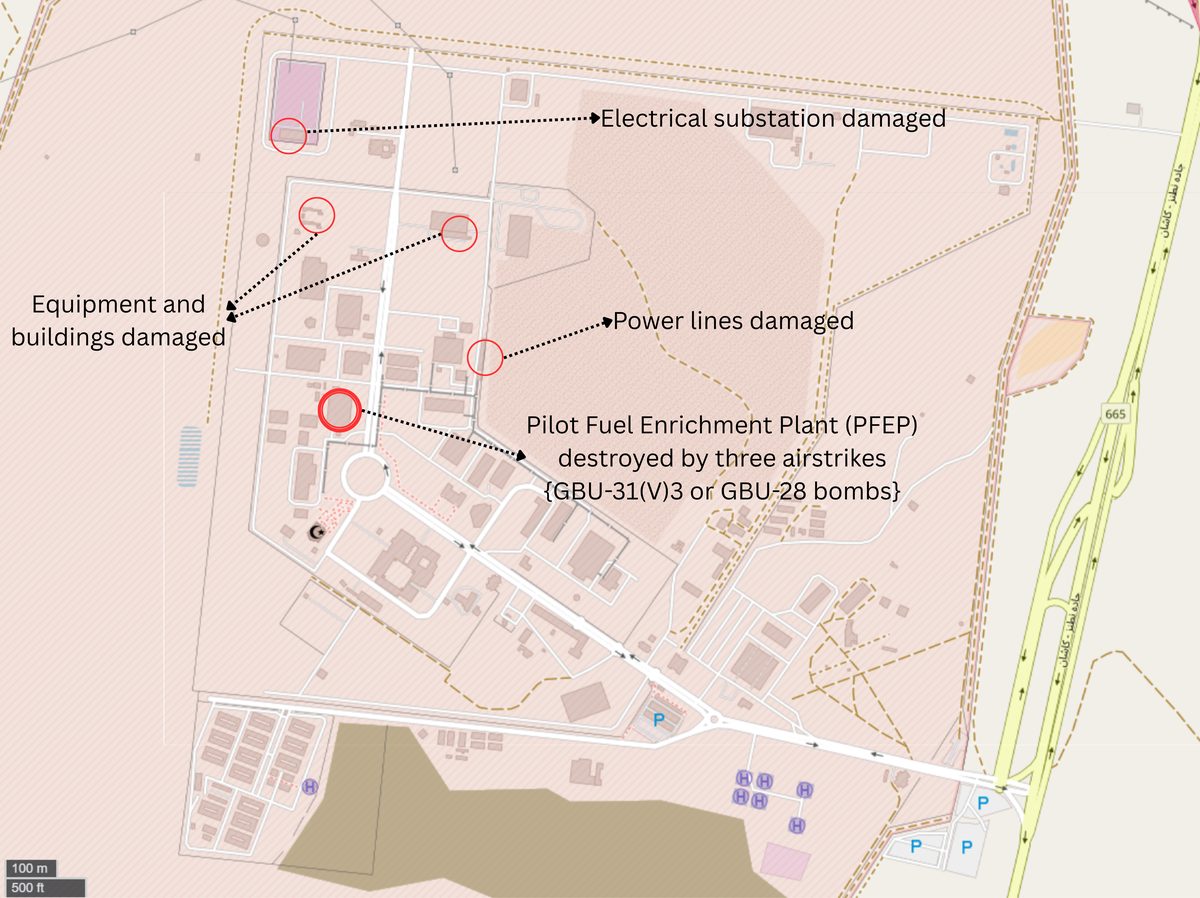
    Satellite imagery showed entrance buildings at Natanz were damaged, making the underground Fuel Enrichment Plant inaccessible. The core underground facility was not confirmed destroyed. No radiological consequences expected.

  6. First confirmed strike on Natanz; IRGC headquarters destroyed

    Military

    Iran's ambassador to the IAEA confirmed Natanz had been struck. The IRGC's Malek-Ashtar building in Tehran was completely destroyed. IAEA convened an emergency Board of Governors meeting.

  7. US and Israel launch Operation Epic Fury / Roar of the Lion

    Military

    Nearly 900 strikes in 12 hours targeted Iran's missiles, air defenses, leadership, and military infrastructure. Supreme Leader Khamenei and dozens of senior officials were killed. A strike on a naval base in Minab also hit an adjacent girls' school, killing approximately 165 people.

  8. Oman announces diplomatic breakthrough with Iran

    Diplomatic

    Oman's foreign minister said Iran had agreed to never stockpile enriched uranium and to accept full IAEA verification. Peace was reportedly 'within reach.'

Scenarios

1

Iran's nuclear infrastructure destroyed; program set back a decade

Discussed by: Foundation for Defense of Democracies, Israeli defense analysts, some US officials

Continued strikes on Natanz, Fordow, and the deeply buried Pickaxe Mountain facility, combined with the loss of senior leadership and scientific personnel, render Iran's enrichment program inoperable for years. The IAEA gains access to verify dismantlement. This would require penetrating underground facilities that have so far survived surface-level bombardment — and would depend on Iran's new leadership accepting terms rather than pursuing covert reconstruction.

2

War escalates into prolonged regional conflict

Discussed by: Arms Control Association, European foreign ministers, UN Secretary-General Guterres

Iran's unprecedented attacks on all six Gulf states, the Strait of Hormuz closure, and the Diego Garcia strike signal that the conflict is expanding beyond a contained air campaign. If Iran successfully strikes a major energy facility or demonstrates a reliable long-range missile capability, the war could draw in additional combatants and permanently reshape Middle Eastern alliances. The absence of ceasefire negotiations and the US-Israeli divergence on objectives increase this risk.

3

Negotiated settlement: Iran accepts permanent enrichment limits under verification

Discussed by: Former US diplomats, Oman's foreign ministry, arms control advocates

The Omani-brokered breakthrough on February 27 showed that Iran was willing to accept permanent enrichment restrictions and full IAEA verification before the strikes began. If the military campaign reaches a point of diminishing returns — or if domestic US or Israeli political pressure mounts — a return to that framework is possible. Iran's March 15 offer to dilute enriched uranium suggests the door is not fully closed, but its preconditions (permanent end to strikes, compensation) remain far from any US or Israeli position.

4

Iran accelerates covert nuclear weapons program

Discussed by: Nonproliferation analysts, historical precedent researchers (citing Iraq post-Osirak)

The historical record shows that Israel's 1981 strike on Iraq's Osirak reactor motivated Saddam Hussein to launch a covert weapons program that hadn't existed before. Iran possesses far more scientific expertise, dispersed facilities (including the unmonitored Pickaxe Mountain tunnel complex), and an unknown number of centrifuges produced since barring IAEA monitoring in 2021. Military strikes that destroy verification infrastructure without eliminating all capability could push Iran toward a covert breakout rather than away from one.

Historical Context

Israel's strike on Iraq's Osirak reactor (1981)

June 1981

What Happened

Eight Israeli F-16s destroyed Iraq's French-built Osirak nuclear reactor near Baghdad in a precision airstrike. Israel faced universal condemnation, including from the United States. Ten Iraqi soldiers and one French civilian were killed.

Outcome

Short Term

Iraq's overt nuclear capability was eliminated. Israel suffered diplomatic isolation but no lasting consequences.

Long Term

Evidence uncovered after 2003 revealed the strike motivated Saddam Hussein to launch a covert nuclear weapons program — committing a tenfold increase in scientists and funding. Only the 1991 Gulf War and subsequent inspections dismantled it.

Why It's Relevant Today

This is the foundational precedent for strikes on nuclear facilities — and its central lesson is that military action can accelerate covert proliferation rather than prevent it. The question hanging over the 2026 campaign is whether Iran follows Iraq's post-Osirak path.

Israel's destruction of Syria's Al-Kibar reactor (2007)

September 2007

What Happened

Eight Israeli jets destroyed a covert North Korean-built nuclear reactor at Al-Kibar in eastern Syria. The strike lasted three minutes. Israel maintained total secrecy for over a decade, only acknowledging the operation in 2018. The IAEA confirmed in 2011 that the site was an undeclared reactor.

Outcome

Short Term

Syria's nuclear weapons program was permanently ended. Damascus did not retaliate and initially denied the facility existed.

Long Term

Unlike Osirak, there was no covert restart — Syria lacked the resources and was soon consumed by civil war. This remains the most successful preventive strike against a nuclear facility.

Why It's Relevant Today

Al-Kibar is the model the 2026 planners likely hoped to replicate: a clean strike that ends a nuclear program. But Iran's program is vastly more dispersed, hardened, and advanced than Syria's single early-stage reactor, making a comparable outcome far less achievable.

Stuxnet cyberattack on Natanz (2007–2010)

2007–2010

What Happened

A US-Israeli cyberweapon, codenamed 'Olympic Games,' caused approximately 1,000 of Iran's 5,000 centrifuges at Natanz to spin erratically and destroy themselves while reporting normal operations to human operators. The worm was discovered publicly in June 2010.

Outcome

Short Term

Iran's enrichment capacity was significantly disrupted, with recovery taking until late 2011. US estimates concluded the attack delayed Iran's weapons capability by at least 18 months.

Long Term

The delay was tactical, not strategic. Iran rebuilt and expanded, eventually operating roughly 18,000 centrifuges and enriching to 60% purity. Stuxnet also established the precedent for state-sponsored cyberweapons targeting critical infrastructure.

Why It's Relevant Today

Stuxnet targeted the same Natanz facility now under kinetic attack. It demonstrated that even sophisticated covert sabotage could only delay, not eliminate, Iran's nuclear ambitions — arguably contributing to the logic that only military force could achieve a more permanent result.

Sources

(14)