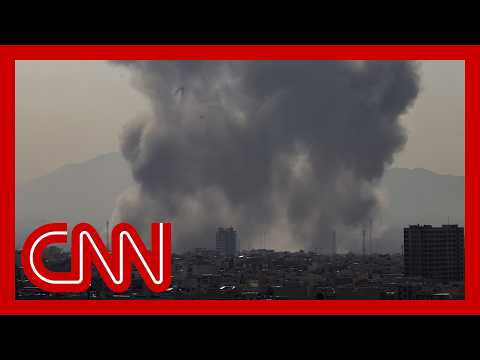
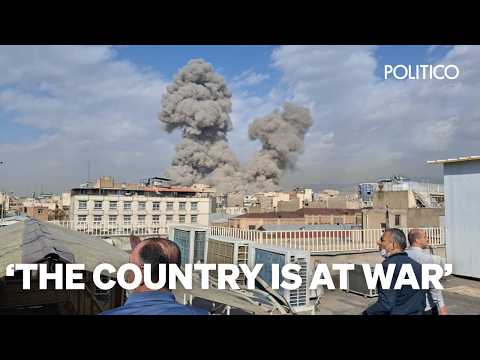
Talks between Washington and Tehran have stalled less than two weeks before the US midterms. Iran says it will not negotiate while US economic pressure continues, and Secretary of State Marco Rubio called a peace deal 'extremely difficult.' The Strait of Hormuz remains closed to most traffic, and a supertanker exploded after hitting a mine near the waterway on October 20.
The Pentagon still counts 19 US troops killed and 624 wounded, with $33.4 billion spent through June. A third US carrier group and about 10,000 more personnel are due by late November, while Israel's prime minister has pressed for a new offensive that President Trump has ruled out before the November 3 vote.
Why it matters
A deal before the midterms could reopen the Strait of Hormuz. Failure leaves three US carriers and a possible Israeli offensive.
Questions about this story
Free account needed to ask — your question is kept and asked for you right after sign-up. Answers are public.
No questions yet — be the first to ask.
Key Indicators
19
US military deaths disclosed
The Army divides the 19 deaths between 14 attributed to Operation Epic Fury and 5 to an Overseas Operations category since July 7. Earlier Washington Post reporting said the true toll ran higher than disclosed.
624
US service members wounded
Pentagon toll: 417 wounded in Operation Epic Fury's first four months and 207 more since July.
$102.60
Brent crude spot price, Oct 5
Brent settled near $102.60 a barrel on October 5, down from a $126 spike on September 24, as Gulf oil finds alternate export routes.
27
US drones lost
At least 24 MQ-9 Reapers, two MQ-1 drones and one MQ-4C Triton have been lost since the war began, more than $800 million, according to a September Congressional Budget Office report.
Images from Openverse under Creative Commons licenses.
Videos from YouTube.
Voices
Curated perspectives — historical figures and your fellow readers.
Ayn Rand
(1905-1982) ·Cold War · philosophy
Fictional AI pastiche — not real quote.
"A government that bypasses its own constitutional framework to wage war without congressional sanction is not defending freedom — it is merely replacing one form of tyranny with the chaos of unchecked executive power, and history's graveyard is filled with the bones of "liberators" who confused the destruction of enemies with the creation of values."
100% found this insightful
Ambrose Bierce
(1842-1914) ·Gilded Age · wit
Fictional AI pastiche — not real quote.
"Oman's minister announced the peace on Friday; the bombs fell on Saturday — the interval between these two events being precisely sufficient to confirm that modern diplomacy serves chiefly as a final courtesy extended to nations about to be liberated."
0% found this insightful
Ever wondered what historical figures would say about today's headlines?
Sign up to generate historical perspectives on this story.
84 events
Latest: Today
Showing 8 of 84
JK to step
Tap a bar to jump to that date
Jump to
October 2026
US says peace deal with Iran extremely difficult
TodayDiplomatic
Secretary of State Marco Rubio told US media that reaching a peace deal with Iran was extremely difficult and that economic pressure would continue until Tehran stopped targeting commercial shipping.
Report: Netanyahu pressed for major Iran offensive before midterms
TodayPolitical
The Financial Times reported that Benjamin Netanyahu urged the military to prepare a major new offensive against Iran, including nuclear sites. A plan for the weekend of October 10 did not go ahead after Trump opposed restarting the conflict before the November 3 midterms.
Iran rules out talks while US pressure continues
Diplomatic
President Masoud Pezeshkian said there would be no return to negotiations without a halt to the US pressure campaign. Security chief Mohsen Rezaei told Pakistan's army chief Tehran would not let enriched nuclear material leave the country.
Parliament Speaker Mohammad Bagher Ghalibaf told Pakistan's General Asim Munir 'We have no new message,' and Iran's security council said talks would wait until Washington met seven conditions.
Qatar delegation arrives in Tehran after Pakistan mediation visit
Diplomatic
A Qatari delegation arrived in Tehran after Pakistan's army chief left Iran, as Qatar and Pakistan continued mediating between Iran and the United States.
Supertanker explodes near Strait of Hormuz after mine strike
Military
The IRGC Navy said a supertanker carrying more than 2 million barrels of crude exploded and caught fire after hitting a naval mine south of the strait. It said the ship had switched off radar and navigation systems and ignored warnings.
Iran asks UN Security Council to act on US and Israeli threats
Diplomatic
Iran's UN envoy, Gholamhossein Darzi, wrote to Secretary-General Antonio Guterres about possible use of the GBU-43/B 'Mother of All Bombs' and Israeli threats to energy infrastructure. He asked for a Security Council meeting and condemnation of the threats.
Iran reportedly accepts IAEA visit to nuclear sites
Diplomatic
Tehran reportedly agreed to an undisclosed visit by the International Atomic Energy Agency to Iranian nuclear sites, addressing a US demand about its nuclear program.
Araghchi: Hormuz stays shut until US accepts seven-day deal
Diplomatic
Foreign Minister Abbas Araghchi said the Strait of Hormuz would remain closed unless Washington accepted Tehran's conditions, and that indirect talks were continuing through Pakistan and Qatar.
US to send third carrier and 10,000 troops by late November
Military
Fox News reported the USS Theodore Roosevelt carrier strike group and the 13th Marine Expeditionary Unit would arrive by the end of November, joining two carriers already in the region.
US Treasury says Kharg Island oil loadings stopped; Iraq closes border crossing
Economic
Treasury Secretary Scott Bessent said oil loadings at Kharg Island had stopped. Iraq's prime minister ordered the Sheeb border crossing with Iran closed from Wednesday, with other crossings to follow.
Iran threatens Gulf undersea cables if strikes resume
Military
An IRGC official, Ali Mohebbi, said Iran would reveal 'new weapons' and 'new targets' if attacked again and noted seven large fiber-optic cables run under the Persian Gulf and Strait of Hormuz.
Blockade has redirected 130 vessels since July 14
Military
CENTCOM said its forces had redirected 130 commercial vessels since resuming the naval blockade on July 14, disabled three that refused to comply and destroyed 13 vessels it said were violating the blockade or part of the IRGC's shadow network.
Brent eases to about $102 as Gulf oil flows resume
Economic
Brent settled near $102.60 a barrel on October 5, down from the $126 spike of September 24. Iraq's state oil tanker company moved 2 million barrels through the Strait aboard a supertanker, described by Gulf News as the first such operation in decades.
Iran reviewing US response to seven-day Hormuz plan
Diplomatic
Iranian officials said they were reviewing Washington's formal reply to Tehran's seven-day proposal for restoring security in the Strait of Hormuz. Parliament Speaker Mohammad Bagher Ghalibaf said the strait will not open until seven conditions based on the Islamabad MoU are met; Foreign Minister Abbas Araghchi said it could reopen within seven days if the US accepts the plan.
Commercial tanker damaged in Strait of Hormuz
Military
A commercial tanker was damaged by an unknown projectile in the Strait of Hormuz, Fox News reported. Critical Threats had assessed on October 3 that the IRGC Navy likely attacked two tankers on October 2.
Camp David war council reviews Iran options
Political
Vice President JD Vance, Secretary of State Marco Rubio, Defense Secretary Pete Hegseth, Middle East envoy Steve Witkoff, CIA Director John Ratcliffe and Joint Chiefs Chairman Gen. Dan Caine met for hours at Camp David on the war with Iran and the Houthi fight. The White House did not comment.
Trump says Iran war 'essentially almost over'
Political
Trump said the conflict with Iran was 'essentially almost over' and ruled out Iran obtaining a nuclear weapon. The two sides continued indirect exchanges despite the impasse over the Strait of Hormuz.
Third carrier group heads to the Gulf
Military
A US official told the Associated Press the USS Theodore Roosevelt carrier strike group and USS Makin Island amphibious group were heading to the region, which could put three carriers and more than 20,000 personnel in and around the Gulf by late October.
September 2026
US carries out hour-long heavy strike operation
Military
CENTCOM launched heavy strikes in response to attempted attacks on US forces, according to a senior US official. The operation began 20:00 ET and lasted about an hour.
Trump briefed on fresh military strike plans against Iran
Political
Trump received a briefing on plans for new strikes designed to force Iran to the negotiating table. News of the briefing sent Brent crude above $126 a barrel before it settled near $114. Iran warned of a 'painful response' if US attacks resume.
Army identifies 19th US service member to die in Iran war
Casualties
The Army identified Capt. Bianca C. Wilkerson, 37, of Norfolk, Virginia, who died September 18 in a non-combat incident and was posthumously promoted to major. She is the fifth death listed under the Pentagon's Overseas Operations category, bringing the public casualty tally to 19.
US and Iran hold first shuttle talks in months at the UN
Diplomatic
The first shuttle talks between Washington and Tehran in months raised hopes of progress toward ending the war, though neither side announced concessions. Tehran said it was reviewing the US response to its peace proposals, which prioritize lifting the naval blockade and reopening the Strait of Hormuz.
Pentagon watchdog reports $33.4B war cost and munitions shortfalls
Government
The Defense Department inspector general's first congressionally mandated report on Operation Epic Fury found the campaign cost $33.4 billion through June 30, including $22.3 billion in munitions. It disclosed 18 US deaths and 417 wounded, warned of strategic inventory shortfalls, and said Iranian strikes damaged or destroyed hundreds of buildings and dozens of aircraft at US bases.
July 2026
US reinstates naval blockade of Iranian ports
Military
The US reimposed its blockade of Iranian ports after Iranian strikes on commercial ships in the Strait of Hormuz, following the collapse of the June memorandum.
Trump declares Islamabad MoU 'over' after Iran attacks three ships
Political
Iran attacked three commercial ships in the Strait of Hormuz on July 7, prompting heavy US counterstrikes. Trump declared the memorandum 'over' on July 8, and CENTCOM resumed daily strike operations.
June 2026
Iran strikes Singapore-flagged cargo vessel; US retaliates
Military
Iran struck a Singapore-flagged cargo ship off Oman, and CENTCOM retaliated with strikes inside Iran. The International Maritime Organization paused vessel evacuation plans for the Strait.
Trump and Pezeshkian sign Islamabad Memorandum of Understanding
Diplomatic
President Trump and Iranian President Masoud Pezeshkian signed the Islamabad MoU, with Pakistan's Prime Minister Shehbaz Sharif as mediator. Iran agreed to safe passage for commercial vessels through the Strait of Hormuz without charge for 60 days.
May 2026
US Navy destroyers transit Strait of Hormuz in Project Freedom
Military
USS Truxtun, USS Rafael Peralta and USS Mason transited the Strait to protect commercial shipping. Trump paused the mission the next day at Pakistan's request, saying the US was close to an agreement with Iran.
April 2026
US blockades all maritime traffic to Iranian ports
Military
CENTCOM announced a blockade of all vessels entering or leaving Iranian ports, stretching from Oman to Iran's southern coast. From April 13 to June 18, US forces redirected more than 140 compliant vessels and disabled 10 non-compliant ships.
U.S. executes heaviest strikes of war on day 39 as Trump Hormuz deadline expires
Military
Defense Secretary Pete Hegseth confirmed most intense strikes since campaign began; Trump set 8:00 PM ET deadline for Iran to reopen Strait of Hormuz, threatening 'complete demolition' of power plants and bridges. Iran rejected temporary ceasefire, delivered 10-point counter-proposal via Pakistan demanding permanent end to hostilities and sanctions relief.
US announces ceasefire with Iran, ending major combat operations
Diplomatic
The United States announced a ceasefire on April 7 to allow negotiations, while keeping forces postured to resume combat. Vice President JD Vance led the US delegation, and Pakistan's prime minister later took a mediation role.
US-Israeli airstrikes kill IRGC intelligence chief Majid Khademi and Quds Force Unit 840 head
Military
Joint US-Israeli dawn airstrikes on Tehran killed IRGC intelligence chief Major General Majid Khademi and Yazdan Mir (alias Sardar Bagheri), head of IRGC Quds Force clandestine Unit 840. Iranian media reported 25+ killed across multiple sites; represents major blow to Iran's intelligence apparatus.
US special forces rescue second F-15E crew member; both pilots recovered
Military
US special operations forces successfully extracted the F-15E weapons systems officer who had evaded Iranian forces for over two days in mountainous terrain. The extraction involved service members from multiple branches and dozens of aircraft, with special operators engaging in a 'massive firefight' at the extraction site. Both crew members from the April 3 downing have now been recovered.
US-Iran race intensifies for missing F-15E crew as A-10 struck in rescue support
Military
US special forces pressed search for F-15E weapon systems officer on Iranian soil as local authorities offered bounties to civilians; A-10 Thunderbolt hit by Iranian fire during rescue support, pilot ejected safely over Kuwait. Incidents highlight persistent Iranian air defense threats.
Iran downs US F-15E Strike Eagle in first American aircraft loss; one pilot rescued
Military
Islamic Revolutionary Guard Corps shot down US Air Force F-15E over Qeshm Island; crew from 48th Fighter Wing ejected safely. US special forces rescued one on Iranian soil; search ongoing for second as IRGC offers civilian bounty.
Iran launches four missile salvos at Israel including cluster warheads; Hezbollah fires 50+ rockets
Military
Iran fired four separate missile salvos at Israel on day 35, some armed with cluster warheads, wounding at least four in Bnei Brak including two babies. Hezbollah simultaneously launched over 50 rockets from Lebanon at northern Israel, striking Kiryat Shmona and lightly injuring two, as Iran persists with daily attacks despite degraded capabilities.
March 2026
Israeli Air Force strikes Iran's ballistic missile and naval weapons factories
Military
Israeli Air Force targeted dozens of IRGC weapons manufacturing facilities, anti-aircraft storage bases, and ballistic missile sites in Tehran area on day 28, hitting Iran's most central naval arms production site amid ongoing US-Israel campaign.
Israel kills IRGC Navy Commander Tangsiri in airstrike near Strait of Hormuz
Military
Israel announced it killed Alireza Tangsiri, IRGC Navy commander responsible for Hormuz mining and blockade stranding 2,000 vessels, in a precise airstrike in Bandar Abbas. The strike also killed senior naval officers on day 27 of the campaign.
Trump and Hegseth brief on Operation Epic Fury; announce five-day pause on power plant strikes
Political
President Trump and Defense Secretary Pete Hegseth provided joint update on day 26, announcing temporary pause on striking Iranian power plants to allow negotiation space amid ongoing strikes.
Reports confirm over 9,000 Iranian targets struck in Operation Epic Fury
Military
Fox News analysis reports more than 9,000 targets hit, reflecting continued degradation of Iranian military capabilities.
US deploys 2,200 more Marines to Middle East as Trump floats 'winding down' Iran war
Military
On day 22 of Operation Epic Fury, President Trump indicated the US is considering winding down military operations, even as the Pentagon deployed a second Marine Expeditionary Unit of 2,200 Marines to the Middle East. Iran confirmed the death of IRGC spokesperson Ali Mohammad Naeini in an Israeli airstrike.
CENTCOM Commander Brad Cooper updates: 8,000 targets struck, 130 vessels eliminated, air superiority achieved
Military
Adm. Brad Cooper's day 22 briefing confirms over 8,000 targets struck, 130 Iranian vessels neutralized, 8,000+ combat flights, and steady decline in Iran's combat power; highlights longest US Army artillery strike in history.
Israeli airstrike kills IRGC spokesman General Ali Mohammad Naeini
Military
The Israeli Air Force killed Iran's Islamic Revolutionary Guard Corps (IRGC) spokesman, General Ali Mohammad Naeini, in an overnight airstrike inside Iran on day 21 of the conflict. Naeini had hours earlier publicly dismissed Israeli claims that Iran's missile production capacity had been destroyed. His death marks the fourth senior Iranian military or government official killed in targeted strikes this week.
Qatar expels Iranian military and security attachés after Ras Laffan attack
Diplomatic
Qatar declared Iranian embassy military and security attachés persona non grata, ordering departure within 24 hours in response to attacks on Ras Laffan gas field violating Qatari sovereignty.
Pentagon briefing confirms 7,000+ targets struck; Iran's navy declared eliminated
Military
Secretary of Defense Pete Hegseth and Chairman of the Joint Chiefs of Staff Air Force Gen. Dan Caine held major Pentagon briefing confirming over 7,000 targets have been struck, Iran's air defenses are flattened, and over 120 Iranian navy ships have been neutralized. Hegseth defended potential $200 billion supplemental funding request to refill US munitions.
Iran launches large-scale retaliatory missile strikes on Israel and Gulf states
Military
Iran's Islamic Revolutionary Guard Corps (IRGC) launched large-scale retaliatory missile strikes against Israel and Gulf states, firing Khorramshahr-4 and Qadr multiple-warhead missiles at over 100 military and security targets. Strikes killed at least two in Ramat Gan, Israel and damaged a Tel Aviv train station. Kuwait and UAE activated air defense systems to intercept incoming missiles and drones.
National Counterterrorism Center director Joe Kent resigns over Iran war
Political
Joe Kent, director of the National Counterterrorism Center (NCTC), became the first senior Trump administration official to resign over Operation Epic Fury. In his resignation letter, Kent stated Iran "posed no imminent threat to our nation" and that the US entered the conflict "due to pressure from Israel and its powerful American lobby." Trump dismissed the resignation, calling Kent "weak on security."
Israel claims killing of Iran's security chief; strikes hit Abu Dhabi and Dubai
Military
Israel's Defense Minister announced Iranian security chief Ali Larijani and Basij force commander Gholamreza Soleimani were killed in overnight strikes. Separately, a fatal missile strike hit Abu Dhabi and drone attacks targeted areas near Dubai's airport and Fujairah Oil Industry Zone, marking significant escalation to Gulf state civilian and energy infrastructure. More than 2,200 people across the Middle East have been killed in the conflict.
Australia and Japan decline Trump's call for Strait of Hormuz naval coalition
Diplomatic
President Trump urged allied nations to send warships to secure the Strait of Hormuz, but Australia and Japan declined to participate in the multinational naval mission, signaling reluctance among key Indo-Pacific allies to deepen involvement in the Iran conflict.
Iran threatens Gulf state infrastructure; calls for UAE port evacuations
Military
Iran threatened for the first time to target non-US assets in neighboring Gulf states, calling for evacuations of three major ports in the United Arab Emirates. Iran accused the US of using UAE ports and docks to launch strikes on Kharg Island.
Gulf states intercept new Iranian missile and drone barrages
Military
Saudi Arabia intercepted 10 drones over Riyadh and eastern region. Bahrain reported intercepting 125 missiles and 203 drones since start of Iranian attacks, with 2 killed in Bahrain and 24 in other Gulf nations.
Formula One cancels April races in Bahrain and Saudi Arabia
Economic
Motorsport's governing body cancelled Formula One races scheduled for April in Bahrain and Saudi Arabia due to the ongoing conflict.
UN reports 3.2 million Iranians displaced by bombardment
Humanitarian
UN refugee agency reports up to 3.2 million people have been displaced in Iran, most fleeing the capital and other cities to seek safety from US and Israeli strikes.
Oil prices surge 40 percent as Strait of Hormuz shipping halted
Economic
Iran's attacks and threats have nearly halted shipping in the Strait of Hormuz, sending petroleum prices soaring 40 percent and roiling the global economy.
UAE adviser criticizes US strategy as 'confused policy'
Diplomatic
Anwar Gargash, adviser to the president of the United Arab Emirates, criticized US policy on social media, stating it 'missed the point, lost its direction, and lacked wisdom' in response to Iran's threats against UAE infrastructure.
Iran's Foreign Minister warns of retaliation against US energy infrastructure
Diplomatic
Foreign Minister Abbas Araghchi warned Iran will target American-linked energy infrastructure in the region if Iran's energy facilities are attacked, stating Iranian forces will act cautiously to avoid densely populated areas.
Trump calls for international naval assistance in Strait of Hormuz; threatens to bomb shoreline
Political
President Trump called on China, France, Japan, South Korea, UK and other affected nations to send warships to keep the Strait of Hormuz open, while threatening to "bomb the hell out of the shoreline" and sink Iranian ships. He claimed Iran's military capability is "destroyed 100%" but acknowledged drones and mines remain threats.
CENTCOM confirms 13 US service members killed in Operation Epic Fury
Casualties
US casualty count rises to 13 service members killed in Operation Epic Fury, with additional wounded from Iranian retaliatory strikes across the region.
US strikes 90+ military targets on Kharg Island; oil infrastructure deliberately spared
Military
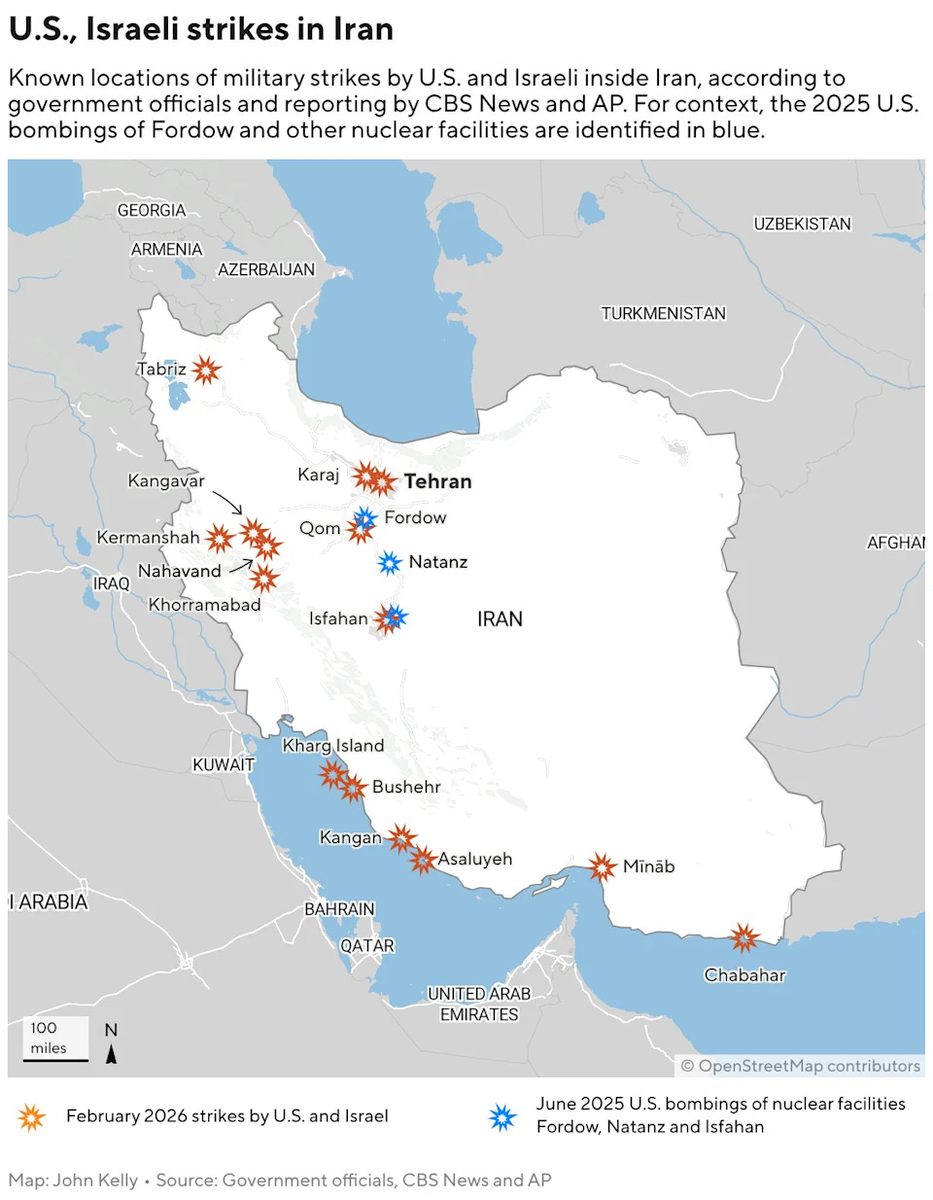
CENTCOM executed large-scale precision strike on Kharg Island destroying naval mine storage facilities, missile storage bunkers, and 90+ military targets while preserving oil infrastructure. Trump warned oil facilities could be targeted if Iran continues blocking Strait of Hormuz traffic.
US military deploying approximately 2,500 Marines to the Middle East as Pentagon weighs options for ground operations to secure Iran's nuclear sites. Over 50,000 military personnel now supporting Operation Epic Fury.
Iran's missile fire continues declining; 32 missiles fired on March 12
Military
Iranian missile fire declined 30% on March 12 with 32 missiles fired compared to 46 on March 11, reflecting continued degradation of Iranian retaliatory capability despite ongoing attacks.
Israel intensifies strikes on Hezbollah in Lebanon; prepares potential ground operation
Military
Israel Defense Forces continue intensifying strikes on Hezbollah targets in Lebanon as part of broader regional escalation. Reports indicate Israel may be preparing for major ground operation against Hezbollah.
Mojtaba Khamenei chosen as Iran's new Supreme Leader
Leadership
Iran's Assembly of Experts selected Mojtaba Khamenei, son of deceased Supreme Leader Ali Khamenei, as his successor. The appointment marks the first hereditary succession in the Islamic Republic's history.
White House confirms 49 senior Iranian leaders killed; US casualty count rises to 6
Leadership
Press Secretary Karoline Leavitt announced 49 senior Iranian regime officials have been eliminated, including Supreme Leader Khamenei. She also extended condolences to families of six US service members killed in Operation Epic Fury, stating President Trump will attend their dignified transfer.
CENTCOM reports 2,000+ targets struck; Iranian Navy destroyed; air superiority achieved
Military
CENTCOM announced over 2,000 targets struck in first four days of Operation Epic Fury using precision munitions. More than 20 Iranian ships destroyed including top submarine (first torpedo use since WWII). Ballistic missile launches down 86%; drone launches down 73%. Pentagon expects total dominance over Iranian airspace within hours.
IDF strikes Tehran political and security institutions; targets IRGC headquarters
Military
Israel Defense Forces conducted multiple strikes on military compounds in southeastern Tehran, targeting IRGC headquarters, internal security agencies, and command-and-control infrastructure. Strikes aimed at disrupting Iranian command structures and weakening retaliation capabilities.
Iran expands retaliatory strikes to Gulf states; targets UAE, Saudi Arabia, Qatar
Military
Iran expanded Operation True Promise-4 retaliation beyond Israel to target US military bases and civilian infrastructure across Gulf states including UAE, Saudi Arabia, Qatar, Bahrain, and Jordan. Drone and missile strikes targeting energy infrastructure; 90% reduction in Strait of Hormuz vessel traffic reported.
White House announces evacuation of 17,500 Americans from Middle East
Humanitarian
State Department reports 17,500 Americans have been safely evacuated from the Middle East since Operation Epic Fury began, with 8,500 returning home in a single day. Approximately 6,000 additional Americans still seeking assistance to depart the region.
IDF confirms elimination of 40 Iranian military commanders
Leadership
Israel Defense Forces confirmed 40 senior Iranian commanders killed since operation launch, including Chief of Staff of Iranian Armed Forces Abdolrahim Mousavi.
Secretary Hegseth declares Iran 'cannot outlast' US; operation in fifth day
Political
Secretary of Defense Pete Hegseth stated Iran 'cannot outlast' the United States in conflict as its military has been decimated. CENTCOM released '100 Hours' video touting Operation Epic Fury as 'the most lethal, most complex, and most-precision aerial operation in history.'
Iranian state media confirms Khamenei killed in Israeli strike
Leadership
Supreme Leader Ali Khamenei was killed in an Israeli airstrike on a Tehran compound where he was meeting with senior officials. Iran's defense minister, an IRGC commander, and the secretary of the security council were also killed. Iran announced an interim governing council.
CENTCOM confirms first US combat deaths: 6 killed in Kuwait missile strike
Casualties
Six American service members were killed when Iranian retaliatory missiles struck a US base at Port Shuaiba, Kuwait. Five others were seriously wounded. The initial count of three was revised upward in the following days.
February 2026
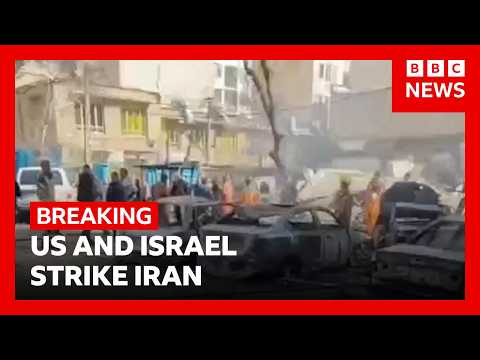
Operation Epic Fury begins with massive air and missile strikes
Military
The US and Israel launched a joint campaign. Four B-2 stealth bombers dropped 14 bunker-buster bombs on underground nuclear sites at Fordow and Natanz. Tomahawk cruise missiles struck Isfahan. Nearly 900 US strikes were conducted in the first 12 hours. Israel flew 200 fighter jets in its largest-ever combat sortie.
F-35s shoot down Iranian fighter jets in first air-to-air kills
Military
American F-35 stealth fighters intercepted and destroyed Iranian MiG-29s that launched from Mazariyeh Air Base, marking the first time the F-35 achieved air-to-air kills against manned adversary aircraft.
Iran retaliates with missile strikes on US bases across the Gulf
Military
Iran launched Operation True Promise-4, firing ballistic missiles at American military facilities in Kuwait, Bahrain, Qatar, Jordan, Iraq, Saudi Arabia, and the United Arab Emirates. Regional air defenses intercepted most but not all incoming missiles.
Oman announces diplomatic breakthrough; strikes follow 24 hours later
Diplomatic
Oman's foreign minister announced Iran had agreed to never stockpile enriched uranium and to accept full IAEA verification, calling peace "within reach." The US-Israeli operation launched the following morning.
Largest US military force in Middle East since 2003 assembled
Military
With two carrier strike groups, over 150 repositioned aircraft, and stealth fighters at bases in Israel and Jordan, the Pentagon completed its largest Middle East buildup since the Iraq invasion.
Trump issues ultimatum to Iran during State of the Union address
Political
Trump demanded Iran publicly declare it would never pursue nuclear weapons, warning: "I will never allow the world's number one sponsor of terror to have a nuclear weapon." Intelligence officials disputed some of his claims about Iranian missile capabilities.
US and Iran hold indirect talks in Oman
Diplomatic
Mediated by Oman's foreign minister, indirect nuclear negotiations between the US and Iran in Muscat were described by both sides as a "good start."
January 2026
Trump announces naval 'armada' heading to Middle East
Military
The USS Abraham Lincoln carrier strike group was redirected from the South China Sea to the Middle East, adding roughly 5,700 service members to the region.
December 2025
Largest protests since 1979 erupt across Iran
Political
Massive anti-government demonstrations driven by economic collapse spread to more than 100 Iranian cities. The rial crashed to record lows, with inflation at 42% and food prices up 72%.
June 2025
Israel launches strikes on Iran, beginning the Twelve-Day War
Military
Israel initiated airstrikes on Iranian nuclear and military facilities. The US joined nine days later with Operation Midnight Hammer, dropping bunker-buster bombs on Fordow, Natanz, and Isfahan. A ceasefire was reached June 24.
May 2025
International atomic inspectors report Iran nearing weapons capability
Intelligence
The International Atomic Energy Agency (IAEA) reported Iran had accumulated over 408 kilograms of uranium enriched to 60% purity — enough for multiple nuclear weapons if further enriched.
Scenarios
1
Air campaign degrades Iranian military, ceasefire reached within weeks
Possible
Discussed by: Center for Strategic and International Studies (CSIS), Foundation for Defense of Democracies analysts, and senior Republican lawmakers framing the operation as a limited precision campaign
In this outcome, the US and Israel accomplish their stated military objectives — destroying Iran's remaining nuclear infrastructure, degrading its missile arsenal, and eliminating senior leadership — then halt operations and negotiate a ceasefire through Omani or other intermediaries. Iran's interim governing council, weakened and facing domestic upheaval, agrees to verifiable nuclear disarmament. This scenario depends on Iran's retaliatory capacity being sufficiently degraded and on the administration resisting pressure to pursue ground operations or prolonged occupation.
2
Conflict widens into regional war involving Iranian proxies
Possible
Discussed by: Chatham House, Stimson Center, and multiple Middle Eastern foreign policy analysts warning of escalation risks across Lebanon, Yemen, and Iraq
Iran's remaining proxy networks — including the Houthis in Yemen, militias in Iraq, and remnants of Hezbollah in Lebanon — escalate attacks on US forces and allied states, drawing the conflict beyond Iran's borders. The Houthis have already resumed Red Sea shipping attacks. If proxy escalation forces the US to open additional fronts, the "precision air campaign" framing collapses and the operation begins to resemble the kind of open-ended Middle Eastern entanglement Trump campaigned against. Gulf states that initially supported the strikes could withdraw cooperation if their infrastructure continues to take retaliatory fire.
3
Iranian regime collapses, triggering a prolonged power vacuum
Possible
Discussed by: Foreign Policy, The Intercept, and historians drawing explicit parallels to post-Saddam Iraq and post-Gaddafi Libya
With Khamenei dead, senior military leaders killed, the economy in freefall, and massive protests already underway, the Islamic Republic's governing structure fractures. The interim council proves unable to consolidate control. Competing factions — reformists, IRGC hardliners, ethnic separatist movements — vie for power. This scenario would present the US with the same question that haunted the Iraq and Libya interventions: having destroyed the existing order, who or what replaces it? Iran's population of 88 million is roughly three times Iraq's at the time of the 2003 invasion.
4
Congress forces a war powers confrontation with the White House
Unlikely
Discussed by: Constitutional scholars at Just Security, the National Constitution Center, and bipartisan sponsors of the Kaine-Paul and Massie-Khanna resolutions
The bipartisan war powers resolutions gain enough support to pass both chambers but fall short of a veto-proof majority, creating a political confrontation without a legal resolution. If US casualties mount or the operation's duration extends beyond weeks, public opinion could shift enough to pressure additional Republican defections. The constitutional question — whether a president can wage an undeclared war of this scale — may ultimately reach the courts, though judicial precedent has historically favored executive discretion in military matters.
5
Regional proxy escalation forces US into multi-front conflict
Possible
Discussed by: Pentagon analysts, Middle East policy experts, and regional security observers noting Hezbollah, Houthi, and Iraqi militia responses
With Iran's conventional military severely degraded, the regime's remaining proxy networks—Hezbollah in Lebanon, Houthis in Yemen, and militias in Iraq—escalate attacks on US forces and regional allies. Hezbollah has already claimed multiple attacks on Israeli positions. If proxy escalation forces the US to open additional fronts or conduct sustained operations across multiple countries, the 'precision air campaign' framing collapses and the operation begins to resemble the kind of open-ended Middle Eastern entanglement Trump campaigned against.
6
Succession crisis in Iran leads to prolonged internal power struggle
Possible
Discussed by: Intelligence analysts and Iranian political experts noting reports of Khamenei's son as potential successor and Assembly of Experts deliberations
With Khamenei dead and senior military leadership decimated, Iran's succession process becomes contested. Reports suggest Khamenei's son Mojtaba as a candidate, but the Assembly of Experts must formally appoint a new Supreme Leader. A prolonged power vacuum could see competing factions—IRGC hardliners, reformists, ethnic separatists—vie for control, creating instability that could either accelerate regime collapse or trigger internal conflict that draws in US forces.
7
Congress forces constitutional confrontation over war powers
Possible
Discussed by: Constitutional scholars, bipartisan war powers sponsors (Kaine-Paul, Massie-Khanna), and legal experts at Just Security
If US casualties mount or the operation extends beyond weeks, public opinion could shift enough to pressure additional Republican defections on war powers votes. Bipartisan resolutions could pass both chambers but fall short of veto-proof majorities, creating a political confrontation without legal resolution. The constitutional question—whether a president can wage an undeclared war of this scale—may ultimately reach courts, though judicial precedent has historically favored executive discretion.
8
Ground operations launched to secure Iran's nuclear sites
Possible
Discussed by: Pentagon analysts, military strategists, and defense officials evaluating operational options
With air superiority established and 2,500 additional Marines deployed, the US could transition from air campaign to ground operations aimed at securing Iran's nuclear facilities at Fordow, Natanz, and Isfahan. This would represent a fundamental shift from precision strikes to occupation, dramatically increasing US casualty risk and commitment duration. Success would require sustained ground presence and coordination with potential Iranian successor government or occupation administration.
9
International naval coalition forms to secure Strait of Hormuz
Possible
Discussed by: Trump administration officials, international maritime security analysts, and regional naval commanders
Trump's call for international assistance could catalyze a multinational naval coalition to counter Iranian mine-laying and drone attacks in the Strait of Hormuz. China, Japan, South Korea, and European nations dependent on Gulf oil could contribute vessels, creating a de facto international blockade of Iranian maritime operations. This would formalize the conflict's internationalization and potentially establish long-term Western naval presence in the region.
10
Mojtaba Khamenei consolidates power; regime stabilizes under new leadership
Possible
Discussed by: Iranian political analysts, succession experts, and intelligence assessments
With Mojtaba Khamenei formally selected as Supreme Leader, Iran's succession crisis could resolve faster than anticipated. If the new leader consolidates support from remaining IRGC factions and regional allies, the regime could stabilize despite military losses. This would complicate US objectives by providing Iran with unified leadership to negotiate ceasefire or manage prolonged conflict.
11
Iran escalates through regional proxies as conventional military collapses
Likely
Discussed by: Middle East security analysts, proxy network experts, and regional intelligence services
With Iran's conventional military severely degraded, the regime could shift strategy toward proxy escalation through Hezbollah in Lebanon, Houthis in Yemen, and militias in Iraq. These networks could target US forces, regional allies, and global shipping, forcing the US to open multiple fronts and sustain operations across the region indefinitely.
12
Iran escalates attacks on Gulf state civilian infrastructure
Likely
Discussed by: Regional security analysts, Gulf state defense officials, and international energy experts
With Iran's conventional military severely degraded, the regime shifts strategy toward targeting non-US assets in neighboring Gulf states. Iran's March 15 threats to UAE ports and calls for evacuations signal a new phase of escalation. If Iran follows through with strikes on civilian energy infrastructure, Gulf states hosting US bases could withdraw cooperation, forcing the US to operate from more distant locations and complicating logistics for sustained operations.
13
International naval coalition forms but faces Iranian mine and drone threats
Possible
Discussed by: Trump administration officials, international maritime security analysts, and regional naval commanders
Trump's call for international assistance could catalyze a multinational naval coalition to counter Iranian mine-laying and drone attacks in the Strait of Hormuz. However, Iran's demonstrated ability to nearly halt shipping despite air superiority suggests that even a coalition fleet would face sustained attrition from mines, drones, and remaining missile systems, potentially making the Strait economically unviable for months.
14
Humanitarian crisis forces international pressure for ceasefire
Possible
Discussed by: UN agencies, humanitarian organizations, and international diplomacy experts
With 3.2 million Iranians displaced and oil prices surging 40 percent, international pressure for a ceasefire could mount rapidly. UN agencies and humanitarian organizations may call for immediate negotiations, and neutral countries like Oman could re-engage mediation efforts. The scale of displacement rivals major refugee crises and could force the US to choose between military objectives and humanitarian concerns.
15
Trump administration fractures over war authorization as resignations mount
Possible
Discussed by: Political analysts, national security experts, and congressional observers noting Kent's departure as potential first of multiple resignations
Joe Kent's resignation on March 17 signals potential fracture within the Trump administration's national security apparatus. If additional senior officials resign over the war's legal basis or necessity, it could trigger a broader political crisis and embolden congressional war powers challenges. The administration's internal divisions could weaken its ability to sustain the operation if key officials publicly question its justification.
16
Iran escalates to systematic targeting of Gulf state civilian infrastructure
Likely
Discussed by: Regional security analysts, Gulf state defense officials, and international energy experts noting March 17 strikes on Abu Dhabi and Dubai
Iran's March 17 strikes on Abu Dhabi and drone attacks near Dubai's airport and Fujairah Oil Industry Zone represent a significant escalation beyond military targets to civilian and energy infrastructure in non-US Gulf states. If Iran continues this pattern, it could force Gulf states hosting US bases to withdraw cooperation, complicate US logistics, and trigger humanitarian crises that force international pressure for ceasefire.
17
Iran escalates to direct strikes on US homeland or critical infrastructure
Possible
Discussed by: Pentagon analysts, intelligence officials, and regional security experts warning of potential Iranian retaliation against US targets
With conventional military severely degraded and senior leadership decimated, Iran could shift to asymmetric attacks targeting US critical infrastructure, energy facilities, or even direct strikes on US territory using long-range missiles. This would represent a fundamental escalation beyond regional conflict and could trigger massive US retaliation.
18
Israel launches ground invasion of Lebanon against Hezbollah
Possible
Discussed by: Israeli military analysts, Middle East security experts, and regional observers noting IDF preparations
Reports indicate Israel is preparing for major ground operations against Hezbollah in Lebanon as part of broader regional escalation. If executed, this would open a second major front and dramatically expand the conflict beyond Iran, potentially drawing in additional regional actors and complicating US military operations.
19
Successful crew recovery boosts US morale and validates air superiority claims
Likely
Discussed by: Pentagon analysts, military strategists, and defense officials
The successful extraction of both F-15E crew members demonstrates US special operations capability and validates claims of air superiority despite the initial aircraft loss. This tactical success could strengthen Trump administration messaging about the operation's effectiveness and potentially reduce domestic political pressure over the downing. However, it does not address the fundamental vulnerability that allowed the aircraft to be shot down in the first place.
20
Iran escalates targeting of US special operations forces and rescue assets
Possible
Discussed by: Iranian military analysts, regional security experts, and Pentagon strategists
The successful extraction operation, which involved dozens of aircraft and ground forces in a 'massive firefight,' demonstrates US commitment to crew recovery but also exposes the concentration of assets required for such operations. Iran could respond by targeting rescue assets, special operations staging areas, or attempting to capture future downed pilots before extraction teams arrive.
21
Munitions shortfall forces the US to slow its campaign
Possible
Resolves by End of 2026
Discussed by: Pentagon inspector general and defense acquisition officials
The DoD watchdog reported $22.3 billion in expended munitions left strategic inventory shortfalls and exposed bottlenecks in the industrial base. If production cannot keep pace, the US may have to cut strike tempo, giving Iran room to regroup, or push harder for a negotiated end.
22
Pakistan and Qatar broker a second ceasefire
Possible
Resolves by End of 2026
Discussed by: State Department, Pakistani and Qatari mediators
Pakistan mediated the June MoU, and Qatar hosted follow-up talks in Switzerland. Both remain engaged after the July collapse. A second truce would hinge on shipping access through the Strait of Hormuz and sanctions relief.
23
Iran and US settle into protracted naval attrition
Likely
Resolves by End of 2026
Discussed by: Naval analysts and regional security observers
With the ceasefire dead, the conflict has become a naval war over the Strait of Hormuz: Iran attacks shipping and US bases, the US strikes Iranian air defenses, missile sites and oil carriers. Neither side appears able to force a decisive end.
24
Second US-Iran deal before the US midterms
Possible
Resolves by Nov 3, 2026
Discussed by: Administration officials, Iranian leadership, and regional analysts tracking the seven-day proposal
Iran and the US settle a new arrangement on the Strait of Hormuz before the November midterms, reopening shipping and pausing strikes. Trump's 'essentially almost over' remark and the exchange of written proposals suggest both sides want an off-ramp. A deal would hinge on the naval blockade, oil-export sanctions and frozen assets.
25
Three-carrier buildup escalates strikes if talks fail
Possible
Resolves by Nov 15, 2026
Discussed by: CENTCOM leaders and naval analysts
If the seven-day proposal collapses, the arrival of a third carrier group by late October enables a heavier campaign against Iran's remaining air defenses, missile sites and energy infrastructure. Iran has warned of a 'painful response' if US attacks resume.
26
Israel launches a new bombing campaign against Iran after the US midterms
Possible
Resolves by End of 2026
Discussed by: Israeli Prime Minister Benjamin Netanyahu, the Financial Times and US officials cited in the report
Netanyahu pressed for a multi-day offensive against Iran, including nuclear facilities, but Trump opposed restarting the conflict before the November 3 midterms. If diplomacy does not produce a deal, the plan could move forward after the vote. One person familiar with the planning told the Financial Times: 'There will either be a deal or an attack.'
Historical Context
3 moments from history that rhyme with this story — and how they unfolded.
1 of 3
March 2003
Invasion of Iraq (2003)
The United States invaded Iraq with roughly 130,000 troops, supported by the United Kingdom, after President George W. Bush argued Saddam Hussein possessed weapons of mass destruction. Congress authorized the war in October 2002. The initial invasion toppled the Iraqi government in three weeks, but the weapons claims proved unfounded.
Then
Saddam Hussein was captured in December 2003. At least 172 coalition troops died during the invasion phase, with thousands of Iraqi military and civilian casualties.
Now
The US occupation lasted eight years, cost over 4,400 American lives and an estimated 200,000 Iraqi civilian deaths, and destabilized the region. The war became a defining cautionary tale about regime change without a viable postwar plan.
Why this matters now
Multiple analysts have drawn direct parallels: disputed intelligence claims, regime change as a stated goal, and the question of what follows the existing government's collapse. The Iraq comparison is politically toxic within Trump's own base, where opposition to the 2003 war was a foundational grievance.
2 of 3
April 1988
Operation Praying Mantis (1988)
After the frigate USS Samuel B. Roberts struck an Iranian mine in the Persian Gulf, the US Navy retaliated by destroying two Iranian oil platforms, sinking or damaging multiple Iranian warships, and shooting down two Iranian fighter jets. The engagement lasted one day and was the largest American surface naval battle since World War II.
Then
Iran's navy suffered severe losses but the broader Iran-Iraq War continued. No US service members were killed.
Now
The International Court of Justice later ruled the US response was not justified as a proportional security measure. The engagement remained the only direct US-Iran military confrontation for 38 years — until Operation Epic Fury.
Why this matters now
Praying Mantis established a precedent for US willingness to strike Iran directly, but it was a contained, single-day operation with no casualties and no regime change ambitions. Epic Fury's scale, duration, and goals are of an entirely different order.
3 of 3
March–June 1999
NATO bombing of Yugoslavia and Kosovo (1999)
NATO launched a 78-day air campaign against Yugoslavia without United Nations Security Council authorization, aiming to stop Serbian ethnic cleansing in Kosovo. The US led the operation with extensive precision strikes, eventually forcing President Slobodan Milosevic to withdraw forces from Kosovo.
Then
No NATO combat deaths from enemy fire during the air campaign. Serbian forces withdrew from Kosovo in June 1999.
Now
Kosovo declared independence in 2008 with contested international recognition. The campaign established a precedent for military intervention without UN authorization but drew lasting criticism over civilian casualties and the bypassing of international law.
Why this matters now
Kosovo demonstrated that a sustained air campaign without ground troops can force a government to change behavior — but also showed the limits: it took 78 days, caused significant civilian casualties, and the postwar political settlement remains unresolved decades later. Iran is a far larger and more capable adversary than 1999 Yugoslavia.