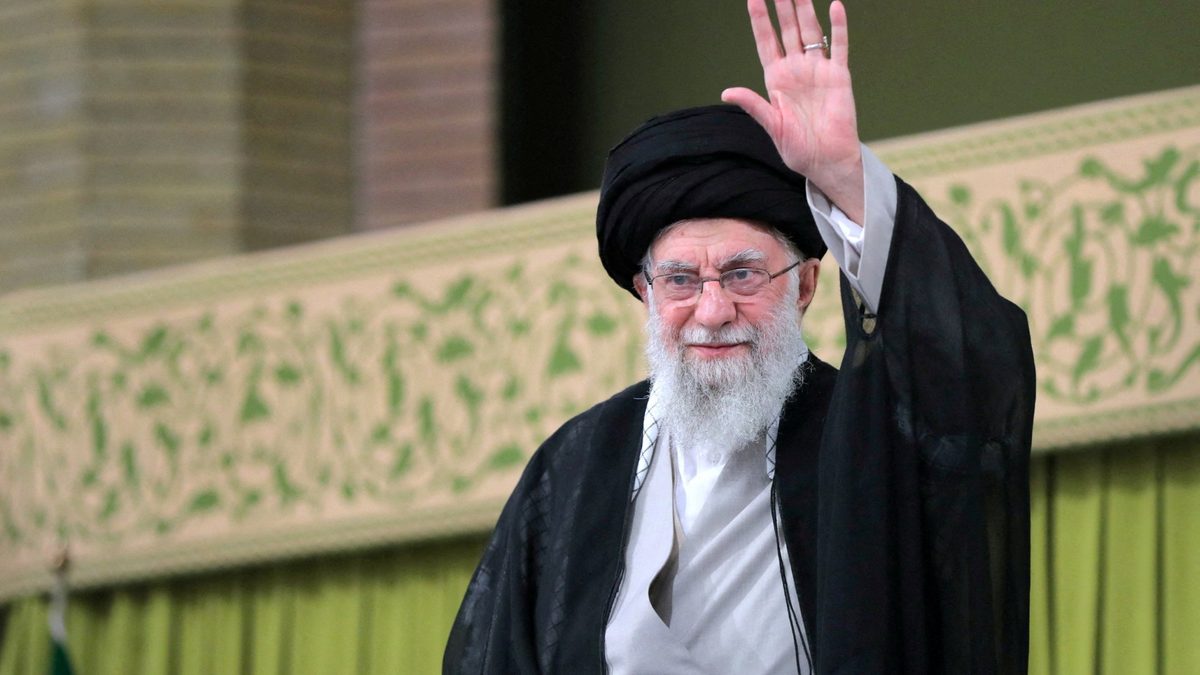
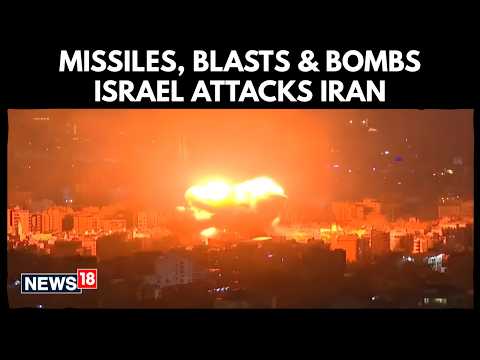
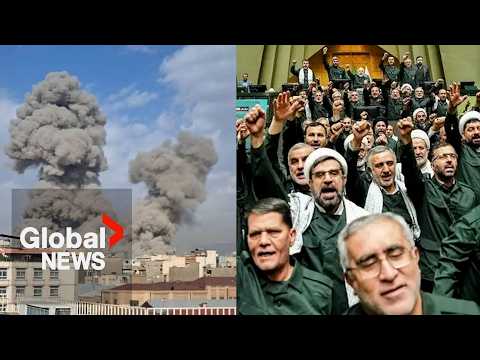
For four decades, the United States and Iran avoided direct, large-scale war. That changed on February 28, 2026, when the US and Israel launched coordinated strikes on Iranian nuclear facilities, military infrastructure, and leadership compounds, killing Supreme Leader Ali Khamenei. The assault followed collapsed indirect nuclear talks mediated by Oman. Iran retaliated with missile and drone attacks on US bases in the Gulf, oil tankers in the Strait of Hormuz, and the US Embassy in Riyadh.
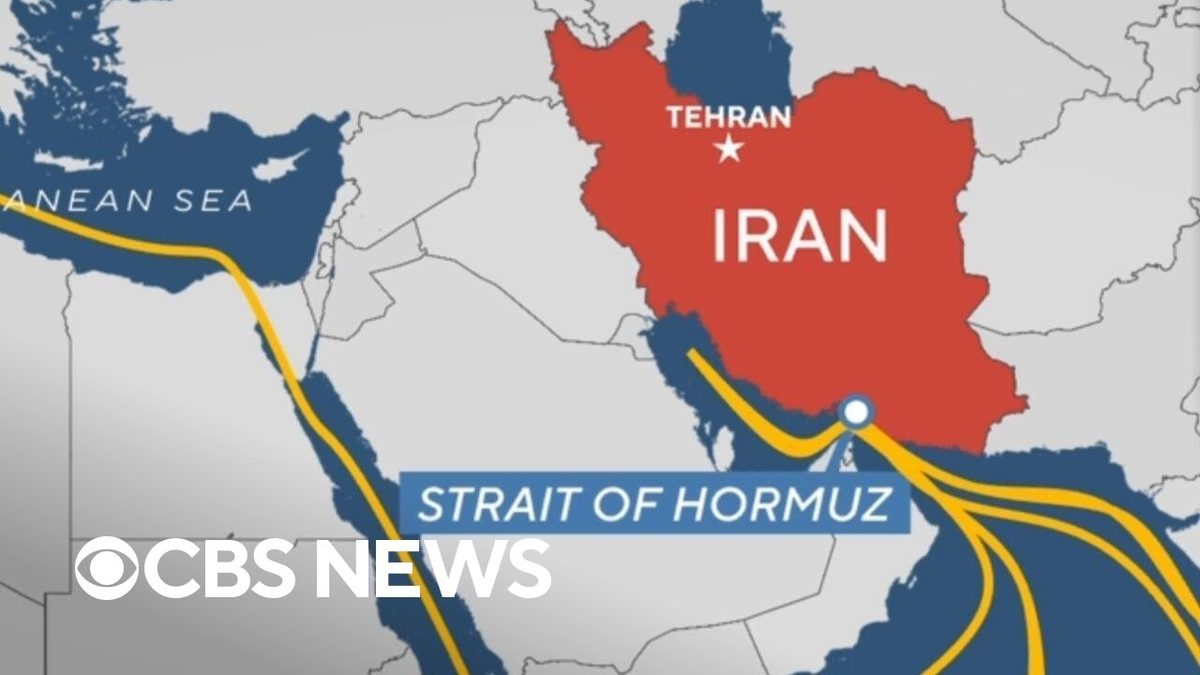
Now on day five, the conflict has expanded dramatically. Hezbollah attacks Israel from Lebanon, the Strait of Hormuz remains disrupted affecting 20% of global oil, and a US submarine reportedly sank the Iranian frigate IRIS Dena near Sri Lanka with over 100 sailors missing.
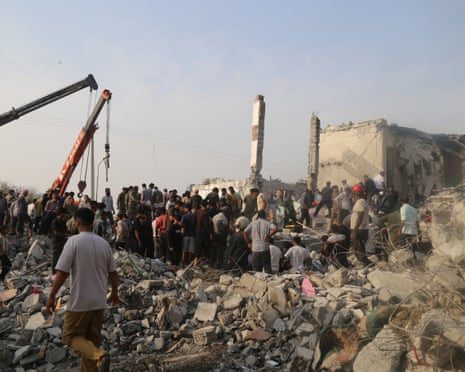
US casualties stand at six killed; Iranian deaths exceed 555. With leadership decimated and no ceasefire, the war risks multi-theater escalation as the US eyes Iran's navy.
Questions about this story
Free account needed to ask — your question is kept and asked for you right after sign-up. Answers are public.
No questions yet — be the first to ask.
Key Indicators
6
US service members killed
All from Iranian drone/missile strike on Kuwait operations center.
555+
Iranian deaths reported
Iranian Red Crescent as of March 2; likely higher across 24 provinces.
101+
Iranian sailors missing
IRIS Dena frigate sunk near Sri Lanka in suspected US submarine attack.
2,000+
Combined US-Israeli strikes conducted
Targets: nuclear sites, air defenses, missiles, leadership.
~150
Ships stranded near Strait of Hormuz
Iran closed strait and hit tankers, disrupting fifth of global oil.
+10%
Brent crude price surge
From $72 to $79+ per barrel; $100 risk if strait stays closed.
Images from Openverse under Creative Commons licenses.
Videos from YouTube.
Voices
Curated perspectives — historical figures and your fellow readers.
George Orwell
(1903-1950) ·Modernist · satire
Fictional AI pastiche — not real quote.
"They called it a surgical strike against proliferation, which is the modern way of saying they bombed a country into regime change while insisting, with perfect sincerity, that they had no intention of doing so."
0% found this insightful
Dorothy Parker
(1893-1967) ·Jazz Age · wit
Fictional AI pastiche — not real quote.
"How remarkable that men who could not agree on words managed to find such swift consensus on bombs."
0% found this insightful
Ever wondered what historical figures would say about today's headlines?
Sign up to generate historical perspectives on this story.
14 events
Latest: March 4th, 2026 · 8 months ago
Showing 8 of 14
JK to step
Tap a bar to jump to that date
Jump to
March 2026
Iranian frigate IRIS Dena sunk by suspected US submarine near Sri Lanka
LatestMilitary
The Moudge-class frigate sank 40 nautical miles south of Galle while returning from exercises in India. Sri Lanka rescued 32 wounded sailors; 101+ missing. Incident marks first major naval engagement outside Persian Gulf, targeting Iran's remaining fleet.
Drones strike US Embassy in Riyadh; IAEA confirms Natanz damage
Military
Two drones hit the US Embassy compound in Riyadh, causing a limited fire and minor damage in the first attack on a US diplomatic compound in the Gulf since the conflict began. Separately, the IAEA reversed its earlier assessment and confirmed structural damage to entrance buildings at the Natanz nuclear enrichment facility, based on new satellite imagery, though it reported no radiation leak.
IRGC closes Strait of Hormuz; Hezbollah attacks Israel from Lebanon
Military
Iran declared the Strait of Hormuz closed and threatened to attack any vessel attempting passage, stranding approximately 150 ships. Hezbollah launched its first attacks on Israel since the November 2024 ceasefire. Israel responded with strikes on Beirut and southern Lebanon, killing at least 31 people. Three US F-15E jets were shot down by Kuwaiti air defenses in a friendly-fire incident; all crew survived.
Iran confirms Khamenei's death; six US troops killed in Kuwait
Military
Iranian state media confirmed Khamenei was killed and declared 40 days of mourning. An Iranian drone struck a tactical operations center at Shuaiba port in Kuwait, killing six US service members. The IRGC claimed attacks on 27 US military facilities and struck three oil tankers.
February 2026
US and Israel launch coordinated strikes on Iran
Military
The US began Operation Epic Fury and Israel launched Operation Roaring Lion, striking over 1,000 targets including nuclear facilities, IRGC headquarters, air defenses, and leadership compounds. Israeli jets dropped 30 bombs on Khamenei's compound in Tehran, killing the Supreme Leader.
Iran launches retaliatory strikes across the Gulf
Military
The IRGC fired missiles and drones at US military bases in Kuwait, Bahrain, Qatar, the United Arab Emirates, Jordan, Iraq, and Saudi Arabia. Explosions were reported in Dubai, Doha, and Manama. Multiple Gulf states closed their airspace.
Final round of US-Iran nuclear talks begins in Geneva
Diplomatic
US envoys Steve Witkoff and Jared Kushner presented demands that Iran destroy its enrichment sites and surrender all enriched uranium. Iran refused, and the talks collapsed the following day.
IRGC gunboats attempt to seize US tanker in Strait of Hormuz
Military
Six IRGC Navy gunboats tried to intercept the tanker Stena Imperative in the Strait of Hormuz. The ship continued under escort from the destroyer USS McFaul, and a US F-35 shot down an approaching Iranian drone.
January 2026
Trump announces military buildup heading to Iran
Military
Trump declared 'a massive Armada is heading to Iran,' confirming the largest US military deployment to the Middle East since the 2003 Iraq invasion, including two carrier strike groups.
December 2025
Massive protests erupt across Iran
Political
Demonstrations fueled by economic collapse spread to cities across Iran, becoming the largest uprising since the 1979 revolution. The government responded with lethal force and shut down internet access on January 8.
June 2025
Israel launches Twelve-Day War against Iran
Military
Israel struck Iranian nuclear sites, military installations, and senior officials across 27 provinces. The US followed on June 22 with bunker-busting bombs on three nuclear facilities including Natanz and Fordow.
March 2025
Trump writes to Khamenei demanding nuclear talks
Diplomatic
Trump sent a letter to Iran's Supreme Leader warning of 'serious military consequences' if Iran refused to negotiate limits on its nuclear program.
January 2020
US kills IRGC commander Qasem Soleimani
Military
A US drone strike killed the commander of Iran's Quds Force at Baghdad International Airport. Iran retaliated five days later with missile strikes on US bases in Iraq, injuring 110 service members but causing no immediate deaths.
May 2018
US withdraws from Iran nuclear deal
Diplomatic
Trump pulled the United States out of the Joint Comprehensive Plan of Action (JCPOA), reimposing sanctions on Iran and launching a 'maximum pressure' campaign. Iran was in compliance at the time.
Scenarios
1
US achieves stated objectives, declares operations complete within weeks
Possible
Discussed by: The White House, which outlined four objectives (nuclear program, missile arsenal, proxy networks, navy); Axios reported Trump floating 'off-ramps' that could end the campaign quickly
The US and Israel destroy enough of Iran's nuclear infrastructure, missile production, and military capacity to declare victory and halt major operations within Trump's stated four-to-five-week timeline. Iran's weakened and decapitated leadership accepts a ceasefire or tacitly stops retaliating. This scenario requires Iran's remaining command structure to conclude that continued resistance is futile, and that no ground invasion follows. Oil markets stabilize as the Strait of Hormuz reopens under implicit threat of further strikes.
2
Conflict escalates into prolonged regional war
Likely
Discussed by: The UN Security Council, which warned of wider conflict; analysts at Chatham House and the Atlantic Council; the Arab League, which declared a 'full-scale regional war' had arrived
Iran sustains retaliatory strikes using its remaining missile stockpile and drone fleet while Hezbollah, the Houthis, and Iraqi Shia militias open additional fronts. The Strait of Hormuz remains closed for weeks, pushing oil above $100 per barrel and triggering a global economic shock. Pressure builds for US ground forces, which Hegseth has not ruled out. Congressional opposition intensifies but lacks the votes to override a presidential veto of a War Powers Resolution. The conflict becomes a multi-front war with no clear exit.
3
Iran's government collapses; power vacuum triggers internal chaos
Possible
Discussed by: Netanyahu, who stated the operation would 'create the conditions for the brave Iranian people to take their destiny'; Foreign Policy and CSIS analysts examining post-Khamenei succession
With Khamenei dead, multiple senior military commanders killed, and the country already convulsed by mass protests, Iran's government fragments. The IRGC and remaining civilian authorities compete for control. The succession crisis prevents coherent military command, reducing Iran's retaliatory capacity but creating a vacuum that could produce civil conflict, humanitarian crisis, or the emergence of a more hardline faction. The 2003 Iraq parallel looms: toppling the government proves far simpler than stabilizing what follows.
4
Diplomatic channel reopens; ceasefire leads to new nuclear framework
Unlikely
Discussed by: Trump, who claimed Iran's new leadership 'wants to talk'; Iranian Foreign Minister Araghchi, who said Tehran was open to 'serious efforts to halt escalation'; Oman, which mediated previous rounds
Mixed signals from both sides suggest a narrow opening. Trump has publicly expressed willingness to negotiate, and some Iranian officials have not categorically rejected talks, even as security chief Ali Larijani stated Iran 'will not negotiate with the United States.' If a backchannel produces a ceasefire framework — potentially brokered by Oman, Qatar, or China — the conflict could shift from kinetic operations to a coerced diplomatic settlement. This would require both sides to accept outcomes short of their maximalist positions: the US would need to abandon explicit regime change, and Iran would need to accept permanent limits on enrichment.
Historical Context
3 moments from history that rhyme with this story — and how they unfolded.
1 of 3
April 1988
Operation Praying Mantis (1988)
After the frigate USS Samuel B. Roberts struck an Iranian mine in the Persian Gulf, the US launched its largest naval engagement since World War II. American forces destroyed two Iranian oil platforms, sank two frigates and several smaller vessels, and shot down two Iranian aircraft — all in a single day.
Then
Iran's navy was crippled and its ability to threaten Gulf shipping was sharply reduced. Both sides avoided further escalation, and the Iran-Iraq War ended four months later.
Now
The International Court of Justice ruled in 2003 that the US response was disproportionate. The episode established that direct US-Iran confrontation in the Gulf could remain limited — a precedent the 2026 conflict has shattered.
Why this matters now
Operation Praying Mantis was the last time US and Iranian forces fought directly before 2026. Its one-day duration and limited scope stand in stark contrast to the current multi-day, region-wide campaign, illustrating how dramatically the scale of confrontation has escalated.
2 of 3
March–April 2003
The 2003 invasion of Iraq
The United States invaded Iraq with 130,000 troops, arguing that Saddam Hussein possessed weapons of mass destruction and posed an imminent threat. Baghdad fell within three weeks. No weapons of mass destruction were found.
Then
Saddam's government collapsed rapidly, and President George W. Bush declared 'Mission Accomplished' on May 1, 2003. The military victory was swift and decisive.
Now
The occupation lasted eight years, cost over 4,400 American lives and an estimated 200,000 Iraqi civilian deaths, and destabilized the region. The power vacuum enabled the rise of the Islamic State and expanded Iran's own influence in Iraq.
Why this matters now
Multiple analysts have drawn direct parallels: a president citing a nuclear threat with a 'ticking clock,' regime change as the objective, and a military campaign that achieves its initial targets quickly. The Iraq precedent raises the central question of 2026: what happens after the bombs stop.
3 of 3
January 2020
The Soleimani assassination and Iranian retaliation (2020)
A US drone killed IRGC Quds Force commander Qasem Soleimani at Baghdad International Airport on January 3. Five days later, Iran launched 12 ballistic missiles at Al Asad Airbase in Iraq, injuring 110 US service members but causing no immediate deaths.
Then
Both sides pulled back from the brink. European and US officials assessed that Iran deliberately calibrated its response to send a message without triggering full-scale war.
Now
Iran continued covert retaliation plots for years. The FBI warned as late as December 2025 that Iranian plots against former US officials remained active. The killing removed a key coordinator of Iran's proxy network but did not dismantle it.
Why this matters now
The Soleimani strike represented targeted escalation without full war — a model the 2026 campaign explicitly rejected. By killing the Supreme Leader and dozens of senior officials, the US and Israel chose the maximalist approach that both sides avoided in 2020.