Pull to refresh
Logo
Daily Brief
Following
Why Sign Up
Meta books 1 gigawatt of space-based solar power for AI data centers

Meta books 1 gigawatt of space-based solar power for AI data centers

Built World
By Newzino Staff |

Capacity reservation with startup Overview Energy gives space solar its first major commercial customer

January 1st, 2030: Commercial delivery to Meta planned

Overview

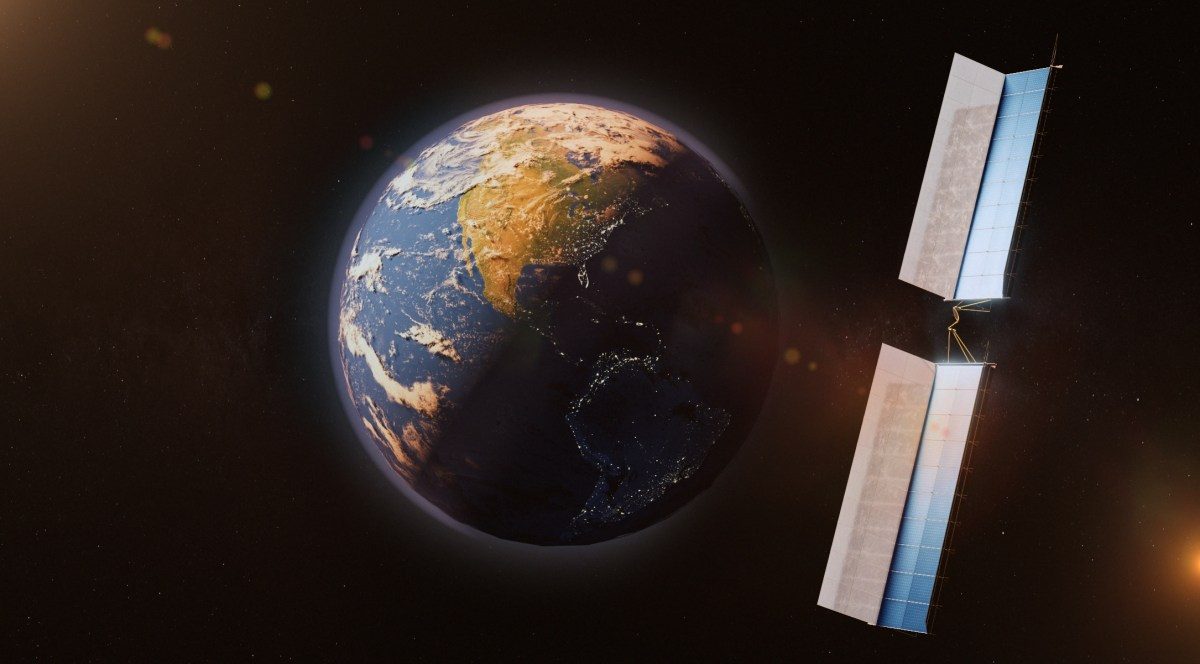
Engineer Peter Glaser patented the idea of beaming solar power from orbit in 1973. For five decades, the concept stayed on whiteboards. On April 27, 2026, Meta signed a capacity reservation agreement with Virginia startup Overview Energy for up to 1 gigawatt of space-based solar power, making the social-media giant the first announced commercial buyer of orbital electricity.

Why it matters

AI data centers need round-the-clock power on a scale the grid cannot easily provide; if space solar works, terrestrial solar farms can run 24/7 without new land or transmission lines.

Key Indicators

1 GW
Capacity reserved by Meta
Roughly equivalent to the output of a single large nuclear reactor.
2028
First in-orbit demonstration
Overview plans a low-Earth-orbit satellite to beam power to the ground.
2030
Commercial delivery target
First gigawatt-class satellites would launch to geosynchronous orbit.
18,000 GWh
Meta's 2024 data center consumption
About what 1.7 million American homes use in a year.
6.6 GW
Meta's parallel nuclear commitments
Deals signed with Vistra, TerraPower, Oklo, and Constellation in January 2026.

Interactive

Exploring all sides of a story is often best achieved with Play.

Ever wondered what historical figures would say about today's headlines?

Sign up to generate historical perspectives on this story.

Sign Up

Debate Arena

Two rounds, two personas, one winner. You set the crossfire.

People Involved

Organizations Involved

Timeline

  1. Commercial delivery to Meta planned

    Planned Milestone

    First operational satellites against Meta's 1 GW reservation expected to begin launching.

  2. Overview targets first orbital demo

    Planned Milestone

    First Overview satellite scheduled for low Earth orbit to demonstrate beaming power from space to a ground site.

  3. Meta signs space-solar capacity reservation

    Power Procurement

    Meta reserves up to 1 GW from Overview Energy, becoming the first announced commercial buyer of orbital solar power.

  4. Meta signs 6.6 GW in nuclear deals

    Power Procurement

    Agreements with Vistra, TerraPower, Oklo, and Constellation establish nuclear as Meta's primary AI baseload bet.

  5. Overview Energy emerges from stealth

    Announcement

    Company publicly identifies itself and its near-infrared beaming approach after three years of quiet development.

  6. Aetherflux founded

    Company Formation

    Robinhood co-founder Baiju Bhatt launches a rival pursuing laser-based power beaming from low Earth orbit.

  7. Beam from orbit detected on Earth

    Demonstration

    Caltech researchers detect MAPLE's directed beam at a rooftop receiver in Pasadena, a field first.

  8. Caltech beams power in space

    Demonstration

    MAPLE experiment aboard SSPD-1 becomes the first to transmit power wirelessly in orbit.

  9. Overview Energy founded

    Company Formation

    Marc Berte and co-founders incorporate the Virginia startup that will sign the first commercial contract four years later.

  10. Caltech receives $100M donation

    Funding

    Anonymous gift establishes the Space Solar Power Project, anchoring serious modern research on the concept.

  11. First space-solar patent issued

    Concept

    Glaser receives the first US patent for a microwave-based method of transmitting power from orbit.

  12. Glaser publishes the founding paper

    Concept

    NASA engineer Peter Glaser proposes orbital solar collectors beaming microwave power to Earth in a Science article.

Scenarios

1

Overview hits 2028 demo, space solar becomes a real category

Discussed by: Bloomberg, TechCrunch, PV Magazine

A successful demonstration validates the near-infrared approach and unlocks follow-on contracts from other hyperscalers and utilities. Meta exercises its full 1 GW reservation, terrestrial solar farm operators sign retrofit agreements to receive beams, and government counterparts in defense and emergency power begin parallel procurements. The 2030 commercial date holds within plus-or-minus a year.

2

Beam efficiency falls short, Meta absorbs the option, leans on nuclear

Discussed by: Energy analysts cited in Bloomberg and PV Magazine coverage

The 2028 in-orbit demo reveals that real-world beam efficiency, atmospheric losses, or pointing accuracy degrade economics below grid-competitive levels. Meta walks away with reputational upside from having tried, the contract lapses, and the company's 6.6 GW of nuclear deals plus terrestrial renewables carry the AI buildout. Space solar reverts to a research category.

3

Aetherflux beats Overview to commercial scale

Discussed by: Payload Space, TechCrunch

Aetherflux's smaller, faster, low-Earth-orbit laser architecture reaches first commercial delivery in 2027, a year ahead of Overview's demo, and the company wins the next round of hyperscaler contracts. Overview's geosynchronous-infrared bet either gets acquired, repositioned for utility-scale customers, or scaled back. The category survives, but with a different winner than Meta backed.

4

Federal government claims a stake

Discussed by: Defense and energy policy analysts

An advisory bench heavy with former NASA administrators and a former FERC chair points to a deliberate strategy: Overview gets designated strategically important, picks up Department of Energy or Department of Defense contracts, and is brought under expanded export controls. Commercial timelines stretch as security review layers in, but funding and orbital slots become easier to secure.

5

Spectrum and orbital-slot fights delay everyone

Discussed by: Spectrum and satellite-industry observers

Geosynchronous slots are scarce and the near-infrared beam will need international coordination on safety and aviation clearance. International regulators and competing satellite operators contest licenses, pushing first commercial delivery past 2030 for Overview and similar dates for rivals. Meta's reservation remains intact but the whole category slips by several years.

Historical Context

Glaser's space solar proposal (1968-1973)

1968-1973

What Happened

NASA engineer Peter Glaser published a Science paper in 1968 proposing satellites that would harvest sunlight in geostationary orbit and beam it to five-mile-wide rectennas on Earth. He received the first patent for the concept in 1973. NASA and the Department of Energy spent tens of millions studying it through the late 1970s.

Outcome

Short Term

By the early 1980s, government studies concluded launch costs and large-aperture engineering made the concept uneconomic, and federal funding largely ended.

Long Term

The concept survived as a recurring academic and defense research thread for fifty years, periodically revived as launch costs fell, until private demonstrations and falling SpaceX-era launch prices made it commercially plausible again.

Why It's Relevant Today

Overview's deal is the first time Glaser's 58-year-old idea has had a paying corporate customer. The historical lesson is that the physics has never been the blocker — economics and launch cost were. Whether those conditions have actually changed enough is what the 2028 demo will test.

Caltech MAPLE in-orbit power beaming (2023)

January-May 2023

What Happened

Caltech's SSPD-1 demonstrator, funded by a $100 million private gift, used a flexible microwave transmitter array called MAPLE to wirelessly transmit power in orbit and direct a detectable beam to a rooftop receiver in Pasadena. The mission was led by professors Harry Atwater, Ali Hajimiri, and Sergio Pellegrino.

Outcome

Short Term

MAPLE provided the first in-space demonstration that beam steering and power transmission work outside controlled lab settings.

Long Term

The result removed the most fundamental technical-feasibility objection to space solar and gave commercial founders a credible reference point when raising venture funding and pitching customers like Meta.

Why It's Relevant Today

Without the 2023 Caltech demonstration, no hyperscaler would credibly sign a 1 GW reservation with a four-year-old startup. MAPLE is the proof point Overview's pitch leans on.

Microsoft's Three Mile Island restart deal (2024)

September 2024

What Happened

Microsoft signed a 20-year power purchase agreement with Constellation Energy to restart the Three Mile Island Unit 1 nuclear reactor in Pennsylvania, idle since 2019, exclusively to power its AI data centers. The deal made a major hyperscaler the anchor customer for reviving an entire dormant power-generation asset.

Outcome

Short Term

Other hyperscalers, including Meta, Google, and Amazon, followed within eighteen months with their own nuclear restarts, small modular reactor agreements, and now space-solar reservations.

Long Term

It established a template: AI compute demand is large enough that single tech buyers can underwrite first-of-a-kind or long-dormant energy infrastructure that utility-scale finance would not otherwise support.

Why It's Relevant Today

The Meta-Overview deal is the same template applied to a more speculative technology. A single AI buyer is large enough to underwrite a category that no utility customer would touch on its own.

Sources

(8)