
Pull to refresh
Logo
Italy stores grid power in giant CO2 dome batteries

Italy stores grid power in giant CO2 dome batteries

New Capabilities

Energy Dome's 200 MWh Sardinia plant is set to be replicated in India, the US, and Ireland

Today: Explainer tracks CO2 dome battery rollout

Overview

Updated 1 hour ago

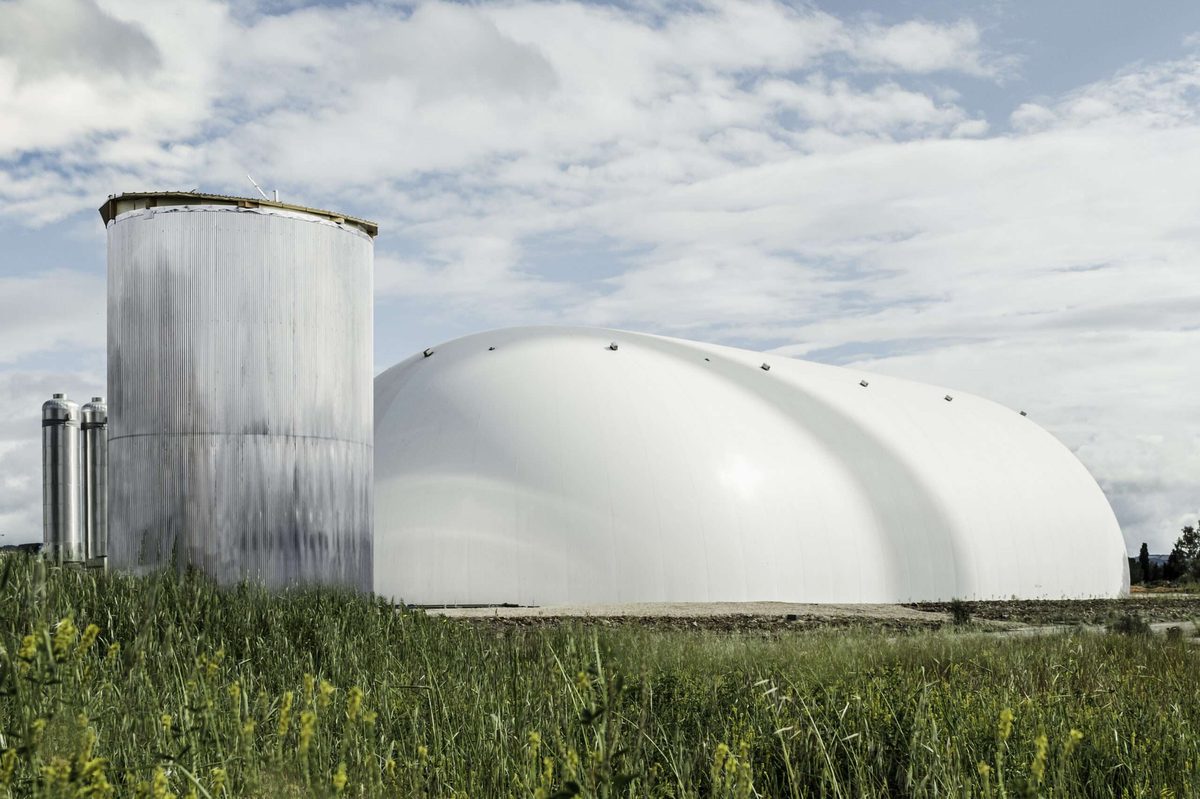
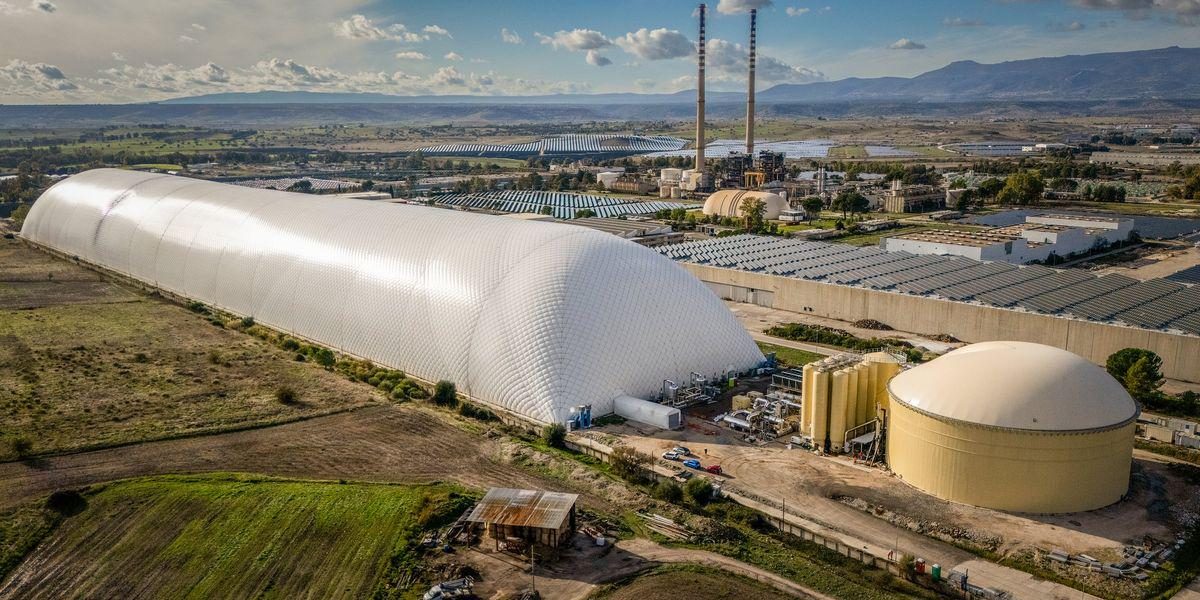
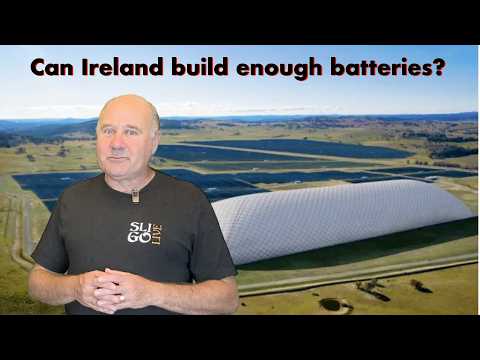
A white dome the size of seven soccer fields squats over the industrial zone of Ottana, Sardinia, holding 2,000 tonnes of carbon dioxide. It is the business end of the world's first commercial CO2 battery, a 20-megawatt plant that stores 200 megawatt-hours of grid power by compressing the gas into a liquid that is later released through a turbine.

CO2 is unusual: it liquefies at ambient temperature under moderate pressure, so no cryogenic cooling is needed, unlike compressed-air storage. Milan-based Energy Dome has run the plant since July 2025 and says replicas take about two years to build because they use off-the-shelf industrial parts.

Contracts are signed and construction is underway in India, Wisconsin, Arizona, and Ireland; Google is the flagship customer. The pitch targets the market lithium-ion can't fill cheaply — storing power for 10 hours or more — with a system Energy Dome says returns about 70% of the power it stores, lasts 30 years, and costs 30% less than lithium-ion.

Why it matters

If CO2 batteries scale at 30% below lithium-ion cost, wind and solar grids gain cheap overnight storage without rare minerals.

Questions about this story

Free account needed to ask — your question is kept and asked for you right after sign-up. Answers are public.

No questions yet — be the first to ask.

Key Indicators

200 MWh
Sardinia plant storage capacity
20 MW output over 10 hours, enough for about 18,000 homes.
2,000 tonnes
CO2 held in the dome
The gas circulates permanently in a closed loop and is never emitted.
~70%
Roundtrip efficiency
Compared with roughly 90% for lithium-ion and 50% for iron-air batteries.
30 GWh
Global project pipeline
Energy Dome's planned capacity under development as of late 2026.

Voices

Curated perspectives — historical figures and your fellow readers.

Ever wondered what historical figures would say about today's headlines?

Sign up to generate historical perspectives on this story.

People Involved

Organizations Involved

Timeline

2022 October 2026

6 events Latest: Today
Tap a bar to jump to that date
  1. Explainer tracks CO2 dome battery rollout

    Today Publication

    Engineerine publishes a walkthrough of the Sardinia plant's closed-loop CO2 compression cycle and global expansion plans.

  2. Google signs Ireland deal

    Deal

    Google contracts a 200 MWh plant in County Offaly, its first long-duration storage investment.

  3. First commercial CO2 battery opens

    Milestone

    The Ottana plant begins grid operation with French utility Engie as offtake partner.

  4. Catalyst backs Sardinia plant

    Funding

    Breakthrough Energy Catalyst invests €60 million in the 20 MW / 200 MWh project.

  5. First US utility signs on

    Deal

    Alliant Energy contracts an identical system for Wisconsin, with commercial operation expected in 2027.

  6. Demo plant proves the cycle

    Milestone

    Energy Dome's 2.5 MW / 4 MWh pilot begins operating in Ottana, Sardinia.

Scenarios

1

CO2 Battery replicas operating on three continents by 2028

Likely Resolves by End of 2028

Discussed by: IEEE Spectrum; Energy-Storage.News

Energy Dome has plants under construction in Wisconsin, Arizona, and India, plus a signed Google deal in Ireland. If the roughly two-year build schedules hold, the Sardinia design will be running in at least two countries outside Italy by the end of 2028, proving the system travels.

2

NTPC's Kudgi CO2 Battery comes online in 2026

Possible Resolves by End of 2026

Discussed by: IEEE Spectrum

India's NTPC expects to complete its plant at the Kudgi power station in Karnataka sometime in 2026. It would be the first replica of the Sardinia design outside Europe if the schedule holds.

3

Google's Ireland CO2 Battery delivers as planned in 2028

Likely Resolves by End of 2028

Discussed by: MIT Technology Review

Google's deal for a 200 MWh plant in County Offaly, Ireland was signed in mid-2026 with a 2028 completion target. Google also plans deployment across Europe, the US, and Asia-Pacific data centers. The Ireland plant is the first test of that commitment.

Historical Context

3 moments from history that rhyme with this story — and how they unfolded.

December 1978

Huntorf compressed-air storage (1978)

Germany switched on the world's first commercial compressed-air energy storage plant at Huntorf, a 290 MW facility that pumped air into two salt caverns and burned natural gas to heat it during expansion.

Then

Huntorf and one later US plant (McIntosh, Alabama, 1991) proved the concept but never scaled.

Now

Only those two commercial compressed-air plants were ever built, because the technology needed underground salt caverns and burned fossil fuel.

Why this matters now

Energy Dome's CO2 battery is the same idea — store energy as compressed gas — but closed-loop, cavern-free, and fuel-free.

1929 to present

Pumped hydro's century of dominance (1929–present)

Pumped hydro — pumping water uphill to a reservoir and releasing it to spin turbines — has provided the vast majority of grid storage for nearly a century. The first large US plant opened at Rocky River, Connecticut in 1929. It needs two reservoirs at different elevations.

Then

It remains the cheapest long-duration storage where the geography allows.

Now

Most regions lack the right terrain, leaving a large gap for storage that doesn't need mountains.

Why this matters now

The CO2 battery's pitch is utility-scale storage with no special topography, sited anywhere with an industrial supply chain.

2023–2025

Iron-air batteries enter the long-duration race (2023–2025)

Iron-air batteries, storing energy by oxidizing and recharging iron, reached the grid at roughly 50% roundtrip efficiency — far below lithium-ion but cheap enough for multi-day storage.

Then

They showed the long-duration market was open to new chemistries built on commodity materials.

Now

Iron-air established itself as the benchmark competitor for multi-hour storage without lithium.

Why this matters now

Energy Dome competes directly with iron-air for the same market, claiming better efficiency (about 70% versus 50%) and a 30-year life.

Sources

(10)