
Pull to refresh
Logo
Japan's science council becomes a government-overseen corporation

Japan's science council becomes a government-overseen corporation

Rule Changes

The Oct. 1, 2026 transition ends 77 years as a special national institution and adds prime-minister-appointed oversight.

Yesterday: Science magazine flags imminent transition

Overview

Updated 1 hour ago

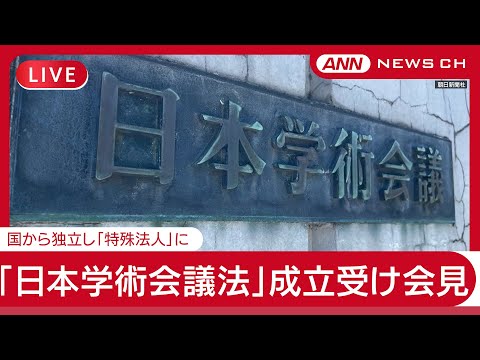
On Oct. 1, 2026, the Science Council of Japan ends its 77-year run as a special national institution and becomes a government-overseen corporation. The change, ordered by a law passed in June 2025, adds two prime-minister-appointed auditors and an evaluation committee to watch the council's work.

The council's 210 senior academics advise the government on science policy. Members and opposition parties say the new structure lets the state steer which scientific advice reaches policymakers, and the law permits removing members who repeat "ideological or partisan" arguments. The dispute traces to 2020, when then-Prime Minister Yoshihide Suga refused to appoint six council-nominated members.

Why it matters

Japan's top science advisors now answer to PM-appointed auditors and an evaluation committee, so policy advice could bend to political interest instead of evidence.

Questions about this story

Free account needed to ask — your question is kept and asked for you right after sign-up. Answers are public.

No questions yet — be the first to ask.

Key Indicators

210
Current member cap
Rises gradually to 250 under the new law.
125
New members approved Aug. 2026
Selected at the final general meeting of the old structure.
1,725
Candidates considered
Nominated researchers vying for the 125 open seats.
77
Years as a special national institution
The council operated under its 1949 founding law until the 2026 transition.

Voices

Curated perspectives — historical figures and your fellow readers.

Ever wondered what historical figures would say about today's headlines?

Sign up to generate historical perspectives on this story.

People Involved

Organizations Involved

Timeline

January 1949 October 2026

9 events Latest: Yesterday
Tap a bar to jump to that date
  1. Science magazine flags imminent transition

    Latest Report

    Coverage examines the Oct. 1 shift and concerns the academy will serve political interests.

  2. Final general meeting approves new members

    Governance

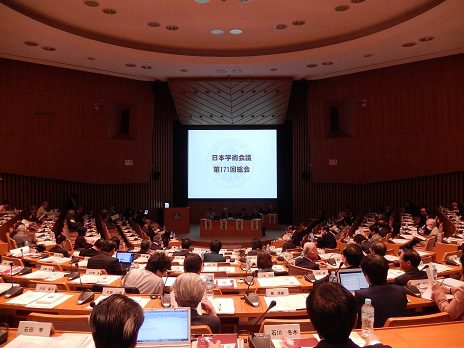
    SCJ selects 125 new members from 1,725 candidates and adopts a council charter.

  3. Final report recommends incorporation

    Government Action

    Panel says incorporation would strengthen the council's independence and relieve administrative constraints.

  4. Advisory panel issues interim report

    Government Action

    Government-appointed panel floats restructuring the Science Council as a special corporation.

  5. Suga refuses six council nominees

    Political Conflict

    Prime Minister Yoshihide Suga declines to appoint six SCJ-nominated members, breaking precedent.

  6. Science Council of Japan established

    Founding

    Created as a special organization under the prime minister's jurisdiction.

Scenarios

1

Science council operates without direct interference

Likely Resolves by End of 2027

Discussed by: Government officials and the Ishiba administration, which argues incorporation enhances independence; the SCJ retains member selection and president voting

The new law removes the prime minister's power to approve individual members, a genuine shift from the old structure. If the evaluation committee and auditors stay hands-off, the council functions much as before while adding 40 members and external input into candidate screening. Supplementary Diet resolutions urging respect for autonomy would shape how the government applies the law.

2

Government uses oversight tools to steer the council

Possible Resolves by End of 2027

Discussed by: SCJ members and opposition parties, who warned the bill would compromise autonomy (Asahi Shimbun, East Asia Forum)

The two PM-appointed auditors and the five-to-seven-member evaluation committee can demand documents and review the council's six-year and annual plans. The law also allows removing members who repeat "ideological or partisan" arguments, the sharpest instrument in the package. If the government uses these tools to block recommendations or remove members, the autonomy concerns become concrete.

3

Courts or a Diet majority restore the council's original status

Unlikely Resolves by Q2 2028

Discussed by: Legal analysis in Yuhikaku Online; SCJ leaders have raised the possibility of judicial remedies for unlawful government involvement

Legal scholars argue the council should have standing to sue over unlawful government interference under the new law, and that intervention based on members' academic or political views would likely be unconstitutional. If the government overreaches, the council could challenge it in court, or a future Diet majority could amend the law. This path is the least likely near term but becomes live if Scenario 2 materializes.

Historical Context

2 moments from history that rhyme with this story — and how they unfolded.

June 2013

Russia restructures its academy of sciences (2013)

The Russian government introduced a bill to merge the Academy of Sciences with two smaller academies and place its property and staff under a new federal agency. Thousands of researchers protested, and the academy's president resigned in opposition, but the reform passed.

Then

The academy kept its name but lost control of its institutes and property to the new agency, which was later dissolved in 2018.

Now

The restructuring weakened the academy's operational independence and is cited as a model of state control over a national scientific body.

Why this matters now

Japan's incorporation of its Science Council parallels the forced restructuring of a national academy against scientists' wishes, with critics citing Russia's outcome to warn that formal independence can mask tighter state direction.

October 2020

Suga's 2020 appointment refusals (2020-2021)

Then-Prime Minister Yoshihide Suga refused to appoint six Science Council members chosen through the council's own electoral process, without a public explanation. The council pushed back, and the dispute became a national debate over academic freedom.

Then

Suga defended the refusals but the episode damaged public trust in both the government and the council's insider selection process.

Now

The government shifted its argument from rejecting individuals to fixing the selection process, using the affair as the stated reason for incorporation.

Why this matters now

The 2020 refusals are the direct origin of the current reform, and the council's new member-selection rules were written in response to the criticism that it had become a self-perpetuating insiders' club.

Sources

(10)