




Pull to refresh
Logo
Japan's centenarian population tops 100,000 for first time

Japan's centenarian population tops 100,000 for first time

Force in Play

Longevity milestone collides with a shrinking population and rising welfare costs

Today: Centenarians top 100,000 at 107,677

Overview

Updated 2 hours ago

Japan now counts 107,677 people aged 100 or older, the first time the figure has passed 100,000. Women are 87.6% of them, and the count has climbed for 56 straight years.

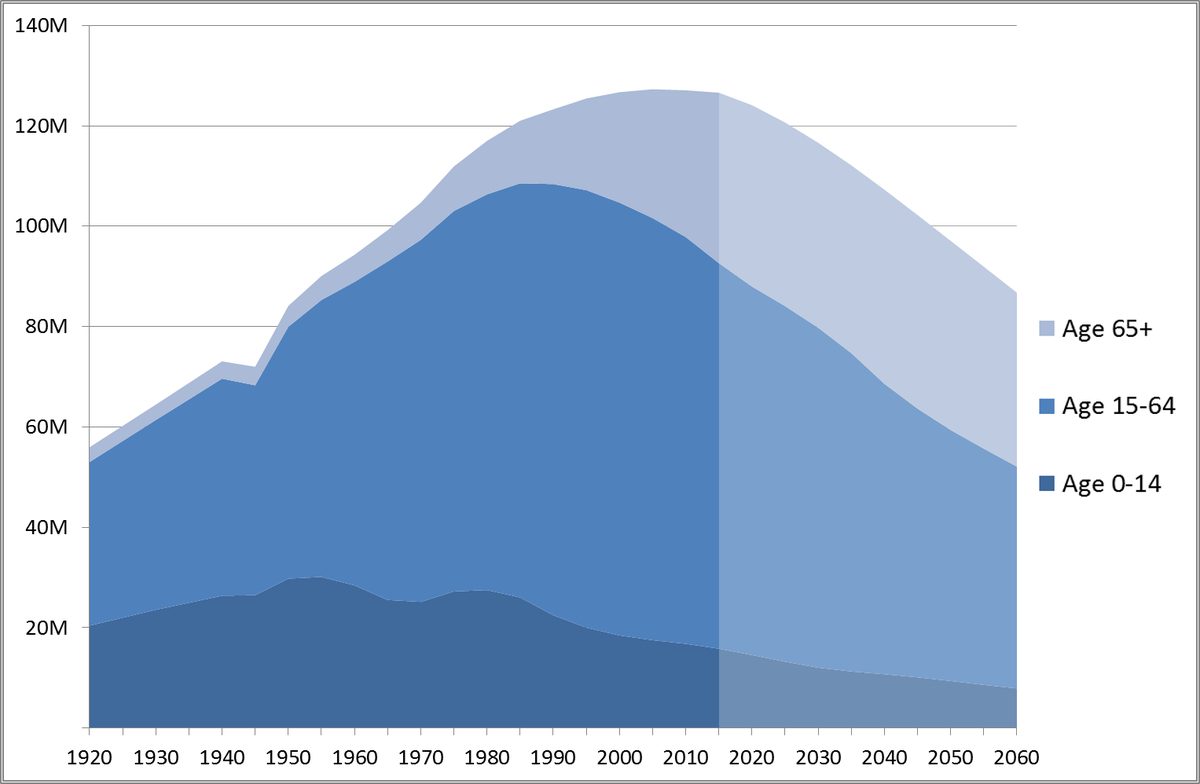
The milestone lands amid a contracting population: births fell to a record-low 1.14 fertility rate, well below the 2.1 needed to hold population steady. Japan projects a fall from 128 million residents in 2008 to 87 million by 2070, with nearly 40% of citizens aged 65 and older.

Why it matters

Japan's shrinking workforce must fund rising pension and elder-care costs, and the math tightens with every passing year.

Questions about this story

Free account needed to ask — your question is kept and asked for you right after sign-up. Answers are public.

No questions yet — be the first to ask.

Key Indicators

107,677
Centenarians in Japan (Sept 2026)
First time the count has passed 100,000; up 7,914 from last year.
87.6%
Share of centenarians who are women
94,298 women versus 13,379 men, a ratio of about 7 to 1.
1.14
Total fertility rate (2025)
Record low; 2.1 children per woman is the replacement level.
30%
Population aged 65 and older
Expected to reach nearly 40% by 2070.
153
Centenarians in Japan in 1963
First survey year under the Act on Social Welfare for the Elderly.

Voices

Curated perspectives — historical figures and your fellow readers.

Ever wondered what historical figures would say about today's headlines?

Sign up to generate historical perspectives on this story.

People Involved

Organizations Involved

Timeline

September 1963 September 2026

6 events Latest: Today
Tap a bar to jump to that date
  1. Centenarians top 100,000 at 107,677

    Today Milestone

    The count crosses 100,000 for the first time; 87.6% are women. Health Minister Kenichiro Ueno announces the figures ahead of Respect for the Aged Day.

  2. Centenarian count exceeds 50,000

    Milestone

    The count doubles from 1998 in just 14 years, signaling accelerating aging.

  3. Japan's population peaks at 128 million

    Demographic Shift

    The population reaches its all-time high and begins a continuous decline.

  4. Centenarian count passes 10,000

    Milestone

    The count crosses 10,000 as healthcare advances reach the oldest cohorts.

  5. Centenarian count tops 1,000

    Milestone

    The count passes 1,000 as post-war life expectancy gains accelerate.

  6. Japan's first centenarian survey counts 153 people

    Census

    The Act on Social Welfare for the Elderly takes effect, and the ministry begins tracking centenarians annually.

Scenarios

1

Japan's centenarians keep climbing toward 115,000

Likely Resolves by Sep 15, 2027

Discussed by: Japan Times; Ministry projections; BBC

The count has risen for 56 consecutive years, most recently by 7,914. If that pace holds, next September's figure lands near 115,000. Drivers include healthy diets, low obesity, and universal healthcare, which continue to extend lifespans.

2

Japan's fertility rate falls again, hitting a new record low

Likely Resolves by Jun 15, 2027

Discussed by: BBC; Straits Times; Business Standard

The fertility rate has declined for ten straight years despite government subsidies. Falling marriage rates, rising childcare costs, and more women in the workforce continue to push it down. The 2026 fertility data, due next June, will show whether the slide has slowed or accelerated.

3

Japan raises pension age or trims benefits as costs climb

Possible Resolves by Q1 2027

Discussed by: Straits Times; Health Minister Kenichiro Ueno

About one in three residents receives public pensions, and a shrinking worker pool must fund them. The ministry's next budget request already seeks ¥33.7 trillion for pensions and medical care. Fiscal 2028 budget negotiations will show whether the government acts on eligibility age or benefits.

Historical Context

3 moments from history that rhyme with this story — and how they unfolded.

September 1963

Act on Social Welfare for the Elderly (1963)

Japan enacted its first comprehensive elderly welfare law, establishing the framework for pensions, healthcare, and the annual centenarian count. The first survey found just 153 people aged 100 or older.

Then

The law created the statistical system still used to track Japan's oldest citizens.

Now

The annual count became a national barometer of longevity, rising 700-fold over six decades.

Why this matters now

The 1963 figure is the baseline against which today's milestone is measured, showing how fast Japanese lifespans extended.

October 2008

Japan's population peak (2008)

Japan's population hit 128 million in 2008, its all-time high. The country then began a continuous decline as deaths outpaced births, a reversal that has now lasted nearly two decades.

Then

Population shrank each year, with regional cities losing residents fastest.

Now

The trend set up today's math: a growing elderly cohort financed by a shrinking tax base.

Why this matters now

The 2008 peak is the pivot point. The centenarian milestone is the latest consequence of the aging that began accelerating then.

2010

Centenarian registry audit (2010)

A government audit of family registries found more than 230,000 people listed as aged 100 or older who could not be accounted for. Some had died decades earlier; patchy record-keeping and possible pension fraud were blamed.

Then

Officials corrected records and tightened verification of age claims.

Now

The episode cast lasting doubt on the accuracy of centenarian counts, though modern census methods have improved reliability.

Why this matters now

It explains why the current 107,677 figure is treated with some caution, even as the overall aging trend is beyond dispute.

Sources

(5)