
Pull to refresh
Logo
Daily Brief
Following
Why Sign Up
Japan ends postwar ban on lethal weapons exports

Japan ends postwar ban on lethal weapons exports

Rule Changes
By Newzino Staff |

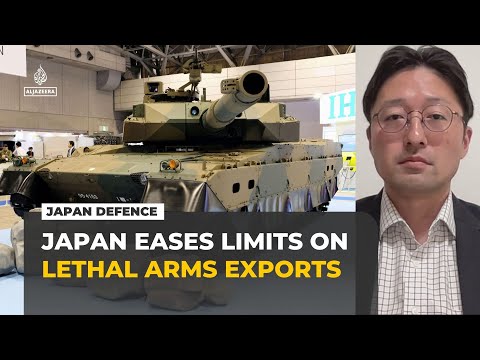
Cabinet scraps decades-old restrictions, opening defense industry to global arms market for the first time since World War II

Yesterday: Cabinet scraps lethal weapons export ban

Overview

Japan banned the export of lethal weapons in 1967 and tightened the restriction to a near-total prohibition in 1976. On April 21, 2026, Prime Minister Sanae Takaichi's cabinet scrapped those limits, allowing Japanese companies to sell fighter jets, missiles, warships, and combat drones to 17 partner countries for the first time since World War II. Each sale of a lethal system must still pass a case-by-case review by Japan's National Security Council, and buyers must pledge to use the equipment consistent with the United Nations Charter.

Why it matters

The world's fourth-largest economy just entered the global arms market, reshaping defense supply chains across the Indo-Pacific.

Key Indicators

17
Eligible buyer countries
Nations with existing defense transfer agreements with Japan, including the United States, Australia, India, the Philippines, and several Southeast Asian and European states.
$6.5B
Australia frigate deal
Contract for 11 Mogami-class frigates — three built in Japan, eight co-produced in Western Australia — signed April 18, 2026.
67%
Public opposition
Share of Japanese voters opposing lethal weapons exports in an Asahi Shimbun poll released April 20, 2026.
$44B
Japan defense market size
Estimated value of Japan's defense industry in 2026, projected to reach $50 billion by 2031.
~2%
Defense spending as share of GDP
Japan's defense budget target by 2027, roughly double the level maintained for decades under postwar norms.

Interactive

Exploring all sides of a story is often best achieved with Play.

Ever wondered what historical figures would say about today's headlines?

Sign up to generate historical perspectives on this story.

Sign Up

Debate Arena

Two rounds, two personas, one winner. You set the crossfire.

People Involved

Organizations Involved

Timeline

  1. Cabinet scraps lethal weapons export ban

    Policy

    The Takaichi cabinet approved new implementation guidelines removing categorical restrictions on lethal weapons exports, allowing sales to 17 partner countries subject to case-by-case National Security Council review.

  2. Poll shows 67% oppose lethal arms exports

    Domestic

    An Asahi Shimbun nationwide poll found two-thirds of Japanese voters opposed allowing the export of lethal weapons.

  3. 36,000 protest arms exports near parliament

    Domestic

    Approximately 36,000 people rallied near the National Diet Building opposing the government's plan to lift restrictions on lethal weapons exports.

  4. Australia signs $6.5 billion frigate deal with Japan

    Deal

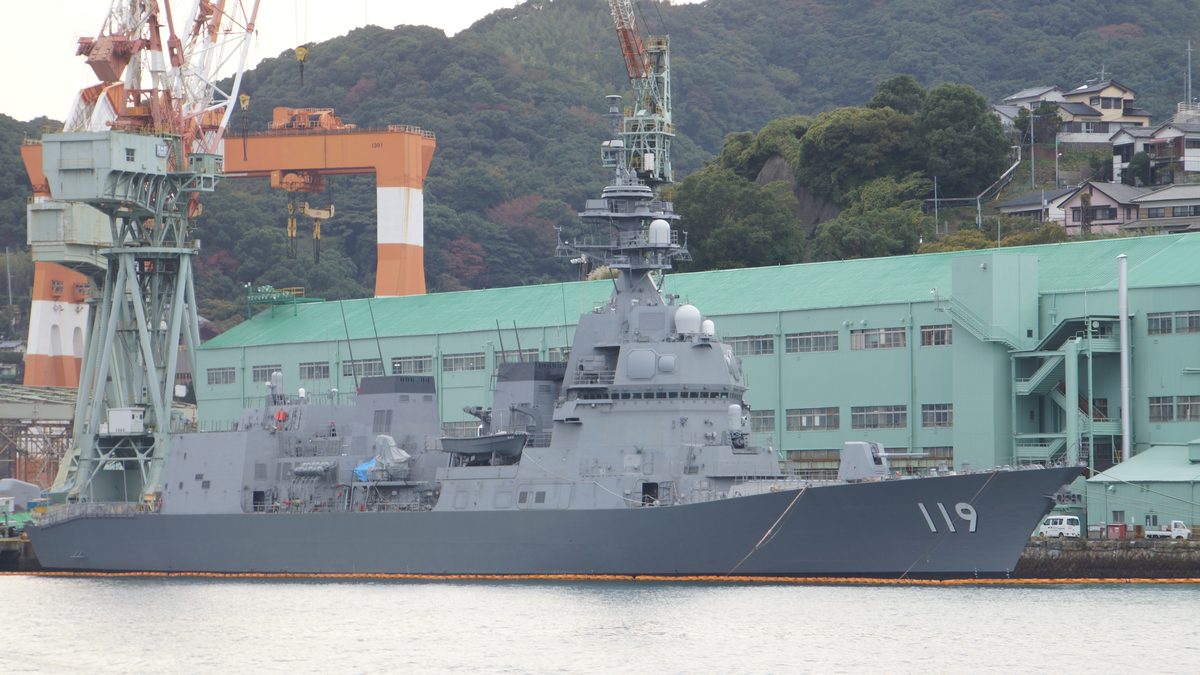
    Defense ministers from Australia and Japan signed a contract for 11 Mogami-class frigates aboard the Japanese destroyer JS Kumano — Japan's first major lethal weapons export agreement.

  5. Extended-range missile mass production begins

    Military

    Mitsubishi Heavy Industries began accelerated production of extended-range Type 12 anti-ship missiles with a 1,200-kilometer range, up from the original 200 kilometers.

  6. Co-developed weapons exception approved

    Policy

    Japan authorized global export of next-generation fighter jets co-developed with other nations, enabling the Global Combat Air Programme (GCAP) with the United Kingdom and Italy.

  7. Licensed defense products cleared for export

    Policy

    The Kishida cabinet allowed export of defense equipment manufactured under foreign license, immediately enabling Japan to ship PAC-3 Patriot missile interceptors to the United States.

  8. Japan adopts new National Security Strategy

    Policy

    The Kishida cabinet named China as Japan's greatest strategic challenge, called for a more offensive military posture, and set a target of 2% of gross domestic product for defense spending by 2027.

  9. Abe replaces export ban with transfer principles

    Policy

    Prime Minister Shinzo Abe replaced the blanket ban with the 'Three Principles on Defense Equipment Transfers,' creating an exemption framework while still effectively blocking lethal exports.

  10. Near-total export ban enacted

    Policy

    Prime Minister Miki Takeo expanded the principles into a de facto total prohibition, pledging Japan would refrain from all arms exports 'in conformity with the spirit of the Constitution.'

  11. Japan establishes Three Principles on Arms Exports

    Policy

    Prime Minister Sato Eisaku announced principles banning arms exports to communist nations, countries under United Nations embargoes, and parties to international conflicts.

Scenarios

1

Japan becomes a major Indo-Pacific arms supplier within five years

Discussed by: Australian Strategic Policy Institute (ASPI), defense industry analysts at Breaking Defense and Jane's

The Australia frigate deal serves as a template. The Philippines, Indonesia, India, and other Southeast Asian nations purchase Japanese submarines, patrol vessels, and missile systems, drawn by competitive pricing as production scales up and by the appeal of a supplier that isn't the United States or China. Japan's defense industry revenue doubles by 2031. This scenario depends on Japanese manufacturers solving their lack of export support infrastructure — maintenance networks, training programs, spare parts logistics — which established exporters like the United States and France already have.

2

Export framework stays narrow — few deals beyond Australia materialize

Discussed by: International Crisis Group, Japanese defense procurement specialists

The case-by-case National Security Council review process, combined with Japan's inexperience in arms exports and high per-unit costs, limits actual sales. Potential buyers opt for cheaper South Korean or established Western alternatives. Japanese firms struggle to build the after-sales service networks that win contracts. The policy change is symbolically significant but commercially modest, mainly benefiting the US alliance through interoperability rather than creating a global export market.

3

Domestic backlash forces constraints back onto exports

Discussed by: Asahi Shimbun editorial board, opposition parties including Centrist Reform Alliance and Japanese Communist Party

With 67% of voters opposed and tens of thousands protesting, opposition parties make arms exports a central campaign issue. If Takaichi's approval ratings continue declining, the Liberal Democratic Party faces pressure to impose new legislative guardrails — such as requiring parliamentary approval for major deals — that effectively slow or narrow the export program without formally reversing the cabinet decision.

4

Arms exports accelerate regional tensions with China

Discussed by: Chinese Foreign Ministry, South China Morning Post analysts, regional security scholars

Japanese weapons sales to nations with territorial disputes with China — particularly the Philippines, Vietnam, India, and Malaysia — prompt Beijing to escalate military posturing in the East and South China Seas. China frames Japan as returning to militarism and imposes economic countermeasures. The dynamic creates a feedback loop: heightened Chinese aggression validates further Japanese exports, which provokes further Chinese responses. The risk is highest if Japan sells missile systems or submarines to Taiwan Strait-adjacent countries.

Historical Context

West Germany's rearmament and NATO integration (1955)

1950–1955

What Happened

A decade after World War II, West Germany rearmed and joined NATO despite fierce domestic opposition and deep anxiety among its neighbors. Chancellor Konrad Adenauer argued that the Soviet threat required Germany to contribute to collective defense. France, initially opposed, agreed after the creation of multilateral structures to constrain German military power.

Outcome

Short Term

West Germany established the Bundeswehr with 500,000 troops by 1959, embedded within NATO's command structure rather than as an independent force.

Long Term

Germany became the cornerstone of European collective defense without reverting to militarism. The multilateral framework channeled rearmament into alliance obligations rather than unilateral projection.

Why It's Relevant Today

Japan faces a parallel challenge: converting a wartime-legacy pacifist identity into active defense participation while reassuring neighbors that the shift serves collective security, not national aggression. The multilateral guardrails — 17 approved partners, United Nations Charter compliance requirements — echo the NATO framework that legitimized German rearmament.

South Korea's rise as a global arms exporter (2014–present)

2014–2026

What Happened

South Korea transformed from a minor defense exporter into the world's ninth-largest arms supplier in a decade. Companies like Hanwha, Korea Aerospace Industries, and Hyundai Rotem won major contracts for tanks, howitzers, fighter jets, and rocket launchers from Poland, Australia, the United Arab Emirates, and other buyers. Seoul leveraged competitive pricing, fast delivery timelines, and willingness to transfer technology.

Outcome

Short Term

South Korean arms exports reached $17 billion in 2022 alone, driven by European demand after Russia's invasion of Ukraine.

Long Term

South Korea established itself as a credible alternative to the United States, France, and Russia, particularly for countries seeking modern equipment without the political strings or long wait times attached to American purchases.

Why It's Relevant Today

South Korea's trajectory shows both the opportunity and the competitive challenge Japan faces. Seoul proved an Asian democracy could break into the global arms market rapidly, but Japanese firms now enter a space where South Korean rivals already have established customer relationships, competitive pricing, and proven export logistics.

Japan's postwar napalm exports during the Vietnam War (1950s–1960s)

1950s–1967

What Happened

Before the 1967 export ban, Japan exported weapons and military materials to several countries including Thailand, Taiwan, South Vietnam, and Brazil. Most controversially, Japanese firms reportedly manufactured 92% of the napalm used by United States forces in Vietnam. Public revulsion over Japan's indirect role in the war was a driving force behind Prime Minister Sato's original arms export restrictions.

Outcome

Short Term

The Three Principles on Arms Exports were established in 1967, banning sales to communist states, embargoed nations, and conflict parties.

Long Term

The 1976 expansion into a near-total ban made pacifist export policy a core part of Japan's postwar identity for nearly 50 years.

Why It's Relevant Today

The original export ban was a direct response to Japanese weapons being used in a war that horrified the Japanese public. The new requirement that buyers pledge United Nations Charter compliance is Tokyo's attempt to prevent a similar reputational crisis — but critics argue that once weapons are sold, end-use monitoring is difficult to enforce.

Sources

(13)