



Pull to refresh
Logo
Japan household spending falls for ninth straight month

Japan household spending falls for ninth straight month

Money Moves

Real wages keep rising, but consumers stay cautious as inflation squeezes purchasing power

Yesterday: Spending falls for ninth straight month

Overview

Updated 58 minutes ago

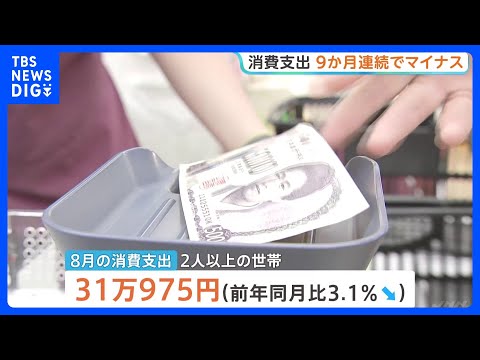
Japanese households cut real spending for a ninth straight month in August, even as wages kept climbing. Inflation-adjusted outlays fell 3.1% from a year earlier, a smaller drop than the 3.6% economists expected.

The data lands at a delicate moment for the Bank of Japan. Real wages have risen every month this year, but that hasn't translated into consumer demand. The central bank is weighing further rate hikes, and weak spending is a counterweight to its inflation-fighting case.

Why it matters

If the Bank of Japan raises rates while households keep cutting spending, it risks deepening the downturn.

Questions about this story

Free account needed to ask — your question is kept and asked for you right after sign-up. Answers are public.

No questions yet — be the first to ask.

Key Indicators

3.1%
August real spending decline (year-on-year)
Ninth consecutive month of contraction in inflation-adjusted household spending.
310,975 yen
Average monthly household spending
Average consumption spending per two-or-more-person household in August 2026.
9
Consecutive months of decline
Real household spending has fallen every month since December 2025.
0.1%
Month-on-month change (seasonally adjusted)
Spending edged up slightly from July, less than the 0.5% economists expected.

Voices

Curated perspectives — historical figures and your fellow readers.

Ever wondered what historical figures would say about today's headlines?

Sign up to generate historical perspectives on this story.

People Involved

Organizations Involved

Timeline

December 2025 October 2026

4 events Latest: Yesterday
Tap a bar to jump to that date
  1. Spending falls for ninth straight month

    Latest Economic Data

    August real spending down 3.1%, less than the 3.6% forecast but still contracting.

  2. Spending falls 3.6%, steepest of the streak

    Economic Data

    July marks the largest year-on-year drop so far in the decline run.

  3. Spending drop deepens to 3.3%

    Economic Data

    June decline accelerates as food and utility costs weigh on households.

  4. Spending decline streak begins

    Economic Data

    Real household spending turns negative in December, starting the current run.

Scenarios

1

BOJ raises rates by year-end despite weak spending

Possible Resolves by End of 2026

Discussed by: Market participants and Reuters

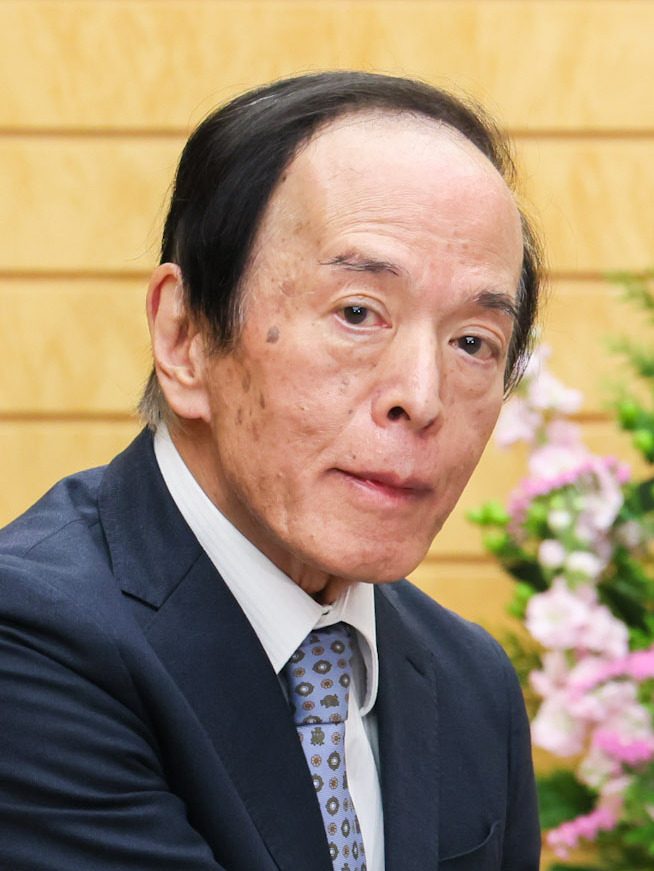
Many investors bet the Bank of Japan will raise its benchmark rate again by the end of 2026. Governor Kazuo Ueda has repeatedly warned about upside inflation risks. A hike would signal the central bank sees wage growth as durable enough to support demand, even if spending has not yet recovered.

2

BOJ holds rates as consumption stays fragile

Possible Resolves by End of 2026

Discussed by: Economists citing weak demand

The spending data shows inflation and domestic demand are not rising together. Raising rates too fast could weigh on the economy. If the BOJ judges the recovery too fragile, it will hold rates and wait for spending to confirm the wage gains before moving again.

3

Takaichi's food tax cut revives household spending

Unlikely Resolves by Apr 30, 2027

Discussed by: Government officials and skeptical economists

The prime minister plans to cut the sales tax on food to 1% from 8% starting in April 2027. If the cut takes effect and households respond by spending more, the decline streak could end. Economists doubt the cut will do much for overall demand, since it is temporary and food is a small share of budgets.

Historical Context

2 moments from history that rhyme with this story — and how they unfolded.

April 2014

Japan's 2014 consumption tax hike

Japan raised the consumption tax from 5% to 8% in April 2014. Household spending fell sharply in the following quarters and the economy contracted, forcing the government to delay the next hike to 10% twice.

Then

Spending dropped and the economy slipped into recession in 2014.

Now

The experience made policymakers cautious about tax increases and showed how sensitive Japanese households are to price pressures.

Why this matters now

It demonstrates how Japanese consumers respond to rising costs: they cut spending sharply, and weak demand can persist for years.

April 1997

Japan's 1997 consumption tax hike

Japan raised the consumption tax from 3% to 5% in April 1997. Household spending fell and the economy slipped into recession, compounded by the Asian financial crisis later that year.

Then

The economy contracted and the banking crisis deepened.

Now

The episode became a cautionary tale about raising taxes or tightening policy when household demand is fragile.

Why this matters now

It is the classic warning for the Bank of Japan: tightening policy while consumers are cutting spending can tip a fragile economy into recession.

Sources

(6)