
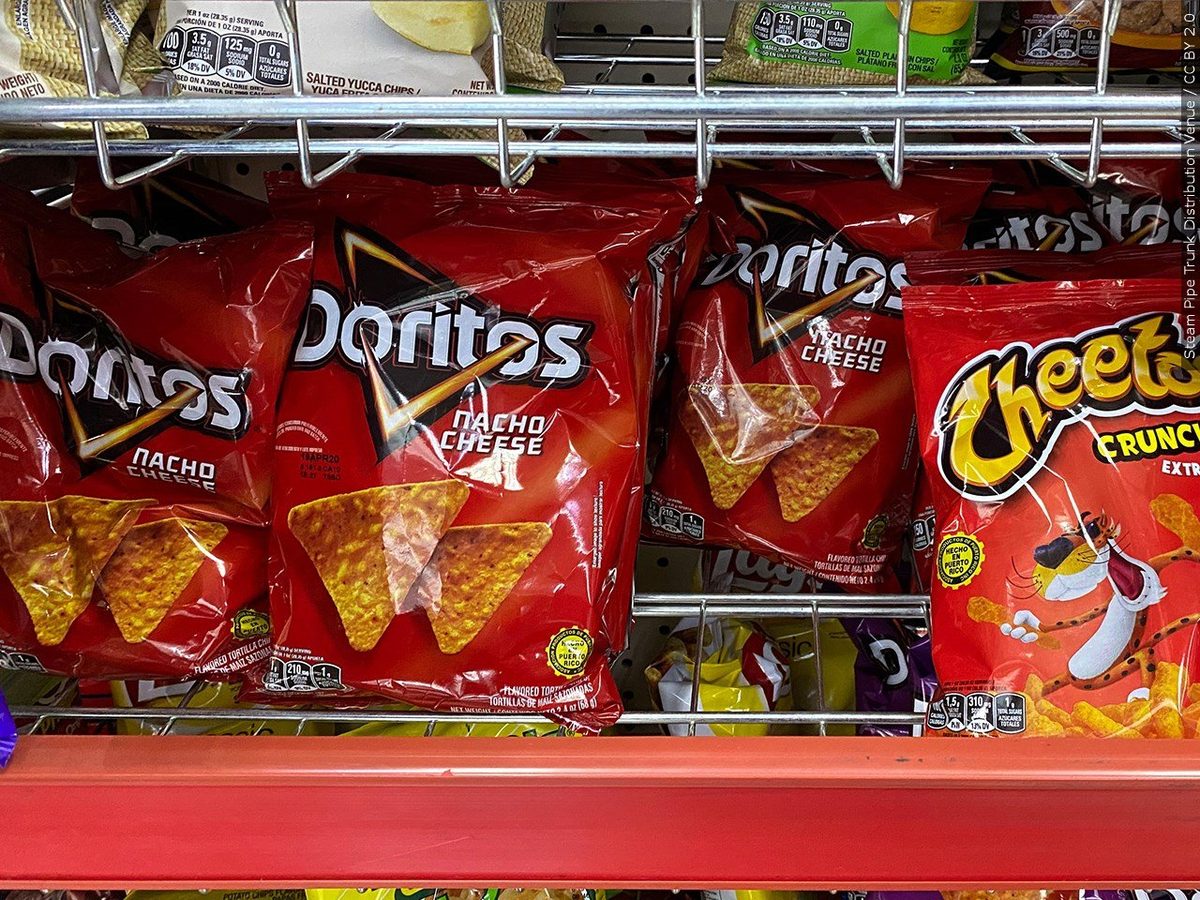
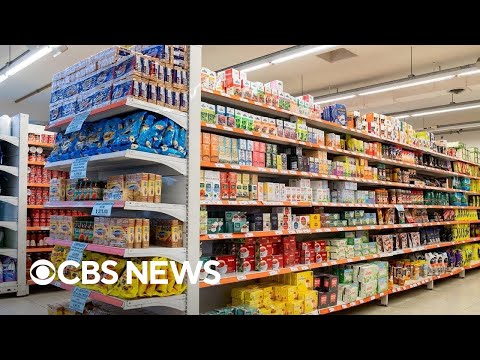
For six years, major food companies raised prices relentlessly—snack prices alone climbed 38% between 2020 and mid-2024. Now the biggest players are reversing course. PepsiCo announced price cuts of up to 15% on Lay's, Doritos, Cheetos, and Tostitos this week, just ahead of the Super Bowl. General Mills has discounted roughly two-thirds of its North American products. The era of pricing power may be over.
The trigger: consumers stopped paying. PepsiCo's snack volumes fell 1.5% in its latest quarter as shoppers traded down to store brands, which now claim 24% of grocery sales. Private-label alternatives grew 6% in 2023 alone. Activist investor Elliott Management took a $4 billion stake in PepsiCo last September, pushing for price reductions and product cuts. The company is closing three plants and eliminating 20% of its product lineup to fund the discounts.
Click a figure to generate their perspective on this story
Debate Arena
Two rounds, two personas, one winner. You set the crossfire.
Choose Your Battle
Watch two AI personas debate this story using real evidence
Make predictions and set the crossfire to earn XP and cred
Select Your Champions
Choose one persona for each side of the debate
DEBATE TOPIC
SIDE A (PRO)
Select debater for this side:
✓
SIDE B (CON)
Select debater for this side:
✓
Choose personas with different perspectives for a more dynamic debate
VS
Get ready to make your prediction...
Round of
Claim
Evidence
Stakes
Crossfire Answer
Closing Statement
Claim
Evidence
Stakes
Crossfire Answer
Closing Statement
Your Crossfire Question
Generating arguments...
Who's Got This Round?
Make your prediction before the referee scores
Correct predictions earn +20 XP
Evidence
40%
Logic
30%
Detail
20%
Style
10%
Round Results
Your Pick!
+20 XP
Your Pick
Not this time
Evidence (40%)
Logic (30%)
Detail (20%)
Style (10%)
Overall Score
/10
Your Pick!
+20 XP
Your Pick
Not this time
Evidence (40%)
Logic (30%)
Detail (20%)
Style (10%)
Overall Score
/10
Set the Crossfire
Pick the question both personas must answer in the final round
Crafting crossfire questions...
Choosing a question earns +10 XP crossfire bonus
🏆
Total XP Earned
Cred Change
Predictions
Debate Oracle! You called every round!
Sharp Instincts! You know your debaters!
The Coin Flip Strategist! Perfectly balanced!
The Contrarian! Bold predictions!
Inverse Genius! Try betting the opposite next time!
XP Breakdown
Base completion+20 XP
Rounds played ( rounds x 5 XP)
+ XP
Correct predictions ( correct x 20 XP)
+ XP
Crossfire bonus+10 XP
Accuracy
%
Prediction History
Round
You picked:
✓✗
Keep debating to level up your credibility and unlock achievements
Who Said What?
WHO SAID WHAT?
Can you match the quotes to the right people?
Rounds
People
Score:
Round /
streak
-- ?
Score:
Round /
streak
Next Up
Round
of
points
Correct
Best Streak
Time Bonus
People Involved
Ramon Laguarta
Chairman and CEO, PepsiCo (Leading company restructuring amid activist pressure)
Rachel Ferdinando
CEO, PepsiCo Foods U.S. (Overseeing snack price cuts and portfolio changes)
Organizations Involved
PE
PepsiCo
Multinational Food and Beverage Corporation
Status: Restructuring with plant closures and price cuts
The world's second-largest food and beverage company, with brands including Pepsi, Frito-Lay snacks, Gatorade, Quaker, and Tropicana.
EL
Elliott Investment Management
Activist Hedge Fund
Status: Major PepsiCo shareholder pushing restructuring
One of the world's largest activist investors, managing over $67 billion in assets.
GE
General Mills
Multinational Food Corporation
Status: Cutting prices on two-thirds of North American products
Maker of Cheerios, Nature Valley, Betty Crocker, and other major food brands.
Timeline
PepsiCo Announces 15% Price Cuts on Flagship Snacks
Pricing
PepsiCo cuts prices up to 15% on Lay's, Doritos, Cheetos, and Tostitos ahead of the Super Bowl, saying it heard consumers feeling financial strain.
PepsiCo Reaches Agreement with Elliott
Corporate
PepsiCo announces deal with activist investor including plans to cut 20% of product offerings and reduce prices. Elliott does not receive a board seat.
PepsiCo Announces Florida Plant Closures
Restructuring
PepsiCo files notice to close two Orlando-area Frito-Lay facilities, eliminating 500 jobs by May 2026.
Detroit Frito-Lay Plant Closes
Restructuring
PepsiCo shuts down its historic Mack Avenue manufacturing facility in Detroit, laying off 83 workers.
Activist hedge fund Elliott reveals major position in PepsiCo and calls for turnaround, pushing for price cuts, product reductions, and potential divestitures.
PepsiCo Closes Liberty, New York Plant
Restructuring
PepsiCo announces closure of its PopCorners manufacturing facility in Liberty, New York, laying off 287 workers.
PepsiCo Responds to Shrinkflation Backlash
Corporate
PepsiCo addresses growing consumer complaints about shrinking package sizes as snack volumes continue to decline.
France Enacts Shrinkflation Labeling Law
Regulatory
France becomes the first major economy to require retailers to warn consumers when products shrink without corresponding price reductions.
Snack Prices Hit 38% Above 2020 Levels
Pricing
Salty snack retail prices reach 38% above 2020 levels, outpacing overall grocery inflation of 21%, according to industry analysts.
Federal Trade Commission Report Suggests 'Greedflation'
Regulatory
The Federal Trade Commission (FTC) publishes a report suggesting large grocery companies used pandemic disruptions to boost profits beyond cost increases.
French Consumer Groups Demand Transparency on Margins
Regulatory
Four French consumer organizations call on the government to mandate transparency on food manufacturer profit margins.
European Inflation Peaks at 10.6%
Economic
European inflation hits its highest point, with food inflation particularly elevated. French consumer groups begin calling for action against 'greedflation.'
Food Companies Begin Aggressive Price Increases
Pricing
Major consumer goods companies including PepsiCo, General Mills, and Kraft Heinz raise prices to offset rising input costs, beginning a multi-year pattern.
Pandemic lockdowns disrupt global supply chains, setting the stage for food price inflation as demand shifts and costs rise.
Scenarios
1
Price Cuts Restore Volume, Margins Compress
Discussed by: TD Cowen analyst Robert Moskow; company investor guidance
PepsiCo's price cuts successfully reverse volume declines, as the company's 2025 test markets showed. However, profit margins narrow permanently as the company cannot restore pre-pandemic pricing power. Private label competition remains intense, with store brands holding 25-30% market share by decade's end. Other major food companies follow with their own cuts, establishing a new pricing equilibrium.
2
GLP-1 Drugs Accelerate Snack Decline
Discussed by: Morgan Stanley; EY-Parthenon consumer survey; Novo Nordisk CEO commentary
Weight-loss drugs like Ozempic and Wegovy structurally reduce snack demand beyond what price cuts can offset. With 23% of U.S. households already using GLP-1 drugs and projections reaching 35% by 2030, consumers not only buy less but shift purchases toward protein-rich, functional foods. PepsiCo's pivot to 'Simply NKD' and 'Doritos Protein' lines proves insufficient, and the company's snack business faces secular decline.
Elliott's December 2025 agreement did not include board representation, leaving the activist potentially unsatisfied if the restructuring fails to boost PepsiCo's stock. If volume declines persist or price cuts hurt margins without revenue recovery, Elliott may push for more dramatic action: spinning off the beverage business, selling Quaker Oats brands, or other major divestitures to unlock value.
4
Regulatory Action on Food Pricing Expands
Discussed by: U.S. Senate shrinkflation legislation; France labeling law; Government Accountability Office (GAO) reports
Following France's 2024 shrinkflation labeling law and pending U.S. legislation, regulatory pressure on food pricing practices intensifies. Congress mandates unit pricing transparency or margin disclosure, limiting companies' ability to obscure price increases through package size reductions. This accelerates the shift toward explicit price competition.
Historical Context
Marlboro Friday (1993)
April 1993
What Happened
Philip Morris slashed Marlboro cigarette prices by 20%—40 cents per pack—to fight generic competitors that had eroded the iconic brand's market share. The announcement wiped out $10 billion in market value in a single day as investors interpreted the cut as an admission that premium pricing power was dead.
Outcome
Short Term
Philip Morris stock plunged 26%. Other branded consumer goods companies including Coca-Cola and RJR Nabisco fell 5-16% in sympathy. Fortune magazine declared it 'the day the Marlboro Man fell off his horse.'
Long Term
The strategy worked. Marlboro regained market share from discount brands, and Philip Morris gradually restored prices over subsequent years. The stock fully recovered within two years. Harvard Business School now uses the case to teach brand equity defense.
Why It's Relevant Today
PepsiCo faces the same calculus: cut prices to stop private-label erosion, risking the perception that premium brands are no longer worth the premium. The Marlboro example suggests aggressive price cuts can restore market position if the brand remains strong—but the transition is painful.
Procter & Gamble Recession Pivot (2009-2010)
2009-2010
What Happened
During the Great Recession, Procter & Gamble faced declining sales as consumers switched to store brands. The company cut prices across roughly 10% of its portfolio, including Cheer laundry detergent, while simultaneously creating new, cheaper product lines to serve price-conscious consumers.
Outcome
Short Term
P&G stopped the bleeding in market share losses and maintained customer loyalty through the recession's worst months.
Long Term
Rather than permanently lowering prices on premium brands, P&G adopted a tiered strategy: keeping flagship products at premium prices while offering lower-priced alternatives. This preserved brand equity while addressing value-seeking consumers.
Why It's Relevant Today
PepsiCo is attempting a similar pivot, combining price cuts with new 'functional ingredient' products like Simply NKD Cheetos. The P&G playbook suggests maintaining some premium positioning while competing on value may work better than across-the-board cuts.
Private Label Surge of 2008-2012
2008-2012
What Happened
During and after the Great Recession, store brands gained significant ground against national brands as consumers traded down. Private label grocery market share rose from roughly 18% to over 20% as retailers invested in quality improvements.
Outcome
Short Term
National brands responded with heavy promotional spending and some permanent price reductions, compressing industry margins.
Long Term
Private label held much of its gains even after the economy recovered, as consumers discovered store brand quality had improved. The experience taught retailers that private label could be a profit driver, not just a budget option.
Why It's Relevant Today
Today's private label share of 24% exceeds the post-recession peak, and McKinsey reports 80% of consumers now rate store brand quality equal to or better than national brands. The structural shift may be more permanent this time.