

Pull to refresh
Logo
Kraken parent Payward to buy venture firm chaired by its co-CEO

Kraken parent Payward to buy venture firm chaired by its co-CEO

Money Moves

Payward adds $2.7 billion in managed assets and private-market investing, with closing expected in the first quarter of 2027 and no price disclosed

Overview

Updated 1 hour ago

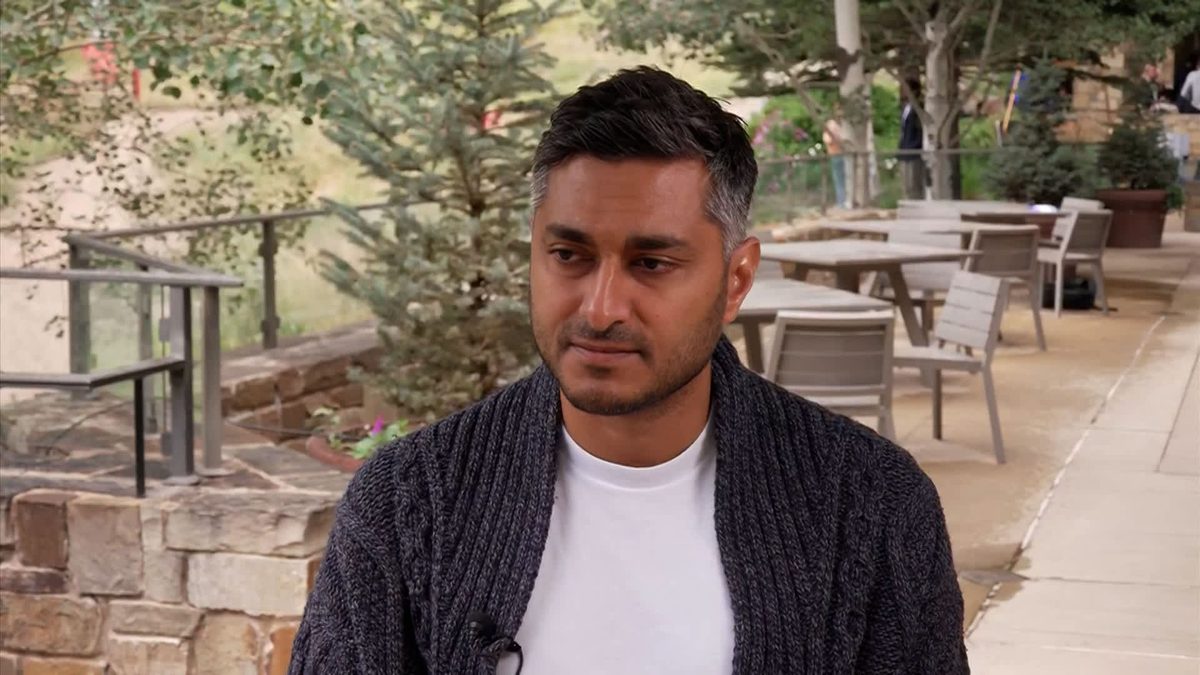
Payward, the company that owns the Kraken cryptocurrency exchange, agreed on November 18 to buy Tribe Capital Management, a venture firm with $2.7 billion in assets under management. Tribe's chairman, Arjun Sethi, is also Payward's co-chief executive. He co-founded Tribe in 2018.

The purchase moves private-company investing inside a company that already runs custody, trading, collateral and tokenization. Payward says it will use Tribe's sourcing and fund-management staff to build private-market products for consumer, professional and institutional clients. Closing is expected in the first quarter of 2027, subject to required consents.

Why it matters

If Payward can sell private-market funds alongside spot trading, crypto exchanges stop being fee-driven trading venues and start competing with asset managers.

Questions about this story

Free account needed to ask — your question is kept and asked for you right after sign-up. Answers are public.

No questions yet — be the first to ask.

Key Indicators

$2.7B
Tribe assets under management
The figure Payward used in the deal announcement, stated without a measurement date.
$3.4B
Tribe regulatory assets under management
Listed in Tribe's Form ADV, the registration document US investment advisers file with the Securities and Exchange Commission, on September 16, 2026, across 90 accounts.
$60M
Payward third-quarter adjusted EBITDA
Earnings before interest, taxes, depreciation and amortization, adjusted, for the quarter before the deal was announced.
30%
Platform transaction volume decline
Year-over-year drop in Payward's total platform transaction volume.
27
Tribe employees
Headcount listed in Tribe's September 2026 Form ADV.

Voices

Curated perspectives — historical figures and your fellow readers.

Sign up to generate historical perspectives on this story.

People Involved

Organizations Involved

Timeline

2018 November 2026

10 events Latest: 4 days ago
Tap a bar to jump to that date
  1. Payward announces deal to acquire Tribe Capital

    Latest Acquisition

    The definitive agreement covers a firm with $2.7 billion in assets under management. Price and approval process were not disclosed; closing is expected in the first quarter of 2027.

  2. Payward agrees to buy Saldo Finance

    Acquisition

    Saldo is the parent of a Lithuanian-licensed bank; Payward expects the deal to close in 2027.

  3. Tribe files Form ADV with the SEC

    Filing

    The filing lists $3.4 billion in regulatory assets under management across 90 accounts and 27 employees.

  4. Payward moves on Magic Labs' wallet business

    Acquisition

    The purchase is meant to let partner companies offer wallets inside their own apps.

  5. Payward agrees to buy Reap

    Acquisition

    The stablecoin payments deal is worth up to $600 million in cash and stock and values Payward's equity at $20 billion.

  6. Kraken raises $500 million at a $15 billion valuation

    Fundraising

    Tribe and Sethi personally take part. Fortune reports that Kraken's board and Tribe's fund investors approved Sethi holding both roles.

  7. Sethi becomes Kraken co-CEO

    Leadership

    Sethi takes the co-chief executive role at Kraken while remaining Tribe's chairman.

  8. Tribe becomes Kraken's second-largest institutional investor

    Investment

    Tribe had put $120 million into Kraken by May 2021. Sethi joined the exchange's board that month.

  9. Tribe starts buying Kraken shares

    Investment

    Tribe buys both newly issued Kraken shares and shares from earlier holders.

  10. Tribe Capital founded

    Founding

    Arjun Sethi and Jonathan Hsu start a venture firm built around using operating data to underwrite startup investments.

Scenarios

1

Payward closes the Tribe acquisition in the first quarter of 2027

Likely Resolves by Q1 2027

Discussed by: Payward's November 18 announcement, which sets the timetable and calls the remaining conditions customary

Payward said the deal is subject to customary closing conditions including required consents, and pointed to the first quarter of 2027. Nothing published so far suggests a regulatory obstacle. If it closes on that schedule, Tribe's investment team becomes the core of Payward's asset-management division and the company starts building private-market products on top of its custody and tokenization systems.

2

Payward discloses how it handled Sethi's dual role

Possible Resolves by Q1 2027

Discussed by: Coindaro, which noted the announcement names no approving body, no price breakdown and no fairness opinion

The announcement does not say whether Sethi left the room, whether directors without a Tribe stake ran the talks, or whether an outside bank assessed the price. Companies sometimes fill those gaps in later filings or in an amended Form ADV after a change of control. A disclosure would not settle whether the price was fair, but it would show which safeguards were used.

3

Kraken offers a Tribe-managed fund to ordinary clients

Uncertain Resolves by End of 2027

Discussed by: Payward's statement that Tribe will expand products across its consumer, professional and institutional client base

The announcement promises a wider range of investment products but names no product, no fee and no launch date, and says nothing about whether Kraken's retail users could buy into Tribe funds. Turning a venture firm into a consumer product would require new fund structures and probably new regulatory permissions. That makes this a slower outcome than the closing itself.

4

The deal slips past the first quarter of 2027 or is abandoned

Unlikely Resolves by Q2 2027

Discussed by: No public source currently predicts this; it is included as the downside case the announcement leaves open

Consents can take longer than expected, and a related-party purchase gives directors and investors a reason to look harder at terms. A delay or termination would leave Payward's asset-management division without the origination and fund-management staff the deal was meant to supply, weakening the private-markets story it may tell IPO investors.

Historical Context

3 moments from history that rhyme with this story — and how they unfolded.

June-November 2016

Tesla buys SolarCity (2016)

Tesla announced it would buy SolarCity, the solar installer chaired by Elon Musk, who was also Tesla's chief executive and largest shareholder. The all-stock deal was pitched as combining electric cars with solar power. Musk recused himself from the board vote and did not vote his own shares.

Then

Tesla shareholders approved the purchase in November 2016 and the deal closed that month.

Now

Investors sued, arguing the purchase rescued a struggling company at Tesla's expense. A Delaware court ruled for Musk in 2022 after a trial.

Why this matters now

It is the reference case for a chief executive buying a company he also controls, and it shows that recusal and an independent process decide whether such a deal survives years of litigation.

February-October 2013

Michael Dell takes Dell private (2013)

Dell's founder and chief executive led a $24.4 billion buyout of the computer maker with private equity firm Silver Lake. Activist investor Carl Icahn and others fought the deal. Dell's special committee raised the offer and added a special dividend, and the voting rules were changed so only yes votes counted.

Then

Shareholders approved the revised terms in September 2013 and the buyout closed in October.

Now

The contest became a template for founder-led deals: a special committee, a raised price and a changed vote threshold.

Why this matters now

Payward's purchase is smaller and uncontested, but the same question applies: who negotiates for the buyer when its leader sits on the other side of the table?

June 2023-November 2024

Nasdaq buys Adenza (2023)

Nasdaq agreed to buy Adenza, a financial-risk software company owned by Thoma Bravo, for $10.5 billion. For an exchange operator, the appeal was revenue that does not depend on how much trading happens.

Then

Nasdaq completed the purchase in November 2024 and began reporting more of its revenue from software and data.

Now

Large exchange groups now describe themselves as technology companies, with trading as one business line among several.

Why this matters now

Payward is making the same move from the opposite direction, adding asset management so its revenue does not rise and fall with crypto trading volume.

Sources

(11)