Anchor

First 3D single-cell map of the lamprey brain traces the origin of vertebrate brains
New CapabilitiesA jawless 'living fossil' fish reveals that the common ancestor of all backboned animals already had a regionalized brain 500 million years ago
June 18th, 2026: First 3D single-cell lamprey brain atlas publishedNew here? Follow stories to track developments over time. Create a free account to get updates when stories you care about change.
Overview
Updated Jun 18Scientists have built the first three-dimensional, single-cell map of an entire lamprey brain. The atlas sorts the brain into 14 regions and 209 cell clusters, giving researchers a reference for how the earliest vertebrate brains were wired.
The lamprey is a jawless fish whose lineage split from ours about 500 million years ago. Its brain is the closest living stand-in for the ancestor of all backboned animals. The map shows that ancestor already had a brain divided into distinct regions, which changes where scientists draw the starting line for vertebrate brain complexity.
Why it matters
It pushes the origin of a regionalized, organized brain back to the dawn of vertebrates, giving researchers a shared baseline for comparing how every animal brain, including ours, was built.
Questions about this story
Free account needed to ask — your question is kept and asked for you right after sign-up. Answers are public.
No questions yet — be the first to ask.
Key Indicators
209
Cell clusters mapped
Distinct cell types identified across the whole lamprey brain.
14
Brain regions
Separate anatomical regions delineated in the 3D atlas.
~500M years
Age of the common ancestor
Roughly when the vertebrate ancestor with a regionalized brain lived.
0
Myelin genes in lamprey
Lamprey lacks the master genes for myelin-making cells, which arose later in jawed vertebrates.
Related Media
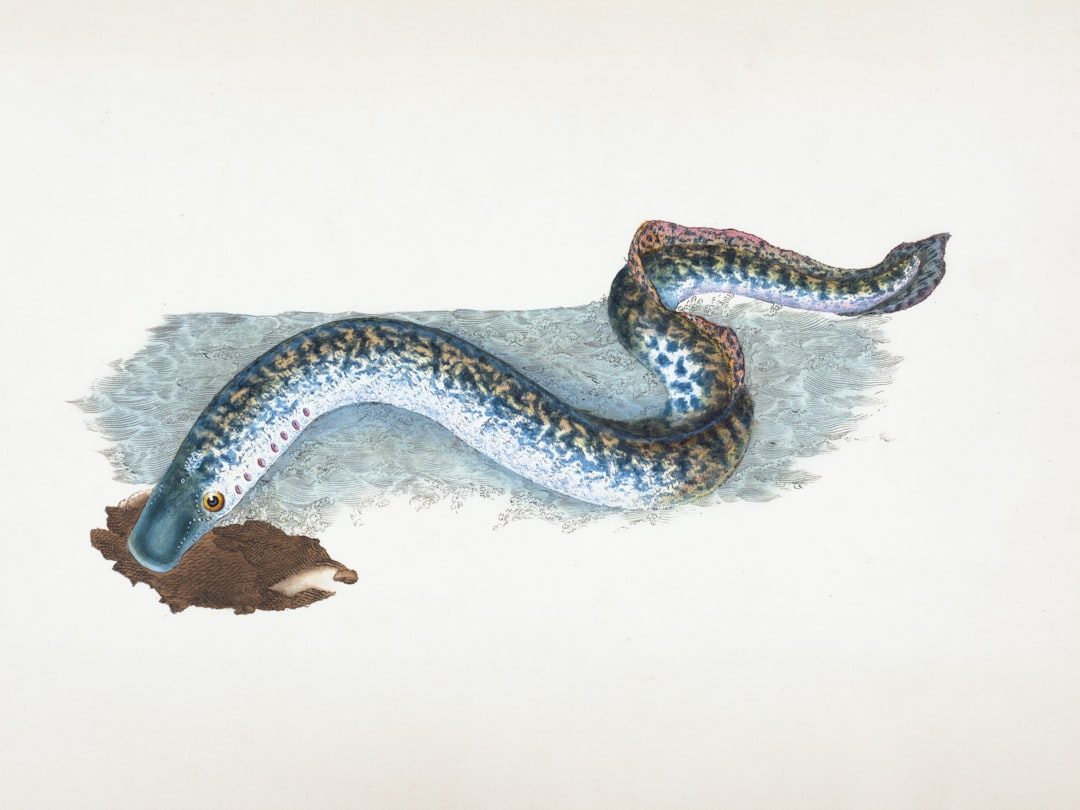
Rare Book Division, The New York Public Library. "Great, or Sea Lamprey, Petromyzon Marinus" The New York Public Library Digital Collections. 1806. https://digitalcollections.nypl.org/items/555f7250-c6c7-012f-83ba-58d385a7bc34
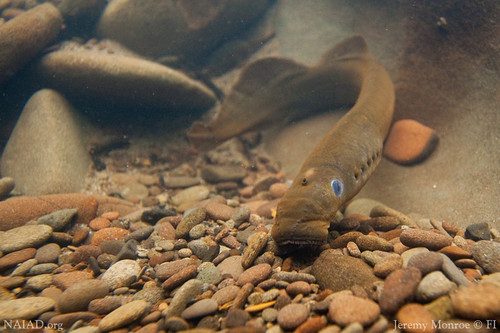
Pacific Lamprey
663 views
2:21
Stowers scientists uncover how sea lamprey brain ...
Stowers Institute for Medical Research
44.8K views
3:19
Your 500-Million-Year-Old Brain — HHMI BioInteractive Video
biointeractive

19.0K views
2:17
300 Million year old fossil shows evolution of fish brain
University of Michigan
Images from Openverse under Creative Commons licenses. Videos from YouTube.
Voices
Curated perspectives — historical figures and your fellow readers.
Play
Exploring all sides of a story is often best achieved with Play.
Most of these play right now — no account needed. Sign up to save scores, keep a streak, and unlock Debate and Predict.
Log in
Sign Up
Higher or Lower
A number from this story, against one from elsewhere in the news — guess which is bigger, then keep the chain going. 5 rounds, 3 strikes; a miss costs a strike and resets your streak.
Example
Anchor
EU tariff revenue
$52B
Big for this kind of number
Mystery
Pentagon AI contract
?
Round 1
Streak: 0
Mystery
?
Keyboard: ↓/L lower · ↑/H higher
0 pts
Best streak: 0 · Rounds: 0
0 points — sign up to put that on the leaderboard.
Now try on this story
Connections
Sixteen names from the news. Find the four hidden groups of four. Four mistakes max.
Loading today's puzzle…
0/4 groups
Mistakes
Sign up to keep a daily streak — a new puzzle lands every day.
Now try on this story
Exit debate?
Your progress in this debate will be lost.
How it works
- 1 Two AI personas square off on this story.
- 2 You predict who'll win each round — correct picks earn XP.
- 3 One crossfire question is yours to fire. Pick it carefully.
Couldn't generate a topic
Select Your Champions
Choose one persona for each side of the debate
DEBATE TOPIC
Choose personas with different perspectives for a more dynamic debate.
SIDE A (PRO)
Select debater for this side:
No debate personas available right now.
SIDE B (CON)
Select debater for this side:
No debate personas available right now.
VS
Get ready to make your prediction...
Round of
Claim
Evidence
Stakes
Crossfire Answer
Closing Statement
Claim
Evidence
Stakes
Crossfire Answer
Closing Statement
Your Crossfire Question
Generating arguments...
Who's Got This Round?
Make your prediction before the referee scores
The referee scores both sides on
Correct predictions earn +20 XP
· Press 1 or 2 to pick
Evidence
40%
Logic
30%
Detail
20%
Style
10%
Round Results
Your Pick
Not this time
(%)
Overall Score
/10
Your Pick
Not this time
(%)
Overall Score
/10
Set the Crossfire
Pick the question both personas must answer in the final round
Crafting crossfire questions...
Choosing a question earns +10 XP crossfire bonus
🏆
Total XP Earned
Cred Change
Predictions
Debate Oracle! You called every round!
Sharp Instincts! You know your debaters!
The Coin Flip Strategist! Perfectly balanced!
The Contrarian! Bold predictions!
Inverse Genius! Try betting the opposite next time!
XP Breakdown
Base completion
+20 XP
Rounds played ( rounds x 5 XP)
+ XP
Correct predictions ( correct x 20 XP)
+ XP
Crossfire bonus
+10 XP
Accuracy
%
Prediction History
Round
You picked:
✓
✗
Now try on this story
Keep debating to level up your credibility and unlock achievements
People Involved
Organizations Involved
Timeline
February 2022 June 2026
3 events
Latest: June 18th, 2026 · 2 months ago
-
First 3D single-cell lamprey brain atlas published
Latest ResearchScience publishes a three-dimensional, single-cell atlas of the whole lamprey brain: 14 regions and 209 cell clusters, dating a regionalized brain to the vertebrate ancestor.
-
First lamprey neural cell type atlas published
ResearchNature Ecology & Evolution publishes a single-cell lamprey neural atlas mapping cell types but not their full 3D positions.
-
Preprint reconstructs the ancestral vertebrate brain
ResearchResearchers post a bioRxiv preprint reconstructing the ancestral vertebrate brain from a lamprey neural cell type atlas.
Historical Context
3 moments from history that rhyme with this story — and how they unfolded.
April 2003
Human Genome Project completed (2003)
An international consortium finished a reference sequence of the human genome after 13 years. It gave biologists a shared map of roughly 20,000 genes. The data was released publicly for any researcher to use.
Then
Labs worldwide began aligning their work to a common reference, speeding gene discovery.
Now
The reference genome became the backbone of modern genetics, from disease research to evolution studies.
Why this matters now
Like the genome, a single shared reference map changes a field by giving everyone the same baseline to compare against. The lamprey atlas aims to be that baseline for early brain evolution.
September 2023
Earlier lamprey neural cell type atlas (2023)
A team published a single-cell atlas of lamprey neural cell types in Nature Ecology & Evolution. It cataloged the cell types of a jawless fish to reconstruct ancestral vertebrate traits. It did not place every cell in three dimensions.
Then
Researchers gained a cell-type inventory for the lamprey nervous system.
Now
It set up the comparison framework the 2026 3D atlas now extends.
Why this matters now
This is the direct predecessor. The 2026 study adds spatial position, turning a parts list into a 3D map of where each cell type sits.
October 2024
First fruit fly brain connectome (2024)
Researchers published the complete wiring diagram of an adult fruit fly brain, mapping about 140,000 neurons and 50 million connections. It was the most complete brain map of any animal at the time. The data was made openly available.
Then
Neuroscientists gained a full circuit map to test theories of how brains compute.
Now
It set a template for whole-brain mapping projects in larger animals.
Why this matters now
Both projects turn a whole brain into a queryable dataset. The lamprey atlas adds the evolutionary angle: not just how a brain is built, but how brains came to be built that way.
Sources
(3)Related Stories
String theory mathematics applied to brain network architecture
New Capabilities
Updated May 29
Racing toward the digital brain
New Capabilities
Updated May 22
Genomic study reveals predictable patterns in how animals conquered land
New Capabilities
Updated May 27
Lab-grown brain tissue cracks the psychiatric diagnosis problem
New Capabilities
Updated May 16
The unified brain: how we remember
New Capabilities
Updated May 27
Scientists map an immune-cell 'tipping point' that may decide who develops Alzheimer's dementia
New Capabilities
Updated Jul 27