
Pull to refresh
Logo
Leqvio cuts cardiovascular events in first outcomes trial of an RNA-silencing drug

Leqvio cuts cardiovascular events in first outcomes trial of an RNA-silencing drug

New Capabilities

ORION-4 met its primary endpoint in 16,124 patients with established artery disease. The size of the benefit, and the safety data, arrive in 2027.

Overview

Updated 1 hour ago

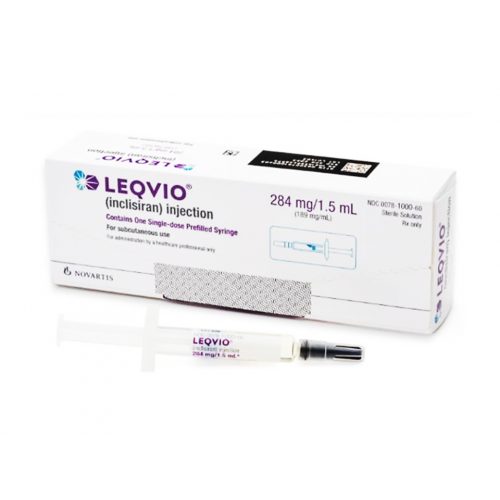
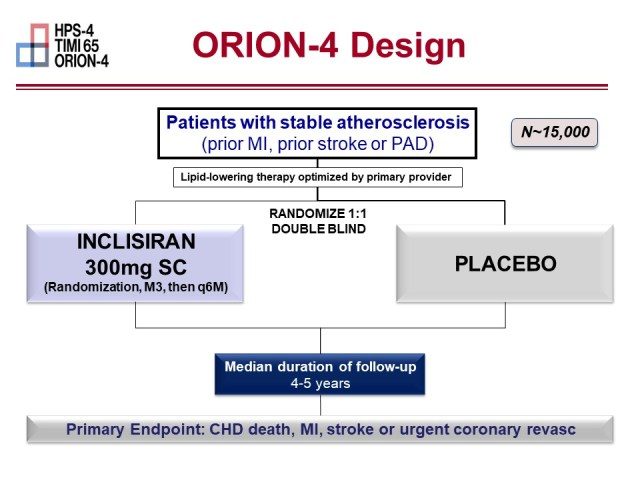
In 2019, researchers in Britain and the United States began enrolling people whose arteries were already narrowed by plaque. They signed up 16,124 of them for a trial planned to run at least five years. On Nov. 23, Novartis said the drug half of them received, a twice-yearly injection called Leqvio, reduced heart attacks, strokes and cardiovascular deaths compared with placebo.

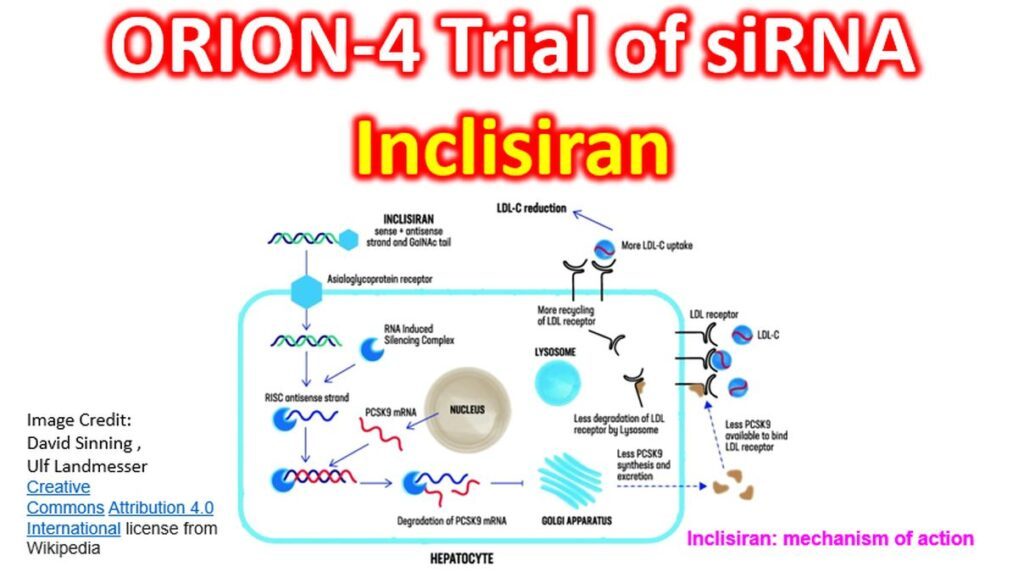
That makes Leqvio the first small interfering RNA therapy to show it prevents cardiovascular events, not just lowers a cholesterol reading. Novartis did not say by how much, and released no safety figures. Both are due with full publication in the first half of 2027.

Why it matters

A twice-yearly shot that prevents heart attacks would reach the many artery-disease patients who never hit cholesterol targets on daily pills.

Questions about this story

Free account needed to ask — your question is kept and asked for you right after sign-up. Answers are public.

No questions yet — be the first to ask.

Key Indicators

16,124
Participants randomized in ORION-4
Enrolled in the UK and US between 2019 and 2023; 30% were women and the mean age was 70.
33,000+
Participants across Novartis's Leqvio outcomes program
ORION-4 plus the ongoing VICTORION-2 PREVENT trial in primary prevention.
$5B
Novartis's stated Leqvio sales target
The forecast the company is using the outcomes data to support, as reported by Fierce Pharma.
80%
Share of ASCVD patients not reaching guideline cholesterol targets
Novartis's cited figure, describing the treatment gap Leqvio is meant to close.
2
Leqvio injections per year after the loading phase
One dose at day one, another at three months, then every six months.
96 mg/dL
Mean LDL cholesterol at enrollment
85% of participants were on a statin at baseline, 53% on a high-intensity regimen.

Voices

Curated perspectives — historical figures and your fellow readers.

Sign up to generate historical perspectives on this story.

People Involved

Organizations Involved

Timeline

2019 2027

6 events Latest: Today
Tap a bar to jump to that date
  1. Full ORION-4 results due

    Upcoming Publication

    Novartis says complete results will be published in the first half of the year.

  2. VICTORION-2 PREVENT readout expected

    Upcoming Trial

    The primary-prevention trial tests Leqvio in people without established artery disease.

  3. ORION-4 hits its primary endpoint

    Today Result

    Novartis reports a significant reduction in major adverse cardiovascular events versus placebo, without disclosing the magnitude.

  4. Enrollment closes at 16,124

    Trial

    Randomization ends; participants continue follow-up toward a median of at least five years.

  5. Leqvio approved on cholesterol lowering alone

    Regulatory

    US approval rests on LDL-C reduction, a surrogate marker, with no outcomes data.

  6. ORION-4 begins enrolling

    Trial

    Randomization starts in the UK and US for people with established atherosclerotic cardiovascular disease.

Scenarios

1

Full data confirm a benefit in the range the field expects

Likely Resolves by Jul 31, 2027

Discussed by: Novartis, the ORION-4 investigators, and trade coverage from Pharmacally and HCPLive, all of which note the topline release withheld effect size and safety numbers

The release calls the MACE reduction clinically meaningful but gives no hazard ratio, no component breakdown and no adverse-event rates. Publication in the first half of 2027 should supply all three. The comparison analysts will reach for is the roughly 15% relative reduction seen in the PCSK9 antibody trials, which hit the same protein.

2

Novartis files for a heart-protection label, and FDA grants it

Possible Resolves by Q2 2029

Discussed by: Novartis, which built the VictORION program explicitly to support an outcomes claim

Leqvio's current US approval covers cholesterol lowering. A MACE risk-reduction indication would require a supplemental application and a favorable FDA review of the full dataset, which Novartis will not have until mid-2027. A granted label would let the company market the drug on event prevention rather than on a lab value.

3

VICTORION-2 PREVENT fails, leaving Leqvio to patients who already have artery disease

Uncertain Resolves by End of 2027

Discussed by: Novartis, which lists the trial as the second half of its outcomes program; Fierce Pharma notes the readout is expected next year

The secondary-prevention result says nothing about people who have not yet had an event. VICTORION-2 PREVENT tests Leqvio against placebo in that larger, lower-risk population. A miss would cap the addressable market at patients with diagnosed disease and leave the $5 billion target dependent on that group alone.

4

Leqvio sales reach Novartis's $5 billion target

Uncertain Resolves by Q1 2029

Discussed by: Novartis, which has tied the forecast to outcomes evidence, per Fierce Pharma

Positive trial data does not automatically convert into prescriptions. Leqvio is given by a health care provider, which means clinic visits, and payers will weigh its price against generic statins and against PCSK9 antibodies whose outcomes data did not produce broad uptake. Reaching the target would show that a twice-yearly format changes that calculus.

Historical Context

3 moments from history that rhyme with this story — and how they unfolded.

2008

ENHANCE and the ezetimibe backlash (2008)

Ezetimibe, sold as Zetia and combined with a statin as Vytorin, lowered LDL cholesterol by roughly 15% to 20% on top of statin therapy. The ENHANCE trial tested whether that mattered in about 700 patients with inherited high cholesterol, measuring plaque buildup in the carotid artery by ultrasound. The combination was no better than the statin alone.

Then

Sales fell and cardiologists publicly questioned whether lowering cholesterol by any mechanism prevented heart attacks.

Now

It took seven more years and an 18,144-patient trial to show ezetimibe did reduce events.

Why this matters now

Leqvio was approved in 2021 on cholesterol lowering alone. ORION-4 is the outcomes test ezetimibe waited a decade for.

2015

IMPROVE-IT validates 'lower is better' (2015)

The IMPROVE-IT trial added ezetimibe to simvastatin in 18,144 people hospitalized for acute coronary syndrome and followed them for up to seven years. The combination cut the composite of cardiovascular death, heart attack and stroke from 34.7% to 32.7%.

Then

A two percentage point absolute difference over seven years was enough to revive ezetimibe and settle the mechanism debate.

Now

Treatment guidelines began naming ezetimibe as standard add-on therapy after a statin.

Why this matters now

It set the precedent that a modest relative reduction in a large secondary-prevention trial counts as success, which is the bar ORION-4 will be measured against.

2017

FOURIER proves PCSK9 inhibition, not its commercial case (2017)

Amgen's evolocumab, an antibody injected every two weeks that blocks the PCSK9 protein, was tested in 27,564 patients with stable atherosclerotic disease already on statins. It cut major cardiovascular events by about 15% relative over a median of 2.2 years.

Then

The result confirmed the target worked, but five-figure annual list prices led insurers to require prior authorization and uptake stalled.

Now

Outcomes data never translated into wide use; cost and the injection schedule limited the class.

Why this matters now

Inclisiran hits the same protein with two shots a year instead of 26, so its effect size will be read directly against FOURIER's 15%.

Sources

(6)