


Pull to refresh
Logo
Benghazi launches Ozone telecom group as Medusa submarine cable lands

Benghazi launches Ozone telecom group as Medusa submarine cable lands

New Capabilities

O3 plans 16,000km fiber network and 5G to break Libya's state telecom monopoly

Today: Ozone Group launches, Medusa cable reaches Benghazi

Overview

Updated 1 hour ago

A new telecom operator launched in Benghazi on October 18, backed by Libya's eastern government and the Haftar family. The same event marked the arrival of the Medusa submarine cable, a 20 terabit-per-second link that could break the state's grip on Libya's internet.

Ozone Group (O3) plans a 16,000-kilometer fiber network, 3,200 cell towers, and 5G service by mid-2027. The project positions Benghazi as a digital gateway for landlocked neighbors Chad, Niger, and Mali, and challenges the telecom monopoly that has kept Libya's internet slow and expensive.

Why it matters

If Ozone's buildout succeeds, it ends Libya's state telecom monopoly and turns Benghazi into a regional internet hub for six African countries.

Questions about this story

Free account needed to ask — your question is kept and asked for you right after sign-up. Answers are public.

No questions yet — be the first to ask.

Key Indicators

20 Tbit/s
Medusa cable capacity
Roughly six times Libya's current total market capacity, per the cable operator.
16,000 km
Planned fiber-optic network
Announced domestic fiber buildout connecting cities and residential areas.
3,200
Planned cell towers
Target tower count to expand coverage across Libya.
8,760 km
Medusa cable length
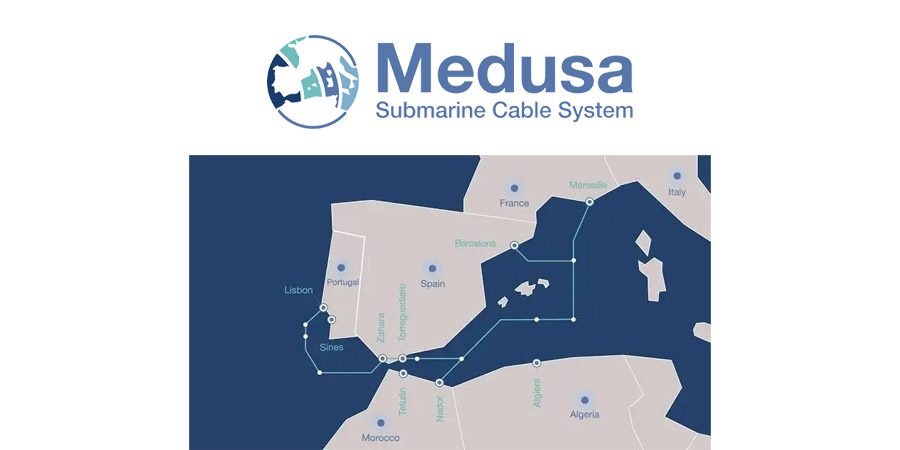
Runs from Portugal through the Mediterranean to Egypt, with two Libya landings.
2
Libya landing points
Tripoli and Benghazi both host Medusa cable stations.

Voices

Curated perspectives — historical figures and your fellow readers.

Ever wondered what historical figures would say about today's headlines?

Sign up to generate historical perspectives on this story.

People Involved

Organizations Involved

Timeline

November 2023 October 2026

3 events Latest: Today
  1. Ozone Group launches, Medusa cable reaches Benghazi

    Today Launch

    O3 inaugurated operations in Benghazi with Prime Minister Hamad and Haftar family officials present, announcing the cable's arrival.

  2. O3 Group secures license from eastern Libyan government

    Regulatory

    Ozone Group obtained its operating license, facing objections from Tripoli's communications authority.

  3. LUIC and Medusa sign Libya landing deal

    Agreement

    Libyan United International signed an agreement to land the Medusa cable in Tripoli and Benghazi.

Scenarios

1

O3 launches commercial 5G on schedule in 2027

Possible Resolves by Q2 2027

Discussed by: Ozone Group leadership, eastern Libyan government officials

Ozone runs its pilot network by the end of 2026 per plan, then scales to commercial 5G in the second quarter of 2027. The licensing dispute with Tripoli remains unresolved but does not stop the eastern rollout, and prices drop as planned competition materializes.

2

Tripoli licensing dispute confines Ozone to eastern Libya

Likely Resolves by End of 2027

Discussed by: akhbarlibya24, telecom analysts tracking Libya's regulatory split

The Tripoli-based General Telecommunications Authority claims sole licensing authority and blocks Ozone from operating in western areas. The cable lands but the retail market remains divided along political lines, limiting Ozone's subscriber base to eastern cities.

3

Benghazi becomes a wholesale bandwidth hub for landlocked states

Possible Resolves by Q2 2028

Discussed by: Faisal Gergab, Benghazi municipal officials

Regardless of domestic market share, the cable's 20 Tbit/s capacity makes Benghazi a transit point. Chadian, Nigerien, and Malian operators sign capacity agreements, generating wholesale revenue even if retail competition stalls at home.

Historical Context

2 moments from history that rhyme with this story — and how they unfolded.

July 2009

SEACOM cable lands in East Africa (July 2009)

SEACOM's 17,000km submarine cable landed in Mombasa, Kenya, ending East Africa's dependence on satellite internet. A single megabit per second cost thousands of dollars monthly before the landing; prices fell roughly 90 percent within a year.

Then

Internet prices collapsed and speeds jumped across Kenya, Tanzania, and Mozambique. Businesses and universities gained reliable connectivity for the first time.

Now

The cable helped incubate Kenya's mobile-money sector and its 'Silicon Savannah' software industry, which now exports services globally.

Why this matters now

Like Medusa in Benghazi, a single cable redirected the economics of connectivity for an entire region and triggered a local technology ecosystem.

2012

West African cable buildout breaks SAT-3 monopoly (2012)

A single monopoly cable, SAT-3, had controlled West African bandwidth since 2002, keeping prices high and capacity scarce. When the ACE and WACS cables landed in 2012, capacity multiplied and bandwidth costs dropped sharply.

Then

Bandwidth prices in Nigeria and Ghana fell by over 90 percent, and service quality improved dramatically.

Now

Lower connectivity costs fueled the growth of technology hubs in Lagos and Accra, making West Africa a competitive outsourcing destination.

Why this matters now

Medusa plays the same role for Libya, entering a market dominated by a state monopoly and offering the same price-competition dynamic SAT-3's challengers brought to West Africa.

Sources

(12)