

Pull to refresh
Logo
Calcium scans cut statin use without changing heart outcomes in CorCal trial

Calcium scans cut statin use without changing heart outcomes in CorCal trial

New Capabilities

The 5,772-patient study missed its noninferiority bar, but found a wide gap in who kept taking the pills

Overview

Updated 55 minutes ago

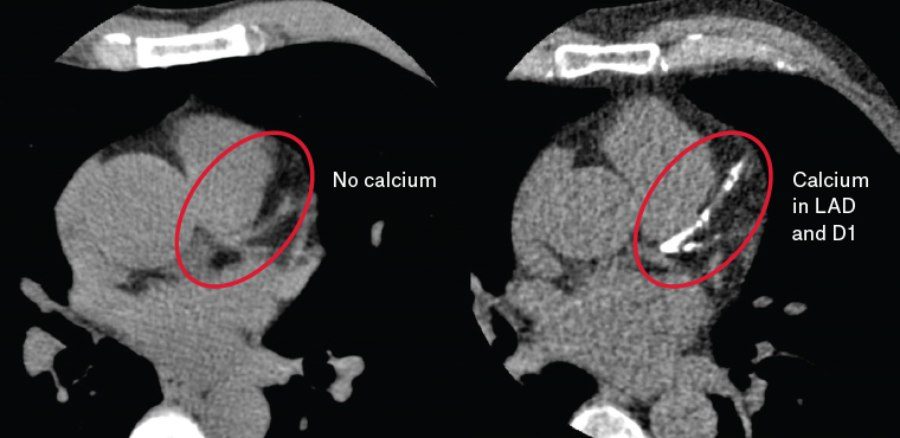
To decide who needs a statin, doctors feed age, cholesterol, blood pressure and smoking status into a calculator called the pooled cohort equations. The CorCal Outcomes trial tested a different input: a CT scan that measures calcium deposits in the coronary arteries, a direct sign that plaque is already there.

After 4.2 years, major cardiovascular events, including death, heart attack, stroke and revascularization, occurred in 2.7% of both groups. The trial did not clear its preset statistical bar for showing the scan approach was not meaningfully worse. But statin recommendations were more than three times as common in the calculator group, and patients advised to start a statin after a scan were far more likely to keep taking it: 62% versus 23%.

Why it matters

If scans lead to far fewer statin prescriptions without more heart attacks, payers and guideline writers have a coverage question to answer.

Questions about this story

Free account needed to ask — your question is kept and asked for you right after sign-up. Answers are public.

No questions yet — be the first to ask.

Key Indicators

2.7%
Major cardiovascular events, both arms
Death, heart attack, stroke or revascularization over an average 4.2 years.
62%
Statin adherence after scan-based advice
Share of patients who stuck with statins when the recommendation came from a calcium score.
23%
Statin adherence after calculator-based advice
Share who stuck with statins when the recommendation came from the pooled cohort equations.
5,772
Trial participants
Adults without known cardiovascular disease or diabetes, average age 64, 51% women.
4.2 years
Average follow-up
The window over which heart events were counted.

Voices

Curated perspectives — historical figures and your fellow readers.

Sign up to generate historical perspectives on this story.

People Involved

Organizations Involved

Timeline

2025 November 2026

3 events Latest: 3 days ago
  1. Trial reported widely; noninferiority bar missed

    Latest Publication

    Coverage highlights the same event rate in both arms and the 62% versus 23% adherence gap.

  2. CorCal results presented at ESC Congress

    Conference

    Investigators report no difference in major cardiovascular events between calcium-guided and calculator-guided statin decisions.

  3. European guidance adds calcium as a risk modifier

    Guideline

    A focused update to the ESC/EAS dyslipidemia guidelines says a high calcium score should be considered when assessing moderate-risk patients.

Scenarios

1

Investigators launch a larger calcium-versus-calculator trial

Possible Resolves by Q2 2028

Discussed by: Joseph Muhlestein, CorCal principal investigator

Muhlestein said the CorCal data could be used to plan an additional well-powered randomized trial. The first study was underpowered because fewer heart events occurred than expected, so a successor would need a larger sample or a longer follow-up to clear the bar CorCal missed. A new study would show up as a registration before any patients enroll.

2

New heart-event analysis shows a real difference between the arms

Unlikely Resolves by End of 2029

Discussed by: CorCal investigators and outside cardiologists reviewing the trial

The primary endpoint drew no distinction between groups. A prespecified secondary analysis or an extended follow-up could still find one, particularly if adherence differences compound over time. Researchers flagged the low event count as the trial's main limitation, which leaves room for a later look at the same patients.

3

Guidelines keep calcium scoring as a tiebreaker, not a first screen

Likely Resolves by End of 2030

Discussed by: Guideline committees at the European Society of Cardiology and the American College of Cardiology

Existing guidance treats a calcium score as a refinement for people near a treatment threshold. CorCal's failure to demonstrate noninferiority gives committees little cover to move scans earlier in the pathway, so the more likely outcome is that current wording survives the next revision.

Historical Context

3 moments from history that rhyme with this story — and how they unfolded.

November 2013

Pooled cohort equations become the gatekeeper (2013)

A joint American College of Cardiology and American Heart Association cholesterol guideline dropped treat-to-target LDL goals and replaced them with a ten-year risk estimate. The new pooled cohort equations, built from large US cohort studies, decided which adults crossed the 7.5% threshold for a statin.

Then

Clinicians adopted risk scores as the default way to open a statin conversation, and the calculator became standard in electronic health records.

Now

Subsequent validation studies questioned how well the equations calibrated across populations, but they remained the reference standard CorCal tested against.

Why this matters now

The calculator arm of CorCal exists because of this guideline. Every patient in the trial was sorted by the equations this decision created.

2018

SCOT-HEART puts coronary imaging into prevention (2018)

A Scottish trial added CT coronary angiography to standard care for patients with stable chest pain and found fewer heart attacks in the imaging group over five years. The scan changed what doctors knew about plaque burden and what they prescribed.

Then

The result pushed CT coronary imaging into chest-pain pathways and gave imaging-based prevention a randomized evidence base.

Now

It reinforced the idea that seeing plaque changes both clinician behavior and patient behavior, a pattern CorCal echoes with its adherence gap.

Why this matters now

SCOT-HEART showed imaging can alter outcomes. CorCal asks the harder question: does it alter outcomes when the image is used to decide who starts a statin, not to investigate symptoms.

November 2018

Calcium scoring enters US guidelines as a tiebreaker (2018)

The next ACC/AHA cholesterol guideline named coronary artery calcium scoring as a decision aid for adults at intermediate risk, roughly the 7.5% to 20% band, when the statin decision remained uncertain after a clinician-patient discussion.

Then

Calcium scoring moved from research tool to a reimbursed option for a narrow group of patients.

Now

Use stayed concentrated near treatment thresholds rather than as a general screen, which is the boundary CorCal tested.

Why this matters now

CorCal enrolled patients without diabetes or known disease and let calcium scores drive recommendations for everyone in that arm, going well past the tiebreaker role guidelines had assigned.

Sources

(6)