

Pull to refresh
Logo
Daily Brief
Following
Why Sign Up
Curiosity rover finds new class of organic molecules on Mars

Curiosity rover finds new class of organic molecules on Mars

New Capabilities
By Newzino Staff |

First use of wet chemistry on another planet detects possible DNA/RNA building blocks in 3.5-billion-year-old sandstone

Today: TMAH wet chemistry reveals 20+ new organics, including possible DNA/RNA building blocks

Overview

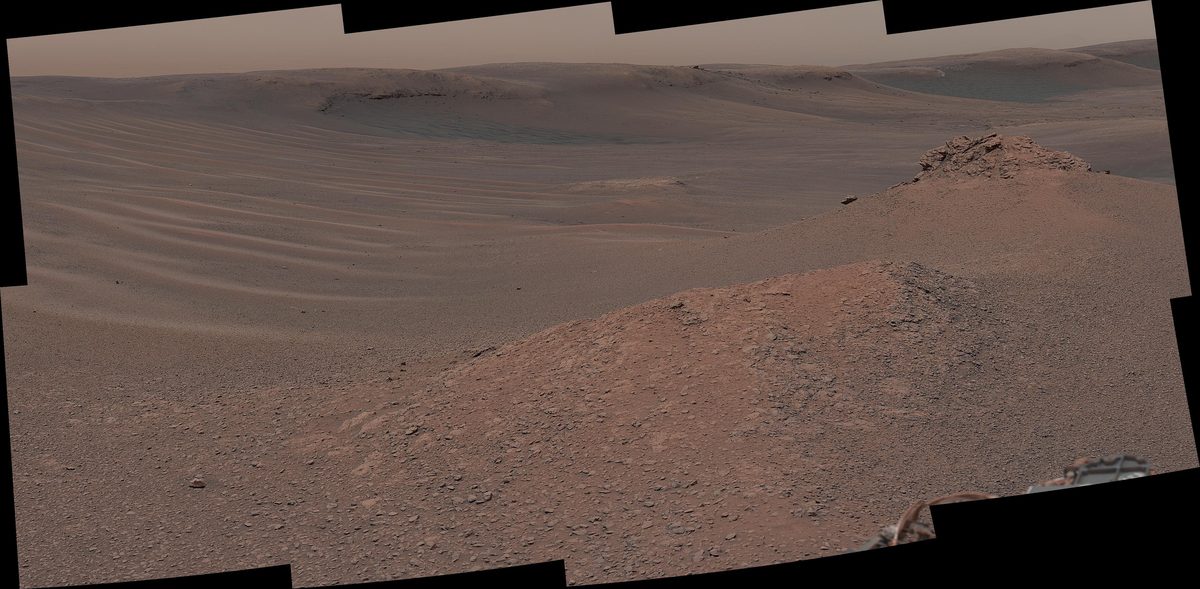
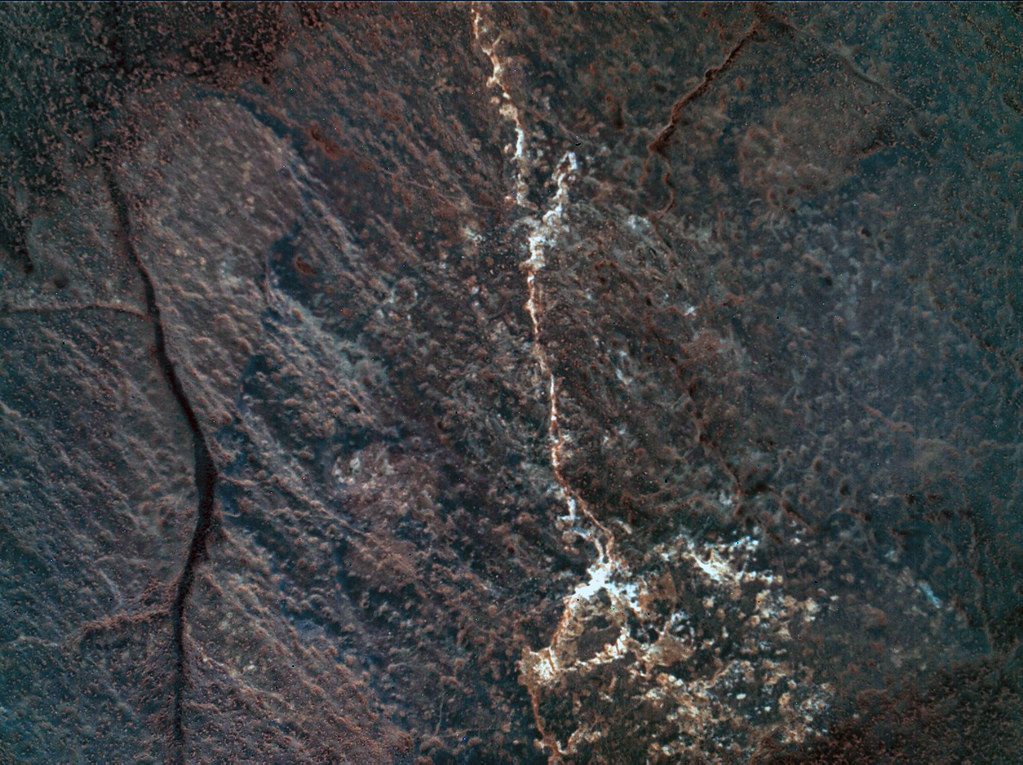
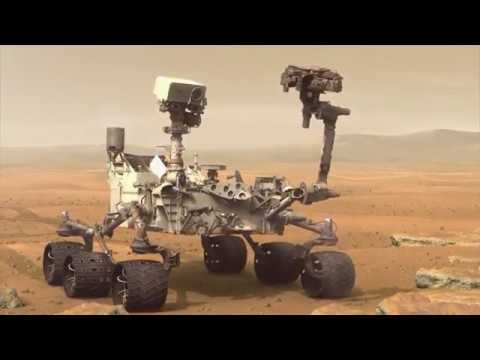
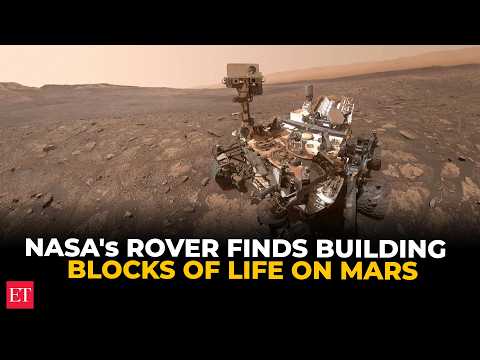
For 14 years, the Curiosity rover has looked for organic molecules on Mars by heating samples in a tiny onboard oven. The method works, but it destroys fragile compounds before they can be identified. On April 22, 2026, NASA reported that a different technique—squirting a chemical solvent onto a Martian rock sample before heating it—revealed more than 20 organic molecules the rover had never seen before.

Why it matters

Every new class of organic molecule found on Mars narrows the gap between prebiotic chemistry and the question of whether Mars was ever habitable.

Key Indicators

20+
New organic molecules
Compounds detected for the first time on Mars using TMAH wet chemistry.
3.5B
Years old
Approximate age of the clay-bearing sandstone sampled at Gale crater.
1st
Wet chemistry experiment off Earth
First time a solvent-based extraction technique has been run on another planet.
14
Years on Mars
Curiosity has operated at Gale crater since August 2012.

Interactive

Exploring all sides of a story is often best achieved with Play.

Ever wondered what historical figures would say about today's headlines?

Sign up to generate historical perspectives on this story.

Sign Up

Debate Arena

Two rounds, two personas, one winner. You set the crossfire.

People Involved

Organizations Involved

Timeline

  1. TMAH wet chemistry reveals 20+ new organics, including possible DNA/RNA building blocks

    Discovery

    NASA announces results in Nature Communications: the first wet chemistry experiment on another planet identifies nitrogen-heterocycles, benzothiophene, methyl benzoate, and other previously undetected compounds in Gale crater sandstone.

  2. Complex aromatic organics found in mudstone

    Discovery

    Curiosity detects thiophenes and benzene-ring compounds in 3-billion-year-old mudstones, establishing that Mars preserves larger organic molecules.

  3. First organic molecules detected on Mars

    Discovery

    SAM reports simple organic compounds in Martian rock, the first confirmed detection of organics on the surface.

  4. Curiosity lands in Gale crater

    Mission

    The rover touches down in a 96-mile-wide impact crater chosen for evidence of ancient water and layered sediments ideal for preserving organics.

  5. Curiosity launches from Cape Canaveral

    Mission

    The Mars Science Laboratory mission lifts off on an Atlas V rocket, carrying the SAM instrument and its sealed TMAH cups.

  6. Viking 1 lands, first life-detection experiments on Mars

    Mission

    Viking's biology experiments produced ambiguous results that researchers still debate. The question of organics on Mars was left open.

Scenarios

1

Mars Sample Return brings Gale-era rock to Earth labs, settles the biosignature question

Discussed by: NASA astrobiology program, European Space Agency, Nature editorials

Perseverance's cached samples eventually arrive on Earth, where full-scale mass spectrometers and isotope-ratio instruments analyze them with precision no rover can match. Earth laboratories either confirm biosignatures—molecular patterns characteristic of living systems—or demonstrate that the organic inventory fits known abiotic pathways. Either way, the ambiguity of in-situ detection ends.

2

Follow-up Mars missions prioritize drilling beneath the surface for better preservation

Discussed by: NASA Mars Exploration Program, ESA ExoMars team, planetary science community

If surface samples already preserve compounds this complex, subsurface samples—shielded from cosmic radiation—could preserve far more. ExoMars's Rosalind Franklin rover, designed to drill two meters deep, becomes the natural follow-up. Future architecture studies shift toward deeper sampling rather than more surface traverses.

3

Abiotic chemistry consensus solidifies, reshapes astrobiology priorities

Discussed by: Planetary chemists, astrobiology skeptics in peer-reviewed journals

Laboratory work on Earth demonstrates that every compound found can form through well-understood non-biological reactions in wet, warm, mineral-rich environments. The Mars organics become an important data point about prebiotic chemistry without implying past life. Research funding rebalances toward ocean worlds like Europa and Enceladus.

Historical Context

Viking biology experiments (1976)

July-November 1976

What Happened

NASA's two Viking landers ran four experiments to test Martian soil for metabolic activity. The Labeled Release experiment produced a positive signal that looked biological. The Gas Chromatograph-Mass Spectrometer found no organic molecules, which most scientists treated as decisive against life.

Outcome

Short Term

The mainstream interpretation declared Mars lifeless and sterile. Funding for Mars astrobiology collapsed for nearly two decades.

Long Term

Later work showed Viking's instruments may have destroyed organics they were trying to detect, rehabilitating the question. The 2014 and 2018 Curiosity detections partly vindicated researchers who had argued organics were there all along.

Why It's Relevant Today

The TMAH result directly addresses the Viking legacy: using a chemistry method that preserves rather than destroys organics, it finds exactly what older instruments could not see.

ALH84001 meteorite announcement (1996)

August 1996

What Happened

NASA held a press conference claiming a Martian meteorite found in Antarctica contained microscopic structures that might be fossil bacteria. President Clinton addressed the nation. The claim rested on tube-shaped features, magnetite crystals, and complex organics inside the rock.

Outcome

Short Term

The announcement drove renewed funding for astrobiology as a formal NASA discipline and contributed to the political case for a sustained Mars program.

Long Term

Most of the biosignature claims were later explained by non-biological processes. The episode became a cautionary reference point for how to communicate ambiguous astrobiology findings.

Why It's Relevant Today

ALH84001 set the template NASA now follows: describe what was detected precisely, flag the non-biological explanations, and avoid declaring discovery of life without sample return.

Curiosity's 2018 thiophene detection

June 2018

What Happened

SAM reported thiophenes and other aromatic compounds in 3-billion-year-old Martian mudstone. Some researchers argued thiophenes on Earth are disproportionately produced by biological processes; others catalogued purely chemical pathways.

Outcome

Short Term

The result established that Mars preserves organic molecules more complex than previously confirmed, strengthening the case for Gale crater's ancient habitability.

Long Term

It became the foundation for selecting which rock targets would get Curiosity's limited TMAH cups, leading directly to the 2026 experiment.

Why It's Relevant Today

The 2018 finding was the reason to spend a TMAH cup on these specific sandstones. The 2026 result is what that bet produced.

Sources

(4)