
Overview
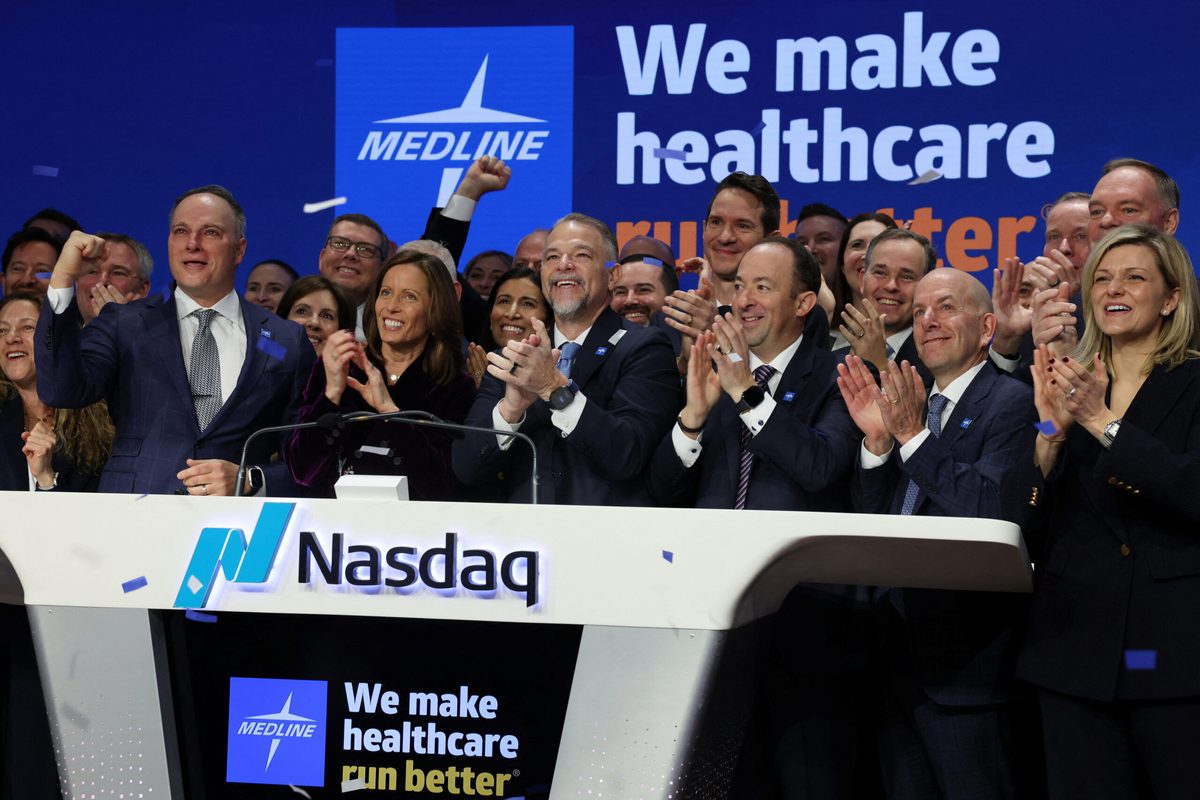
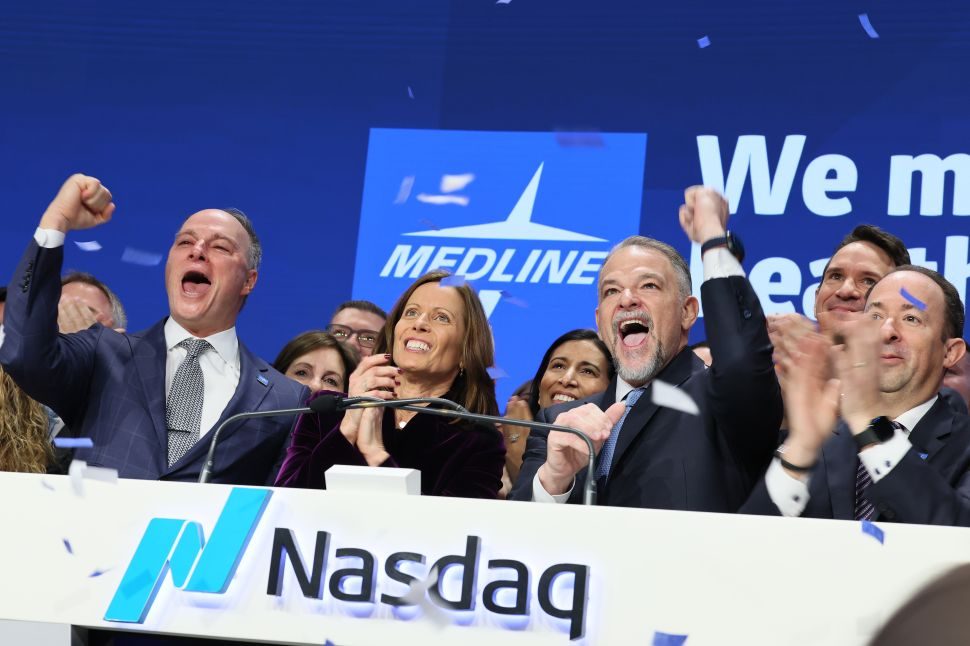
Medline’s Nasdaq arrival as MDLN quickly turned from “biggest IPO of 2025” into a live market verdict: shares jumped roughly 41% in their first session, pushing the company into a roughly $50B+ valuation conversation almost immediately.
Then came the mechanical but meaningful follow-through—its IPO officially closed on December 18, with underwriters fully exercising the 30-day option for extra shares. That boosts total deal size and accelerates the capital-structure cleanup narrative, while setting up 2026 as the real test: how fast leverage comes down, how tariffs flow through margins, and how long public investors stay patient with a PE-era balance sheet.
Key Indicators
People Involved
Organizations Involved
A medical-surgical supply giant turning a private, leveraged ownership era into a public-market story.
One of Medline’s controlling owners, using the IPO to shift the exit clock back into motion.
The gatekeeper that turned Medline’s filing into a tradable public security.
The venue where Medline’s private-company story became a daily public price.
Timeline
-
IPO closes; underwriters fully exercise greenshoe, lifting deal to ~248.4M shares
IPOMedline closed its IPO at $29/share and said underwriters fully exercised the option for additional shares, bringing total shares sold to 248,439,654 and gross proceeds to about $7.2B.
-
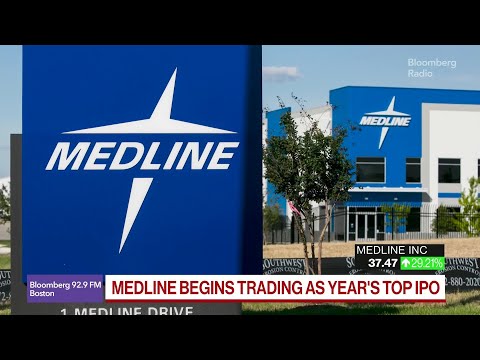
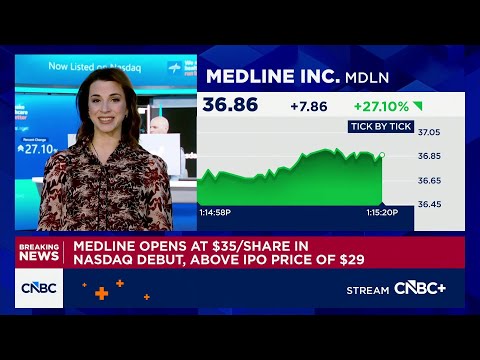
MDLN surges about 41% in first session, sharpening the ‘public-market test’
MarketMedline shares jumped roughly 41% from the $29 IPO price in their first session, signaling strong demand and immediately raising the stakes for follow-through on deleveraging.
-
MDLN starts trading
MarketMedline begins trading on the Nasdaq Global Select Market under ticker MDLN.
-
Pricing night: upsized at $29
IPOMedline prices 216,034,482 shares at $29 and sets MDLN trading for Dec. 17.
-
Medline files in public
FilingMedline publicly files its S-1 and targets Nasdaq ticker MDLN.
-
The IPO quietly starts
FilingMedline confidentially submits a draft S-1 to the SEC for a proposed IPO.
-
Succession plan goes public
LeadershipMedline names Jim Boyle CEO, with leadership transition effective October 1, 2023.
-
Private equity strikes the deal
DealBlackstone, Carlyle, and Hellman & Friedman agree to a majority Medline investment.
Scenarios
MDLN Holds Up, Follow-On Offerings Turn the IPO Into a Multi-Step PE Exit
Discussed by: Reuters; Financial Times; IPO research outlets tracking the PE exit backlog
If MDLN trades steadily and the company shows visible debt paydown progress, sponsors can stage liquidity over time: greenshoe, follow-on offerings, and eventual lockup-driven sales. The trigger is boring—but powerful: clean quarters, improving leverage, and a market willing to absorb large blocks without punishing the stock.
Tariffs Bite, MDLN Re-Rates as a ‘Good Business, Bad Stock’
Discussed by: Reuters; market commentators focused on tariff exposure and margin risk
Medline’s supply chain spans tariff-exposed sourcing regions, and management has already flagged a meaningful 2026 pre-tax hit. If costs rise faster than pricing power, the narrative shifts from “defensive healthcare infrastructure” to “margin squeeze with leverage,” pressuring the multiple and delaying sponsor exits until conditions improve.
Medline Uses Public Currency to Buy Scale, Not Just Pay Down Debt
Discussed by: Deal-focused reporting and IPO analysts watching how newly public issuers deploy capital
If the stock trades well and debt falls into a more comfortable range, Medline can pivot from deleveraging to expansion—buying categories, manufacturing capacity, or logistics assets. The trigger is management confidence plus market confidence: a stable share price makes acquisitions less dilutive and more defensible.
Historical Context
First Data IPO (KKR-backed)
2015What Happened
KKR brought payments processor First Data public after a leveraged buyout and years of debt overhang. The IPO was framed as a step toward reducing leverage and restoring flexibility.
Outcome
Short term: The company gained access to public capital and visibility, but debt remained central.
Long term: First Data ultimately exited via a strategic deal, showing IPOs can be a waypoint.
Why It's Relevant
Medline’s IPO similarly reads as a deleveraging-and-liquidity bridge, not an endpoint.
Albertsons IPO (Cerberus-led ownership)
2020What Happened
Grocery chain Albertsons returned to public markets while still heavily sponsor-influenced. The listing created a tradable vehicle, but ownership and exit timing stayed staged over years.
Outcome
Short term: Public investors priced steady cash flows alongside leverage and competitive pressures.
Long term: Sponsors’ liquidity path depended on market windows and follow-on transactions.
Why It's Relevant
Medline’s owners face the same reality: exits happen in chapters, not one night.
Dell’s Return to Public Markets
2013–2018What Happened
Dell went private in a leveraged deal, then engineered a route back to public markets to regain flexibility and reshape its capital story.
Outcome
Short term: The structure reduced constraints and broadened the investor base.
Long term: The market ultimately judged execution and cash flow more than the comeback narrative.
Why It's Relevant
Medline’s ‘public again’ moment will matter less than post-IPO execution under scrutiny.
