

Pull to refresh
Logo
Nobel Prize in medicine honors optogenetics, a light switch for brain cells

Nobel Prize in medicine honors optogenetics, a light switch for brain cells

New Capabilities

Karl Deisseroth, Peter Hegemann, and Georg Nagel share the 2026 prize for a method that controls neurons with light

2 days ago: Nobel Prize awarded for optogenetics

Overview

Updated 1 hour ago

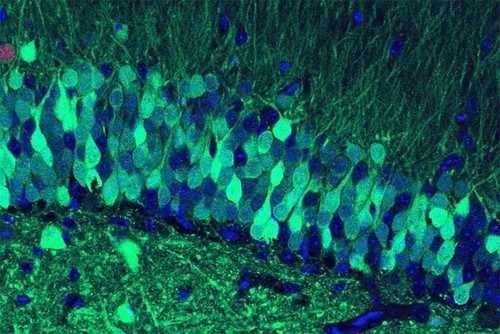
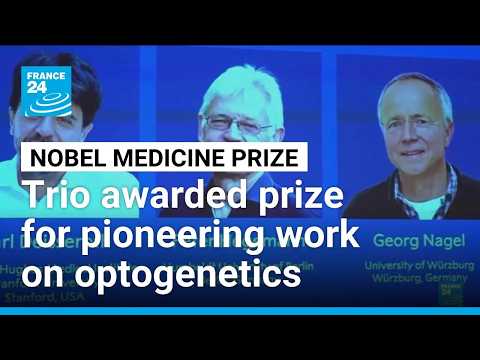
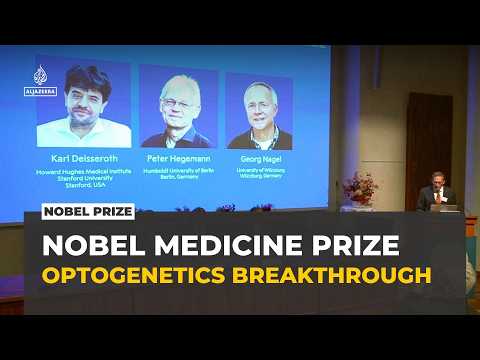
The 2026 Nobel Prize in Physiology or Medicine went to three scientists who built a light switch for brain cells. Karl Deisseroth, Peter Hegemann, and Georg Nagel share the 12 million Swedish kronor prize for optogenetics, a method that lets researchers turn individual neurons on and off with pulses of light.

The method has already revealed which neural circuits govern memory, pain, social behavior, and reward. Clinical trials are now testing it as a way to restore sight in people blinded by retinitis pigmentosa.

Why it matters

If optogenetic therapy succeeds in trials, it could restore sight in the blind and open a new class of treatments for brain disorders.

Questions about this story

Free account needed to ask — your question is kept and asked for you right after sign-up. Answers are public.

No questions yet — be the first to ask.

Key Indicators

3
Laureates sharing the prize
Deisseroth, Hegemann, and Nagel split the award equally.
90 billion
Nerve cells in the adult human brain
Optogenetics lets researchers target individual cell types among them.
12M SEK
Prize amount
Shared equally among the three laureates.

Voices

Curated perspectives — historical figures and your fellow readers.

Ever wondered what historical figures would say about today's headlines?

Sign up to generate historical perspectives on this story.

People Involved

Organizations Involved

Timeline

2002 October 2026

6 events Latest: 2 days ago
Tap a bar to jump to that date
  1. Nobel Prize awarded for optogenetics

    Latest Award

    Nobel Assembly awards the 2026 Physiology or Medicine prize to Deisseroth, Hegemann, and Nagel.

  2. Optogenetics works in living mice

    Breakthrough

    Deisseroth activates nerve cells in living mice, controlling whisker movement with light.

  3. Method named optogenetics

    Milestone

    The method is named optogenetics.

  4. First light-controlled nerve cells

    Breakthrough

    Deisseroth introduces channelrhodopsin into rat nerve cells; blue light triggers nerve signals.

  5. Channelrhodopsin-2 characterized

    Discovery

    Channelrhodopsin-2, the protein that enables optogenetics, is characterized.

  6. Channelrhodopsin-1 discovered in single-celled alga

    Discovery

    Nagel and Hegemann discover channelrhodopsin-1, a light-gated ion channel, in a single-celled alga.

Scenarios

1

Optogenetic therapy restores sight in blind patients

Possible Resolves by End of 2028

Discussed by: Stanford Medicine, Scientific American

Early trials have inserted channelrhodopsin-like proteins into the retinas of people blinded by retinitis pigmentosa. With light-emitting glasses, some patients have regained enough vision to discern and grasp objects. Larger trials will determine whether the approach becomes the first approved optogenetic treatment.

2

Optogenetics expands beyond the eye to treat brain and body disorders

Possible Resolves by End of 2030

Discussed by: Stanford Medicine

Researchers are adapting optogenetics to heart, pancreas, and other cell types, and exploring it for Parkinson's disease and paraplegia. Deisseroth's lab has reversed Parkinson's symptoms in mice. Human use depends on safe gene delivery and light delivery.

3

Optogenetics remains a research tool as clinical hurdles persist

Possible Resolves by End of 2028

Discussed by: Nature

Gene delivery and light delivery remain difficult in humans. If trials stall or fail, optogenetics would stay a laboratory workhorse for mapping neural circuits rather than a clinical treatment.

Historical Context

2 moments from history that rhyme with this story — and how they unfolded.

1991

Patch clamp technique (1991)

Erwin Neher and Bert Sakmann won the 1991 Nobel Prize in Physiology or Medicine for developing the patch clamp technique, which measures the tiny electrical currents flowing through single ion channels. The method let researchers study how individual channels open and close in real time.

Then

The technique became a standard tool in neuroscience and pharmacology, used to test how drugs affect ion channels.

Now

It opened the field of single-channel biophysics and remains a core method in labs worldwide.

Why this matters now

Like optogenetics, patch clamping is an enabling technique that gave researchers a precise window into the brain's electrical signaling.

2021

TRP channels and touch receptors (2021)

David Julius and Ardem Patapoutian won the 2021 Nobel Prize in Physiology or Medicine for discovering the molecular receptors that sense temperature and touch. Julius identified TRPV1, the receptor activated by capsaicin and heat; Patapoutian found the mechanosensitive channels that respond to pressure.

Then

The discoveries explained how the body converts physical stimuli into nerve signals and opened new targets for pain treatment.

Now

They established a framework for understanding sensory biology and drug development for chronic pain.

Why this matters now

Both prizes recognize molecular sensors that convert physical stimuli into cellular signals, the same principle behind channelrhodopsin's light-gated ion flow.

Sources

(7)