Pull to refresh
Logo
Daily Brief
Following
Why
First coronary bypass without opening the chest

First coronary bypass without opening the chest

New Capabilities
By Newzino Staff |

VECTOR Procedure Offers Alternative for Patients Ineligible for Traditional Surgery

January 14th, 2026: VECTOR Case Published

Overview

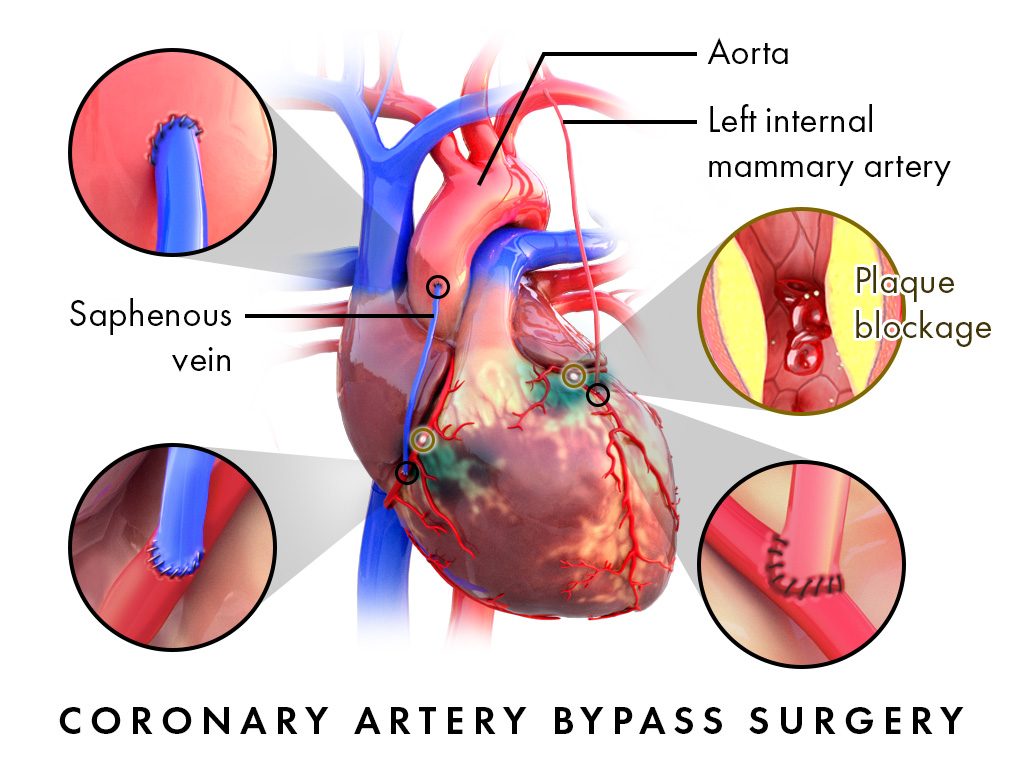
For nearly six decades, coronary artery bypass surgery has required cracking open the chest—a procedure performed more than 300,000 times annually in the United States alone. In May 2025, a team at Emory University and the National Institutes of Health performed the first human coronary bypass through blood vessels in the leg, leaving the chest intact. The 67-year-old patient, who had no other surgical options, showed no complications at six-month follow-up.

The procedure, called VECTOR (Ventriculo-Coronary Transcatheter Outward Navigation and Re-entry), uses catheters to create a new blood vessel pathway around blocked coronary arteries. It mirrors the transformation that valve replacement surgery underwent over the past two decades: from open-heart procedures to catheter-based interventions that send patients home the next day. If VECTOR proves durable in further testing, it could eventually spare hundreds of thousands of patients the trauma, infection risk, and months-long recovery of traditional bypass surgery.

Key Indicators

300,000+
Annual US Bypass Surgeries
Coronary artery bypass grafting remains the most common major cardiac operation performed in the United States.
6 months
Follow-up Without Obstruction
The first VECTOR patient showed no coronary artery obstruction at six-month assessment.
1-5%
Sternal Infection Rate
Deep sternal wound infections occur in 1-3% of open-heart surgeries, with mortality rates of 10-47%.
8h 40m
Procedure Duration
The first human VECTOR procedure took over eight hours—reflecting its technical complexity and early-stage development.

Interactive

Exploring all sides of a story is often best achieved with Play.

Ever wondered what historical figures would say about today's headlines?

Sign up to generate historical perspectives on this story.

Sign Up

Debate Arena

Two rounds, two personas, one winner. You set the crossfire.

People Involved

Adam B. Greenbaum
Adam B. Greenbaum
Professor of Medicine (Cardiology), Emory University; Co-director, Emory Structural Heart and Valve Center (Senior author on VECTOR study; has performed procedure on two patients)
Robert J. Lederman
Robert J. Lederman
Senior Investigator and Chief, Laboratory of Cardiovascular Intervention, NHLBI/NIH (Co-developed VECTOR procedure and contributed to animal model testing)
Christopher G. Bruce
Interventional Cardiologist, WellSpan York Hospital and NIH/NHLBI; Adjunct Assistant Professor, Emory (Lead author on VECTOR publication)
Vasilis C. Babaliaros
Professor of Medicine (Cardiology), Emory University (Senior author; performed first human VECTOR alongside Greenbaum)

Organizations Involved

EM
Emory Structural Heart and Valve Center
Academic Medical Center
Status: Site of first two human VECTOR procedures

Emory's Structural Heart and Valve Center performs high-volume valve replacement procedures and develops novel catheter-based interventions in partnership with NIH.

Laboratory of Cardiovascular Intervention, NHLBI
Federal Research Laboratory
Status: Developed VECTOR technique and tested in animal models

The NHLBI Laboratory of Cardiovascular Intervention develops catheter-based treatments and devices for structural heart disease under real-time MRI and X-ray guidance.

Timeline

  1. VECTOR Case Published

    Publication

    The first human VECTOR case is published in <em>Circulation: Cardiovascular Interventions</em>, documenting the technique for the medical community.

  2. Six-Month Follow-up Confirms Success

    Outcome

    First VECTOR patient shows no coronary artery obstruction at six-month assessment; a second patient has also been successfully treated with two conduits.

  3. First Human VECTOR Bypass Performed

    Breakthrough

    Emory and NIH physicians perform the first coronary artery bypass through leg vessels on a 67-year-old patient ineligible for open-heart surgery. The 8-hour procedure uses covered stents to create a new blood pathway around blocked arteries.

  4. Emory Completes 5,000th TAVR

    Milestone

    Emory Structural Heart and Valve Center reaches 5,000 transcatheter aortic valve replacements, demonstrating maturation of catheter-based cardiac intervention.

  5. Emory Structural Heart Center Launches

    Development

    Emory establishes its Structural Heart and Valve Center with Adam Greenbaum as co-director, beginning a partnership with NIH to develop novel catheter techniques.

  6. First Human TAVR Procedure

    Milestone

    The first transcatheter aortic valve replacement is performed, demonstrating that heart valves could be replaced through catheters rather than open surgery.

  7. First Coronary Stent Implanted

    Milestone

    Jacques Puel implants the first coronary stent in Toulouse, France, to treat restenosis after balloon angioplasty.

  8. First Coronary Balloon Angioplasty

    Milestone

    Andreas Gruentzig performs the first coronary balloon angioplasty in Zurich, Switzerland, demonstrating that blocked arteries could be opened without surgery.

  9. First Modern Coronary Bypass Surgery

    Milestone

    René Favaloro at Cleveland Clinic performs the first saphenous vein coronary artery bypass graft on a 51-year-old woman, launching the modern era of cardiac surgery.

Scenarios

1

VECTOR Expands to Select High-Risk Patients

Discussed by: Greenbaum and colleagues at Emory; coverage in TCTMD

VECTOR becomes established as a compassionate-use option for patients who cannot undergo traditional bypass surgery due to frailty, prior surgeries, or vascular disease. The procedure remains technically demanding and time-intensive, limiting it to specialized centers with catheter electrosurgery expertise. It complements rather than replaces conventional surgery.

2

VECTOR Achieves Broader Clinical Adoption

Discussed by: Brett Wanamaker at University of Michigan; speculative analysis in TCTMD

As the technique is refined and procedure times decrease, VECTOR becomes a viable alternative for a wider range of patients, including some who could undergo traditional surgery but prefer a less invasive option. Drug-coated stent improvements extend graft durability. Device companies develop purpose-built VECTOR catheter systems.

3

Technical Limitations Cap VECTOR's Growth

Discussed by: Mathew Williams at NYU Langone Health, noting surgical skepticism

Long-term follow-up reveals that covered stent grafts have inferior durability compared to internal mammary artery grafts used in traditional bypass. The 8+ hour procedure time and steep learning curve prevent widespread adoption. VECTOR remains a niche technique for patients with no other options.

4

VECTOR Applied Beyond Valve Replacement Complications

Discussed by: Greenbaum, speculating on future applications in TCTMD

The technique is adapted for isolated coronary artery disease, particularly chronic total occlusions where conventional stenting has failed. If proven safe and durable, this could position VECTOR as an alternative to bypass surgery even for patients without valve complications.

Historical Context

Transcatheter Aortic Valve Replacement (TAVR) Adoption (2002-2020)

April 2002 - January 2020

What Happened

French cardiologist Alain Cribier performed the first transcatheter aortic valve replacement in 2002 on a patient too sick for open-heart surgery. Initially restricted to patients at prohibitive surgical risk, the procedure gradually expanded as trials demonstrated safety and efficacy. By 2020, TAVR was approved for patients at all risk levels.

Outcome

Short Term

High-risk patients who would have died received a treatment option. Early TAVR required large catheters causing vascular complications.

Long Term

TAVR now accounts for a majority of aortic valve replacements in the US. Catheter sizes have shrunk from 24-25 French to 14-16 French. Patients typically go home the next day.

Why It's Relevant Today

VECTOR follows the same trajectory TAVR established: starting with patients who have no other options, then potentially expanding to broader populations as the technique matures and long-term data accumulates.

From Balloon Angioplasty to Coronary Stents (1977-1994)

September 1977 - August 1994

What Happened

Andreas Gruentzig performed the first coronary balloon angioplasty in Zurich in 1977, showing blocked arteries could be opened without surgery. But vessels often reclosed. In 1986, Jacques Puel implanted the first coronary stent in France. The Palmaz-Schatz stent received FDA approval in 1994 after trials showed superior results to balloon-only treatment.

Outcome

Short Term

Angioplasty offered an alternative to bypass surgery for some patients. Early stents required aggressive blood thinners.

Long Term

By 1990, angioplasty treated coronary blockages more commonly than bypass surgery. Stents are now used in nearly all angioplasty procedures. Over 1 million percutaneous coronary interventions are performed annually worldwide.

Why It's Relevant Today

The progression from primitive balloon angioplasty to sophisticated stent systems took nearly two decades. VECTOR's covered stent grafts may follow a similar refinement path, with next-generation devices improving durability and ease of implantation.

Favaloro and the Birth of Coronary Bypass Surgery (1967)

May 1967

What Happened

René Favaloro, an Argentine surgeon at Cleveland Clinic, performed the first saphenous vein coronary bypass on May 9, 1967. The patient was a 51-year-old woman with a completely blocked right coronary artery. Within a year, Favaloro had performed 150 procedures with generally excellent results. By 1970, he had completed over 1,000 cases.

Outcome

Short Term

Patients with severe coronary disease who would have died had a surgical option. The technique spread rapidly to hospitals worldwide.

Long Term

Coronary bypass became the most common cardiac operation, with over 300,000 performed annually in the US. Despite advances in stenting, bypass remains the standard for complex multi-vessel disease.

Why It's Relevant Today

Favaloro's innovation saved millions of lives but required opening the chest—a limitation that has persisted for 58 years. VECTOR represents the first technique to perform bypass grafting without sternotomy, potentially the biggest change to the procedure since Favaloro's original breakthrough.

10 Sources: