
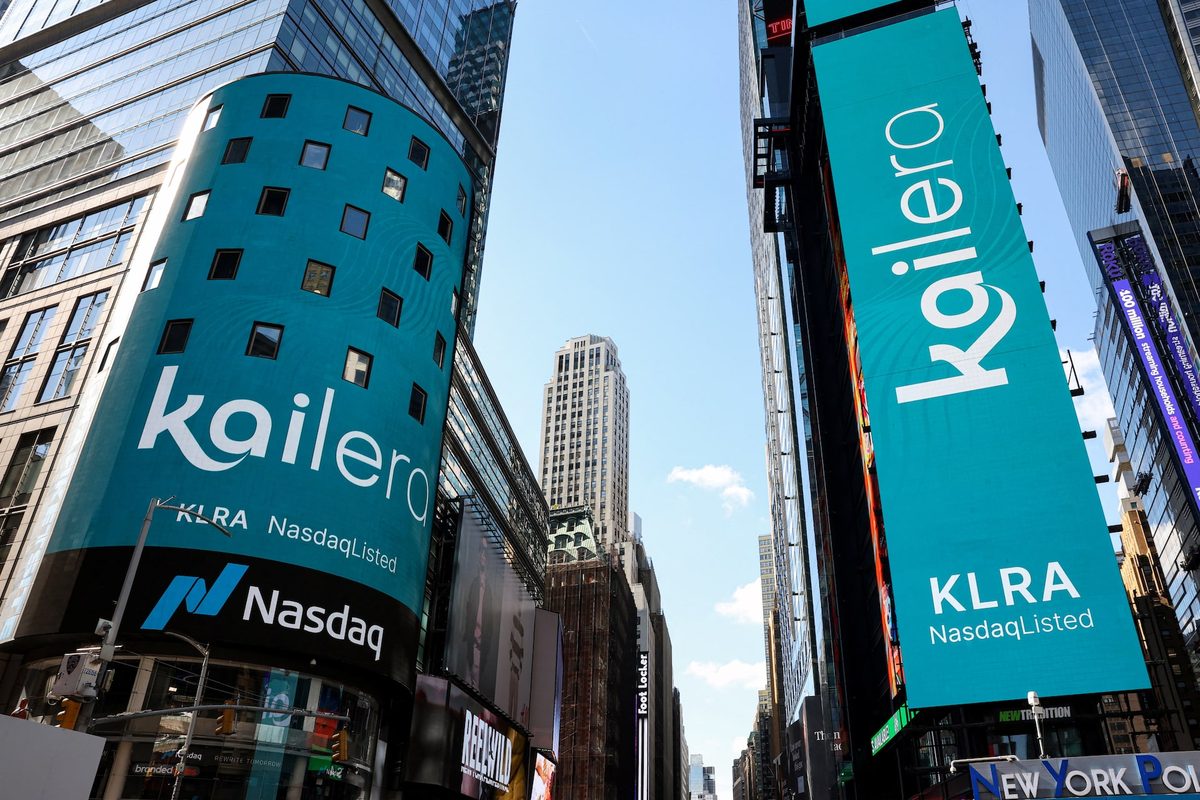

Kailera Therapeutics just pulled off the largest biotech initial public offering in history, raising $625 million and watching its shares surge 62.5% on the first day of trading. The company, founded less than two years ago with drugs licensed from a Chinese pharmaceutical firm, is now valued at roughly $3.5 billion — without a single approved product. That a startup built entirely around next-generation obesity drugs can command this kind of investor enthusiasm tells you where the pharmaceutical industry's center of gravity has shifted.
The GLP-1 receptor agonist market — drugs that mimic gut hormones to suppress appetite — has ballooned from a niche diabetes treatment into what analysts project will be an $80 billion market by decade's end. Novo Nordisk and Eli Lilly currently dominate with Wegovy and Zepbound, but the field is fragmenting fast. At least a dozen companies are racing to develop pills, longer-acting injections, and multi-target molecules that could leapfrog the incumbents. Kailera's record-breaking debut is the latest signal that Wall Street sees this market as far from settled.
Why it matters
Obesity drugs that actually work are reshaping healthcare economics — and the scramble to build better ones is attracting more capital than any biotech sector in history.
Key Indicators
$625M
Kailera IPO raise
Largest biotech initial public offering in history, surpassing Moderna's $600 million in 2018
62.5%
First-day share price gain
Kailera shares opened at $26 against a $16 IPO price on April 18, 2026
12.1%
Ribupatide weight loss at 26 weeks
Oral formulation in Phase 2 trial; injectable version now in global Phase 3 studies
$80B
Projected GLP-1 obesity market by 2030
Up from roughly $14 billion in 2024, driven by expanding indications and new entrants
12+
Companies with obesity drugs in clinical trials
Including Novo Nordisk, Eli Lilly, Amgen, Viking Therapeutics, Structure Therapeutics, and Kailera
Kailera surges 62.5% in record-breaking $625M biotech IPO
Market
Kailera Therapeutics began trading on Nasdaq under ticker KLRA, with shares closing at $26 — a 62.5% gain over the $16 IPO price. The $625 million raise surpassed Moderna's 2018 record as the largest biotech IPO in history.
FDA approves Eli Lilly's oral obesity pill orforglipron
Regulatory
Eli Lilly's orforglipron became the second oral GLP-1 approved for obesity, setting up a direct pill-versus-pill competition with Novo Nordisk's oral Wegovy.
Oral ribupatide shows 12.1% weight loss in Phase 2
Clinical
Kailera and Hengrui reported that once-daily oral ribupatide produced 12.1% mean weight loss at 26 weeks in a 166-patient trial, with 59.1% of participants on the 25 mg dose losing at least 10% of body weight.
Kailera begins Phase 3 trials for injectable ribupatide
Clinical
Kailera announced the first patients randomized in its KaiNETIC global Phase 3 program — three trials enrolling a combined 4,700 adults to evaluate weekly ribupatide injections over 76 weeks.
Oral Wegovy launches in the United States
Market
Novo Nordisk began selling its Wegovy pill at U.S. pharmacies, priced between $149 and $299 per month. The drug hit 50,000 weekly prescriptions within three weeks.
FDA approves oral Wegovy, first GLP-1 pill for obesity
Regulatory
Novo Nordisk's oral semaglutide (Wegovy pill) won FDA approval for weight management, showing 16.6% mean weight loss in the OASIS 4 trial — comparable to the injectable version.
Kailera launches with $400 million Series A
Business
Kailera Therapeutics emerged from stealth with $400 million in Series A funding co-led by Atlas Venture, Bain Capital Life Sciences, and RTW Investments to develop next-generation obesity therapies.
Kailera licenses obesity drug portfolio from Hengrui
Business
Kailera Therapeutics acquired exclusive global rights (outside greater China) to four metabolic disease assets from Jiangsu Hengrui Pharmaceuticals, including the dual GLP-1/GIP agonist ribupatide.
Zepbound approved, intensifying the obesity drug race
Regulatory
The FDA approved tirzepatide as Zepbound for chronic weight management. With up to 22.5% weight loss in trials, Eli Lilly now had a direct competitor to Wegovy with superior efficacy data.
Semaglutide shows cardiovascular benefit beyond weight loss
Clinical
Novo Nordisk's SELECT trial demonstrated that semaglutide reduced major cardiovascular events in obese patients — expanding the medical rationale for GLP-1 drugs beyond weight management alone.
Eli Lilly enters the field with Mounjaro
Regulatory
The FDA approved tirzepatide (Mounjaro), a dual GLP-1/GIP agonist, for type 2 diabetes. Its superior weight-loss results foreshadowed a direct challenge to Novo Nordisk's dominance.
Wegovy becomes first GLP-1 approved for weight loss
Regulatory
The FDA approved higher-dose semaglutide (Wegovy) for chronic weight management in adults with obesity, creating an entirely new treatment category. Clinical trials showed roughly 15-17% body weight reduction.
FDA approves Ozempic, launching the GLP-1 era
Regulatory
The Food and Drug Administration approved Novo Nordisk's semaglutide injection (Ozempic) for type 2 diabetes, establishing the drug class that would later reshape obesity treatment.
Discussed by: Biotech analysts at JP Morgan and Benzinga; parallels drawn to Ron Renaud's track record of selling all three of his previous companies to Big Pharma
If the KaiNETIC Phase 3 trials, with results expected in 2028, show ribupatide matching or exceeding tirzepatide's efficacy with a favorable safety profile, Kailera becomes an attractive acquisition candidate for a large pharmaceutical company seeking to enter or expand in the obesity market. Renaud has sold his last three companies for a combined $16 billion. Roche, AstraZeneca, and Pfizer — all of which lack marketed GLP-1 obesity drugs — would be logical acquirers.
2
Market saturation compresses margins; late entrants struggle to differentiate
Discussed by: JP Morgan Global Research, PharmaVoice analysts covering the crowded GLP-1 pipeline
With Novo Nordisk already seeing sales declines from pricing pressure, a flood of new entrants — Kailera, Viking, Amgen, Structure, and others — could saturate the market before Kailera reaches commercialization. If oral Wegovy and orforglipron capture most of the pill market and Amgen's MariTide locks up the long-acting injectable segment, Kailera may struggle to carve out differentiated positioning, putting pressure on its $3.5 billion valuation.
3
Oral ribupatide trails competitors in Phase 3, dimming Kailera's prospects
Discussed by: Biotech skeptics noting that 12.1% oral weight loss at 26 weeks trails oral Wegovy's 16.6% in the OASIS 4 trial
Ribupatide's Phase 2 oral data showed 12.1% weight loss at 26 weeks, while Novo Nordisk's oral semaglutide achieved 16.6% in its pivotal study. If the gap holds or widens in Phase 3, and if the injectable form doesn't show a clear advantage over tirzepatide, Kailera's pipeline may look like a me-too offering in an increasingly crowded field. The company has no revenue and years of clinical development ahead.
4
GLP-1 market expands beyond weight loss; Kailera rides the wave
Discussed by: CNBC, JP Morgan, and clinical researchers studying GLP-1 benefits for cardiovascular disease, liver disease, sleep apnea, and addiction
GLP-1 drugs are showing benefits far beyond weight loss — cardiovascular risk reduction, liver disease treatment, and sleep apnea relief have already won FDA approvals. If Kailera's multi-target pipeline (especially the triple-agonist KAI-4729) captures any of these expanding indications, the addressable market grows dramatically. Kailera's four-asset portfolio gives it multiple shots on goal across both injectable and oral formulations.
Historical Context
Moderna's Record Biotech IPO (2018)
December 2018
What Happened
Moderna, then an unproven messenger RNA (mRNA) therapeutics company with no approved products, raised $604 million in the largest biotech IPO at the time, pricing at $23 per share. Many analysts questioned the valuation of a company built entirely on an experimental technology platform.
Outcome
Short Term
Shares dropped below the IPO price within weeks, and skeptics called the offering overhyped. The company continued to burn cash developing its mRNA pipeline.
Long Term
The COVID-19 pandemic vindicated the bet spectacularly. Moderna's mRNA vaccine generated tens of billions in revenue, and the stock reached over $400 per share at its peak — a roughly 17-fold return from the IPO price.
Why It's Relevant Today
Kailera's $625 million raise directly surpasses Moderna's record. Both companies went public on the promise of a transformative therapeutic platform with no approved products. The parallel raises the central question: is Kailera another visionary bet, or does the crowded obesity field make the comparison less apt?
Eli Lilly's Tirzepatide Disruption (2022-2023)
May 2022 – November 2023
What Happened
Eli Lilly's tirzepatide, a dual GLP-1/GIP agonist, won FDA approval for diabetes (as Mounjaro) in May 2022 and for obesity (as Zepbound) in November 2023. Its SURMOUNT trials showed up to 22.5% weight loss — significantly outperforming Novo Nordisk's semaglutide and proving that dual-receptor targeting could deliver superior results.
Outcome
Short Term
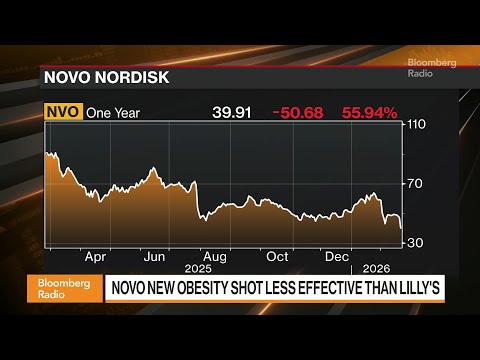
Lilly rapidly gained market share, and Novo Nordisk's stock fell as investors reassessed its competitive position. Zepbound demand outstripped supply within weeks of launch.
Long Term
Lilly overtook Novo Nordisk in GLP-1 market share by 2026, with projected revenues of $80-83 billion. The success validated dual-agonist approaches and triggered a wave of investment in multi-target obesity drugs.
Why It's Relevant Today
Kailera's ribupatide is also a dual GLP-1/GIP agonist, the same mechanism that allowed Lilly to leapfrog Novo Nordisk. The precedent shows that second-movers with superior or differentiated mechanisms can capture enormous value — but also that the bar for efficacy keeps rising.
China-to-Global Drug Licensing Boom (2020s)
2020 – present
What Happened
A wave of Western biotech companies began licensing drug candidates from Chinese pharmaceutical firms, reversing the traditional flow of innovation. Companies like Legend Biotech (partnered with Johnson & Johnson on the CAR-T therapy Carvykti) demonstrated that Chinese-developed therapies could win global regulatory approval and commercial success.
Outcome
Short Term
Deal volume surged, with billions in licensing fees flowing to Chinese drugmakers. U.S.-listed biotechs built around Chinese-origin assets attracted significant venture capital.
Long Term
The trend established China as a legitimate source of globally competitive drug candidates, though it also raised questions about intellectual property protection, regulatory scrutiny, and geopolitical risk.
Why It's Relevant Today
Kailera's entire pipeline — all four candidates — is licensed from Hengrui Pharmaceuticals. The company's success or failure will be a bellwether for the viability of the China-to-global licensing model in the competitive obesity drug space.