


Pull to refresh
Logo
NASA's ESCAPADE twins swing past Earth toward Mars

NASA's ESCAPADE twins swing past Earth toward Mars

New Capabilities

Two small spacecraft pulled off the first powered Earth flybys NASA has used to send a mission to Mars, trading a two-year launch wait for a year-long detour

Overview

Updated 1 hour ago

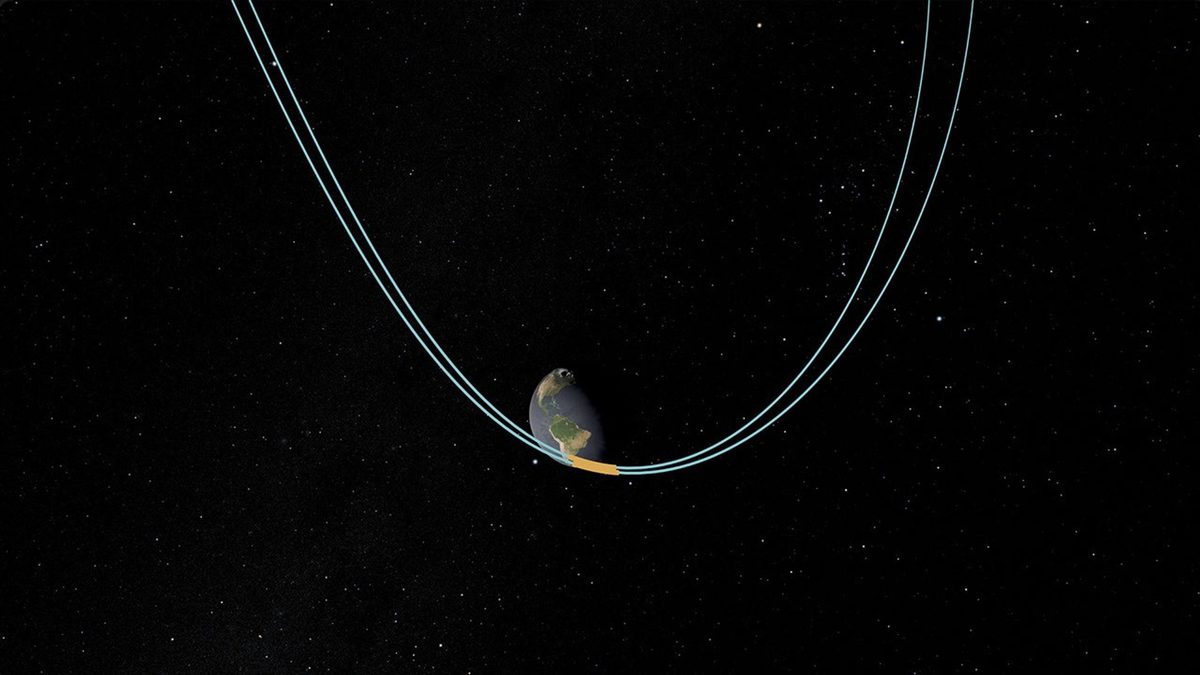
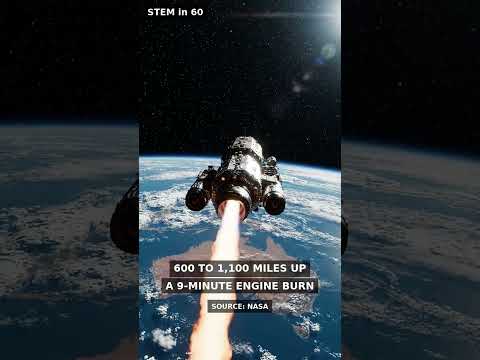
On November 7, one of NASA's two ESCAPADE spacecraft skimmed about 1,000 miles above Earth and fired its engine for roughly nine minutes. Two days later, its twin did the same at about 650 miles. Both are now on course for Mars.

The maneuver is called a powered flyby, or Oberth maneuver. Earth's gravity plus the burn added more than 1,000 mph, pushing each spacecraft from about 6.3 miles per second to roughly 6.7. No Mars-bound NASA spacecraft had flown one before, and NASA executed two in three days.

Why it matters

If the loiter-then-slingshot route holds up, Mars launch windows stop being a 26-month bottleneck.

Questions about this story

Free account needed to ask — your question is kept and asked for you right after sign-up. Answers are public.

No questions yet — be the first to ask.

Key Indicators

2
Spacecraft on the mission
Gold and Blue will fly in formation around Mars, arriving two days apart.
~9 min
Length of each trans-Mars injection burn
The engine firing that commits each spacecraft to its Mars trajectory.
~1,000 mph
Speed added by the burn
From about 6.3 miles per second to about 6.7, courtesy of the Oberth effect.
10 months
Cruise time to Mars
Trajectory correction maneuvers will fine-tune the path along the way.
Sept 2027
Planned Mars arrival
Orbit insertion burns are planned for September 7 and September 9, 2027.

Voices

Curated perspectives — historical figures and your fellow readers.

Sign up to generate historical perspectives on this story.

People Involved

Organizations Involved

Timeline

November 2025 November 2026

3 events Latest: Today
  1. Second spacecraft completes powered Earth flyby

    Today Maneuver

    Blue follows two days later at about 650 miles altitude, finishing the pair's trans-Mars injection.

  2. First spacecraft completes powered Earth flyby

    Maneuver

    Gold passes about 1,000 miles above Earth and fires its engine for roughly nine minutes, committing itself to Mars.

  3. ESCAPADE launches into a year-long detour

    Launch

    The twin spacecraft lift off from Cape Canaveral on Blue Origin's New Glenn and enter a loiter orbit around the Earth-Sun Lagrange point 2.

Scenarios

1

Both spacecraft enter Mars orbit in September 2027

Likely Resolves by Sep 15, 2027

Discussed by: NASA mission planners and the ESCAPADE science team, who have published insertion dates of September 7 and 9

Each spacecraft fires its engine for about 11 minutes to slow down and be captured by Martian gravity. They settle first into large orbits lasting around 60 hours, then work inward before a solar conjunction cuts communications in late 2027. This is the nominal plan.

2

One spacecraft is lost before Mars arrival

Unlikely Resolves by Sep 9, 2027

Discussed by: No official prediction; this is the standard failure branch for a 10-month cruise with multiple engine burns

The mission depends on two functioning spacecraft to make simultaneous measurements. A failure in a trajectory correction maneuver or the orbit insertion burn for one of them would leave a single orbiter and cut the paired-observation science the mission was built for.

3

Twin-orbiter science campaign begins on schedule in 2028

Possible Resolves by End of 2028

Discussed by: NASA and the Berkeley science team, who have scheduled the first science phase for June 2028

After orbit adjustments and a solar conjunction blackout, the two spacecraft move into the same orbit and begin following one another. Six months later they separate into different orbits, one farther out to watch the incoming solar wind and one closer in to watch Mars respond.

Historical Context

3 moments from history that rhyme with this story — and how they unfolded.

July 2020

The 2020 Mars launch window (July 2020)

Three Mars missions launched within 11 days: the United Arab Emirates' Hope orbiter on July 19, China's Tianwen-1 on July 23, and NASA's Perseverance rover on July 30. All three were racing the same planetary alignment.

Then

All three arrived at Mars in February 2021, roughly seven months after launch.

Now

The cluster became the standard illustration of how tightly Mars launches are bound to a roughly 26-month cycle.

Why this matters now

ESCAPADE launched outside that cycle and used a loiter orbit to buy its way back into alignment, which is the constraint the mission is testing an alternative to.

August 2004 - March 2011

MESSENGER's flyby chain to Mercury (2004-2011)

NASA's MESSENGER launched in August 2004 and spent nearly seven years reaching Mercury. It flew past Earth once, Venus twice and Mercury three times before firing its main engine to enter orbit on March 18, 2011.

Then

Theflybys bled off speed and reshaped the trajectory enough for a small spacecraft to be captured by the Sun's gravity well.

Now

MESSENGER orbited Mercury for four years, mapping the planet and confirming water ice in permanently shadowed craters.

Why this matters now

It shows how a mission can substitute planetary encounters for fuel and launch-window timing, the same trade ESCAPADE makes with a single Earth flyby plus an engine burn.

November 1971

Mariner 9 arrives at Mars (1971)

Mariner 9 became the first spacecraft to orbit another planet when it arrived at Mars on November 14, 1971. A global dust storm was raging, hiding the surface from its cameras.

Then

The team waited out the storm, then photographed the surface and mapped about 85% of the planet.

Now

Orbital mapping replaced flyby snapshots as the standard way to study Mars.

Why this matters now

Orbit insertion is where a Mars mission stops being a trajectory problem and starts producing science. ESCAPADE's two insertion burns in September 2027 mark the same transition.

Sources

(6)