
Pull to refresh
Logo
Antarctic ozone hole grows to seventh-largest on record as the layer keeps healing

Antarctic ozone hole grows to seventh-largest on record as the layer keeps healing

Rule Changes

A strong polar vortex pushed the 2026 hole to 9.6 million square miles on average, while chlorine levels continue to fall under the Montreal Protocol

Overview

Updated 1 hour ago

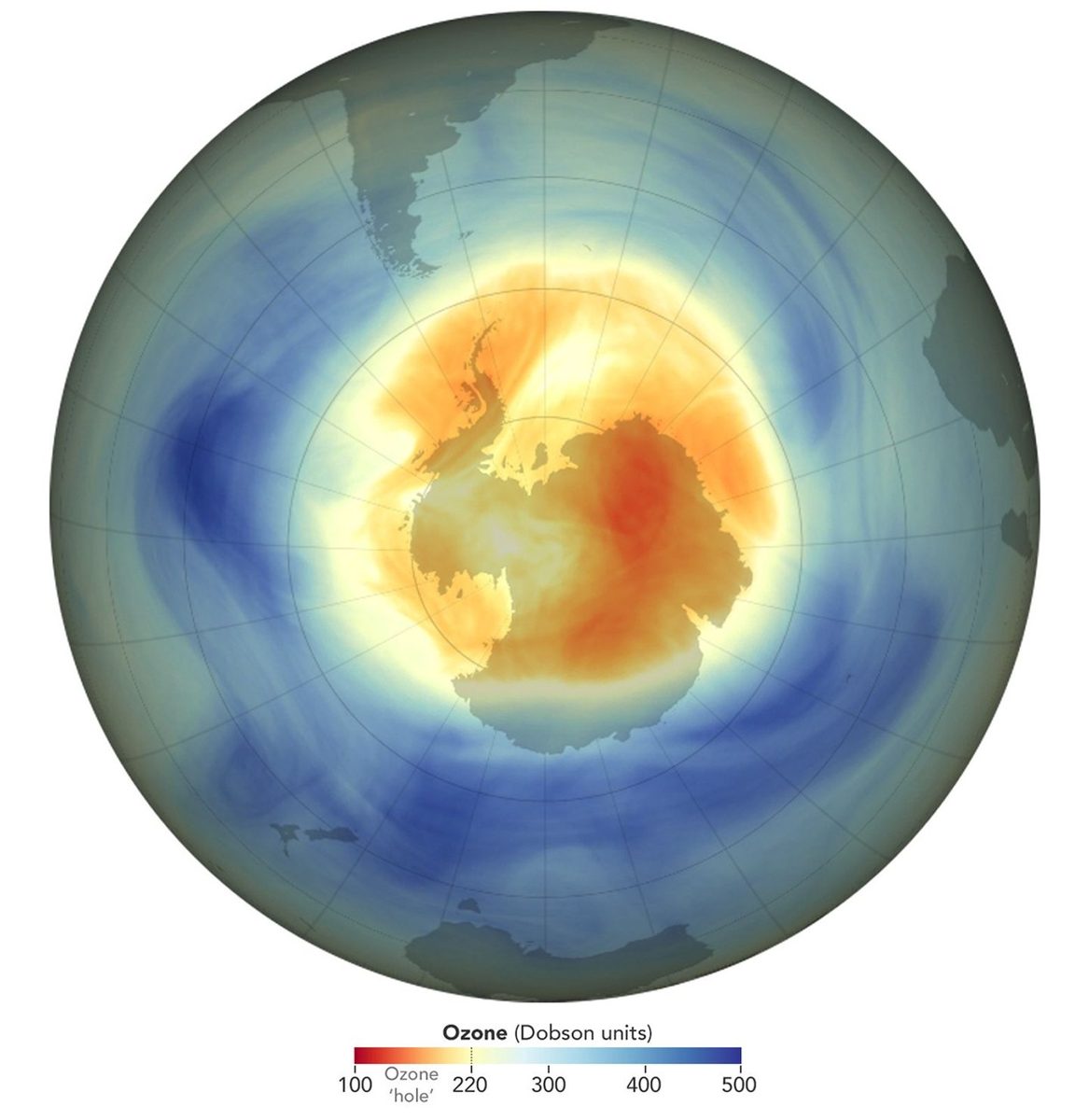
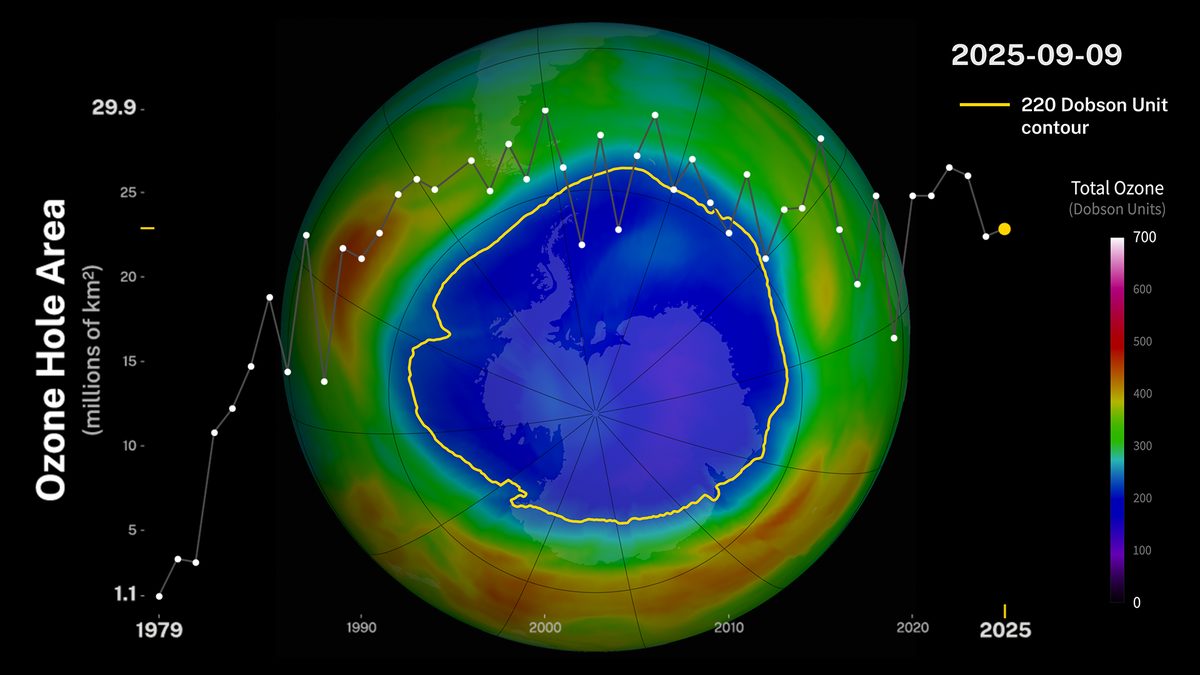
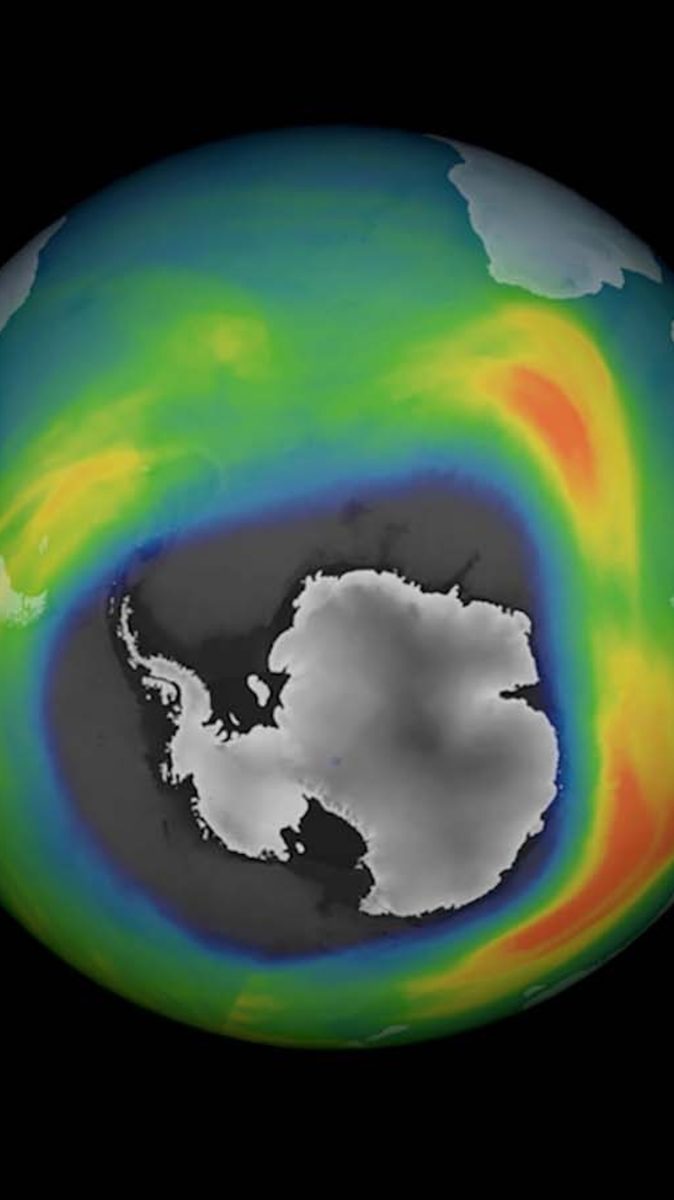
On September 18, the hole in the ozone layer over Antarctica covered 10.5 million square miles, about 90% of the largest single-day extent ever measured. Averaged across the peak depletion season from September 7 to October 13, it was the seventh-largest hole in 48 years of satellite records.

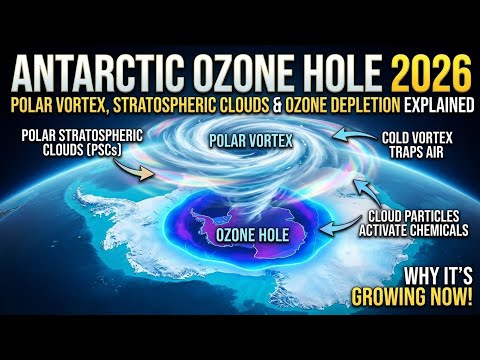
The cause was weather, not new chemicals. An unusually strong and cold polar vortex held the conditions that destroy ozone in place longer than usual. Chlorine in the Antarctic stratosphere is down about a third from its 1980s peak, and NOAA and NASA say the layer is still on course to recover by the 2070s.

Why it matters

Ozone is the one global environmental problem with a working fix. 2026 shows the repair is real, but weather still rules year to year.

Questions about this story

Free account needed to ask — your question is kept and asked for you right after sign-up. Answers are public.

No questions yet — be the first to ask.

Key Indicators

25 million sq km
Average extent of the 2026 ozone hole
Measured over the peak depletion season, September 7 to October 13.
27.1 million sq km
Largest single-day extent in 2026
Reached on September 18, about 90% of the record set on September 9, 2000.
7th
Rank by seasonal mean area
Seventh-largest of 48 years of records kept since 1979.
105 Dobson units
Lowest ozone reading over the South Pole in 2026
Recorded on October 17, against a record low of 92 Dobson units in October 2006.
About one-third
Decline in Antarctic stratospheric chlorine since the 1980s
NOAA's measure of how far ozone-depleting chemicals have fallen from their peak.
2070s
Projected recovery date for the Antarctic ozone layer
The point at which ozone is expected to return to 1980 levels.

Voices

Curated perspectives — historical figures and your fellow readers.

Sign up to generate historical perspectives on this story.

People Involved

Organizations Involved

Timeline

1987 November 2026

11 events Latest: Today Showing 8 of 11
Tap a bar to jump to that date
  1. ScienceDaily reports the decade-high ozone hole

    Today Coverage

    Report frames the 2026 hole as the largest in a decade while noting treaty-driven recovery.

  2. NOAA and NASA publish 2026 ozone hole results

    Statement

    The seasonal mean ranks seventh-largest in 48 years; scientists say recovery remains on track.

  3. South Pole ozone hits its 2026 low

    Measurement

    Balloon instruments record 105 Dobson units overhead, well above the 2006 record low.

  4. 2026 ozone hole reaches its peak size

    Measurement

    The hole covers 10.5 million square miles, about twice the area of the United States.

  5. Smallest ozone hole since 1982

    Measurement

    Abnormal upper-atmosphere weather over Antarctica sharply limits depletion for the season.

  6. First direct satellite evidence of ozone recovery

    Research

    Scientists measure a 20% drop in Antarctic winter ozone depletion between 2005 and 2016.

  7. Lowest ozone reading over the South Pole

    Measurement

    Balloon instruments record 92 Dobson units, the deepest overhead reading on record.

  8. Largest single-day ozone hole ever observed

    Measurement

    The hole reaches its record extent; 2026 would peak at about 90% of that size.

  9. Deepest ozone hole on record

    Measurement

    Concentrations fall to 73 Dobson units, the lowest ever recorded in the hole's core.

  10. Ozone over Antarctica falls below 100 Dobson units for the first time

    Measurement

    Readings under 100 Dobson units become more common after this threshold is crossed.

  11. Montreal Protocol adopted

    Treaty

    Countries agree to phase out chlorofluorocarbons and other chemicals that destroy stratospheric ozone.

Scenarios

1

2027 ozone hole ranks in the top ten again

Possible Resolves by Nov 30, 2027

Discussed by: NOAA and NASA researchers, who attribute large years to stratospheric weather rather than chemical levels

A second strong, cold polar vortex would keep the hole near the top of the record again in 2027 despite falling chlorine. This is the outcome scientists expect if planetary wave activity stays weak through August and September, the pattern that drove 2026. It would not indicate the treaty is failing, but it would keep the public reading large numbers.

2

2027 ozone hole falls back out of the top ten

Likely Resolves by Nov 30, 2027

Discussed by: Ozone researchers who note that year-to-year size swings track stratospheric temperature, not chlorine trends

A normal or disturbed polar vortex would break up the cold conditions early, shrinking the hole toward the average of the last two decades. The 2019 season showed how fast that can happen: unusual upper-atmosphere weather produced the smallest hole since 1982 with no change in the chemicals involved. A smaller 2027 hole would fit the same pattern.

3

Scientific assessment keeps Antarctic recovery on the 2070s track

Likely Resolves by End of 2028

Discussed by: NOAA, NASA and the Ozone Secretariat, which all cite the 2070s as the expected recovery date

The next WMO and UNEP Scientific Assessment of Ozone Depletion is the venue where the recovery timetable gets formally restated or revised. If it keeps the 2070s projection, the 2026 hole becomes a weather story inside a slow, successful repair. A revision would signal that some part of the chemical decline or the climate response is behaving differently than models expected.

Historical Context

3 moments from history that rhyme with this story — and how they unfolded.

1987

Montreal Protocol (1987)

After researchers linked chlorofluorocarbons, long used in refrigerators and aerosol sprays, to ozone destruction, countries agreed to phase out their production and consumption. The treaty was later strengthened and extended, and industrial substitutes replaced the banned compounds. It remains the only environmental agreement with near-universal participation.

Then

CFC production fell sharply through the 1990s, but concentrations in the stratosphere kept rising for years because the chemicals persist for decades.

Now

Chlorine in the Antarctic stratosphere is now about one-third below its 1980s peak, and the ozone layer is projected to return to 1980 levels in the 2070s.

Why this matters now

Every statement about the 2026 hole being large but not larger rests on the chemical decline this treaty produced.

September 2000

Record ozone hole (September 2000)

With stratospheric chlorine near its maximum, the Antarctic hole reached its largest single-day extent ever recorded, on September 9, 2000. That year is the benchmark NOAA uses when it describes how much damage the chemicals would have done without the treaty.

Then

The 2000 season set an area record that no year since has matched.

Now

NOAA estimates the 2026 hole would have been 1 to 2 million square miles larger if atmospheric chlorine still matched 2000 levels.

Why this matters now

It gives the 2026 hole a fixed yardstick and shows how much of the current size is weather rather than chemistry.

2019

The smallest hole in decades (2019)

Abnormal weather patterns in the upper atmosphere over Antarctica disrupted the polar vortex and sharply limited ozone depletion. The result was the smallest ozone hole since 1982, in a year with essentially the same chlorine levels as its neighbours.

Then

The 2019 season showed how much a single year's stratospheric weather can swing the hole's size.

Now

It became the standard example scientists cite when a large or small hole is reported: chemistry sets the trend, weather sets the year.

Why this matters now

It is the mirror image of 2026, where a strong vortex produced a large hole in a year of falling chlorine.

Sources

(5)