

Pull to refresh
Logo
NASA moon orbiter finds 728-foot crater that wasn't there before

NASA moon orbiter finds 728-foot crater that wasn't there before

New Capabilities

Largest newly formed crater ever identified also created a miles-wide cold spot

Today: NASA announces discovery publicly

Overview

Updated 1 hour ago

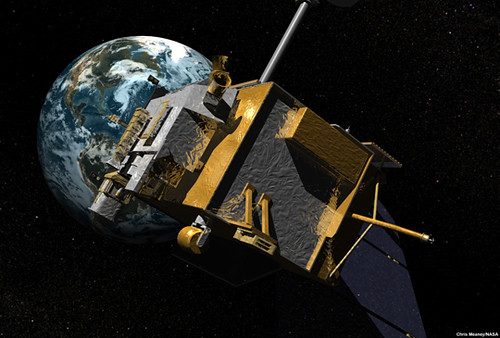
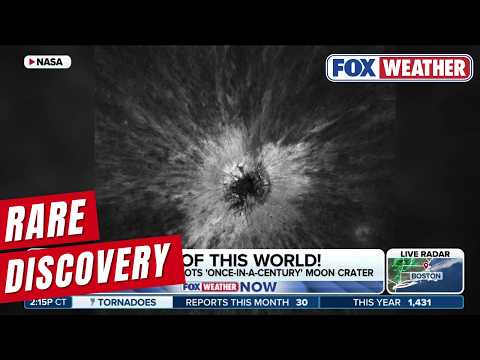
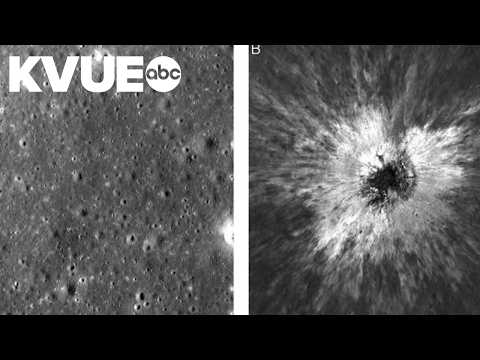
A routine data-quality check turned up the largest newly formed crater ever found in the solar system. The National Aeronautics and Space Administration (NASA) Lunar Reconnaissance Orbiter spotted a 728-foot-wide crater on the Moon that wasn't in 2011 images.

The impact happened between April 11 and May 22, 2024, when an asteroid or comet the size of a three- to six-story building hit the lunar surface. It also created a 4-mile-wide cold spot around the crater. The data will help NASA assess the risk of impacts and ejected debris striking its planned moon base.

Why it matters

The crater data will help NASA assess the risk of impacts and ejected debris striking its planned moon base.

Questions about this story

Free account needed to ask — your question is kept and asked for you right after sign-up. Answers are public.

No questions yet — be the first to ask.

Key Indicators

222 m
Crater diameter
The McGetchin crater spans 728 feet, about the length of two football fields.
7 km
Cold spot width
The impact disturbed a 4-mile-wide area around the crater, making it cooler at night.
8 K
Nighttime temperature drop
The cold spot is about 16 degrees Fahrenheit cooler at night than surrounding terrain.
1,000+
New craters identified by LRO
LRO has identified at least 1,000 new impact craters during its 17-year mission.
~130 years
Estimated impact frequency
Impacts of this magnitude are estimated to occur about once every 100 to 130 years.

Voices

Curated perspectives — historical figures and your fellow readers.

Ever wondered what historical figures would say about today's headlines?

Sign up to generate historical perspectives on this story.

People Involved

Organizations Involved

Timeline

June 2009 September 2026

7 events Latest: Today
Tap a bar to jump to that date
  1. NASA announces discovery publicly

    Today Announcement

    NASA and ScienceDaily report the discovery to the public.

  2. Cold spot paper published

    Publication

    A second paper reports the cold spot and explains the regolith loosening mechanism.

  3. First paper published in Science Advances

    Publication

    Researchers report the discovery of the McGetchin crater, the largest newly formed crater ever identified.

  4. Diviner begins thermal follow-up

    Observation

    LRO's thermal instrument maps the crater area, revealing a 4-mile-wide cold spot.

  5. Wagner spots crater in summer images

    Discovery

    Robert Wagner notices an unusually large bright spot during a routine data-quality check of LRO images.

  6. Impact window opens on the Moon

    Impact

    An asteroid or comet the size of a three- to six-story building strikes the Moon's eastern edge sometime between April 11 and May 22, 2024.

  7. LRO launches to map the Moon

    Launch

    NASA's Lunar Reconnaissance Orbiter launches to map the Moon's surface.

Scenarios

1

NASA publishes lunar base impact risk assessment

Likely Resolves by End of 2027

Discussed by: Mark Robinson, NASA LRO team

Robinson said the next step is to calculate the risk of ejected crater material striking NASA's planned moon base. The McGetchin crater data, including the extent of the ejecta blanket and the cold spot, will inform this assessment. Engineers could use the data to harden structures against impact damage.

2

McGetchin crater becomes a calibration standard for impact studies

Likely Resolves by End of 2028

Discussed by: LRO science team, planetary science community

The crater is the largest newly formed impact crater ever observed, making it a unique reference point. Future studies may use it to calibrate impact frequency estimates and ejecta models. The cold spot, which fades over timescales of 100,000 to 2 million years, could also serve as a dating marker for young craters.

3

LRO discovers an even larger new crater

Unlikely Resolves by End of 2028

Discussed by: LRO mission team

LRO has identified at least 1,000 new impact craters during its 17-year mission. A larger one could be found as the spacecraft continues to map the Moon, though impacts of this scale are estimated to occur only once every 100 to 130 years.

Historical Context

3 moments from history that rhyme with this story — and how they unfolded.

October 2009

LCROSS mission (2009)

NASA deliberately crashed a Centaur rocket stage into the Moon's south pole on October 9, 2009, to study the ejecta plume. The mission confirmed the presence of water ice in permanently shadowed craters.

Then

The impact created a visible plume and confirmed water ice.

Now

It showed how impact ejecta can reveal subsurface composition, informing future lunar exploration.

Why this matters now

LCROSS demonstrated the value of studying impact ejecta, which is what the McGetchin crater discovery also does.

March 2013

2013 lunar impact flash (March 2013)

On March 17, 2013, a meteoroid about the size of a small boulder hit the Moon, creating a flash bright enough to be seen from Earth. It was the brightest lunar impact ever recorded at the time.

Then

The impact was captured on video by telescopes monitoring the Moon.

Now

It showed that lunar impacts can be observed in real-time from Earth, providing data on impact frequency.

Why this matters now

Like McGetchin, it demonstrated that impacts on the Moon happen more often than previously thought and can be studied in detail.

January 2019

2019 lunar eclipse impact (January 2019)

A meteoroid struck the Moon during the total lunar eclipse on January 21, 2019, creating a flash captured on video by observers worldwide. The impactor was estimated to be about the size of a small car.

Then

The flash was widely documented and analyzed.

Now

It showed that even small impacts can be detected and studied, contributing to impact frequency estimates.

Why this matters now

Like McGetchin, it was a newly formed crater detected through careful observation, though much smaller in scale.

Sources

(10)