

Pull to refresh
Logo
Buried volcanic complex on Moon's far side points to ancient magnetic field

Buried volcanic complex on Moon's far side points to ancient magnetic field

New Capabilities

ETH study combines orbital gravity and magnetic data to find evidence of a lunar dynamo 4.2 billion years ago

Today: Study finds buried magnetized body at Dewar

Overview

Updated 1 hour ago

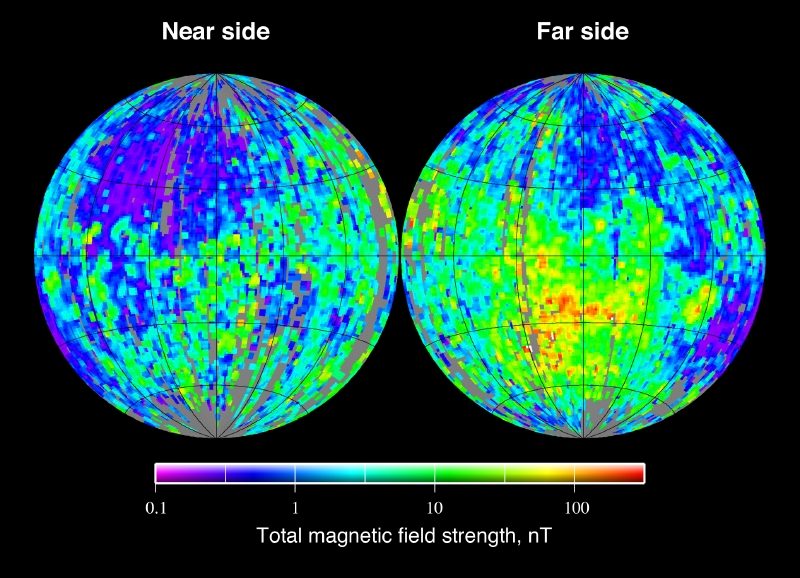
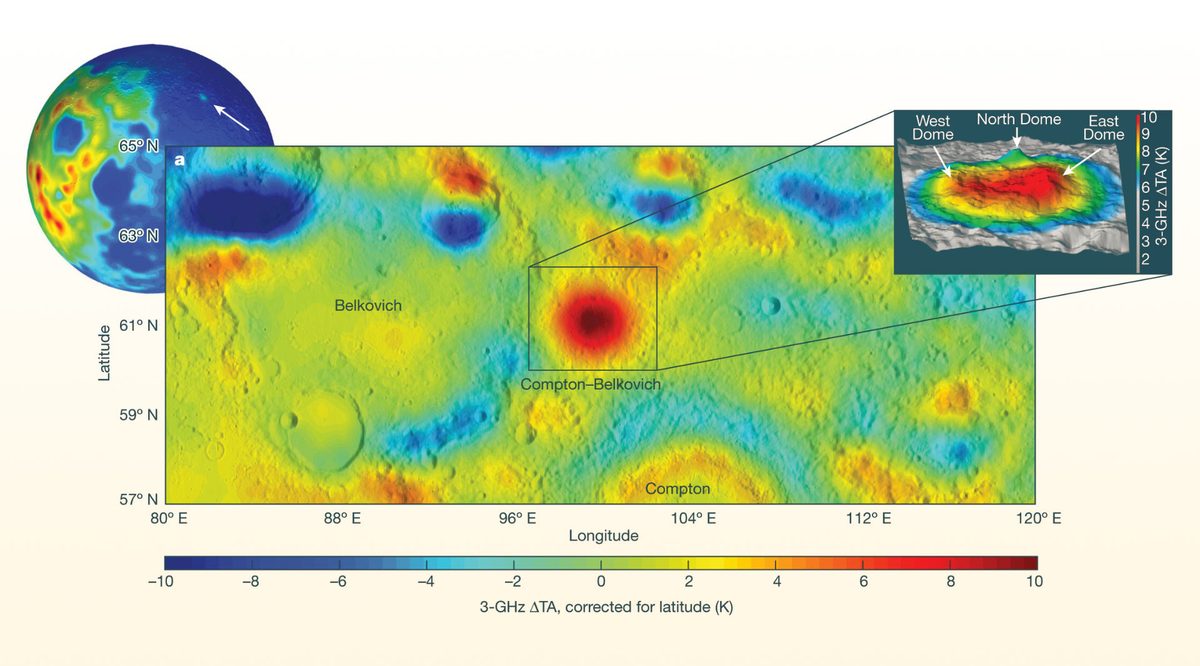
ETH Zurich researchers combined gravity and magnetic measurements from orbiting probes and found a buried, strongly magnetized volcanic complex beneath the Moon's far side. The 4.2-billion-year-old structure, roughly 60 kilometers wide, is the strongest evidence yet that the Moon once generated its own magnetic field.

The finding supports the dynamo theory over the competing impact explanation. It leaves an open puzzle: how did the Moon's small core produce a field of at least 10 microtesla? It also points to where magnetic field lines could shield future astronauts from solar wind.

Why it matters

If the Moon once had a magnetic field, it rewrites lunar history and points astronauts to solar-wind-shielded regions.

Questions about this story

Free account needed to ask — your question is kept and asked for you right after sign-up. Answers are public.

No questions yet — be the first to ask.

Key Indicators

>10 µT
Minimum strength of ancient lunar magnetic field
Estimated from iron in the buried volcanic body; Earth's field is about 50 µT today.
60 km
Width of buried magnetized body
The volcanic complex beneath the Moon's Dewar region.
9 km
Depth of the buried body
How far below the lunar surface the magnetized structure extends.
4.2 billion years
Age of the structure
Dated from impact deposits on the lunar surface, with a margin of about 80 million years.

Voices

Curated perspectives — historical figures and your fellow readers.

Ever wondered what historical figures would say about today's headlines?

Sign up to generate historical perspectives on this story.

People Involved

Organizations Involved

Timeline

July 1969 September 2026

5 events Latest: Today
Tap a bar to jump to that date
  1. Study finds buried magnetized body at Dewar

    Today Research

    Combining orbital gravity and magnetism, researchers find a magnetized volcanic body supporting an ancient lunar dynamo.

  2. GRAIL measures lunar gravity

    Mission

    NASA's twin GRAIL probes begin mapping lunar gravity, revealing subsurface density structure.

  3. Kaguya launches

    Mission

    Japan's Kaguya orbiter launches, later collecting high-resolution lunar magnetic data.

  4. Lunar Prospector begins mapping

    Mission

    NASA launches Lunar Prospector to map lunar magnetic fields from orbit.

  5. Apollo 11 returns first lunar samples

    Mission

    Apollo 11 brings back lunar rock, opening debate over an ancient lunar magnetic field.

Scenarios

1

Dewar targeted for direct lunar sampling

Possible Resolves by End of 2034

Discussed by: Anna Mittelholz and Yang of ETH Zurich, who note the findings are intended to assist future lunar missions in selecting priority targets.

The study's method and results make the Dewar region an attractive target for a landing or sample-return mission. NASA's Artemis program, China's Chang'e series, or JAXA could select the site, allowing direct measurement of the magnetized rock or a dynamo test through returned samples.

2

New model explains lunar core dynamo

Likely Resolves by End of 2031

Discussed by: The ETH researchers themselves, who say the question has shifted from 'Was there a dynamo?' to 'How did it work?'

Researchers publish a model showing how the Moon's relatively small core could generate a field of 10 microtesla or more. A credible mechanism would resolve the main open puzzle in the study and strengthen the dynamo interpretation.

3

Alternative mechanism undercuts dynamo theory

Unlikely Resolves by End of 2033

Discussed by: Researchers who hold that meteorite impacts could magnetize lunar rock without a dynamo.

A competing explanation challenges the dynamo reading. If new modeling or data show the Dewar magnetization could arise from impacts or an external field, the interpretation weakens and the debate reopens.

Historical Context

2 moments from history that rhyme with this story — and how they unfolded.

1998

Mars Global Surveyor detects crustal magnetism (1998)

NASA's Mars Global Surveyor orbiter detected strong, banded crustal magnetic fields in Mars's southern highlands. The fields were fossil magnetization, frozen into the rock when Mars's own global magnetic field died.

Then

The discovery established that Mars had an early dynamo that shut down early in the planet's history, leaving only crustal magnetic traces.

Now

It shaped decades of work on how small planetary bodies generate and lose magnetic fields, providing a template for reading dead dynamos from orbit.

Why this matters now

The lunar study uses the same principle: read fossil magnetization in crustal rock to infer a dynamo that no longer runs.

1970s-present

Apollo-era lunar rock analysis debate (1970s-present)

Apollo astronauts returned hundreds of kilograms of lunar rock. Sample analyses showed magnetization, but conflicting results divided researchers: some argued for an ancient lunar dynamo, others for magnetization from meteorite impacts.

Then

Re-evaluations of the Apollo samples produced contradictory conclusions, leaving the dynamo question unresolved for decades.

Now

The ETH study offers evidence independent of the disputed sample record, combining gravity and magnetic data from orbit to read the subsurface directly.

Why this matters now

This approach bypasses the sample controversy by identifying a magnetized geological structure using measurements taken entirely from lunar orbit.

Sources

(10)