
Pull to refresh
Logo
NASA rover confirms organic carbon in ancient Mars mudstones

NASA rover confirms organic carbon in ancient Mars mudstones

New Capabilities

Perseverance found complex carbon a few microns below the surface in Jezero Crater, and the program built to bring the samples home was cancelled in January.

Overview

Updated 57 minutes ago

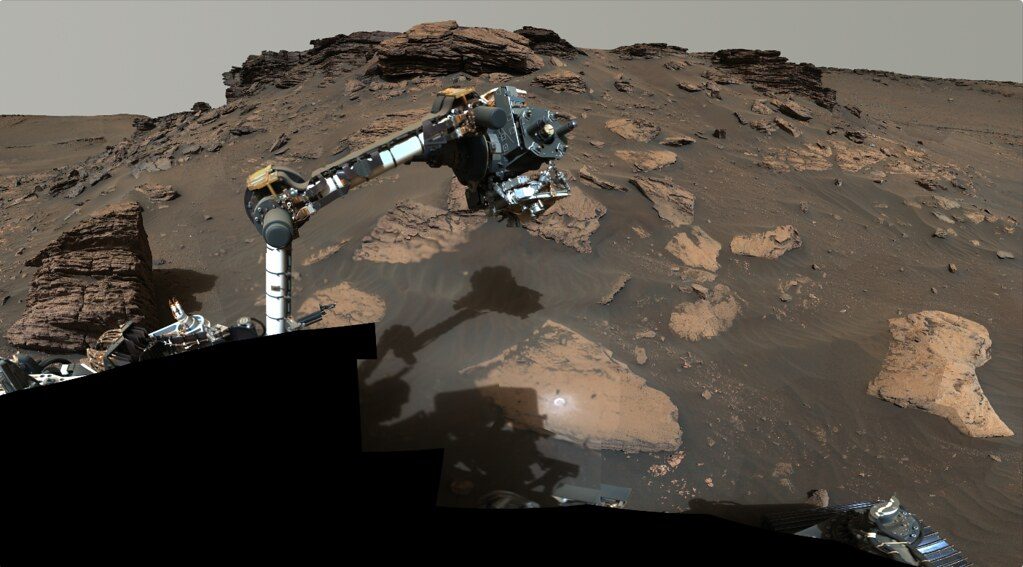
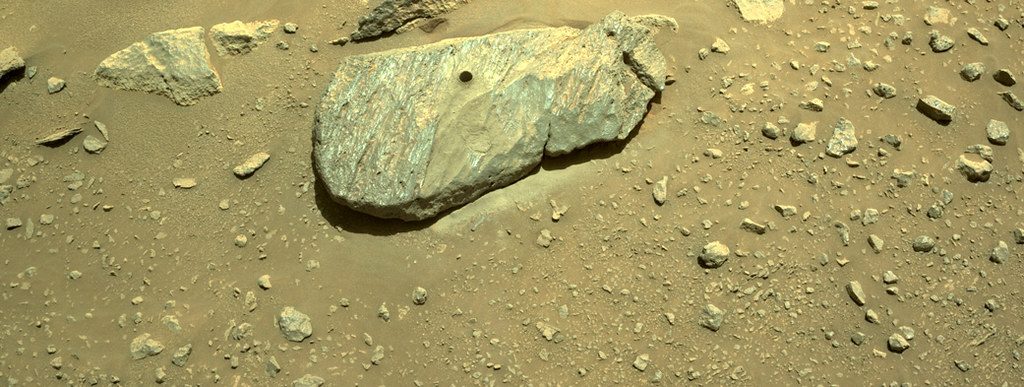
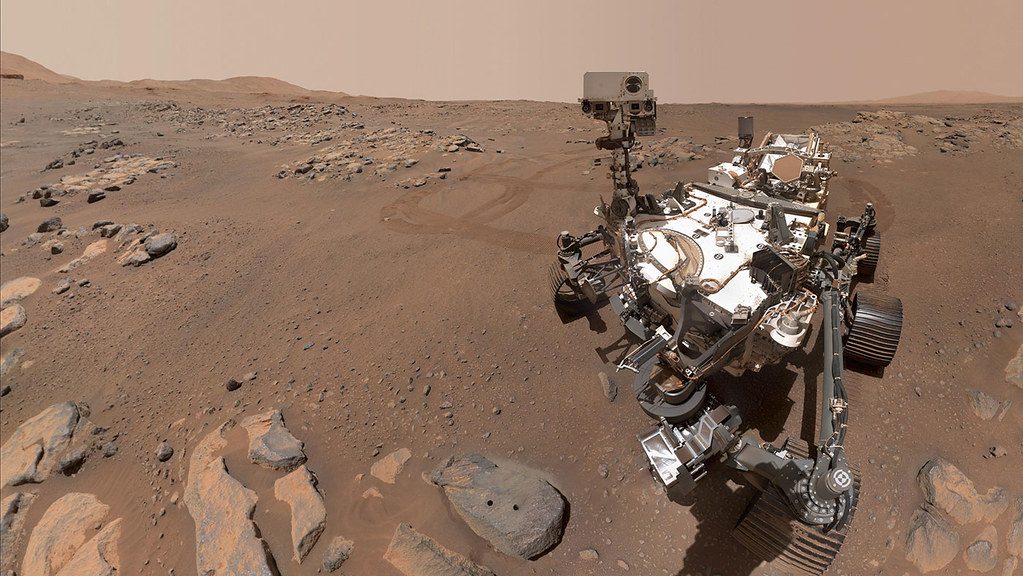
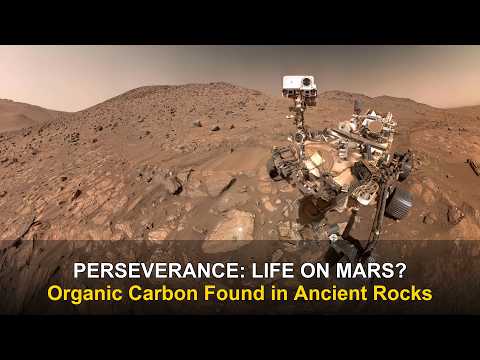
NASA's Perseverance rover has confirmed organic carbon in two mudstone rocks in Jezero Crater, the clearest evidence yet that the raw material for life was present on ancient Mars. The carbon sits a few microns below the surface, shallower than the thickness of a sheet of paper and the shallowest such detection ever made there.

The rocks lie more than 2,000 miles from Gale Crater, where NASA's Curiosity rover found organic molecules in 2018. Carbon at both sites suggests the chemistry was not confined to one lake. It does not show that anything lived.

Why it matters

If organic carbon was common in ancient Martian water, habitable chemistry was widespread. Proving whether life used it needs samples with no ride home.

Questions about this story

Free account needed to ask — your question is kept and asked for you right after sign-up. Answers are public.

No questions yet — be the first to ask.

Key Indicators

2
Rocks with confirmed organic carbon
Both from the Bright Angel formation, examined by the SHERLOC instrument.
A few microns
Depth of the shallowest detection
Less than a sheet of paper thick, where radiation and oxidants are expected to destroy organics.
0
Perseverance sample tubes delivered to Earth
Congress ended the Mars Sample Return program in January 2026; the sealed tubes remain on the surface.
$110M
Funding for NASA's Mars Future Missions line
The smaller program that replaced Mars Sample Return, aimed at preserving landing technology.

Voices

Curated perspectives — historical figures and your fellow readers.

Sign up to generate historical perspectives on this story.

People Involved

Organizations Involved

Timeline

September 2025 November 2026

3 events Latest: Yesterday
  1. Organic carbon confirmed in Bright Angel mudstones

    Latest Scientific finding

    Science Advances published SHERLOC measurements showing macromolecular carbon a few microns below the surface of two ancient rocks.

  2. Congress ends the Mars Sample Return program

    Budget

    A spending bill backed the White House's cancellation and redirected the work into a smaller Mars Future Missions line funded at $110 million.

  3. Perseverance sample flagged as potential biosignature

    Scientific finding

    A Nature paper reported iron-phosphate and iron-sulfide patterns in the Cheyava Falls rock that microbes could produce, but so could non-living chemistry.

Scenarios

1

Samples stay on Mars as return funding stays cut

Likely Resolves by End of 2029

Discussed by: Science, SpaceDaily, and planetary scientists quoted in the coverage

Congress ended Mars Sample Return in January 2026 and replaced it with a $110 million technology line. If later budget cycles follow that pattern, Perseverance's sealed tubes remain on the surface and the question of biological origin stays open. Rovers can map minerals and carbon but cannot run the isotope and molecular tests that Earth laboratories can.

2

A leaner retrieval mission restores the samples' ride home

Unlikely Resolves by End of 2031

Discussed by: Mars community advocates and NASA technology planners

A future administration or Congress could fund a smaller retrieval architecture, using commercial landers or a stripped-down orbiter. NASA has kept landing technology work alive through the Mars Future Missions line, which keeps the option open in principle. Restoring a full campaign would take years of design work and a budget line well above anything now proposed.

3

Laboratory work attributes the carbon to non-living chemistry

Possible Resolves by Q2 2028

Discussed by: Planetary scientists publishing on Martian organic preservation

Researchers can test the non-biological route without returned samples. They can reproduce the mineral assemblages and carbon structures in laboratories and model how the mudstones were heated and altered after deposition. A paper concluding that abiotic chemistry explains the Bright Angel carbon would not rule out life elsewhere on Mars, but it would settle this outcrop.

Historical Context

3 moments from history that rhyme with this story — and how they unfolded.

July-November 1976

Viking landers biology experiments (1976)

Two NASA landers ran three experiments designed to detect microbial metabolism in Martian soil, plus a gas chromatograph-mass spectrometer to look for organic molecules. The labeled-release experiment produced a positive signal. The spectrometer found no organics down to parts-per-billion levels.

Then

Scientists could not agree whether the signal was biology or reactive soil chemistry.

Now

The results pushed Mars exploration toward subsurface sampling, on the theory that the surface destroys organics.

Why this matters now

The Bright Angel carbon sits a few microns down, the shallowest detection yet, which challenges the assumption that the surface destroys everything.

August 1996

ALH 84001 meteorite announcement (1996)

A NASA-led team announced that a Martian meteorite found in Antarctica contained carbonate globules, magnetite crystals, and organic molecules resembling products of microbial activity. The claim reached a televised White House press conference.

Then

The finding drew intense scrutiny and did not survive as evidence of life.

Now

It set a higher bar for biosignature claims, which is why NASA now labels such findings 'potential' until further data arrives.

Why this matters now

The September 2025 Cheyava Falls announcement and this week's carbon confirmation follow the cautious vocabulary that ALH 84001 made standard.

June 2018

Curiosity finds organics in Gale Crater (2018)

NASA's Curiosity rover, using its Sample Analysis at Mars instrument, detected organic molecules including sulfur-bearing compounds in 3-billion-year-old mudstone on the floor of Gale Crater.

Then

It was the first solid detection of organic material in Martian surface rock.

Now

It established that organics can survive in Martian sediments, opening the search for them elsewhere.

Why this matters now

Bright Angel sits more than 2,000 miles away, so carbon at both sites suggests the chemistry was regional rather than local.

Sources

(6)