
Pull to refresh
Logo
All five DNA and RNA nucleobases found in asteroid Ryugu samples

All five DNA and RNA nucleobases found in asteroid Ryugu samples

New Capabilities

Pristine samples returned by Hayabusa2 add to evidence that life's genetic building blocks formed in space

Overview

Updated 1 hour ago

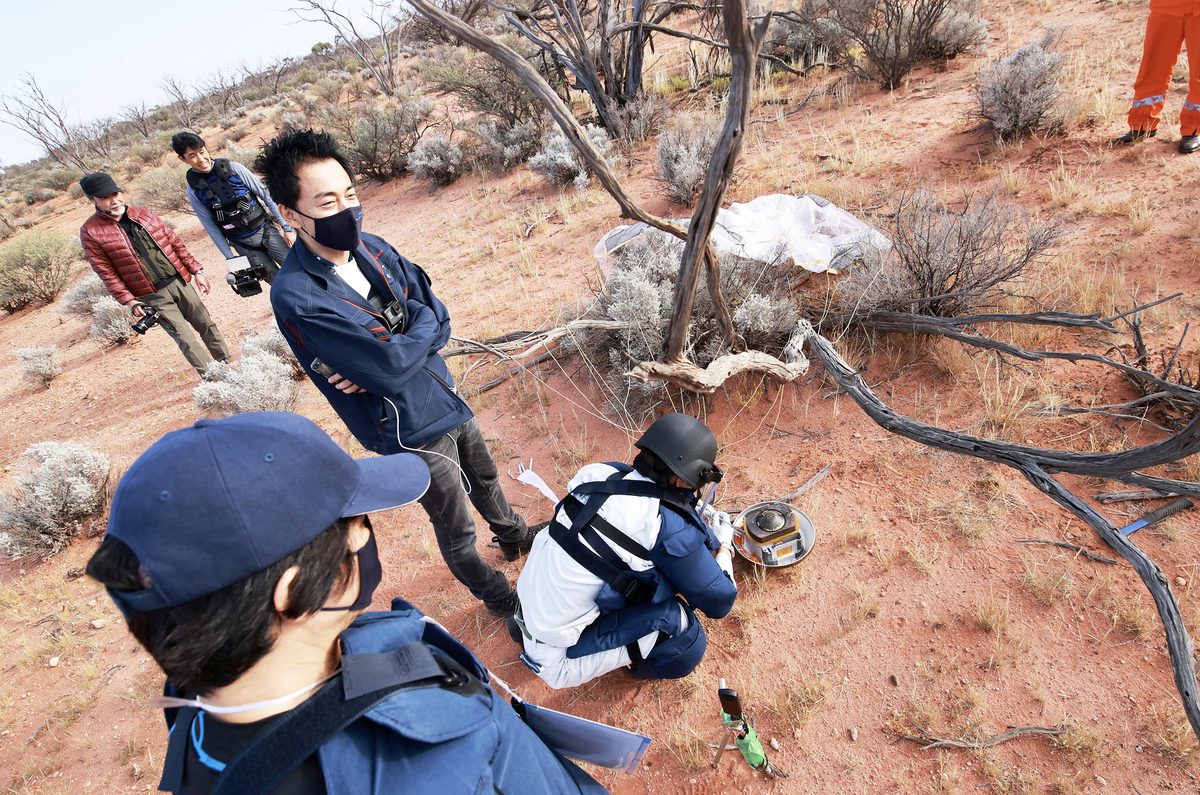
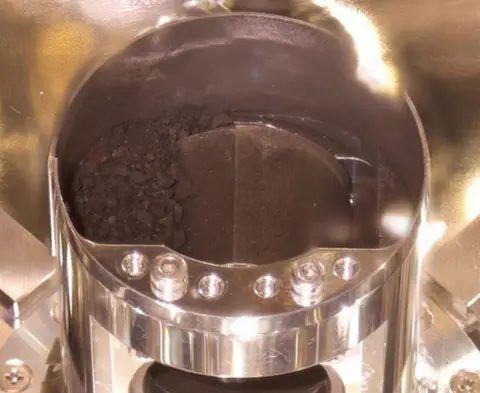
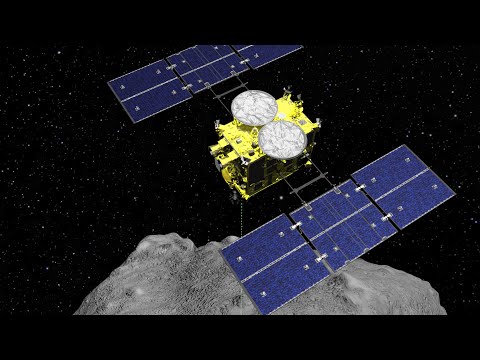
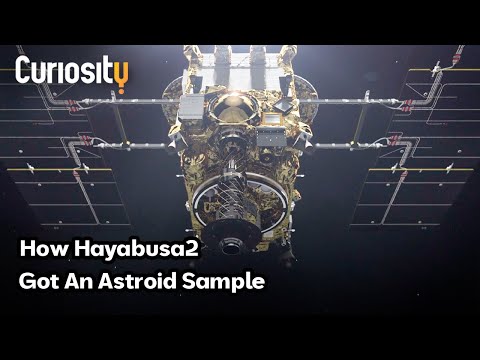
Japan's Hayabusa2 spacecraft dropped 5.4 grams of asteroid Ryugu onto Earth in 2020. In March 2026, researchers reported that those pristine grains contain all five nucleobases used in DNA and RNA.

The finding means the molecular letters of genetic code can form and survive on carbon-rich asteroids. It does not mean life existed on Ryugu. It means the raw chemistry for life was present in the early solar system.

Why it matters

If the building blocks of DNA can form on multiple asteroids, the raw chemistry for life may be common across the solar system.

Questions about this story

Free account needed to ask — your question is kept and asked for you right after sign-up. Answers are public.

No questions yet — be the first to ask.

Key Indicators

5
Nucleobases detected in Ryugu samples
Adenine, guanine, cytosine, thymine and uracil were all found.
5.4 g
Ryugu material returned by Hayabusa2
The mission delivered pristine asteroid grains in 2020.
4.5 billion years
Age of asteroid material
Ryugu is a remnant from the early solar system.
2
Asteroids with all five nucleobases confirmed
Ryugu and Bennu have both yielded the complete set.
2
Ryugu samples analyzed
Researchers tested two separate samples from the mission.

Voices

Curated perspectives — historical figures and your fellow readers.

Sign up to generate historical perspectives on this story.

People Involved

Organizations Involved

Timeline

2020 November 2026

6 events Latest: Today
Tap a bar to jump to that date
  1. ScienceDaily publishes report on Ryugu nucleobases

    Today Publication

    The outlet describes the discovery and its implications for early solar system chemistry.

  2. JAMSTEC announces the findings

    Statement

    The institute reports a complete set of nucleobases in Ryugu.

  3. Nature Astronomy publishes Ryugu study

    Publication

    Researchers confirm all five canonical nucleobases in two Ryugu samples.

  4. Bennu samples yield all five nucleobases

    Research

    NASA's asteroid sample confirmed the complete set in pristine material.

  5. Uracil detected in Ryugu samples

    Research

    An international team reported one nucleobase in the asteroid material.

  6. Hayabusa2 returns Ryugu material

    Mission

    The spacecraft delivered 5.4 grams of pristine asteroid grains to Earth.

Scenarios

1

Additional asteroid samples confirm all five nucleobases

Likely Resolves by End of 2028

Discussed by: JAMSTEC and NASA researchers, cited in the Nature Astronomy study and Ars Technica

The Ryugu result matches Bennu. If more sample-return missions find the same set, the chemistry looks common rather than rare.

2

Lab experiment reproduces Ryugu's ammonia-linked nucleobase ratio

Possible Resolves by Q2 2028

Discussed by: Study authors in Nature Astronomy

The team found a correlation between ammonia abundance and the purine-to-pyrimidine ratio. A lab synthesis that reproduces it would show how the molecules formed.

3

Independent team challenges Ryugu nucleobase detection

Unlikely Resolves by End of 2027

Discussed by: Ars Technica, which notes past meteorite nucleobase findings faced contamination questions

Pristine sample return was designed to rule out Earth contamination. A credible challenge would need to show the molecules came from handling or the spacecraft.

Historical Context

3 moments from history that rhyme with this story — and how they unfolded.

1969

Murchison meteorite (1969)

The Murchison meteorite fell in Australia in 1969. It contained amino acids and nucleobases, but its passage through Earth's atmosphere and landing left open the possibility of contamination.

Then

Researchers used it to argue that organic chemistry is common in space.

Now

Murchison became a benchmark for meteorite organics, but contamination questions limited how far the nucleobase findings could be pushed.

Why this matters now

Ryugu's pristine samples were collected in space, avoiding the contamination problem that dogged Murchison.

2023-2025

Bennu sample return (2023-2025)

NASA's OSIRIS-REx mission returned samples from asteroid Bennu in 2023. In 2025, researchers reported all five nucleobases in that material.

Then

The Bennu result showed that Ryugu was not unique.

Now

It established that carbon-rich asteroids can carry the full set of genetic letters.

Why this matters now

Ryugu now joins Bennu, strengthening the case that the chemistry is widespread.

1864

Orgueil meteorite (1864)

The Orgueil meteorite fell in France in 1864. It contained a rich variety of organic molecules, including nucleobases.

Then

It was among the first meteorites to suggest that organic chemistry exists beyond Earth.

Now

Like Murchison, it carried contamination questions because it landed on Earth.

Why this matters now

The Ryugu study extends a 160-year line of meteorite organic chemistry into pristine sample-return science.

Sources

(6)