
Pull to refresh
Logo
Astronomers watch a star swallow its companion in Andromeda

Astronomers watch a star swallow its companion in Andromeda

New Capabilities

Webb observations taken 47 days after the outburst gave the first direct measure of how efficiently a giant star sheds its outer layers when it engulfs a companion

Overview

Updated 7 hours ago

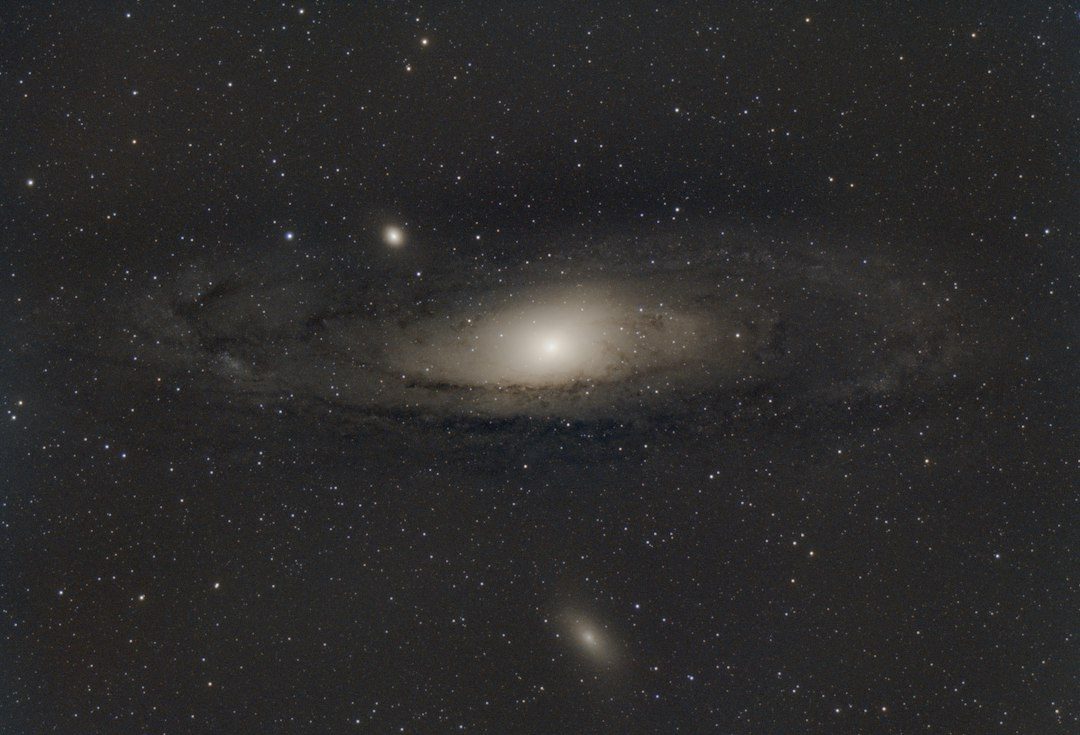
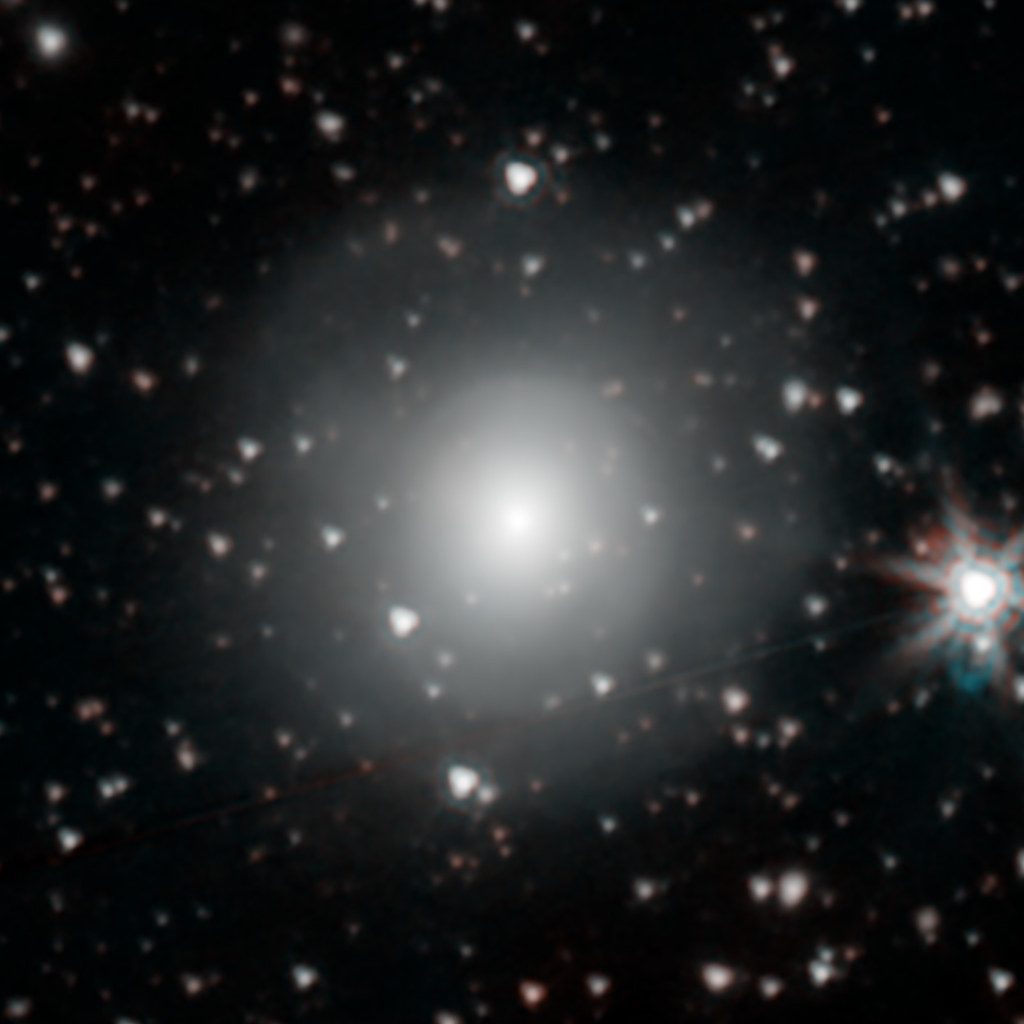
A star in the Andromeda galaxy brightened slowly for seven years. On October 17, 2025, it erupted. Astronomers now say a smaller companion star spiraled into its core, and that they captured the whole sequence, from the first faint brightening to the aftermath.

The analysis, published November 18 in Nature, is the first direct measurement of how much energy a giant star spends shedding its outer layers when it swallows a companion. That number decides whether a binary pair survives as two stars in a tight orbit or becomes one, and it governs how such systems later end up as neutron stars, black holes and sources of gravitational waves.

Why it matters

Common envelope evolution is how many binary stars become neutron stars, black holes and gravitational-wave sources. It now has a measured efficiency.

Questions about this story

Free account needed to ask — your question is kept and asked for you right after sign-up. Answers are public.

No questions yet — be the first to ask.

Key Indicators

47 days
Gap between eruption peak and Webb observation
The earliest follow-up ever made of a stellar merger, and the observation that clinched the case.
7 orbits
Orbits before the smaller star was swallowed
About seven years of spiral-in. Other known mergers of small stars took thousands of orbits.
10%
Share of the giant's outer envelope that escaped
Too little mass left to keep two stars apart, which is why the team concluded they merged.
0.7 solar masses
Estimated mass of the destroyed companion
The first mass estimate for a star demolished in a common envelope, derived from simulations matched to Webb's data.

Voices

Curated perspectives — historical figures and your fellow readers.

Sign up to generate historical perspectives on this story.

People Involved

Organizations Involved

Timeline

2018 November 2026

10 events Latest: Today
Tap a bar to jump to that date
  1. The merger is confirmed

    Today Research

    Nature publishes the analysis and the first common-envelope efficiency measurement.

  2. Webb takes the decisive look

    Observation

    Three hours of mid-infrared data, 47 days after peak.

  3. Fast-turn follow-up

    Observation

    Swift and Gemini North deliver rapid observations of the fading outburst.

  4. The eruption

    Observation

    The Zwicky Transient Facility detects the outburst as the stars rapidly heat up.

  5. Spectra captured before the blast

    Observation

    NASA's Infrared Telescope Facility records the system in its pre-eruption state.

  6. SPHEREx catches a strange color change

    Observation

    A routine survey records Bao fading in visible light and brightening in infrared.

  7. First paper predicts the merger

    Research

    The team argues a small star is orbiting inside the giant's envelope.

  8. Dust appears

    Observation

    The WINTER telescope shows the star brightening and shedding dust.

  9. NEOWISE flags an odd variable

    Observation

    The team spots an unusual variable star in archived infrared data.

  10. The giant starts to brighten

    Observation

    Big Bao begins a slow, steady brightening that lasts seven years.

Scenarios

1

Follow-up observations confirm Bao is a single star

Likely Resolves by Q2 2028

Discussed by: The Karambelkar team and NASA

The mass budget already points this way: only about a tenth of the giant's outer gas escaped, too little to leave two stars in separate orbits. What remains unclear is the shape of the merged core. Dust blocks the view now and the team says it could take years or decades to settle. When it does, mid-infrared and spectroscopic observations should show whether a companion survived.

2

Astronomers catch another common-envelope merger before it erupts

Possible Resolves by End of 2029

Discussed by: Viraj Karambelkar and the Roman Space Telescope team

Karambelkar says the next goal is to find similar systems at the slow-brightening stage, before the outburst. Roman's Galactic Bulge Time-Domain Survey should produce a large stream of transients, and the surveys are public. Catching one early would let astronomers watch the spiral-in from the start rather than from the eruption forward, and would test whether the seven-orbit timescale seen here is typical.

3

The dust clears and a surviving companion is still there

Unlikely Resolves by Q2 2028

Discussed by: The Karambelkar team, which considered and rejected this outcome

If the outburst had thrown off enough shared gas, both stars could have survived in a tighter orbit, as happens in other binary systems. The energy carried by the escaping gas argues against it, and the team concluded the smaller star reached the core. But dust hides the system, and some coverage has noted that conclusive confirmation will need future observations. A surviving companion would put this event in a different category.

Historical Context

3 moments from history that rhyme with this story — and how they unfolded.

2008

V1309 Scorpii (2008)

A star in the Milky Way brightened into a red nova. Years later, astronomers went back through survey data and found the object had been a contact binary whose orbit shrank steadily before the outburst. Two stars had merged, but nobody saw it coming.

Then

The eruption was logged as a red nova, an oddity with no clear explanation.

Now

V1309 Sco became the reference case for stellar merger light curves, reconstructed entirely after the fact.

Why this matters now

Bao is the same physics caught live: the first merger observed before, during and after, instead of reverse-engineered from an archive.

February 1987

Supernova 1987A

A blue supergiant in the Large Magellanic Cloud exploded, the closest supernova in nearly four centuries. Neutrino detectors and a rush of telescopes recorded it as it happened rather than years later.

Then

Confirmed that a collapsing core sends neutrinos out ahead of the visible light.

Now

Set the template for rapid multi-wavelength follow-up of stellar deaths.

Why this matters now

Webb's 47-day follow-up runs on the same bet: speed buys physics that archival work cannot recover.

August 2017

GW170817 (2017)

Two neutron stars merged in the galaxy NGC 4993, and gravitational wave detectors caught the signal. Telescopes on the ground and in space turned to the source within hours and watched the aftermath fade.

Then

Produced the first kilonova tied to a gravitational wave event, and evidence that heavy elements form in such mergers.

Now

Made coordinated rapid follow-up standard practice across astronomy.

Why this matters now

Shows what a carefully organized quick-turn campaign can extract from a single fast-fading event, which is exactly what the Bao team did.

Sources

(6)