


Pull to refresh
Logo
Astronomers trace eight-minute radio pulses to a white dwarf and a Sun-like star

Astronomers trace eight-minute radio pulses to a white dwarf and a Sun-like star

New Capabilities

First long-period radio transient linked to a white dwarf orbiting a G-type star

Overview

Updated 1 hour ago

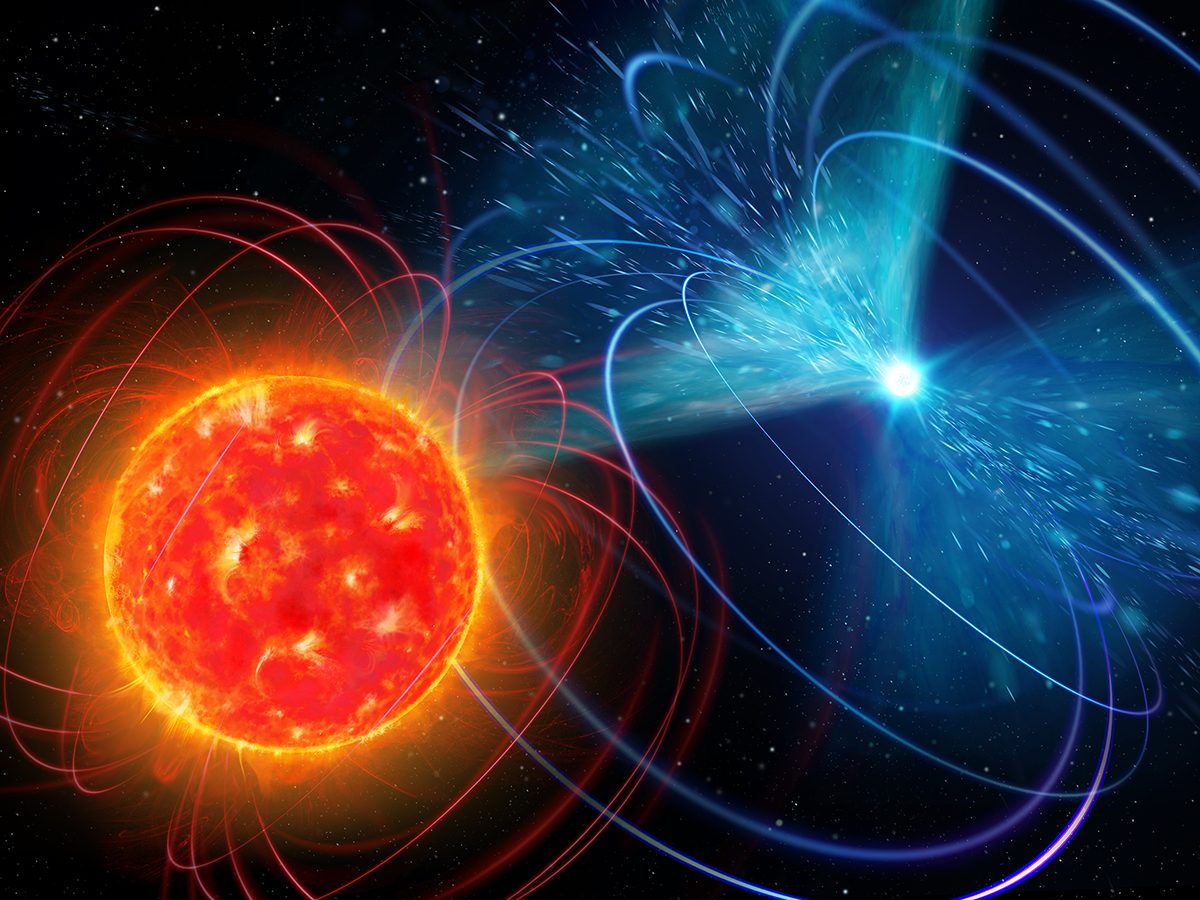
A dead star about two-thirds the mass of the Sun is flashing radio waves every 7.9 minutes. Its companion is a star with roughly the Sun's mass and temperature.

The system, GPM J071507−114153, is the first long-period transient traced to a white dwarf orbiting a G-type star. The discovery suggests radio surveys can find white dwarf binaries hidden by the glare of bright companions. Some white dwarf binaries are thought to be ancestors of Type Ia supernovae, the exploding stars astronomers use to measure cosmic distances.

Why it matters

Radio surveys may reveal a hidden population of white dwarf binaries, including ancestors of Type Ia supernovae used to measure cosmic distances.

Questions about this story

Free account needed to ask — your question is kept and asked for you right after sign-up. Answers are public.

No questions yet — be the first to ask.

Key Indicators

7.9
Radio pulse period
Flashes arrive like clockwork every 7.9 minutes.
32
Binary orbit
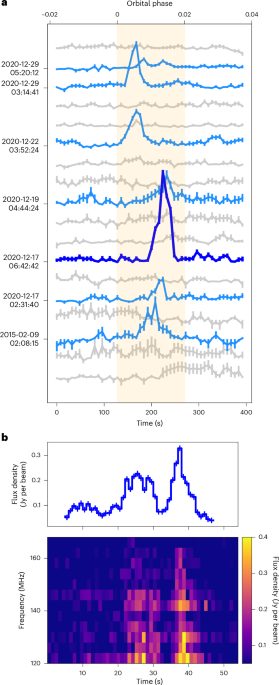
Pulses appear for about six hours, then vanish for 26.
5,000+
Distance from Earth
The system lies over 5,000 light-years away.
2/3
White dwarf mass
Too light to be a neutron star.
100
Hours of radio data
Team processed the data at the Pawsey Supercomputing Research Centre.
1st
White dwarf–Sun-like star LPT
First long-period transient linked to this pairing.

Voices

Curated perspectives — historical figures and your fellow readers.

Sign up to generate historical perspectives on this story.

People Involved

Organizations Involved

Timeline

2022 November 2026

4 events Latest: Today
Tap a bar to jump to that date
  1. Study links pulses to white dwarf and Sun-like star

    Today Publication

    Nature Astronomy publishes first LPT with a white dwarf orbiting a G-type star.

  2. Team spots 7.9-minute flashes in MWA data

    Discovery

    Csanád Horváth's search method finds 7.9-minute flashes; pulses then stop.

  3. Pattern reveals 32-hour binary orbit

    Analysis

    Pulses appear for about six hours, then vanish for 26, suggesting a 32-hour orbit.

  4. First long-period radio transient reported

    Discovery

    ICRAR team reports first long-period radio transient, opening a new class of radio sources.

Scenarios

1

SKA surveys find more white dwarf–Sun-like star transients

Likely Resolves by End of 2029

Discussed by: ICRAR researchers, including Natasha Hurley-Walker

Hurley-Walker said next-generation radio telescopes should find many more long-period transients. If surveys turn up more white dwarfs around bright stars, the hidden population becomes a statistical sample.

2

Independent team confirms the white dwarf pulsar interpretation

Possible Resolves by End of 2028

Discussed by: Astronomers using radio and optical follow-up

The team infers a white dwarf mass about two-thirds solar from timing and spectrum. Independent measurements could confirm the mass and the pulsed origin.

3

Magnetar model challenges white dwarf explanation for some LPTs

Unlikely Resolves by End of 2028

Discussed by: Science article and teams studying a 44-minute LPT

Some long-period transients show X-ray pulses and may come from magnetars. If similar evidence appears for this system, the white dwarf model weakens.

Historical Context

3 moments from history that rhyme with this story — and how they unfolded.

1967

First pulsar discovery (1967)

Jocelyn Bell Burnell detected regular radio pulses from a fixed point in the sky. The signal was briefly nicknamed LGM-1 before astronomers identified it as a rapidly spinning neutron star.

Then

The discovery established pulsars as a new class of astrophysical object.

Now

Pulsar timing became a tool for testing gravity and studying dense matter.

Why this matters now

Periodic radio signals can reveal new classes of dead stars, just as this 7.9-minute signal points to a white dwarf.

2007

Fast radio bursts (2007)

Duncan Lorimer and his students found a millisecond radio burst in archival data. Astronomers debated its origin for years.

Then

The burst was confirmed as an extragalactic radio transient.

Now

Some fast radio bursts were later traced to magnetars.

Why this matters now

New transient classes often have competing models before observations settle the source.

2016

AR Scorpii (2016)

Astronomers found a white dwarf and red dwarf binary emitting radio pulses every 1.97 minutes. It was the first known white dwarf pulsar.

Then

The system showed that white dwarfs can power pulsed radio emission.

Now

It became a template for searching for similar white dwarf binaries.

Why this matters now

This discovery extends the white dwarf pulsar idea from a red dwarf companion to a Sun-like star.

Sources

(4)