
Pull to refresh
Logo
Wearable neuromodulation cuts recurrent atrial fibrillation events after ablation in pilot trial

Wearable neuromodulation cuts recurrent atrial fibrillation events after ablation in pilot trial

New Capabilities

NeuroPulse study finds 57% reduction in arrhythmia events with median nerve stimulation; larger confirmatory trial planned

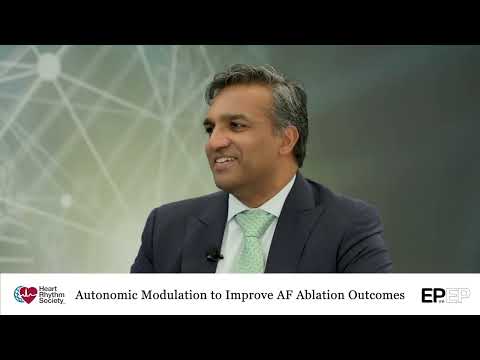
Today: NeuroPulse results presented at HRX Live 2026 and published in Heart Rhythm

Overview

Updated 1 hour ago

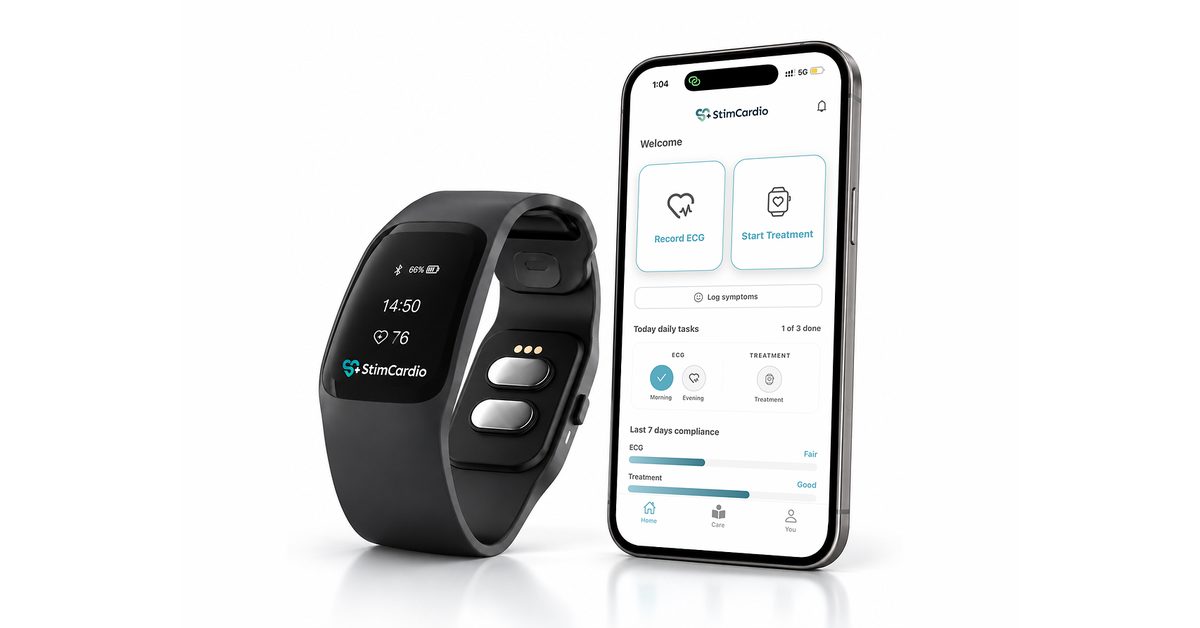
Roughly one in four patients who get atrial fibrillation ablation sees the arrhythmia return within a year. StimCardio Medical tested a wrist-worn device designed to change that, and the pilot results show it cut recurrent arrhythmia events by 57%.

The randomized, sham-controlled NeuroPulse trial found 12 recurrent arrhythmia events with median nerve stimulation versus 28 with sham over six months, a statistically significant difference. Freedom from atrial arrhythmias hit 90% with stimulation versus 80.8% with sham, but that gap didn't reach statistical significance. No serious device-related adverse events occurred.

Why it matters

If the effect holds in a larger trial, a wrist-worn device could reduce the need for repeat ablation procedures in the one in four patients whose atrial fibrillation returns.

Questions about this story

Free account needed to ask — your question is kept and asked for you right after sign-up. Answers are public.

No questions yet — be the first to ask.

Key Indicators

57%
Reduction in recurrent arrhythmia events
12 events with median nerve stimulation vs 28 with sham over six months (p=0.025)
90.0%
Freedom from atrial arrhythmias with MNS at 6 months
vs 80.8% with sham; difference not statistically significant
77
Patients randomized in NeuroPulse pilot
Randomized 1:1 to active stimulation or sham across three centers
59
Patients in modified intention-to-treat analysis
Assessed after a 60-day post-ablation blanking period

Voices

Curated perspectives — historical figures and your fellow readers.

Ever wondered what historical figures would say about today's headlines?

Sign up to generate historical perspectives on this story.

People Involved

Organizations Involved

Timeline

2023 September 2026

5 events Latest: Today
Tap a bar to jump to that date
  1. NeuroPulse results presented at HRX Live 2026 and published in Heart Rhythm

    Today Clinical Trial Results

    StimCardio announces 57% reduction in recurrent arrhythmia events with median nerve stimulation vs sham; freedom-from-arrhythmia gap not statistically significant.

  2. PVI-SHAM-AF trial finds ablation doesn't improve AF quality of life vs sham

    Clinical Trial Results

    Randomized trial presented at ESC Congress 2026 and published in The Lancet shows ablation reduces AF recurrence but not quality of life, adding weight to adjunct therapy arguments.

  3. NEUROPULSE reaches primary completion

    Clinical Trial

    Trial completes follow-up data collection for its primary endpoint analysis.

  4. NEUROPULSE trial begins enrollment

    Clinical Trial

    Mount Sinai opens enrollment for the randomized, double-blind, sham-controlled pilot testing median nerve stimulation after AF ablation.

  5. ADVENT trial shows pulsed field ablation matches thermal ablation

    Clinical Trial

    Reddy's randomized trial found one-year treatment success of 73.3% with pulsed field ablation vs 71.3% with thermal ablation, exposing a persistent efficacy gap.

Scenarios

1

Larger confirmatory trial confirms wearable neuromodulation benefit

Possible Resolves by Q2 2028

Discussed by: StimCardio Medical leadership; lead investigator Vivek Reddy

StimCardio and Mount Sinai launch a larger multi-center trial powered for the freedom-from-arrhythmia endpoint. The 57% event reduction and clean safety profile give a strong basis for a powered study. If results hold, Rhyvive could move toward regulatory review as an adjunct to ablation.

2

Confirmatory trial fails to replicate pilot results

Possible Resolves by Q2 2028

Discussed by: Skeptics noting the non-significant freedom-from-arrhythmia endpoint

The pilot's headline freedom-from-arrhythmia rate (90% vs 80.8%) wasn't statistically significant, and the event-count finding came from a post-blanking sensitivity analysis in a small sample. A larger trial with longer follow-up could land on the null side, especially given how previous AF technologies have failed to scale beyond promising pilots.

3

FDA clears Rhyvive as an adjunct to AF ablation

Possible Resolves by End of 2029

Discussed by: Medical device regulatory analysts

If the safety data hold and the efficacy signal persists, Rhyvive could reach clinicians through a de novo or similar regulatory pathway for novel wearable devices. A clearance would make it the first neuromodulation wearable specifically for post-ablation AF care, though claims might be narrower than the pilot suggested.

Historical Context

3 moments from history that rhyme with this story — and how they unfolded.

1997

Vagus nerve stimulation for epilepsy (1997)

The FDA approved Cyberonics' vagus nerve stimulator for drug-resistant epilepsy after years of pilot data. The implant delivered electrical pulses to the vagus nerve, which connects to brain circuits regulating seizure activity.

Then

Vagus nerve stimulation became an approved therapy for patients who failed anti-seizure drugs.

Now

It opened the field of neuromodulation for neurological and cardiac conditions, including atrial fibrillation research.

Why this matters now

NeuroPulse applies a similar neuromodulation logic with a non-invasive, wrist-worn form factor for cardiac arrhythmia.

2023

ADVENT trial (2023)

Reddy led a randomized comparison of pulsed field ablation against conventional thermal ablation for AF. One-year treatment success was 73.3% for pulsed field ablation and 71.3% for thermal ablation, showing the newer technology matched the older one without closing the efficacy gap.

Then

Pulsed field ablation became a standard ablation tool.

Now

The trial set a benchmark for what even the newest ablation technology can achieve, leaving room for adjunct approaches.

Why this matters now

NeuroPulse targets that same persistent efficacy gap with a fundamentally different mechanism: peripheral nerve stimulation rather than more ablation.

August 2026

PVI-SHAM-AF trial (2026)

This randomized double-blind trial, presented at ESC Congress 2026 and published in The Lancet, found catheter ablation reduced AF recurrence but did not significantly improve AF-related quality of life versus sham at six months.

Then

Debate over ablation's subjective benefits intensified just weeks before NeuroPulse results.

Now

The result suggests ablation alone may not be enough for many patients, strengthening the case for adjunct approaches.

Why this matters now

NeuroPulse's wearable neuromodulation is positioned as just such an adjunct, extending AF care beyond the ablation procedure.

Sources

(5)