
Pull to refresh
Logo
Daily Brief
Following
Why Sign Up
Texas bets $350 million on becoming America's advanced nuclear capital

Texas bets $350 million on becoming America's advanced nuclear capital

Built World
By Newzino Staff |

The largest state-level nuclear investment in the country opens for applications, but only two projects currently qualify

April 1st, 2026: TANEO opens $350 million fund for applications

Overview

Texas has opened applications for a $350 million fund to jumpstart advanced nuclear reactor construction — the largest state-level nuclear energy investment in the United States. The Texas Advanced Nuclear Energy Office, created by legislation Governor Greg Abbott signed in June 2025, is now accepting proposals from companies that want to build next-generation reactors, manufacture nuclear components, or rebuild the domestic nuclear fuel supply chain. But there's a catch: only two projects in the state currently meet the fund's requirement of having a construction permit application filed with federal regulators.

Why it matters

Texas is betting hundreds of millions that advanced nuclear reactors can solve the AI-era power crisis before the grid breaks again.

Key Indicators

$350M
State nuclear fund size
Largest state-level investment in nuclear energy in the United States
2
Eligible projects today
Only two Texas projects currently have docketed construction permits with the Nuclear Regulatory Commission
134-9
House vote on HB 14
Overwhelming bipartisan support in the Texas House of Representatives
43 GW
Projected new power demand
Additional electricity capacity Dallas-Fort Worth alone may require in the coming years
320 MW
First planned project capacity
Four X-energy Xe-100 reactors planned at Dow's Seadrift chemical plant

Interactive

Exploring all sides of a story is often best achieved with Play.

Ever wondered what historical figures would say about today's headlines?

Sign up to generate historical perspectives on this story.

Sign Up

Debate Arena

Two rounds, two personas, one winner. You set the crossfire.

People Involved

Organizations Involved

Timeline

  1. TANEO opens $350 million fund for applications

    Policy

    Texas officially began accepting applications for the Advanced Nuclear Construction Reimbursement Program and the Project Design and Supply Chain Reimbursement Program. Notice of intent is due April 23, 2026; formal applications by May 14, 2026.

  2. Jarred Shaffer appointed TANEO director

    Personnel

    Governor Abbott named Jarred Shaffer as the first director of TANEO to oversee the office and administer the nuclear fund.

  3. Governor Abbott signs HB 14 into law

    Legislative

    Abbott signed House Bill 14, creating the Texas Advanced Nuclear Energy Office and the $350 million Texas Advanced Nuclear Development Fund, effective September 1, 2025.

  4. NRC expedites Dow/X-energy permit review

    Regulatory

    The NRC announced an 18-month review timeline for the Dow/X-energy construction permit — roughly half the typical 30-36 month period — potentially clearing construction by late 2026.

  5. Texas Senate passes HB 14

    Legislative

    The Senate approved HB 14 by a vote of 26-5. The House concurred in Senate amendments two days later, 118-6.

  6. Texas House passes HB 14 overwhelmingly

    Legislative

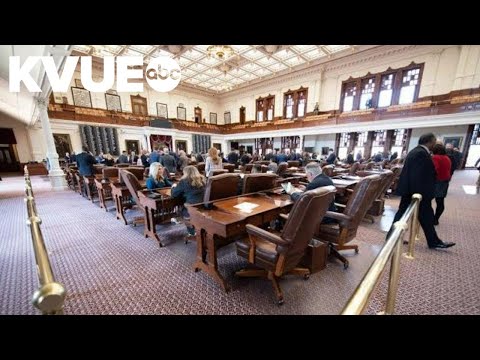
    The House approved HB 14 by a vote of 134-9, reflecting broad bipartisan support for the nuclear fund.

  7. Dow and X-energy submit NRC construction permit application

    Regulatory

    Dow submitted a construction permit application to the NRC for four 80-megawatt Xe-100 reactors at its Seadrift chemical plant, backed by $1.2 billion in Department of Energy funding.

  8. Last Energy announces 30-microreactor Texas deployment

    Industry

    Last Energy unveiled plans to build 30 microreactors on a 200-acre site in Haskell County to power data centers in the Dallas-Fort Worth region.

  9. HB 14 filed in 89th Texas Legislature

    Legislative

    Representative Cody Harris filed House Bill 14, proposing the creation of TANEO and a $350 million nuclear development fund.

  10. NRC approves first new university research reactor in 30+ years

    Regulatory

    The Nuclear Regulatory Commission granted Abilene Christian University a construction permit for a molten salt research reactor — the first liquid-salt-fueled reactor licensed in American history and the first university research reactor approved in over three decades.

  11. NuScale's first SMR project cancelled in Idaho

    Industry

    NuScale Power and Utah Associated Municipal Power Systems terminated the Carbon Free Power Project after costs ballooned from $5.3 billion to $9.3 billion, casting doubt on SMR economics nationwide.

  12. Abbott directs creation of nuclear reactor working group

    Policy

    Governor Abbott directed the formation of the Texas Advanced Nuclear Reactor Working Group, assembling over 100 industry experts and stakeholders to explore nuclear power expansion.

  13. Winter Storm Uri exposes Texas grid fragility

    Crisis

    A catastrophic winter storm caused widespread power outages across Texas, killing hundreds and revealing critical vulnerabilities in the ERCOT grid. Nuclear plants, particularly the South Texas Project, performed relatively well compared to natural gas and wind generation.

Scenarios

1

Texas becomes first state with operating advanced reactor

Discussed by: Department of Energy officials, X-energy leadership, Texas Nuclear Alliance

If the NRC approves Dow and X-energy's construction permit by late 2026 as the expedited timeline suggests, and TANEO funding accelerates supply chain development, the Seadrift plant could begin construction this decade with operations in the early 2030s. This would make Texas the first state to host a commercially operating advanced reactor, validating both the technology and the state investment model. The $1.2 billion in federal backing and an industrial customer in Dow reduce financial risk compared to utility-led projects.

2

Fund attracts a wave of new projects by deadline

Discussed by: TANEO officials, nuclear industry analysts

TANEO director Shaffer has acknowledged only two projects currently qualify, but the December 1, 2026 deadline allows applicants who 'reasonably expect' to have a docketed NRC application. Companies like Last Energy, Aalo Atomics, and Texas A&M's SMR initiative could file NRC pre-applications to meet this bar, expanding the eligible pool. If the fund attracts five or more serious applicants, it would signal that state-level investment can meaningfully accelerate the nuclear pipeline.

3

Cost overruns and delays repeat the NuScale pattern

Discussed by: Clean Air Task Force, Utility Dive analysts, nuclear skeptics

No advanced reactor design has yet reached commercial operation in the United States. The NuScale/UAMPS cancellation showed how quickly costs can spiral — from $5.3 billion to $9.3 billion — killing a project with federal support and NRC certification. If early TANEO-funded projects encounter similar escalation, the fund could exhaust its resources on designs that never produce power, discrediting both the technology and the state investment approach. Water scarcity in Texas adds an engineering constraint that could further inflate costs.

4

Other states replicate Texas model, triggering interstate competition

Discussed by: National Governors Association, Morgan Lewis energy practice, Nuclear Innovation Alliance

Tennessee has committed roughly $70 million to nuclear, Wyoming up to $150 million in matching funds, and Virginia has approved $122 million in utility cost recovery for SMR development. If Texas's fund successfully attracts projects, other states will likely escalate their own commitments, creating a competitive market for nuclear developers. This could accelerate deployment nationwide but also fragment a limited workforce and supply chain across too many simultaneous projects.

Historical Context

Georgia's Vogtle Units 3 & 4 (2009–2024)

2009–2024

What Happened

Georgia Power began building two new AP1000 reactors at Plant Vogtle, originally budgeted at roughly $14 billion. The project suffered years of delays, contractor bankruptcy (Westinghouse in 2017), and ballooning costs that ultimately reached approximately $35 billion. Unit 3 entered commercial operation in July 2023 and Unit 4 in April 2024 — the first new nuclear units built in the United States in over three decades.

Outcome

Short Term

Georgia ratepayers absorbed billions in cost overruns. Southern Company's stock and reputation took sustained hits during construction.

Long Term

Vogtle proved that new nuclear can still be built in the U.S. but raised hard questions about cost discipline. The experience intensified interest in smaller, simpler reactor designs that avoid Vogtle-scale construction risk.

Why It's Relevant Today

Texas's $350 million fund explicitly targets small modular and advanced reactors — designs meant to avoid the cost and schedule disasters that plagued Vogtle. Whether these designs actually deliver on that promise remains the central unanswered question.

NuScale UAMPS Carbon Free Power Project cancellation (2023)

November 2023

What Happened

NuScale Power and the Utah Associated Municipal Power Systems cancelled the Carbon Free Power Project, which would have been the first commercial small modular reactor in the United States. Despite NuScale holding the only NRC-certified SMR design, costs escalated 75% — from $5.3 billion to $9.3 billion — and municipal subscribers pulled out. The project collapsed without breaking ground.

Outcome

Short Term

NuScale's stock cratered and the company faced questions about viability. SMR skeptics pointed to the failure as evidence that small reactors cannot compete on cost.

Long Term

The cancellation shifted industry strategy away from utility consortium models toward industrial customers (like Dow) and behind-the-meter deployments for data centers — exactly the model Texas is now backing.

Why It's Relevant Today

TANEO's eligibility requirement of a docketed NRC application filters for projects further along than UAMPS ever was. But the core question — whether advanced reactors can be built at the costs their developers promise — remains open. Texas is betting $350 million that the answer is yes.

Texas Energy Fund for natural gas (2023)

2023

What Happened

In the 88th Legislature, Texas created the $5 billion Texas Energy Fund via HB 1500 and a constitutional amendment approved by voters. The fund provided low-interest loans to finance new natural gas power plants, motivated by the grid failures during Winter Storm Uri in February 2021 that left millions without power and killed hundreds.

Outcome

Short Term

The fund attracted proposals for several gigawatts of new gas-fired generation and signaled Texas's willingness to use state capital to shape its energy market.

Long Term

Established the template — state-capitalized energy fund administered through the Governor's office — that HB 14 explicitly replicates for nuclear.

Why It's Relevant Today

The nuclear fund directly follows the playbook Texas built for gas. The $350 million nuclear commitment is smaller than the $5 billion gas fund, but represents the same governing logic: if the deregulated ERCOT market won't build what Texas needs fast enough, the state will put up the money.

Sources

(12)