



Pull to refresh
Logo
New York City completes center-running bus lanes on Flatbush Avenue

New York City completes center-running bus lanes on Flatbush Avenue

Built World New York, NY local

The 1.9-mile redesign gives buses 24-hour priority and adds six concrete boarding islands.

Overview

Updated 1 hour ago

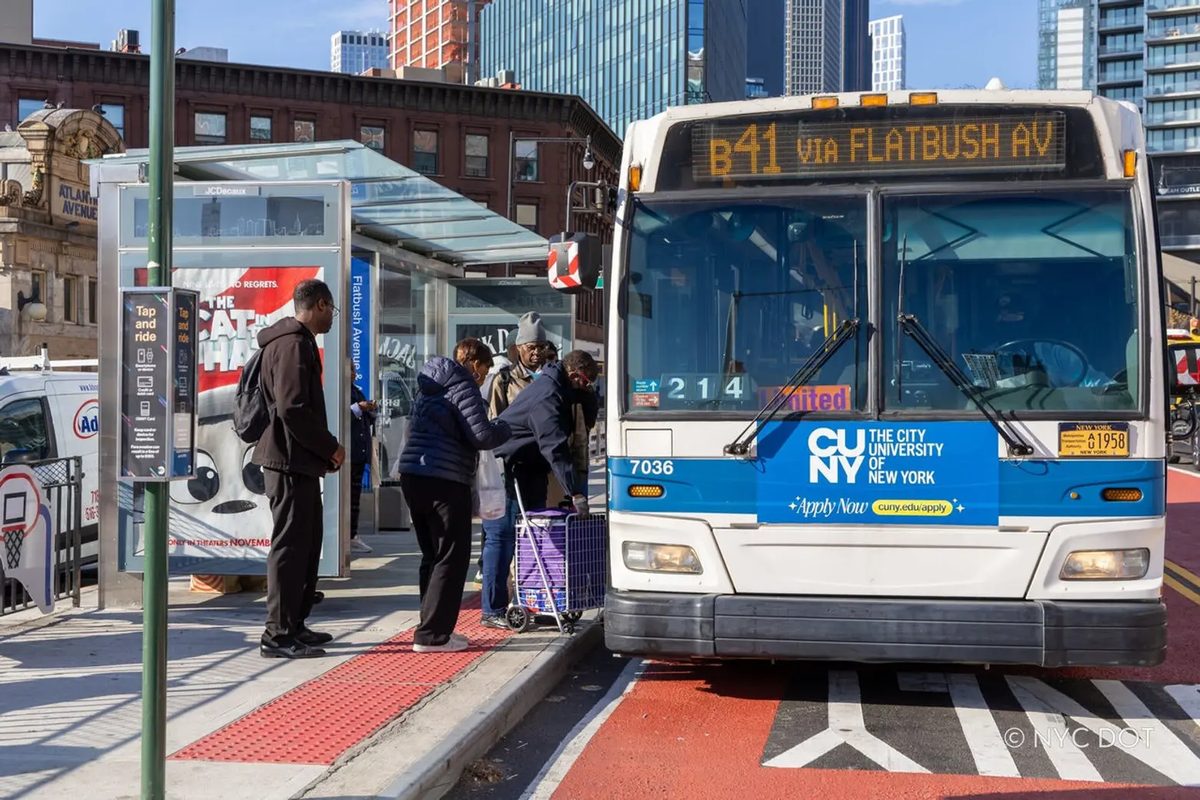
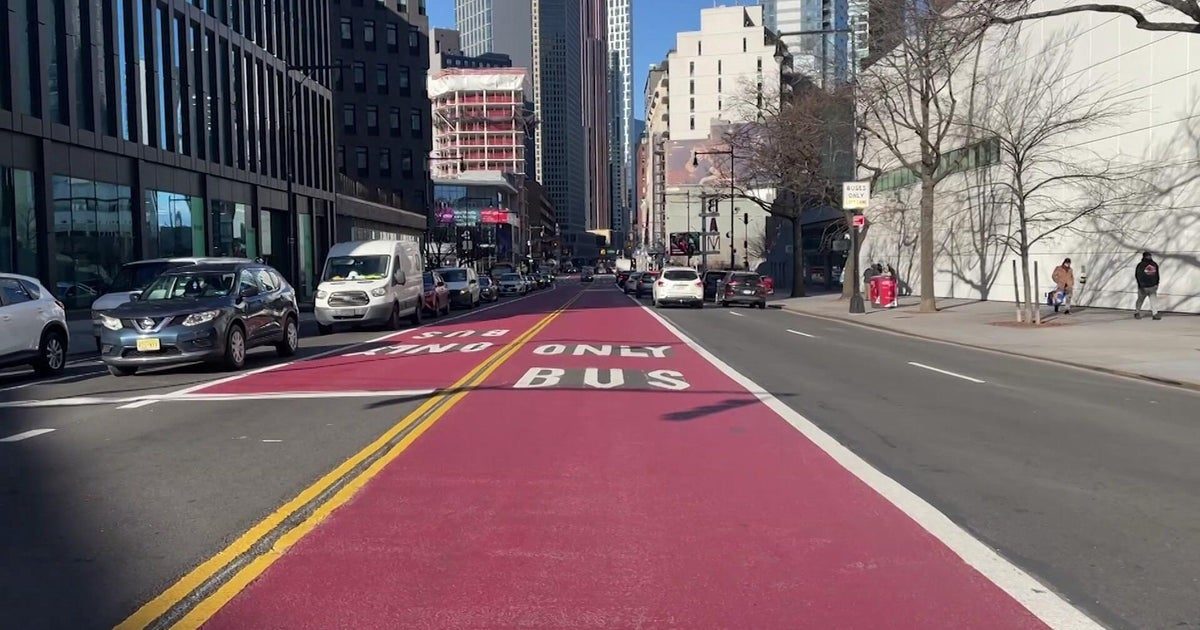
For years, buses on Brooklyn's Flatbush Avenue averaged 4 mph through downtown traffic. On Nov. 17, city officials opened a 1.9-mile redesign with two center-running bus lanes, six concrete boarding islands, and a 24-hour ban on passenger cars in those lanes.

The project serves 120,000 daily riders on the B41 and nearby routes. It is the first piece of a planned bus rapid transit corridor to Kings Plaza by 2030, and a test of whether removing car lanes can speed buses without hurting local businesses.

Why it matters

The redesign tests whether center-running bus lanes can speed commutes on one of Brooklyn's busiest corridors and set a template for future routes.

Last Monday's email for New York, NY

Sent Nov 16. It carried:

Get next Monday's: one short email a week. Free. Unsubscribe in one click.

Questions about this story

Free account needed to ask — your question is kept and asked for you right after sign-up. Answers are public.

No questions yet — be the first to ask.

Key Indicators

1.9 miles
New bus lanes
Center-running lanes between Grand Army Plaza and Livingston Street.
120,000
Daily bus riders
Riders on the B41, B67, B45 and B103 routes.
4 mph
Previous average bus speed
B41 buses crawled through traffic before the redesign.
6
Concrete boarding islands
Passengers board from islands between traffic lanes.
41
Parking spaces removed
New loading zones were added on side streets.
36
New bike racks
Added along the corridor.

Voices

Curated perspectives — historical figures and your fellow readers.

Sign up to generate historical perspectives on this story.

People Involved

Organizations Involved

Timeline

2022 November 2026

3 events Latest: Today
  1. City opens center-running bus lanes on Flatbush Avenue

    Today Infrastructure

    The 1.9-mile redesign adds two protected bus lanes, six boarding islands, and a 24-hour car ban in the lanes.

  2. NYC DOT begins outreach on next Flatbush phase

    Planning

    The city starts public outreach for improvements between Grand Army Plaza and Avenue H.

  3. Public outreach begins for Flatbush Avenue redesign

    Planning

    NYC DOT started block-by-block outreach on a plan to give buses priority on Flatbush Avenue.

Scenarios

1

B41 speeds rise, city advances bus rapid transit to Kings Plaza

Likely Resolves by Nov 17, 2028

Discussed by: NYC DOT and Mayor Mamdani

Officials plan to monitor the corridor and extend bus priority toward Kings Plaza by 2030. If B41 speeds climb above the old 4 mph average, the city is likely to use the design as a template for the next phase.

2

Business backlash forces city to restore some parking

Possible Resolves by Q2 2027

Discussed by: Local business owners quoted by Gothamist

Some shop owners say removing 41 parking spaces has cost them customers. If complaints persist, the city could add loading zones or restore parking on side streets, though officials say they will monitor before adjusting.

3

Boarding island crash prompts safety redesign

Unlikely Resolves by Nov 17, 2027

Discussed by: Pedestrians quoted by Gothamist

Some residents worry cars will crash into the new concrete boarding islands. A serious collision could force the city to add barriers or change the design, though no such crash has been reported.

Historical Context

2 moments from history that rhyme with this story — and how they unfolded.

1974

Curitiba bus rapid transit (1974)

Curitiba, Brazil, opened dedicated bus lanes with tube-shaped stations, allowing buses to move more like a train system. The design became a model for bus rapid transit worldwide.

Then

The system cut travel times and cost less than a subway.

Now

Cities from Bogotá to Istanbul adapted the model.

Why this matters now

Flatbush Avenue's center-running lanes and boarding islands follow the same logic: give buses their own space and speed boarding.

2000

Bogotá's TransMilenio (2000)

Bogotá opened TransMilenio, a high-capacity bus rapid transit system with center-running lanes and station platforms. It moved hundreds of thousands of riders daily.

Then

The system reduced commute times and became a global reference.

Now

It showed that bus systems could handle subway-level ridership at lower cost.

Why this matters now

New York officials describe Flatbush as a first step toward bus rapid transit, a model TransMilenio popularized.

Sources

(2)