
Pull to refresh
Logo
MTA withholds millions from Cubic as OMNY software misses its marks

MTA withholds millions from Cubic as OMNY software misses its marks

Built World New York, NY local

Nearly a decade after the $573 million contract, New York's tap-and-go fare system still drops auto-reloads and double-charges transfers.

Overview

Updated 29 minutes ago

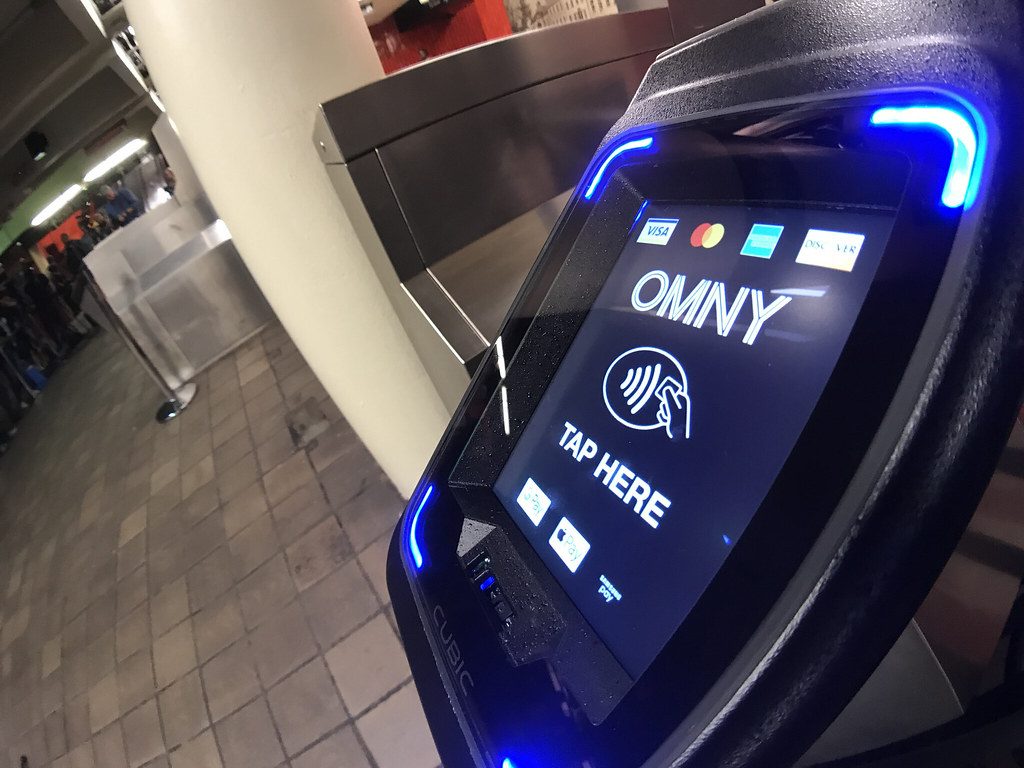
The MetroCard went off sale on Dec. 31, 2025. Nearly a year later, the Metropolitan Transportation Authority says it is withholding “millions and millions” of dollars from Cubic Transportation Systems, the company it paid to build OMNY, the tap-and-go system that replaced it.

MTA chair Janno Lieber confirmed the withholding, saying Cubic “has been a disappointment in many respects.” The authority will not say how much it is holding back from a contract that has grown past $700 million. Riders, meanwhile, have no fallback card.

Why it matters

Riders have no MetroCard to fall back on. Whether the MTA's leverage works decides how fast OMNY's billing errors get fixed.

Last Monday's email for New York, NY

Sent Nov 23. It carried:

Get next Monday's: one short email a week. Free. Unsubscribe in one click.

Questions about this story

Free account needed to ask — your question is kept and asked for you right after sign-up. Answers are public.

No questions yet — be the first to ask.

Key Indicators

$573M
Original OMNY contract value
Awarded to Cubic to build the MetroCard's replacement.
$700M+
OMNY contract value today
Contract modifications have pushed the total past its original price.
5B+
Trips paid via OMNY since 2019
The system now handles almost all paid subway and bus trips.
75%
Riders reporting a recent OMNY problem
From a 2025 riders' advisory committee survey of 392 users.
3.43/5
Riders' rating of OMNY
Average score in the same 2025 survey.

Voices

Curated perspectives — historical figures and your fellow readers.

Sign up to generate historical perspectives on this story.

People Involved

Organizations Involved

Timeline

2017 November 2026

7 events Latest: Yesterday
Tap a bar to jump to that date
  1. MTA confirms it is withholding payments

    Latest Statement

    Lieber says the agency is holding back millions over unmet software commitments.

  2. Board ratifies more OMNY spending

    Contract

    Two modifications worth $38.3 million are approved; members warn about withholding.

  3. Cubic hires a former MTA chief

    Leadership

    Lee Sander, who once ran the MTA, becomes Cubic Transportation Systems' CEO.

  4. MetroCard goes off sale

    Milestone

    The MTA declares substantial completion of OMNY as MetroCard sales end.

  5. Contract reset

    Contract

    Modification No. 32 drops commuter rail work and moves milestones to August 2024.

  6. OMNY taps in

    Launch

    Contactless payment debuts on subway turnstiles and buses.

  7. MTA awards Cubic the OMNY contract

    Contract

    The deal is valued at $573 million and covers the MetroCard's replacement.

Scenarios

1

Cubic clears its milestones and the MTA releases the withheld money

Likely Resolves by Q3 2027

Discussed by: MTA officials and the Permanent Citizens Advisory Committee to the MTA

Lieber says the agency intends to keep working with Cubic rather than replace it. If the company delivers on the fare features and payment processing behind the holdback, the money is released and the dispute closes without a formal claim. Fritsch expects Cubic to do exactly that, because it cannot absorb serious penalties.

2

Cubic formally challenges the withholdings

Possible Resolves by End of 2027

Discussed by: Transit-contract analysts cited by The City Reporter and Wisevoter

Withholding payments under a contract is a claim about performance, and contractors often contest it. Cubic could file a claim, demand arbitration or sue, which would move the dispute from board meetings to a docket and could freeze work while it plays out.

3

The MTA opens the fare system to a second vendor

Unlikely Resolves by End of 2028

Discussed by: Rider advocates who have called for stronger accountability on OMNY

If withholding does not produce fixes, the MTA's remaining lever is competition. That could mean a solicitation for new fare-payment work, or splitting components such as customer service or payment processing to another company. Any such step takes years and would run alongside Cubic's existing contract rather than replacing it immediately.

Historical Context

2 moments from history that rhyme with this story — and how they unfolded.

1993–2003

MetroCard replaces the token (1993–2003)

The MTA began testing MetroCards at a handful of stations in 1993 and spent most of the decade moving riders off tokens. Card readers, vending machines and the back-office systems behind them were rolled out gradually across the system.

Then

Riders kept using tokens alongside the card for years, and fare collection stayed a mix of the two.

Now

MetroCard became the standard fare medium for roughly two decades, and the MTA kept the same basic technology until OMNY.

Why this matters now

OMNY is the second full fare-system replacement in about 30 years. The difference is that this time the MTA retired the old card before the new system was finished.

2003

London's Oyster card (2003)

Transport for London introduced the Oyster smartcard in 2003 through the TranSys consortium, which included Cubic. The program arrived later than originally planned and cost more than early estimates.

Then

Oyster became the standard way to pay on the Underground and buses, and the paper ticket was phased out.

Now

The card stayed in use for two decades, and TfL later let riders tap bank cards directly at the gate.

Why this matters now

It shows a Cubic-built fare system settling down after a rough start, and a transit agency layering new payment methods onto gates it already owns.

Sources

(2)