
Pull to refresh
Logo
Staten Island adds $20 Uber vouchers to its Thanksgiving Eve impaired-driving push

Staten Island adds $20 Uber vouchers to its Thanksgiving Eve impaired-driving push

Rule Changes New York, NY local

The district attorney's office, Uber, the NYPD and the Taxi and Limousine Commission are splitting the ride home on the year's biggest bar night

Overview

Updated 1 hour ago

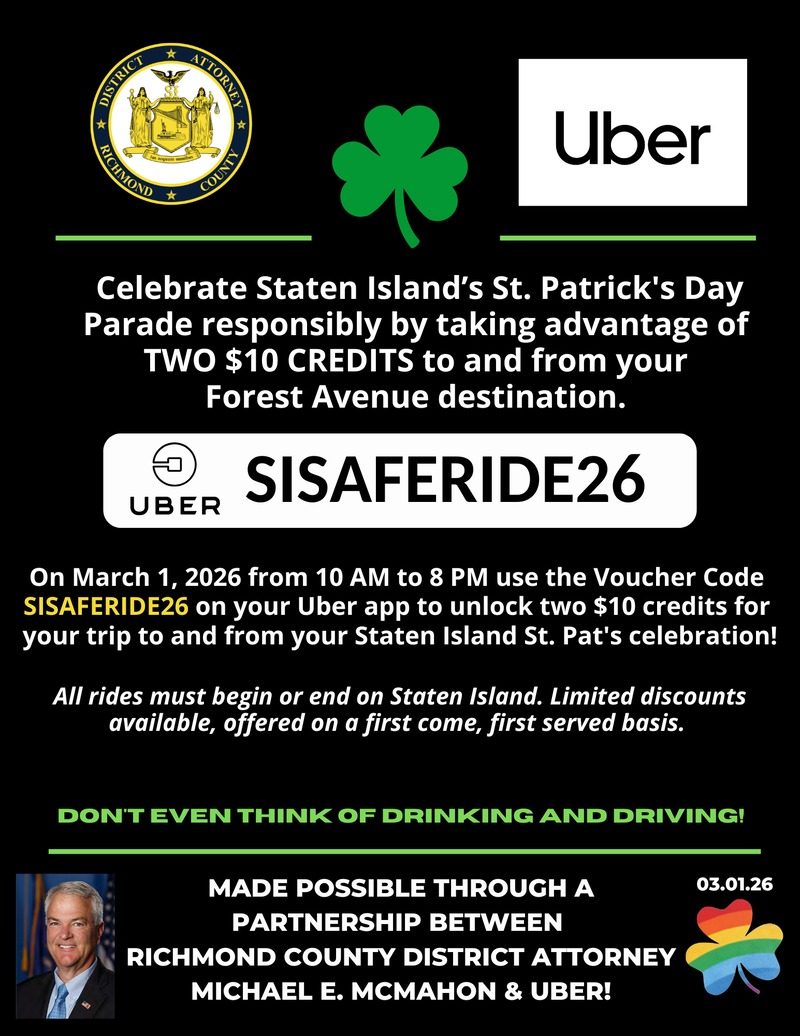
The night before Thanksgiving is one of the busiest of the year for bars. This year on Staten Island, the district attorney's office is putting $20 toward an Uber ride home.

The office announced the program on Nov. 23, in a partnership with Uber, the New York City Police Department and the Taxi and Limousine Commission. The announcement did not say how many vouchers exist, who pays for them, or which hours they cover. Those details decide whether $20 changes anyone's mind at closing time.

Why it matters

Small subsidies at closing time are among the few impaired-driving tools that target the decision itself, not the aftermath.

Last Monday's email for New York, NY

Sent Nov 23. It carried:

Get next Monday's: one short email a week. Free. Unsubscribe in one click.

Questions about this story

Free account needed to ask — your question is kept and asked for you right after sign-up. Answers are public.

No questions yet — be the first to ask.

Key Indicators

$20
Voucher value toward an Uber ride home
The credit offsets part of a fare rather than covering a trip outright.
4
Organizations named in the partnership
The district attorney's office, Uber, the NYPD and the Taxi and Limousine Commission.
904
Riders helped by Delaware's separate voucher program
Delaware's Office of Highway Safety reported that figure for its prior program year, across four holidays.

Voices

Curated perspectives — historical figures and your fellow readers.

Sign up to generate historical perspectives on this story.

People Involved

Organizations Involved

Timeline

December 2025 November 2026

2 events Latest: Yesterday
  1. Staten Island district attorney announces Thanksgiving Eve Uber credit

    Latest Announcement

    The office said it would partner with Uber, the NYPD and the Taxi and Limousine Commission to keep impaired drivers off the roads, offering $20 toward a ride home.

  2. A New York law firm runs its own $20 Uber credit for New Year's Eve

    Program

    William Mattar, a personal-injury firm, offered $20 Uber vouchers to New York State residents for rides between 8 p.m. and 8 a.m.

Scenarios

1

Vouchers run out long before closing time

Possible Resolves by Dec 15, 2026

Discussed by: Comparable programs cap their voucher supply; Delaware's Office of Highway Safety says its own credits can be claimed within minutes of release.

Ride-credit programs almost always set a fixed pool, and heavy demand on a single night drains it fast. If Staten Island's caps are small, the credit functions as a lottery rather than a standing option, and late-night drinkers never see it.

2

The credit comes back for New Year's Eve

Uncertain Resolves by Jan 5, 2027

Discussed by: Delaware runs its vouchers across four holidays, and private programs in New York have targeted New Year's Eve specifically.

A one-night pilot is cheap to repeat. If the partners treat Thanksgiving Eve as a template, the next test is New Year's Eve, when bars stay open past midnight and the ride home is later and more expensive.

3

Staten Island builds a standing multi-holiday program

Unlikely Resolves by Jul 10, 2027

Discussed by: Delaware's statewide model, funded by private sponsors, has run for multiple years across several holidays.

The path from one night to a calendar requires sponsors willing to pay yearly. Delaware's version is financed by beverage distributors, law firms and local businesses rather than highway-safety funds, a model Staten Island could copy. Without named funders, the program stays a one-off.

Historical Context

2 moments from history that rhyme with this story — and how they unfolded.

July 1984

National Minimum Drinking Age Act (1984)

Congress tied a portion of federal highway money to a 21-year minimum drinking age. President Reagan signed it on July 17, 1984, and states that refused stood to lose up to 10 percent of their highway apportionment.

Then

States raised the age rather than forfeit the money, and by 1988 all 50 had done so.

Now

The law set the template for federal drunk-driving policy: attach conditions to money states already want.

Why this matters now

Staten Island's voucher works from the opposite direction. It does not penalize anyone; it lowers the price of the safe choice for one night.

October 2000

0.08 blood-alcohol limit becomes the national standard (2000)

Congress passed a measure withholding federal highway construction funds from states that kept a 0.10 limit for drivers. President Clinton signed it into law in October 2000.

Then

States moved their thresholds down to 0.08 over the following years.

Now

The legal line for impaired driving is now the same nationwide, which makes enforcement predictable across state borders.

Why this matters now

Both older policies changed the consequences of drinking and driving. A $20 credit tries to change the fare instead, before a driver is ever stopped.

Sources

(3)