
Pull to refresh
Logo
Huang-Bai railway holes through first long tunnel in southwest China

Huang-Bai railway holes through first long tunnel in southwest China

Built World

The freight line links Guizhou to Guangxi's coast, cutting southwest China's rail distance to the sea

Today: Leye Tunnel breakthrough

Overview

Updated 47 minutes ago

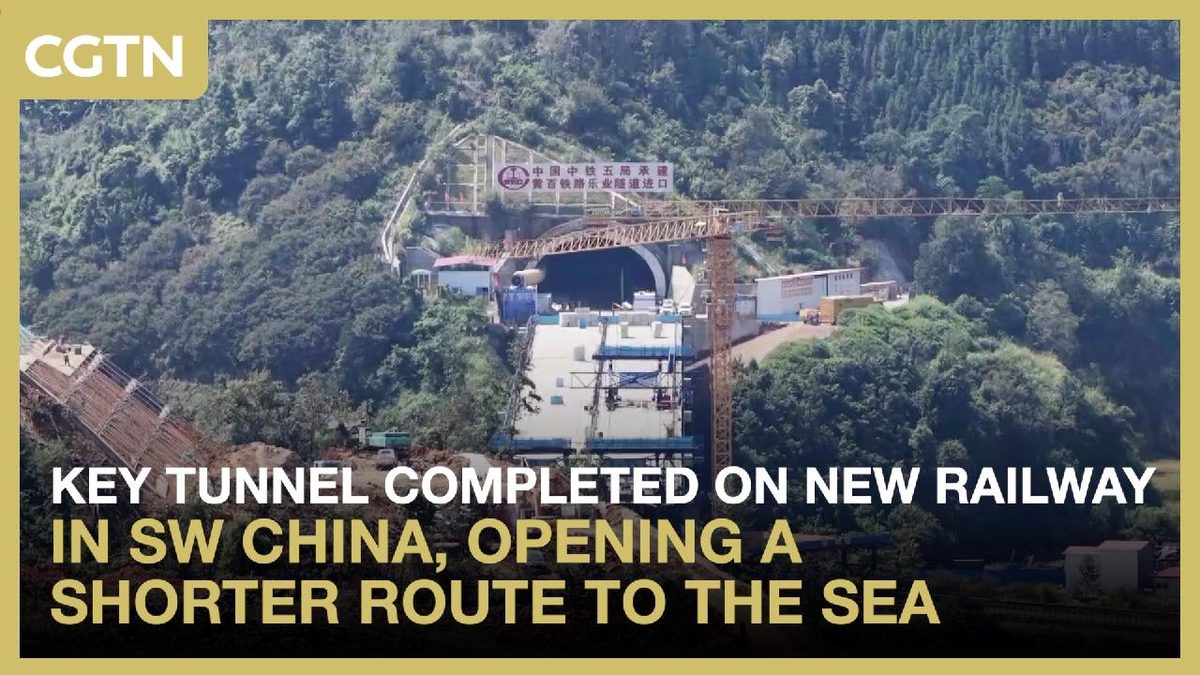
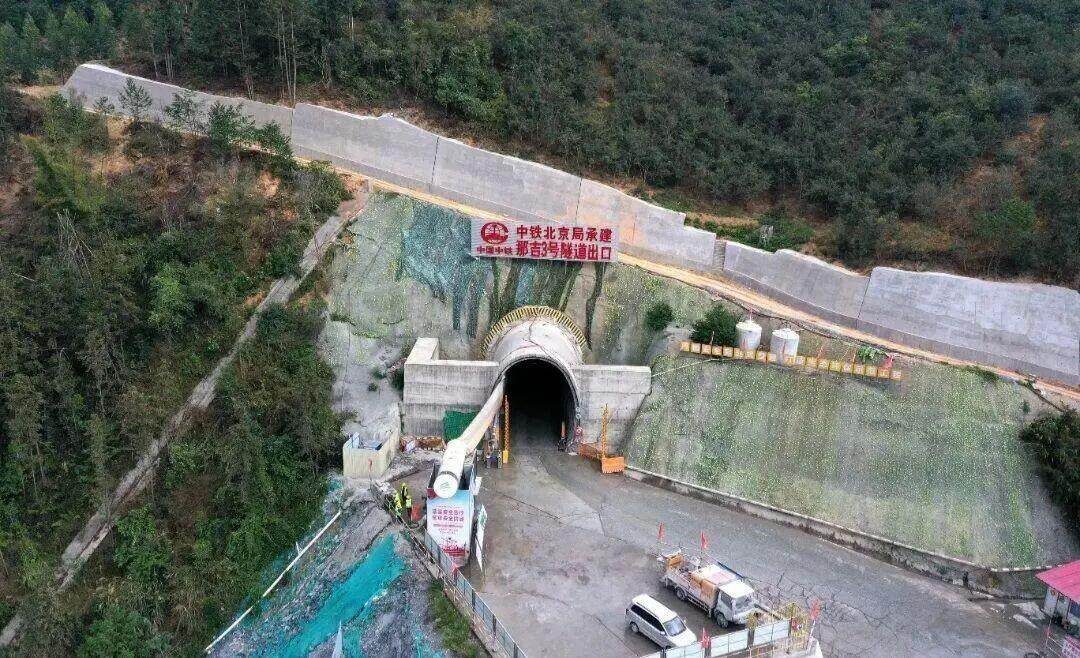
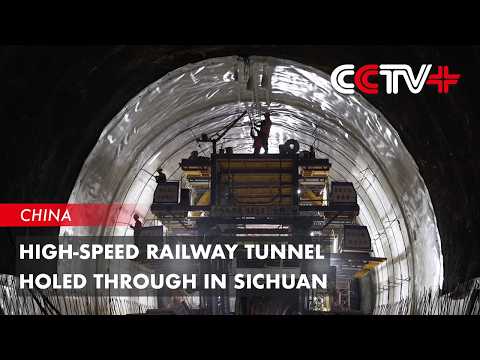
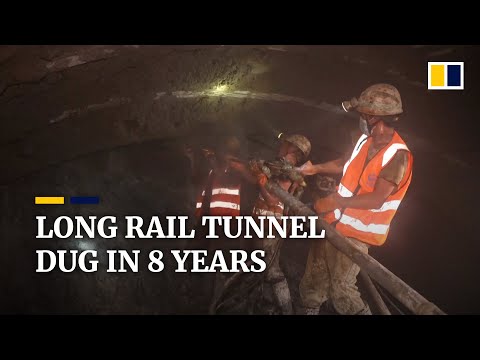
A morning blast on September 21 pierced the last rock of the 7,042-meter Leye Tunnel, the first long tunnel completed on the Huang-Bai Railway. Crews began in July 2024 and pushed four working faces forward about 270 meters a month.

The 315-kilometer freight line will run from Huangtong in Guizhou to Baise in Guangxi, feeding cargo onto the Nanning-Kunming railway and through the Beibu Gulf ports. It is the shortest rail route from Sichuan and Guizhou to the sea, and the breakthrough keeps the railway on schedule for a 2028 opening.

Why it matters

The line gives Sichuan and Guizhou freight the shortest rail route to the Beibu Gulf, cutting transport distance and cost.

Questions about this story

Free account needed to ask — your question is kept and asked for you right after sign-up. Answers are public.

No questions yet — be the first to ask.

Key Indicators

7.0 km
Leye Tunnel length
First long tunnel holed through on the Huang-Bai Railway.
315 km
Total railway length
Huang-Bai line from Huangtong (Guizhou) to Baise (Guangxi).
74%
Guangxi section tunnels complete
As of the September 21 breakthrough, with bridges 94% done.
80%
Share of line in tunnels and bridges
Southwest terrain puts most of the route underground or elevated.

Voices

Curated perspectives — historical figures and your fellow readers.

Ever wondered what historical figures would say about today's headlines?

Sign up to generate historical perspectives on this story.

People Involved

Organizations Involved

Timeline

July 2024 September 2026

5 events Latest: Today
Tap a bar to jump to that date
  1. Leye Tunnel breakthrough

    Today Construction

    Final blast breaks through, completing the first long tunnel.

  2. Sanhe No. 1 tunnel holed through

    Construction

    Guangxi section completes another tunnel on the line.

  3. First Guangxi T-beam cast at Leye yard

    Construction

    Guangxi section begins beam production; tunnels 70% complete.

  4. First T-beam cast at Anshun yard

    Construction

    Guizhou section casts first 32-meter T-beam; Xujiabao Tunnel holes through.

  5. Construction begins on Leye Tunnel

    Construction

    Work starts on the 7,042-meter tunnel in Guangxi.

Scenarios

1

Huang-Bai Railway Opens to Traffic in 2028

Likely Resolves by End of 2028

Discussed by: Project officials at Yunnan-Guizhou Railway Guangxi Company and state media (Xinhua, CGTN)

With Guangxi tunnels 74% complete and beam erection set to start before the end of 2026, officials say the planned 2028 opening is holding. If the remaining long tunnels, notably the 12.9-kilometer Dayunshan in Guizhou, clear on schedule, the line becomes southwest China's shortest freight corridor to the sea.

2

Karst Geology Delays Opening Past 2028

Possible Resolves by End of 2028

Discussed by: Contractors citing fault zones, karst cavities and weak rock on the route

The line crosses karst terrains and fault zones that have already forced complicated excavation methods, including sealing each tunnel chamber immediately after digging. If a major tunnel such as Dayunshan hits prolonged water inflow or ground collapse, the opening slips past 2028.

3

Guangxi Section Starts Beam Erection and Station Work in 2026

Likely Resolves by End of 2026

Discussed by: Deputy commander Xiao Qingbin, Yunnan-Guizhou Railway Guangxi Company

Officials plan to begin bridge beam erection and station construction in the Guangxi section before the end of 2026, after the first T-beams were cast in July. This is the next concrete milestone that would show the schedule is holding.

Historical Context

3 moments from history that rhyme with this story — and how they unfolded.

1960s-1970

Chengdu-Kunming Railway (1970)

One of southwest China's first great rail engineering feats, the 1,100-kilometer line took a decade to build through Sichuan and Yunnan's mountains and rivers in the 1960s, largely by hand.

Then

Its completion in 1970 finally linked the southwest interior to Kunming and opened the region economically.

Now

It set the pattern for southwest rail: tunnels and bridges dominate, and projects often run 80% underground or elevated.

Why this matters now

The Huang-Bai line shares that pattern, with more than 80% of its route in tunnels and bridges, which is why each breakthrough is a major milestone.

Opened 1997

Nanning-Kunming Railway (1997)

The 898-kilometer line was the first trunk railway giving landlocked southwest China direct rail access to Guangxi's coast and the Beibu Gulf ports. It took decades to build through mountainous terrain.

Then

It cut shipping times from the interior to the sea and opened regional coal, ore and agricultural trade.

Now

It remains the backbone corridor for southwest freight, and the Huang-Bai line is built to feed into it.

Why this matters now

Huang-Bai connects to the Nanning-Kunming line at Baise, making it the new shorter approach to the same coast.

2019

Western Land-Sea New Corridor launch (2019)

Beijing approved a Western Land-Sea New Corridor with three rail routes (east, central, west) linking inland provinces to Guangxi's Beibu Gulf ports. The east and central routes progressed faster; the west route through Guizhou lagged.

Then

The corridor's east and central routes opened first, carrying growing freight volumes.

Now

Huang-Bai is the missing piece of the west route, which is the shortest of the three.

Why this matters now

Leye's completion keeps the corridor's west route on track for its planned 2028 opening.

Sources

(8)