
Pull to refresh
Logo
Daily Brief
Following
Why Sign Up
North Korea grooms a 13-year-old girl to inherit a nuclear arsenal

North Korea grooms a 13-year-old girl to inherit a nuclear arsenal

Force in Play
By Newzino Staff |

South Korea's spy agency delivers its strongest assessment yet that Kim Jong Un's daughter is being prepared to lead

Today: NIS formally assesses Kim Ju Ae as likely successor

Overview

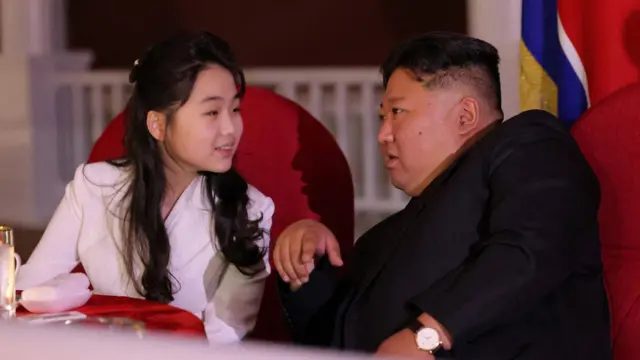
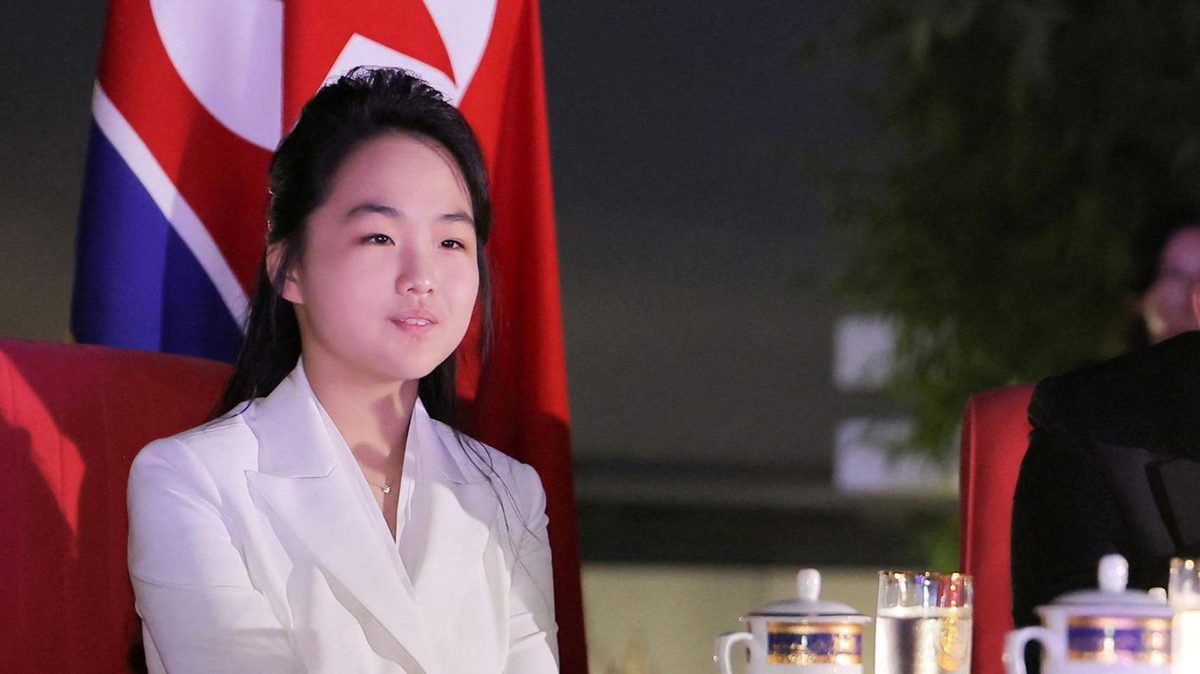
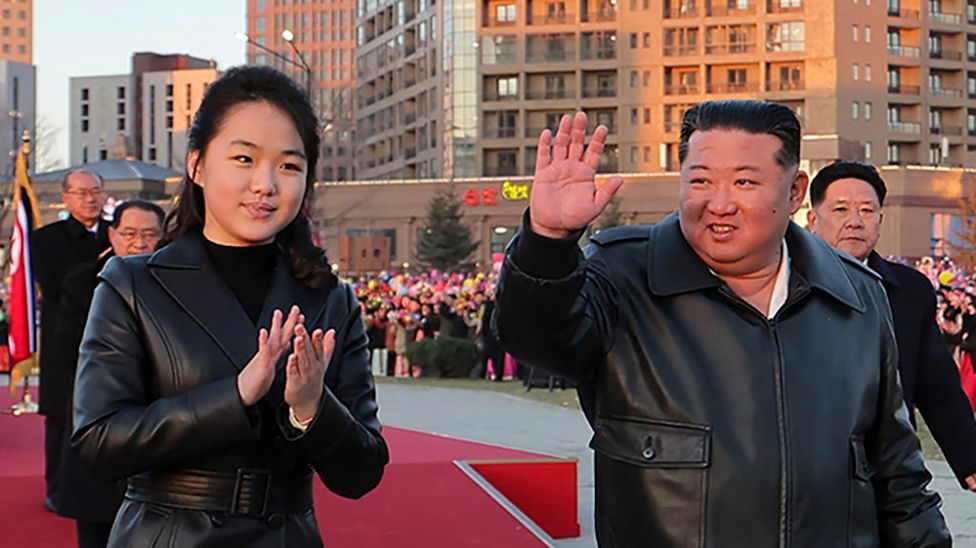
South Korea's National Intelligence Service (NIS) told lawmakers on April 6 that it is now "fair to view" Kim Ju Ae — the approximately 13-year-old daughter of North Korean leader Kim Jong Un — as his designated successor. The assessment, the agency's most definitive public statement on succession in the nuclear-armed state, cited her completion of successor training and an expanding public profile that includes driving tanks and firing weapons at military events.

Why it matters

Who inherits command of North Korea's growing nuclear arsenal shapes the security of 200 million people in the region.

Key Indicators

~13
Kim Ju Ae's estimated age
Born circa 2012-2013, she would be the youngest designated heir in modern authoritarian succession
42
Kim Jong Un's current age
Relatively young, but his father died at 69 and grandfather at 82, both from cardiovascular causes
50+
Estimated nuclear warheads
North Korea's arsenal continues to grow, with capacity to produce roughly 6-7 new warheads per year
3
Generations of Kim dynasty rule
North Korea is the only communist state to achieve multigenerational dynastic succession

Interactive

Exploring all sides of a story is often best achieved with Play.

Ever wondered what historical figures would say about today's headlines?

Sign up to generate historical perspectives on this story.

Sign Up

Debate Arena

Two rounds, two personas, one winner. You set the crossfire.

People Involved

Organizations Involved

Timeline

  1. NIS formally assesses Kim Ju Ae as likely successor

    Intelligence

    South Korea's National Intelligence Service briefs the National Assembly that it is now 'fair to view' Kim Ju Ae as Kim Jong Un's heir, citing completed successor training and her expanding role at military events including driving tanks and firing weapons.

  2. Putin and Kim sign mutual defense treaty

    Diplomacy

    Russia and North Korea sign a comprehensive strategic partnership including mutual defense commitments, deepening the external security architecture that any future North Korean leader would inherit.

  3. Kim Ju Ae appears at multiple military events

    Succession

    Over the course of 2023, Kim Ju Ae attends military parades, weapons displays, and public events alongside her father, each appearance expanding her visibility within the regime's choreography.

  4. Kim Ju Ae revealed to the world at ICBM launch

    Succession

    Kim Jong Un brings his daughter, approximately 9-10 years old, to an intercontinental ballistic missile launch — her first public appearance. State media photographs show her standing beside the Hwasong-17 missile.

  5. Kim Jong Un disappears from public view for weeks

    Health

    Kim's prolonged absence from public events triggers global speculation about his health and the lack of a visible succession plan.

  6. North Korea's largest nuclear test

    Military

    North Korea conducts its sixth nuclear test, estimated at 100-370 kilotons, claiming a thermonuclear weapon capability that fundamentally raises the stakes of any future succession.

  7. Kim Jong Nam assassinated in Malaysia

    Succession

    Kim Jong Un's half-brother Kim Jong Nam is killed with VX nerve agent at Kuala Lumpur airport, removing the only other adult male Kim heir from the picture.

  8. Kim Jong Un executes his uncle Jang Song-thaek

    Consolidation

    Kim orders the execution of his uncle and former regent figure on charges of treason, eliminating the most powerful potential rival to his authority.

  9. Kim Jong Un takes power after father's death

    Succession

    Kim Jong Il dies of a heart attack. His youngest son Kim Jong Un, groomed for barely two years, assumes control of North Korea at approximately age 27.

Scenarios

1

Kim Ju Ae assumes power decades from now after long grooming

Discussed by: NIS analysts and succession scholars who view the current trajectory as deliberate, long-horizon planning

Kim Jong Un, only 42, rules for another 20-30 years while systematically building his daughter's credentials, institutional support, and public mythology. Kim Ju Ae accumulates party titles, military affiliations, and a propaganda narrative recasting female leadership as compatible with the Paektu bloodline. By the time she takes power, potentially in her 30s or 40s, the groundwork is so extensive that resistance is minimal. Kim Yo Jong serves as mentor and enforcer during the transition. This scenario mirrors the 20-year grooming of Kim Jong Il.

2

Health crisis forces early succession; Kim Yo Jong serves as regent

Discussed by: Analysts at 38 North, Stimson Center, and CSIS who note Kim Jong Un's cardiovascular risk factors

Kim Jong Un suffers incapacitation or death while Kim Ju Ae is still too young to govern. Kim Yo Jong steps in as de facto leader and regent, wielding power on behalf of her niece. This arrangement — a senior female relative ruling until the heir comes of age — has precedent in Korean dynastic history. The risk is that Kim Yo Jong consolidates power for herself or that military elites resist dual female authority at the top. Regional powers scramble to assess nuclear command and control.

3

Military elites reject female succession; internal power struggle erupts

Discussed by: Skeptical analysts who emphasize North Korea's deeply patriarchal military culture and the lack of any precedent for female communist leadership

Senior Korean People's Army generals and party elders, many of whom rose through a rigidly male hierarchy, refuse to accept a female supreme leader regardless of her bloodline. A succession crisis triggers factional infighting — potentially between military hardliners backing a male alternative (possibly Kim Jong Un's reported older son, about whom little is known) and party loyalists supporting the designated heir. This scenario is the most dangerous for regional security, as competing factions with access to nuclear weapons could miscalculate or use provocations to consolidate domestic support.

4

Succession plan shifts to an undisclosed male heir

Discussed by: Analysts who note Kim Jong Un is believed to have an older son whose identity remains hidden

Kim Jong Un reportedly has at least one son, possibly older than Kim Ju Ae, who has been kept entirely out of public view. Kim Ju Ae's public appearances may be a deliberate misdirection — using one child as a visible symbol while quietly grooming another. The NIS assessment could prove premature if the son is later introduced as the actual successor. North Korean precedent supports this: Kim Jong Un himself was kept hidden until just two years before assuming power.

Historical Context

Kim Jong Un's own succession (2010-2011)

September 2010 - December 2011

What Happened

Kim Jong Il, after suffering a stroke in 2008, designated his youngest son Kim Jong Un as heir. The 26-year-old was publicly introduced at a party conference in September 2010 with the instant rank of four-star general, despite no known military experience. Fifteen months later, Kim Jong Il died of a heart attack.

Outcome

Short Term

Kim Jong Un took power with a support network arranged by his father, including uncle Jang Song-thaek as regent. The transition was orderly.

Long Term

Kim purged his uncle within two years and consolidated absolute control, proving that even a compressed, unconventional grooming period could produce a durable succession — the key precedent for his own daughter's candidacy.

Why It's Relevant Today

If Kim Jong Un pulled off succession with just two years of preparation and no prior public profile, the fact that Kim Ju Ae has already had three-plus years of public exposure — starting at age 9 — suggests an even more deliberate and longer-horizon plan.

Bashar al-Assad's unexpected succession in Syria (2000)

January 1994 - June 2000

What Happened

Syrian dictator Hafez al-Assad had groomed his eldest son Bassel as heir, but Bassel died in a 1994 car crash. His younger brother Bashar, a London-trained eye doctor with no political experience, was recalled and given six years of rapid grooming — military promotions, political introductions, and a constitutional amendment lowering the presidential age minimum from 40 to 34 specifically to accommodate him.

Outcome

Short Term

Bashar assumed power smoothly in 2000 at age 34, inheriting his father's security apparatus and political network.

Long Term

He ruled for over two decades, demonstrating that authoritarian systems can adapt succession plans to accommodate unexpected heirs — though his rule ended in civil war and eventual overthrow in 2024.

Why It's Relevant Today

Syria shows that authoritarian dynasties can rewrite their own rules when succession requires it — including changing constitutions and fast-tracking unprepared heirs. North Korea rewriting gender norms for Kim Ju Ae would follow the same logic: the dynasty's survival overrides all other institutional constraints.

Queen Seondeok of Silla (632-647 CE)

632-647 CE

What Happened

In the ancient Korean kingdom of Silla, Princess Seondeok became the peninsula's first and one of its only female rulers when her father King Jinpyeong died without a male heir. She reigned for 15 years, overseeing military campaigns, diplomatic alliances with Tang China, and major cultural projects including the Cheomseongdae observatory — the oldest surviving astronomical observatory in East Asia.

Outcome

Short Term

Her reign was marked by both military threats from rival kingdoms and an attempted coup, which she survived.

Long Term

Two more queens eventually ruled Silla, but no woman has led a Korean state since the 7th century — a gap of nearly 1,400 years.

Why It's Relevant Today

The closest Korean precedent for female leadership is over a millennium old. If Kim Ju Ae takes power, she would be breaking not just communist precedent but 1,400 years of Korean political tradition — which is precisely why the NIS noted the regime is staging military events specifically to 'reduce resistance to a female leader.'

Sources

(2)