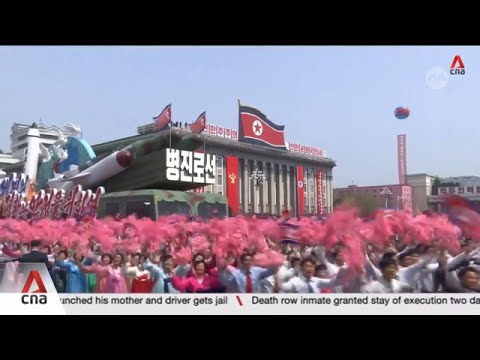
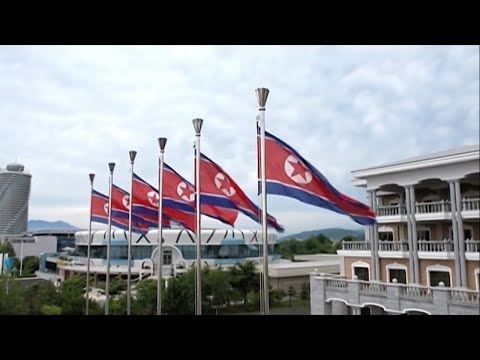
North Korea sealed its borders on January 23, 2020, before most countries had heard of COVID-19. For six years it operated in near-total isolation: China trade fell 96%, food reached levels not seen since the 1990s famine that killed hundreds of thousands, and no tourists entered.
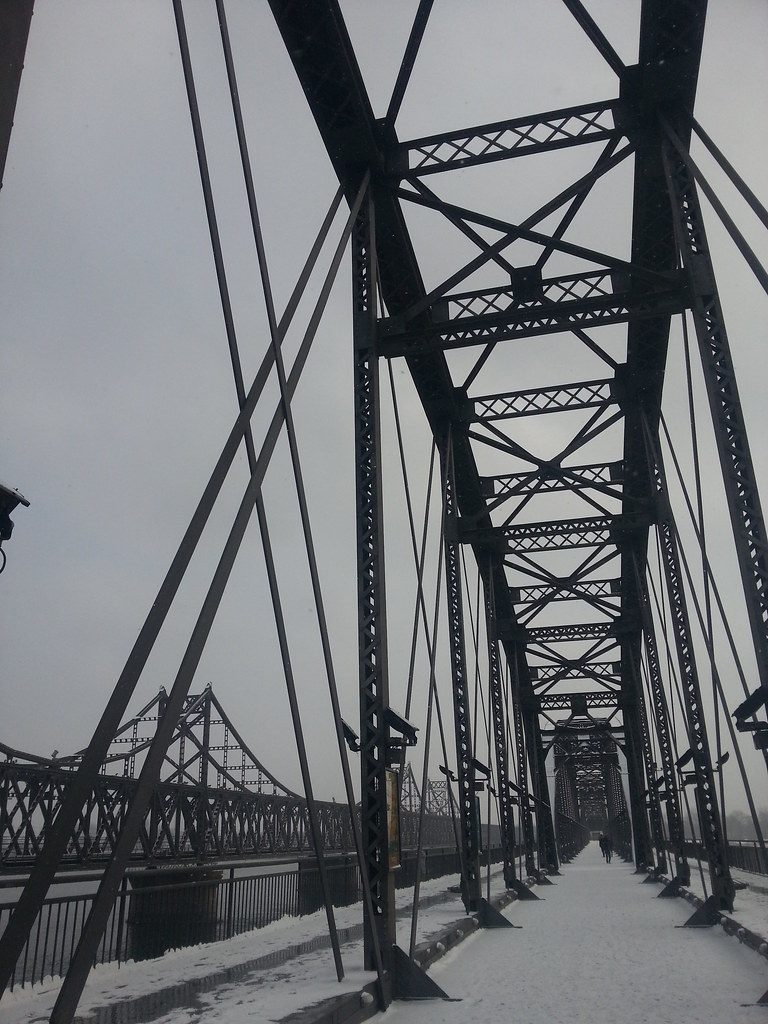
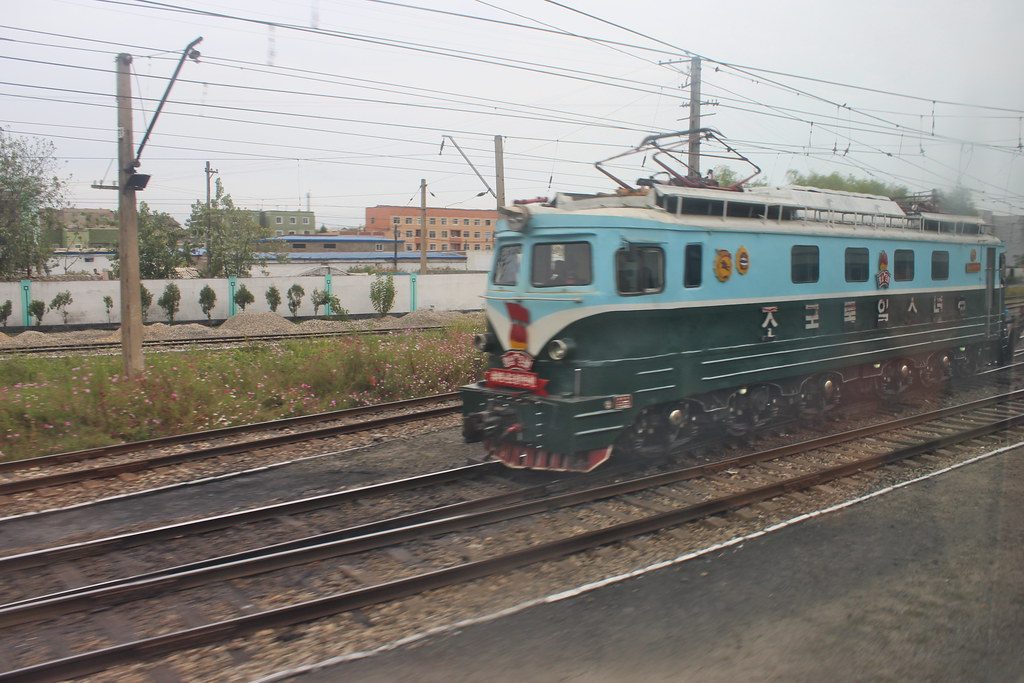
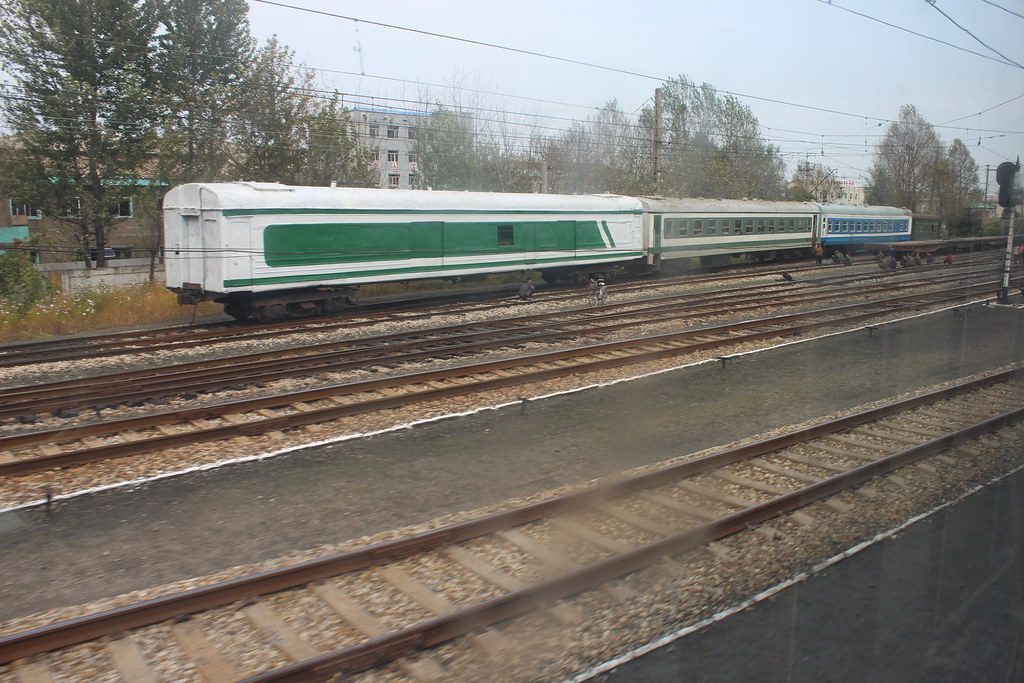
On March 12, 2026, a passenger train departed Beijing for Pyongyang for the first time in six years, carrying diplomats and businesspeople in just two carriages on a 25-hour journey through Dandong. Air China resumed direct flights on March 30, the first commercial service since January 2020. Both require strict authorization: train passengers need business visas, air travelers official approval.
This is not a country opening its doors; every reopening step since 2022 has been narrow, controlled, and revocable. When Western tourists were allowed into the northeastern Rason zone in February 2025, the regime shut it down within two weeks after videos appeared online; Russian tourists remain the only foreigners welcome. The dual reopening supports the five-year plan announced in February 2026—which requires stable China supply chains accounting for 98% of North Korea's foreign trade—but the real question is how tightly the regime can control the valve.
Questions about this story
Free account needed to ask — your question is kept and asked for you right after sign-up. Answers are public.
No questions yet — be the first to ask.
Key Indicators
2
Transport Links Restored
Both passenger rail (March 12) and direct air service (March 30) resumed within 18 days, signaling coordinated transport normalization with China.
$2.73B
China-North Korea trade in 2025
Two-way trade rebounded to pre-pandemic levels after collapsing to under $100 million in 2021.
98%
Share of North Korea's trade with China
China remains North Korea's overwhelmingly dominant economic partner, making these transport links critical.
4x weekly
Train frequency
The restored Beijing-Pyongyang service runs Monday, Wednesday, Thursday, and Saturday — matching pre-COVID frequency, though with far fewer carriages.
Weekly
Air China flight frequency
Boeing 737 service between Beijing Capital and Pyongyang operates on a weekly schedule, restricted to authorized travelers.
Images from Openverse under Creative Commons licenses.
Videos from YouTube.
Voices
Curated perspectives — historical figures and your fellow readers.
J. P. Morgan
(1837-1913) ·Gilded Age · finance
Fictional AI pastiche — not real quote.
"A nation that trades with but one partner, on that partner's terms, under that partner's gaze, is not a sovereign state — it is a debtor who has forgotten the word."
0% found this insightful
Ayn Rand
(1905-1982) ·Cold War · philosophy
Fictional AI pastiche — not real quote.
"The most honest thing about North Korea's "reopening" is its candor: they do not pretend the state exists to serve the individual, but rather that the individual exists to serve the state's five-year plan. At least they have the decency not to call it freedom."
0% found this insightful
Ever wondered what historical figures would say about today's headlines?
Sign up to generate historical perspectives on this story.
16 events
Latest: March 30th, 2026 · 6 months ago
Showing 8 of 16
JK to step
Tap a bar to jump to that date
Jump to
March 2026
Air China resumes Beijing-Pyongyang flights after six-year COVID suspension
LatestTransport
Air China restarts direct flights between Beijing and Pyongyang with a Boeing 737, marking the first commercial air service between the two capitals since January 2020. Weekly service is planned, with travel restricted to those with official or special-purpose authorization. The resumption follows the March 12 restart of passenger train service.
Beijing-Pyongyang passenger train announced, tickets sell out
Transport
China and North Korea confirm the resumption of four-times-weekly passenger rail between the two capitals, restricted to business visa holders. Tickets for the March 12 inaugural departure sell out immediately.
February 2026
Party Congress unveils new five-year economic plan
Policy
The 9th Workers' Party Congress announces a 2026-2030 plan emphasizing agricultural stability and self-reliance — language analysts read as acknowledging ongoing economic fragility rather than signaling outward opening.
October 2025
Chinese premier visits Pyongyang — first in 16 years
Diplomatic
Premier Li Qiang's three-day visit is the highest-level Chinese engagement with North Korea since 2009, widely read as Beijing reasserting influence after Pyongyang's tilt toward Moscow.
June 2025
Pyongyang-Moscow passenger rail restored
Transport
Direct passenger train service resumes between Pyongyang and Moscow — one of the world's longest rail routes, spanning eight time zones.
March 2025
North Korea abruptly shuts Rason to foreigners
Policy
Two weeks after the first Western tourists arrived, North Korea suspends all non-Russian foreign access with no explanation. Reports cite regime alarm over visitors posting uncontrolled smartphone videos to social media.
February 2025
Western tourists briefly allowed into Rason zone
Tourism
Thirteen international travelers from the United Kingdom, Canada, France, and Germany enter the Rason Special Economic Zone on a five-day tour — the first non-Russian foreign tourists since the pandemic.
December 2024
Russia-North Korea passenger rail resumes
Transport
Scheduled passenger trains begin running three times weekly on the short Khasan-Tumangang border route — the first regular international passenger rail into North Korea since 2020.
Putin's first North Korea visit since 2000 produces a comprehensive strategic partnership including mutual military assistance. The treaty enters force in December 2024.
March 2024
Russia vetoes UN sanctions monitoring panel
Diplomatic
Russia blocks renewal of the United Nations Panel of Experts that had monitored North Korea sanctions compliance since 2009. China abstains. The panel formally disbands on April 30, removing the primary international enforcement mechanism.
February 2024
First tourists enter North Korea in four years
Tourism
Approximately 100 Russian tourists arrive on an Air Koryo charter flight from Vladivostok — the first foreign sightseers since the border closure. Only Russian nationals are permitted.
September 2023
Kim travels abroad for first time since pandemic
Diplomatic
Kim Jong Un takes his armored train to Russia's Far East and meets Vladimir Putin at the Vostochny Cosmodrome, beginning a deepened military partnership that would reshape North Korea's foreign relations.
August 2023
Air Koryo flies internationally for the first time in three years
Transport
Air Koryo flight JS151 lands at Beijing Capital Airport — the first international commercial flight from North Korea since February 2020.
July 2023
First foreign delegations received since COVID
Diplomatic
Russian Defense Minister Sergei Shoigu and Chinese Politburo member Li Hongzhong visit Pyongyang for the Korean War armistice anniversary — the first foreign officials received since January 2020.
January 2022
First crack in the wall: freight rail restarts
Transport
The Dandong-Sinuiju freight train runs for the first time since the closure, driven by severe supply shortages. The service is suspended again in April due to COVID outbreaks, then permanently restored in September 2022.
January 2020
North Korea seals all borders
Policy
North Korea bans all foreign entry and suspends international flights and rail — one of the earliest and most extreme COVID border closures of any country, days before the World Health Organization declared a global health emergency.
Scenarios
1
Train service expands, tourism remains frozen
Likely
Discussed by: Korea on Point, the Center for Strategic and International Studies (CSIS), and 38 North analysts
The most widely predicted path. The Beijing-Pyongyang train gradually increases to full pre-COVID capacity as business and diplomatic travel normalizes, and Air Koryo adds more flights. But general tourism remains closed to everyone except Russians, and the Rason zone stays shut after the March 2025 social media scare. North Korea gets the supply chain stability its five-year plan requires without exposing its population to uncontrolled outside contact. This scenario treats the train as logistics infrastructure, not a political signal.
2
North Korea snaps the border shut again
Possible
Discussed by: Sino-NK, Radio Free Asia, and tour operators who experienced the March 2025 Rason reversal
A provocation — a defection attempt via the train, unauthorized photography by a passenger, or a deterioration in China-North Korea political relations — triggers an abrupt suspension of the service. North Korea demonstrated exactly this pattern in March 2025, canceling the Rason tourism experiment within two weeks. The regime's threshold for reversing openings is extremely low, and the train's restricted two-carriage format suggests Pyongyang has already designed it to be easily shut down.
3
Controlled Chinese tourism resumes by 2027
Possible
Discussed by: Koryo Tours, Beyond the Borders Tours, and The Diplomat's North Korea analysts
If the business-visa train operates without incident for 12-18 months, Pyongyang gradually expands eligibility to include organized Chinese tour groups — the largest pre-COVID tourist demographic. This would mirror the sequencing of Russian tourism, which moved from charter flights (February 2024) to resort access (July 2025) over 18 months. Chinese tourists are seen as lower-risk than Westerners because Chinese travel companies operate under Beijing's regulatory oversight, reducing the social media exposure problem that killed the Rason experiment.
4
US-North Korea diplomacy reshapes the reopening
Uncertain
Discussed by: NK News, Chatham House, and analysts tracking potential Trump-Kim reengagement
Speculation that the Trump administration may attempt to revive US-North Korea diplomacy adds a wild card. If summit talks resume, the controlled bilateral reopening with China could accelerate into a broader engagement — or freeze entirely if Pyongyang decides to consolidate leverage before negotiations. The 2018-2019 cycle showed that diplomatic momentum can dramatically alter North Korea's openness calculus in both directions, and the regime has historically used transport links as bargaining chips.
5
Dual transport links enable rapid expansion of Chinese business delegations
Likely
Discussed by: Trade analysts at CSIS and NK News, China-focused business consultants
With both rail and air options now available, Chinese companies may accelerate investment scouting missions to Pyongyang. The redundancy reduces vulnerability to single-mode disruption and signals Beijing's confidence in the reopening's durability. This could lead to visible increases in Chinese business presence in North Korea by mid-2026, though still tightly controlled by regime handlers.
6
Air service becomes the preferred channel for sensitive diplomatic communications
Possible
Discussed by: Diplomatic observers tracking China-North Korea relations
The faster air route (2-3 hours vs. 25 hours by train) may become the preferred method for high-level Chinese officials to visit Pyongyang for sensitive negotiations. This could enable more frequent, less visible diplomatic engagement than the high-profile train arrivals, allowing Beijing to maintain pressure on North Korea's Russia alignment without public spectacle.
Historical Context
3 moments from history that rhyme with this story — and how they unfolded.
1 of 3
April 1971
China's ping-pong diplomacy (1971)
Nine American table tennis players accepted an invitation to visit China on April 10, 1971 — the first Americans to enter the country since 1949. The opening came through a spontaneous contact between Chinese player Zhuang Zedong and American player Glenn Cowan at the World Championships in Japan, which Premier Zhou Enlai seized on as a diplomatic channel. Henry Kissinger made secret visits months later; Nixon followed in February 1972.
Then
The table tennis visit cracked open a channel that led to Nixon's historic 1972 summit and the Shanghai Communique, ending 22 years of zero diplomatic contact.
Now
It took 17 more years — from ping-pong in 1971 to Deng Xiaoping's economic reforms in 1978 — for the opening to produce genuine structural transformation. The controlled initial signal was not the same as a commitment to change.
Why this matters now
The Beijing-Pyongyang train carries diplomats and businesspeople in two carriages under tight restrictions — architecturally closer to a controlled signal than to a policy transformation. The Chinese precedent shows that minimal openings can lead to historic change, but the timeline is measured in years, not months.
2 of 3
November 1998 - July 2008
North Korea's Mount Kumgang tourism collapse (1998-2008)
South Korea's Hyundai Asan paid North Korea roughly $12 million per month for exclusive tourism rights to Mount Kumgang. Over a decade, more than one million South Korean tourists visited the resort — the flagship project of Seoul's Sunshine Policy of engagement through economic interdependence. On July 11, 2008, a North Korean soldier shot and killed Park Wang-ja, a 53-year-old South Korean tourist who had wandered into a restricted zone.
Then
South Korea immediately suspended all tours. North Korea refused any joint investigation. Hyundai Asan suffered losses in the hundreds of millions of dollars.
Now
North Korea expelled remaining South Korean staff, confiscated all infrastructure, and by 2020 was demolishing the South Korean-built facilities — deliberately erasing the physical evidence of interdependence.
Why this matters now
Mount Kumgang shows the regime's established pattern: openings serve economic extraction, not relationship building, and are terminated the moment they create political vulnerability. The train resumption's restriction to business visas — no tourists — suggests Pyongyang has internalized this lesson and is designing openings that minimize the risks Kumgang exposed.
3 of 3
March 2011 - February 2021
Myanmar's managed military opening and reversal (2011-2021)
Myanmar's military junta, facing economic stagnation and alarm at overdependence on China, engineered a transition to nominally civilian government under former general Thein Sein. Within a year, political prisoners were released, press censorship was eased, and Western sanctions were suspended. Foreign investment surged. Opposition leader Aung San Suu Kyi entered parliament in 2012 and became the country's de facto leader after 2015 elections.
Then
A decade of genuine economic growth, increased press freedom, and international reengagement followed the opening.
Now
On February 1, 2021, the military staged a full coup after the opposition won elections by an even larger margin than before. The opening was reversed. The Myanmar lesson: reforms designed to preserve the old order can succeed for a decade and still snap back when the political settlement proves unstable.
Why this matters now
North Korea shares Myanmar's core structural features: a military institution that is the actual power, heavy economic dependence on China, and a reform logic rooted in economic necessity rather than political conviction. Pyongyang has almost certainly studied the 2021 coup — and drawn the conclusion that even carefully managed openings can threaten regime survival if they go too far.