

Pull to refresh
Logo
Daily Brief
Following
Why Sign Up
Indonesia builds Nusantara as a second capital

Indonesia builds Nusantara as a second capital

Built World
By Newzino Staff |

From Jokowi's full Jakarta replacement to Prabowo's scaled-back political capital

January 2026: Prabowo's first overnight stay

Overview

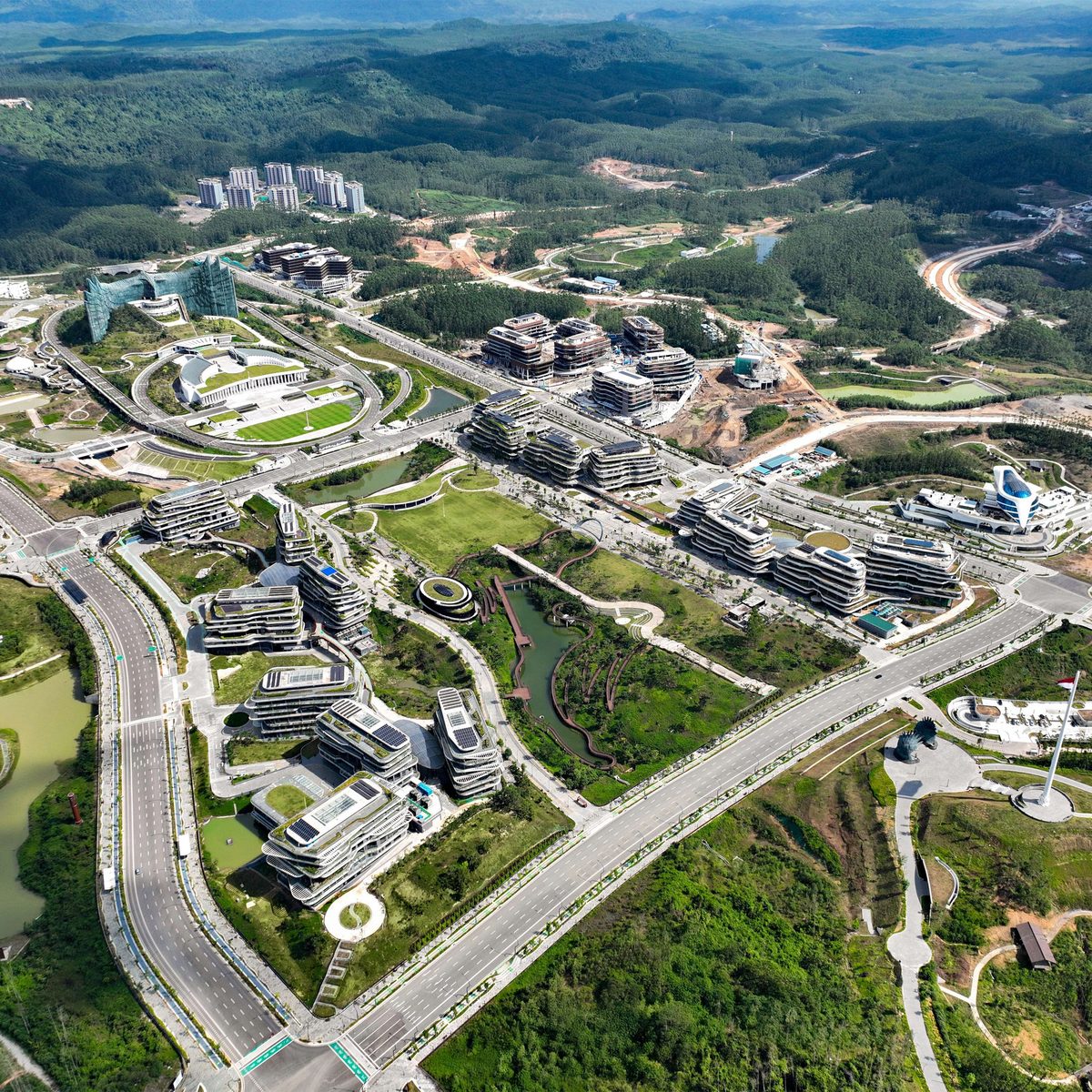
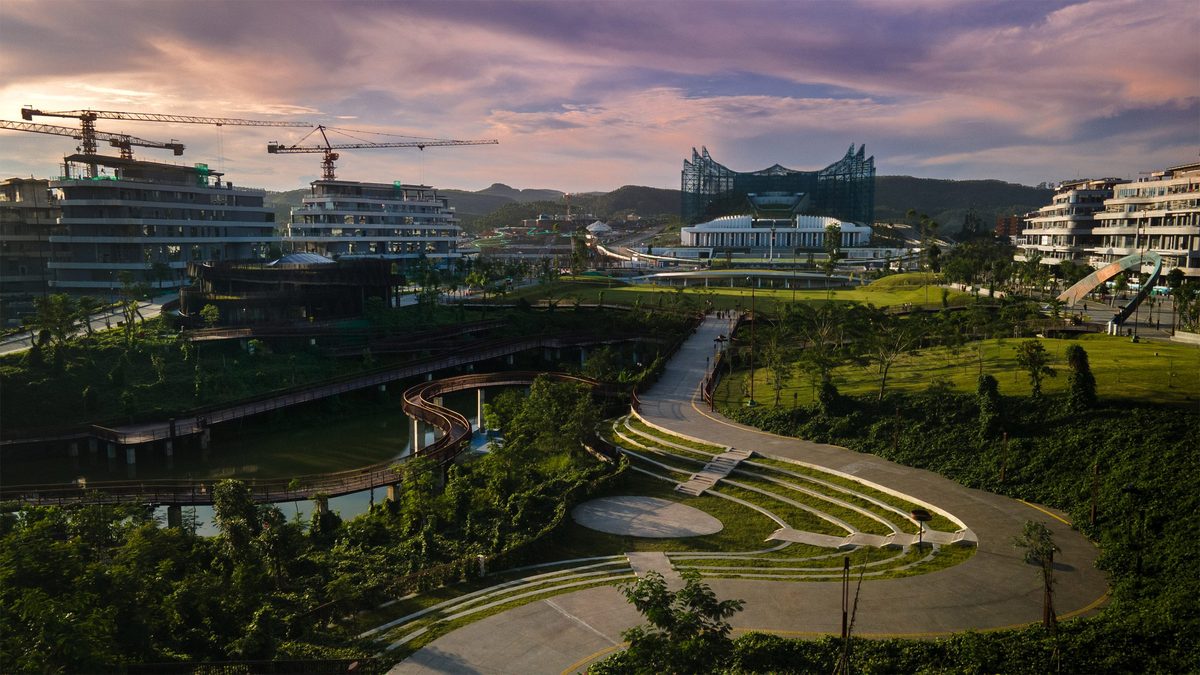
Indonesia has been building a brand-new capital in the jungles of East Kalimantan since 2022. On December 12, 2025, construction crews broke ground on the legislative and judicial districts of Nusantara — the buildings meant to house parliament, the Supreme Court and the Constitutional Court — under multi-year contracts worth roughly Rp20 trillion (about $1.2 billion).

Why it matters

Indonesia is spending tens of billions to relocate the seat of government — but Jakarta keeps the economy, raising the odds Nusantara ends up half-empty.

Key Indicators

$35B
Total estimated cost
Original five-phase budget through 2045, mostly to be raised from private investors who have largely stayed away.
Rp20T
Legislative + judicial contracts
Eight multi-year construction packages signed in early December 2025, covering 2025–2027.
147,320
Nusantara population, end 2025
Mostly residents of pre-existing villages such as Sepaku, Bumi Harapan and Pemaluan, not relocated civil servants.
2028
Target political capital launch
Year executive, legislative and judicial branches are planned to fully operate from Nusantara.
0%
Foreign private investment secured
All Rp65.3 trillion in private commitments to date come from Indonesian firms and state-owned entities.

Interactive

Exploring all sides of a story is often best achieved with Play.

Ever wondered what historical figures would say about today's headlines?

Sign up to generate historical perspectives on this story.

Sign Up

Debate Arena

Two rounds, two personas, one winner. You set the crossfire.

People Involved

Organizations Involved

Timeline

  1. Prabowo's first overnight stay

    Political

    Prabowo sleeps at Nusantara for the first time and reaffirms the $32 billion project, addressing months of investor doubt.

  2. Vice Presidential Palace completed

    Milestone

    Gibran's office begins phased relocation to Nusantara, the first senior executive office to move.

  3. Groundbreaking on legislative and judicial complexes

    Construction

    Crews break ground on the parliament, Supreme Court, Constitutional Court, Judicial Commission and a Plaza of Democracy designed for public assembly. Total contract value: about Rp20 trillion through 2027.

  4. Final Phase II contracts signed

    Construction

    OIKN signs the last eight of 20 contract packages, covering 16 legislative buildings on 41.81 hectares and four judicial buildings on 15.15 hectares.

  5. Nusantara redesignated 'political capital'

    Legal

    Prabowo signs Presidential Regulation 79/2025, formally scaling the project back from a full Jakarta replacement.

  6. Phase II budget unblocked

    Funding

    Government clears Rp48.8 trillion for 2025–2029 Phase II works, well below Jokowi-era spending.

  7. Prabowo takes office

    Political

    Prabowo Subianto and Vice President Gibran Rakabuming Raka are sworn in, inheriting Nusantara as Jokowi's flagship project.

  8. Independence Day ceremony at Nusantara

    Milestone

    Jokowi holds Indonesia's national day flag ceremony at the unfinished State Palace, marking partial first-phase completion.

  9. IKN Law passed

    Legal

    Parliament approves the law creating the new capital and naming it Nusantara, and establishes OIKN to build and govern it.

  10. Jokowi announces capital move

    Announcement

    President Joko Widodo tells the nation he will relocate the capital from Jakarta, citing congestion, flooding and land subsidence.

Scenarios

1

Two-capital model takes hold by 2028

Discussed by: OIKN, Jakarta Globe, ANTARA News

Legislative and judicial complexes finish on or near the 2027 target. Around 4,000 civil servants relocate, parliament begins sitting in Nusantara, and Jakarta retains the economic and cultural center. Indonesia operates with a working political/economic capital split similar to Putrajaya–Kuala Lumpur, but at a much larger scale.

2

Nusantara becomes a 'ghost capital'

Discussed by: Asia Times, South China Morning Post, Anadolu Agency

Government buildings open on schedule but private investment continues to lag, civil servants resist moving, and most economic life stays in Jakarta. Nusantara ends up with empty boulevards and underused offices, echoing Naypyidaw's experience and validating early skeptic warnings.

3

Further scope cuts under fiscal pressure

Discussed by: Global Construction Review, Asia News Network

If Prabowo's broader fiscal priorities — free meals program, defense spending, sovereign wealth fund — squeeze the budget, later phases of Nusantara are deferred indefinitely. The political capital opens as a stripped-down core while planned districts for housing, universities and commerce never break ground.

4

Successor government reverses the move

Discussed by: Jakarta Post analysts, SCMP

A future president elected in 2029 declines to fund continued relocation, citing cost and limited uptake. Nusantara is left as a regional administrative outpost and Jakarta quietly resumes full capital functions, even if Law 2/2024 is never formally repealed.

Historical Context

Putrajaya, Malaysia (1999)

1999

What Happened

Malaysia opened Putrajaya as a planned administrative capital 25 km south of Kuala Lumpur, moving the prime minister's office and most ministries there. Parliament and the central bank stayed in Kuala Lumpur, and many civil servants resisted relocating their families.

Outcome

Short Term

Government functions split between two cities, with Putrajaya housing the executive while Kuala Lumpur kept legislature and finance.

Long Term

Malaysia today runs a stable two-capital model, but Putrajaya's population growth lagged plans for years and the city is still seen as quiet outside business hours.

Why It's Relevant Today

Putrajaya is the closest living model for Indonesia's new two-capital design — political functions in one city, economic life left in the old capital — and shows both that the model can work and that the new capital tends to feel hollow for a long time.

Naypyidaw, Myanmar (2005)

November 2005

What Happened

Myanmar's military junta moved the capital from Yangon to Naypyidaw with almost no warning, ordering ministries to relocate within days. The new city was built in remote central Myanmar with twenty-lane boulevards and sprawling government complexes.

Outcome

Short Term

Government operations transferred by 2006, but the city remained largely empty of residents and visitors.

Long Term

Two decades later Naypyidaw is widely cited as the textbook 'ghost capital' — functional on paper, but lacking the dense civic life that makes a capital city work.

Why It's Relevant Today

Naypyidaw is the cautionary case Nusantara skeptics most often cite: a state-built capital can be physically completed and still fail to attract a real urban population, especially without strong private-sector pull.

Brasília, Brazil (1960)

April 1960

What Happened

Brazil inaugurated Brasília as a brand-new capital on the empty central plateau, designed by Lúcio Costa and Oscar Niemeyer. The move shifted the federal government from coastal Rio de Janeiro to a planned modernist city built in under four years.

Outcome

Short Term

The federal government and diplomatic corps relocated, but officials continued to commute to Rio for years and the construction left Brazil with significant debt.

Long Term

Brasília succeeded as a political capital and now has more than 3 million residents, though it never absorbed Rio's economic role and developed sharp inequality between the planned core and informal satellite towns.

Why It's Relevant Today

Brasília shows the most ambitious version of the Nusantara playbook can endure — but also that a new capital tends to leave the old city's economic dominance intact for generations and produce its own unequal geography.

Sources

(11)