

Pull to refresh
Logo
Energy Department clears Oklo's Groves-1 reactor for unrestricted operation

Energy Department clears Oklo's Groves-1 reactor for unrestricted operation

New Capabilities

The first private reactor under the DOE's Reactor Pilot Program can now run for research, equipment tests and crew training, feeding Oklo's isotope and Aurora plans

Overview

Updated 38 minutes ago

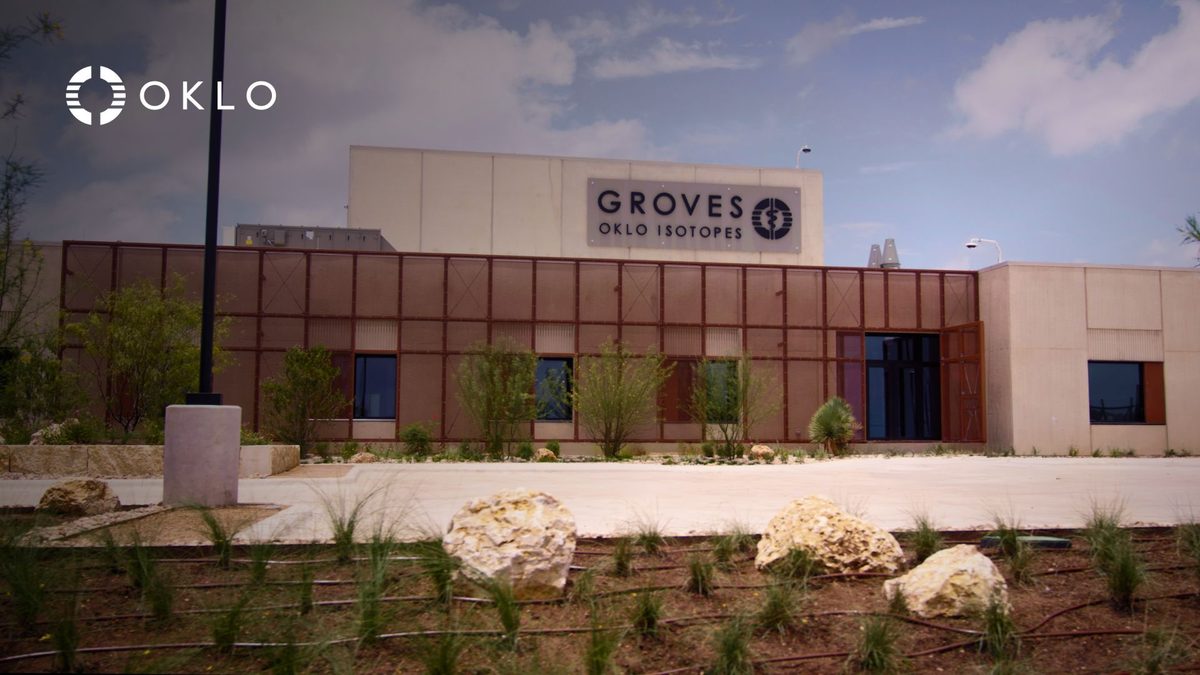
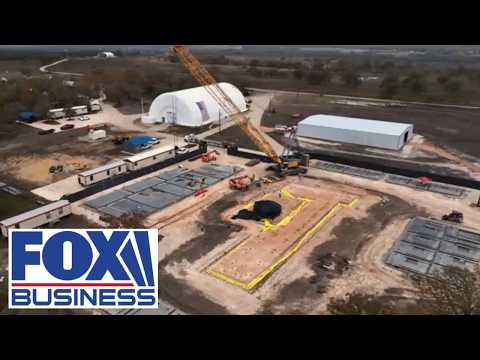
Oklo's Groves-1 reactor went from a greenfield site in Caldwell County, Texas to first criticality in less than a year. In November, the Department of Energy removed the last hold point on the machine, letting Oklo run it for research, equipment testing and crew training instead of only proving it could start.

The clearance turns a demonstration into a working testbed. Data from Groves-1 is meant to shape Groves-2 Forge, a planned isotope plant, and the Aurora powerhouse, Oklo's commercial fast reactor. It also tests a regulatory shortcut: the Energy Department, not the Nuclear Regulatory Commission, authorized this reactor.

Why it matters

Oklo just showed a private company can go from greenfield to criticality in under a year. Its commercial reactors depend on that pace holding.

Questions about this story

Free account needed to ask — your question is kept and asked for you right after sign-up. Answers are public.

No questions yet — be the first to ask.

Key Indicators

$3.13B
Oklo cash and securities, September 30, 2026
Up from $3.0 billion at June 30, with the increase coming from stock sales rather than operations.
11
Advanced reactor projects in the DOE Reactor Pilot Program
The Energy Department selected the projects in August 2025 to test designs under its own authorization pathway.
<12 months
Groundbreaking to first criticality at Groves-1
The reactor reached first criticality at low power in August 2026, less than a year after construction began.
7.2%
Oklo share move after the clearance
Shares rose to $26.90 in premarket trading the morning the clearance was announced.

Voices

Curated perspectives — historical figures and your fellow readers.

Sign up to generate historical perspectives on this story.

People Involved

Organizations Involved

Timeline

May 2025 November 2026

6 events Latest: Today
Tap a bar to jump to that date
  1. DOE removes final hold point on Groves-1

    Today Authorization

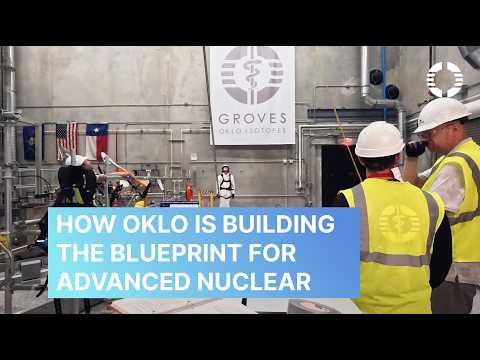
    Unrestricted operations begin: research, equipment testing and crew training, including control rod drive mechanism evaluations.

  2. NRC opens commercial reviews to DOE test data

    Rule

    The commission finalized a rule letting applicants use analyses and test data from DOE and Department of War reactor programs.

  3. Groves-1 reaches first criticality

    Milestone

    The reactor went critical at low power, the first under the pilot program to do so on private land.

  4. Oklo wins startup authorization for Groves-1

    Authorization

    The authorization cleared fuel loading and startup testing, roughly 10 months after groundbreaking.

  5. DOE selects 11 reactor projects for pilot program

    Program

    The Reactor Pilot Program was set up to test advanced designs under a DOE authorization rather than a commercial license.

  6. Executive orders push for rapid prototype criticality

    Policy

    Orders called for at least three prototype reactors to reach criticality by July 4, 2026. The Energy Department rewrote its authorization pathway in response.

Scenarios

1

Oklo breaks ground on Groves-2 Forge

Possible Resolves by Q2 2028

Discussed by: Oklo, which says Groves-1's operating experience will directly inform the forge facility

Groves-2 Forge is meant to combine reactor irradiation with hot-cell processing, handling separation, product recovery, packaging and transport, with an initial focus on lutetium-177 for targeted cancer treatment. A construction start would show Groves-1 produced a repeatable playbook rather than a one-off demonstration.

2

A commercial license application cites Groves-1 data

Uncertain Resolves by End of 2027

Discussed by: The Nuclear Regulatory Commission, whose October 2026 rule allows DOE demonstration data in commercial applications

The NRC rule was written so that test data from DOE and Department of War programs can support a commercial license review. A filing that leans on Groves-1 would be the first test of whether a pilot-program reactor shortens the path to a licensed power plant.

3

A second pilot-program reactor reaches criticality

Possible Resolves by Q2 2027

Discussed by: The Department of Energy, which selected 11 projects and set a target of three prototype criticalities

One criticality does not make a program. If another of the 11 selected projects reaches first criticality, the pathway looks reusable across designs. If Groves-1 stays the only one for another year, the program looks like a single company's shortcut.

4

Oklo's cash falls below $2 billion before an Aurora unit runs

Possible Resolves by Q2 2028

Discussed by: The Inference, citing analyst projections of about $6.3 billion of free cash flow consumed from 2026 to 2030

Oklo held $3.13 billion at September 30, 2026, after raising $2.3 billion in stock sales during the first nine months of the year, and guided $400 million to $500 million of plant spending for 2026. Against consensus 2028 revenue of $39.2 million, the company has not disclosed what its first Aurora reactor in Idaho costs to build.

Historical Context

3 moments from history that rhyme with this story — and how they unfolded.

September 1954 - December 1957

Shippingport Atomic Power Station (1954-1957)

The Atomic Energy Commission and Duquesne Light built the first full-scale nuclear power plant in the United States on the Ohio River in Pennsylvania. Ground was broken in 1954 and the reactor reached criticality in December 1957.

Then

The plant sent power to the grid and became the reference design for the pressurized water reactors that followed.

Now

It set the pattern of government-backed first-of-a-kind reactors paired with a utility customer.

Why this matters now

Oklo is running the same play with a different partner: the Energy Department authorizes and the company builds, hoping the first unit sets the template for many more.

1964 - 1994

Experimental Breeder Reactor II (1964-1994)

Argonne National Laboratory's Experimental Breeder Reactor II in Idaho ran for three decades as a testbed for fast reactor fuel and components. In 1986, tests showed the reactor could shut itself down without operator action after a loss of coolant flow.

Then

The reactor generated data on fuel behavior and passive safety that fed directly into fast reactor design work.

Now

It became the reference case for how a test reactor de-risks a commercial fast reactor program.

Why this matters now

Groves-1 is meant to do for Oklo's fast reactor Aurora what EBR-II did for the U.S. breeder program, at a fraction of the scale and on private land.

January - November 2023

NuScale and the Carbon Free Power Project (2023)

NuScale's design became the first small modular reactor certified by the Nuclear Regulatory Commission. Ten months later, the Utah Associated Municipal Power Systems project it was built for was cancelled as cost estimates climbed and member utilities withdrew.

Then

The only U.S. small modular reactor with an NRC certification lost its first customer.

Now

It separated regulatory approval from commercial viability, a gap every advanced reactor developer now has to cross.

Why this matters now

Oklo has cleared its reactor and not its economics: it has not disclosed what its first Aurora unit costs to build, and analysts project cash burn well above its current reserves.

Sources

(5)