
Pull to refresh
Logo
Daily Brief
Following
Why
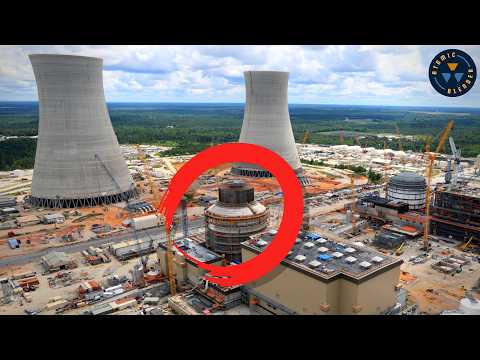
America's first new nuclear reactors in a generation

America's first new nuclear reactors in a generation

Built World
By Newzino Staff |

Georgia's Vogtle Units 3 and 4 Complete After Massive Delays and Cost Overruns

April 29th, 2024: Unit 4 Enters Commercial Operation

Overview

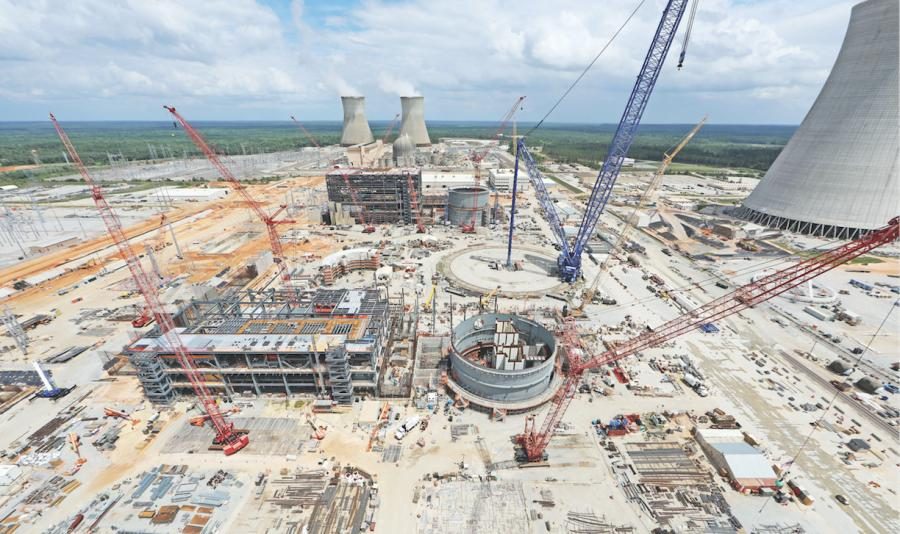
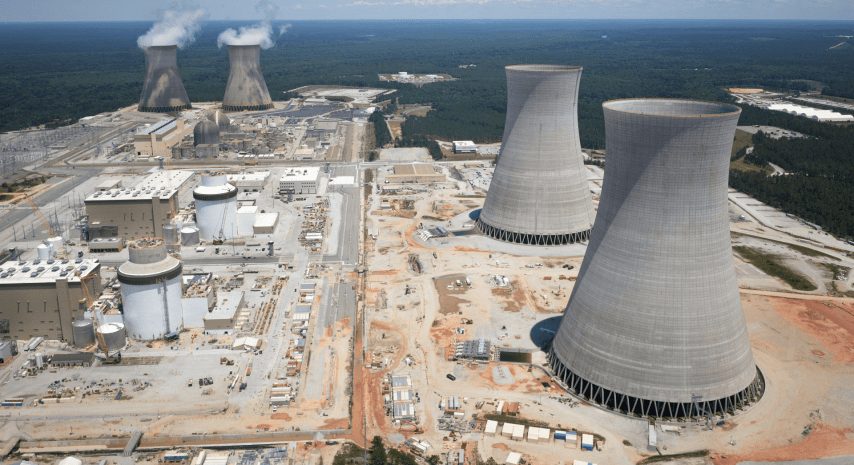
The United States had not completed a new nuclear reactor from scratch since the 1970s. On April 29, 2024, Vogtle Unit 4 entered commercial operation in Georgia, joining its sister Unit 3 which came online in July 2023. Together, they mark the first new American nuclear reactors built in over 30 years and make Plant Vogtle the largest generator of carbon-free electricity in the nation.

The achievement came at extraordinary cost. What was projected to take five years and $14 billion ultimately required 15 years and $35 billion. Westinghouse, the reactor designer, filed for bankruptcy mid-construction. A parallel project in South Carolina using the same AP1000 reactor design was abandoned entirely in 2017, leaving ratepayers paying for reactors that will never generate electricity. Georgia saw it through, and now 4,800 megawatts of emissions-free baseload power will run for 60 to 80 years.

Key Indicators

$35B
Final project cost
More than double the original $14 billion budget
4,800 MW
Total generation capacity
All four Vogtle units combined, largest nuclear plant in the US
30+ years
Gap since last new reactor
First new US nuclear construction since the 1970s to reach completion
10M tons
Annual CO2 emissions avoided
Units 3 and 4 alone displace significant fossil fuel generation

Interactive

Exploring all sides of a story is often best achieved with Play.

Ever wondered what historical figures would say about today's headlines?

Sign up to generate historical perspectives on this story.

Sign Up

Debate Arena

Two rounds, two personas, one winner. You set the crossfire.

People Involved

Chris Womack
Chris Womack
Chief Executive Officer, Southern Company (Leading Southern Company through post-Vogtle era)
Kim Greene
Kim Greene
Chairman, President, and Chief Executive Officer, Georgia Power (First woman to lead Georgia Power)

Organizations Involved

Southern Company
Southern Company
Utility Holding Company
Status: Primary owner and operator of Vogtle

One of America's largest energy companies, Southern Company owns Georgia Power and operates Plant Vogtle through subsidiary Southern Nuclear.

Westinghouse Electric Company
Nuclear Technology Company
Status: Emerged from bankruptcy, acquired by Brookfield

Designer of the AP1000 reactor used at Vogtle and developer of nuclear technology for over a century.

Georgia Public Service Commission
State Regulatory Agency
Status: Approved cost recovery from ratepayers

The elected regulatory body that oversees utility rates in Georgia and approved the Vogtle expansion.

Timeline

  1. Unit 4 Enters Commercial Operation

    Milestone

    Vogtle Unit 4 began commercial operation, completing the project. Plant Vogtle became the largest nuclear power plant in the United States with 4,800 MW total capacity.

  2. Unit 4 Connects to Grid

    Milestone

    Vogtle Unit 4 synchronized to the power grid for the first time, beginning the final testing phase before commercial operation.

  3. PSC Approves Cost Recovery

    Regulatory

    Georgia Public Service Commission approved passing $7.56 billion of $10.2 billion in cost overruns to ratepayers, with Georgia Power absorbing the remainder.

  4. Unit 3 Enters Commercial Operation

    Milestone

    Vogtle Unit 3 began commercial operation, the first new nuclear reactor completed in the United States since Watts Bar 2 in 2016.

  5. Georgia Decides to Continue

    Decision

    Georgia Power and project partners voted to continue Vogtle construction despite Westinghouse bankruptcy and the South Carolina abandonment.

  6. V.C. Summer Project Abandoned

    Industry

    South Carolina utilities abandoned their parallel AP1000 project after spending $9 billion, leaving Georgia's Vogtle as the only surviving US AP1000 construction.

  7. Westinghouse Files for Bankruptcy

    Financial

    Westinghouse filed for Chapter 11 bankruptcy protection, crippled by losses from Vogtle and V.C. Summer projects. Parent company Toshiba faced massive liabilities.

  8. Westinghouse Takes Direct Control

    Management

    After ongoing delays and cost increases, Westinghouse replaced CB&I/Shaw as primary contractor, taking direct control of construction with Fluor handling day-to-day work.

  9. First Concrete Poured for Unit 4

    Construction

    Safety-related concrete placement began for Unit 4's nuclear island.

  10. First Concrete Poured for Unit 3

    Construction

    Construction officially began with the first safety-related concrete placement for Unit 3's nuclear island.

  11. NRC Issues Combined License

    Regulatory

    Nuclear Regulatory Commission issued combined construction and operating licenses for Units 3 and 4, the first new reactor licenses in the US since 1978.

  12. Georgia PSC Approves Vogtle Expansion

    Regulatory

    Georgia Public Service Commission approved construction of two AP1000 reactors, projected to cost $14 billion and begin operation in 2016-2017.

  13. AP1000 Reactor Design Certified

    Regulatory

    The Nuclear Regulatory Commission certified Westinghouse's AP1000 reactor design, enabling its use in new US plants.

Scenarios

1

Vogtle Success Catalyzes Nuclear Renaissance

Discussed by: Department of Energy officials, nuclear industry advocates, Goldman Sachs energy analysts

With Vogtle proving that large-scale nuclear construction can still be completed in the US, and data center electricity demand projected to triple by 2030, utilities and tech companies pursue new reactor projects. The lessons learned from Vogtle's difficulties—particularly around supply chain, workforce training, and project management—enable future projects to avoid the same pitfalls. Federal loan guarantees and streamlined licensing accelerate deployment.

2

Vogtle Remains a One-Off as Industry Pivots to SMRs

Discussed by: MIT Technology Review, industry analysts, TVA leadership

The scale of Vogtle's cost overruns—more than $20 billion over budget—convinces utilities that large conventional reactors are too risky. Instead, investment flows to small modular reactors like NuScale's design and GE Hitachi's BWRX-300. TVA's planned SMR at Clinch River in Tennessee becomes the template for new nuclear, with the first units targeted for the early 2030s.

3

Cost Burden Triggers Ratepayer Backlash

Discussed by: Georgia Conservation Voters, consumer advocacy groups, state legislators

Georgia Power customers, facing $35 monthly increases attributable to Vogtle, organize political opposition to nuclear expansion. The Georgia Public Service Commission, whose members are elected, faces pressure in future campaigns. Combined with South Carolina's ongoing anger over the abandoned V.C. Summer project, southeastern support for nuclear weakens even as the industry seeks revival.

Historical Context

Shoreham Nuclear Power Plant (1973-1989)

1973-1989

What Happened

Long Island Lighting Company built a complete 820 MW nuclear reactor at Shoreham, New York. Originally budgeted at $65-75 million with a 1973 completion date, costs ballooned to $6 billion by 1989. Local opposition and evacuation planning disputes prevented the plant from ever operating commercially.

Outcome

Short Term

LILCO sold the finished plant to the state for $1 in 1989 and agreed never to operate it. The reactor was decommissioned without generating commercial power.

Long Term

Long Island ratepayers paid for the unused plant for decades. Shoreham became a symbol of nuclear project risk and contributed to the decades-long pause in US reactor construction.

Why It's Relevant Today

Shoreham demonstrated how political and regulatory opposition could doom a completed reactor. Vogtle faced similar cost escalation but had stronger political support from Georgia officials who stayed committed through the overruns.

Watts Bar Unit 2 (1973-2016)

1973-2016

What Happened

Tennessee Valley Authority began constructing Watts Bar Unit 2 in 1973 but halted work in 1985 with the reactor 60% complete and $1.7 billion spent. TVA resumed construction in 2007 and finally completed the unit in 2015 at a total cost of $4.7 billion.

Outcome

Short Term

Unit 2 began commercial operation in October 2016, becoming the first new US reactor since 1996.

Long Term

Watts Bar 2 proved that mothballed nuclear projects could be revived, but the 43-year construction timeline underscored the challenges of starting and stopping major nuclear work.

Why It's Relevant Today

When Westinghouse's bankruptcy threatened to derail Vogtle in 2017, Southern Company chose to press forward rather than risk a Watts Bar-style decades-long pause. The decision to continue proved critical to eventual completion.

V.C. Summer Units 2 and 3 (2013-2017)

2013-2017

What Happened

South Carolina utilities SCANA and Santee Cooper began building two AP1000 reactors identical to Vogtle's at the V.C. Summer plant. After $9 billion spent and with reactors partially built, the utilities abandoned the project in July 2017 following Westinghouse's bankruptcy.

Outcome

Short Term

800,000 South Carolina ratepayers were left paying for reactors that would never generate power. SCANA was acquired by Dominion Energy amid scandal and lawsuits.

Long Term

Customers still pay about $8 monthly for the abandoned project, with 15 years of payments remaining. Former Westinghouse executives faced fraud charges for concealing construction problems.

Why It's Relevant Today

V.C. Summer's abandonment made Vogtle the only surviving US AP1000 project. Georgia's decision to continue when South Carolina quit was the turning point that determined whether America would have any new large-scale nuclear capacity.

12 Sources: