

Pull to refresh
Logo
Allegheny County becomes first US county to mandate paid parental leave

Allegheny County becomes first US county to mandate paid parental leave

Rule Changes

County council votes 11-4 to require 12 weeks of fully paid leave after a six-month nurse-led campaign

Yesterday: County Council passes paid parental leave mandate

Overview

Updated 1 hour ago

Businesses in Allegheny County, Pennsylvania, will soon have to pay new parents for three months off. County councilmembers voted 11-4 on October 26 to require employers with 15 or more workers to offer 12 weeks of paid parental leave, the first county-level mandate of its kind in the United States.

The policy covers birthing and non-birthing parents after a birth, stillbirth, adoption, or foster placement. Qualifying employees get 100% of their base pay, capped at $4,200 a week, and keep their health benefits while on leave. Full-time workers need six months on the job; part-time workers need 625 logged hours over the same period.

Why it matters

The US has no federal paid leave mandate, and Pennsylvania is not among the 14 states with one. This county-level first gives local governments across the country a model to copy.

Questions about this story

Free account needed to ask — your question is kept and asked for you right after sign-up. Answers are public.

No questions yet — be the first to ask.

Key Indicators

12 weeks
Maximum paid parental leave
Full pay for up to 12 weeks within the first year of a qualifying event.
$4,200/week
Maximum weekly benefit
Workers receive 100% of base pay, capped at $4,200 per week.
15+ employees
Employer threshold
Businesses with 15 or more full or part-time employees must offer the benefit.
11-4
County Council vote
The policy passed after six months of hearings and public comment.
14 states
States with paid leave programs
14 states and Washington, DC, have state-level programs; Pennsylvania is not among them.

Voices

Curated perspectives — historical figures and your fellow readers.

Ever wondered what historical figures would say about today's headlines?

Sign up to generate historical perspectives on this story.

People Involved

Organizations Involved

Timeline

May 2026 October 2026

5 events Latest: Yesterday
Tap a bar to jump to that date
  1. County Council passes paid parental leave mandate

    Latest Legislation

    Allegheny County Council votes 11-4 to pass the first county-level paid parental leave mandate in the US.

  2. Board of Health adopts revisions

    Legislation

    The Allegheny County Board of Health adopts the revised paid parental leave provisions by affirmative vote.

  3. Proposal scaled back to 12 weeks

    Legislation

    The policy is revised: leave cut from 18 weeks to 12, and employers with under 15 workers are exempted.

  4. Initial proposal introduced to Board of Health

    Legislation

    The first version of the paid parental leave proposal is introduced to the Allegheny County Board of Health.

  5. Nurses launch paid leave campaign

    Campaign

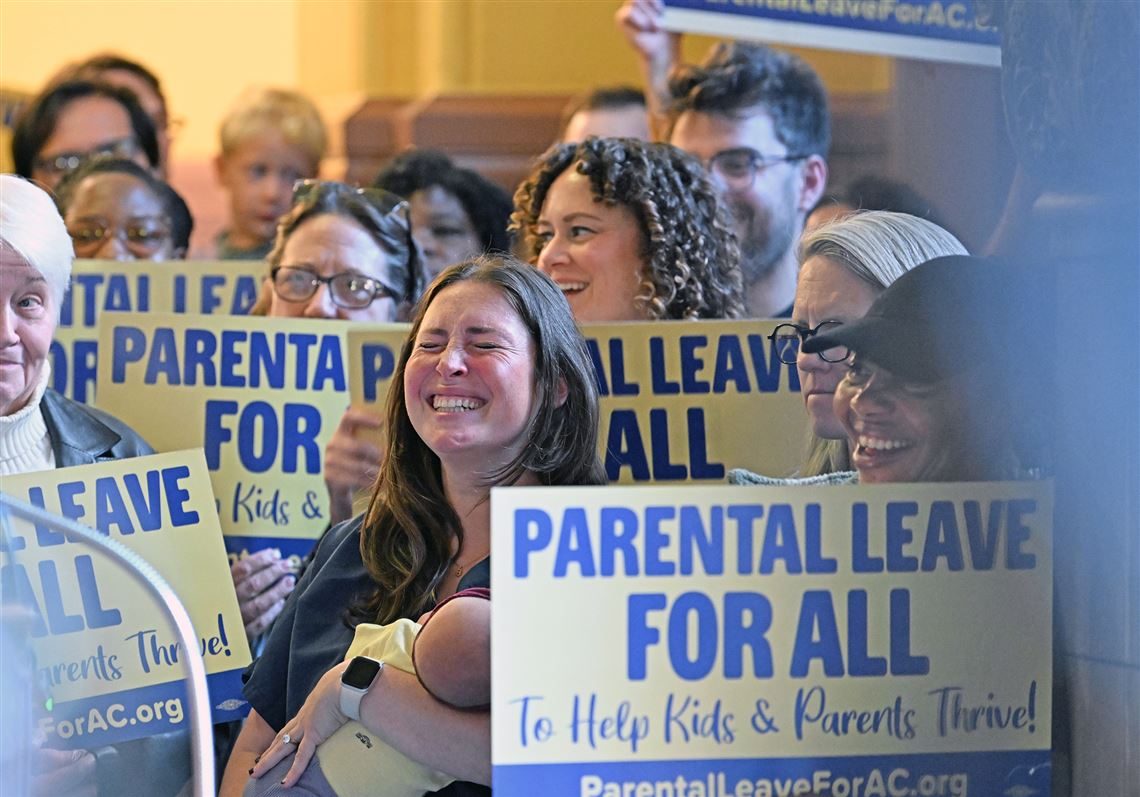
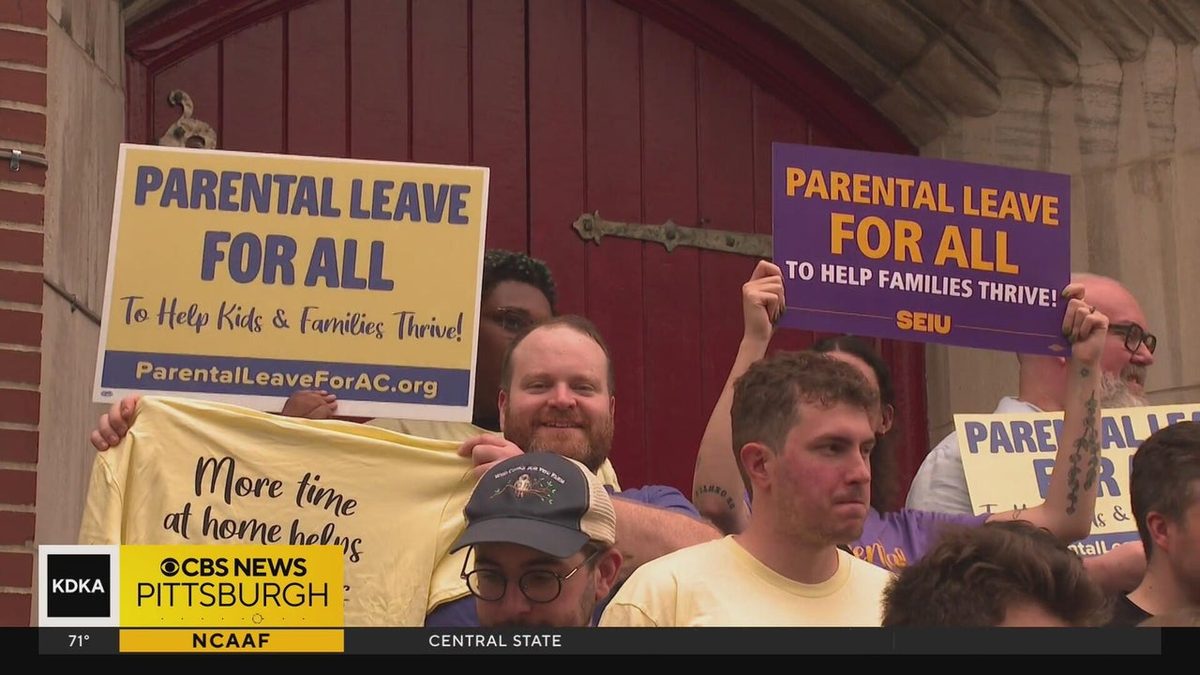
    Magee-Womens Hospital nurses and a coalition of advocates launch the paid parental leave campaign on Mother's Day.

Scenarios

1

Business groups sue to block Allegheny County paid leave mandate

Possible Resolves by Q2 2028

Discussed by: Pittsburgh business groups that opposed the policy through six months of hearings

Business groups fought the proposal for six months, arguing it imposes new costs on employers, particularly smaller firms. After the council's 11-4 vote, they may challenge the county's authority under Pennsylvania law to mandate employer-funded benefits. The challenge would likely argue that the county is overstepping its home-rule authority, which could take years to resolve in the courts.

2

Paid leave mandate takes effect; other US counties copy the model

Possible Resolves by End of 2028

Discussed by: Advocates and policy analysts who say the county-level approach could spread

If the policy survives implementation, other counties and cities could introduce similar measures. The employer-funded model, financed through self-insurance or private policies, differs from the state-level social insurance approach used in 14 states. Insurance provider Parento estimates coverage costs employers $13 a month for a $15-an-hour employee and $30 a month for a worker at the county's $66,000 median wage.

3

Pennsylvania legislature passes statewide paid family leave

Possible Resolves by End of 2027

Discussed by: State lawmakers who backed a paid leave bill that passed the House before stalling in the Senate

Pennsylvania's House previously passed a paid leave bill that stalled in the Senate. Supporters, including the nurses who led the county campaign, say the Allegheny County win could lend momentum to a statewide effort. The same business opposition that fought the county measure exists at the state level, which is part of why the Senate never acted.

Historical Context

2 moments from history that rhyme with this story — and how they unfolded.

February 1993

Family and Medical Leave Act (1993)

The federal Family and Medical Leave Act (FMLA) established the US baseline: 12 weeks of unpaid, job-protected leave for qualifying workers after a birth, adoption, or serious health condition. It covers only employers with 50 or more employees.

Then

Millions of workers gained the right to take unpaid time off without losing their jobs, but many could not afford to use it.

Now

FMLA remains the only federal leave law. The United States is the only industrialized nation without a paid federal leave policy.

Why this matters now

Allegheny County's mandate goes beyond FMLA by requiring employers to pay workers during their leave, closing a gap that has existed at the federal level for more than three decades.

2004-2026

State paid leave programs (2004-present)

Fourteen states and Washington, DC, have passed their own paid leave programs over the past two decades. Most are funded through social insurance pools that employers and employees pay into, with benefits administered by state governments. Pennsylvania is not among them.

Then

States with programs saw higher rates of parents taking leave after a birth or adoption compared with the national average.

Now

The state-level patchwork left roughly two-thirds of US workers without access to paid family leave, prompting local governments to act.

Why this matters now

Allegheny County's approach is structurally different: employers fund the benefit directly, either through self-insurance or private policies, rather than through a state-run social insurance fund. That distinction is central to the legal and political fight ahead.

Sources

(9)