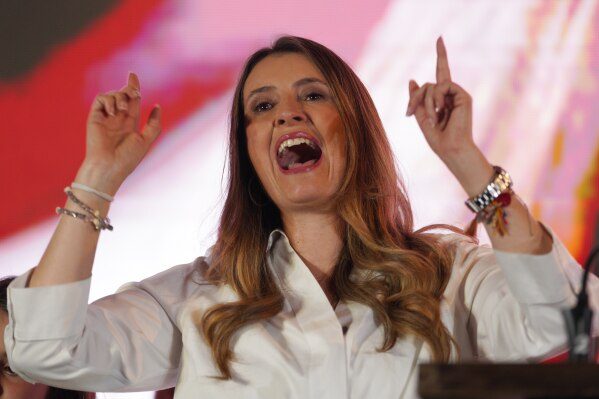
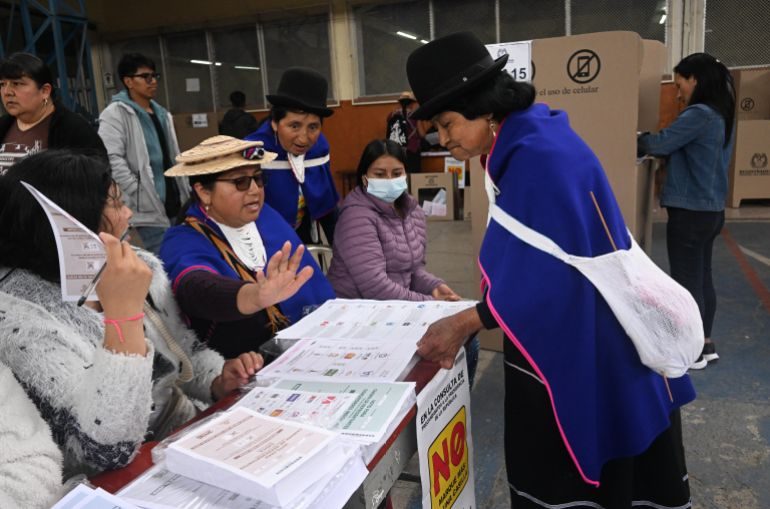
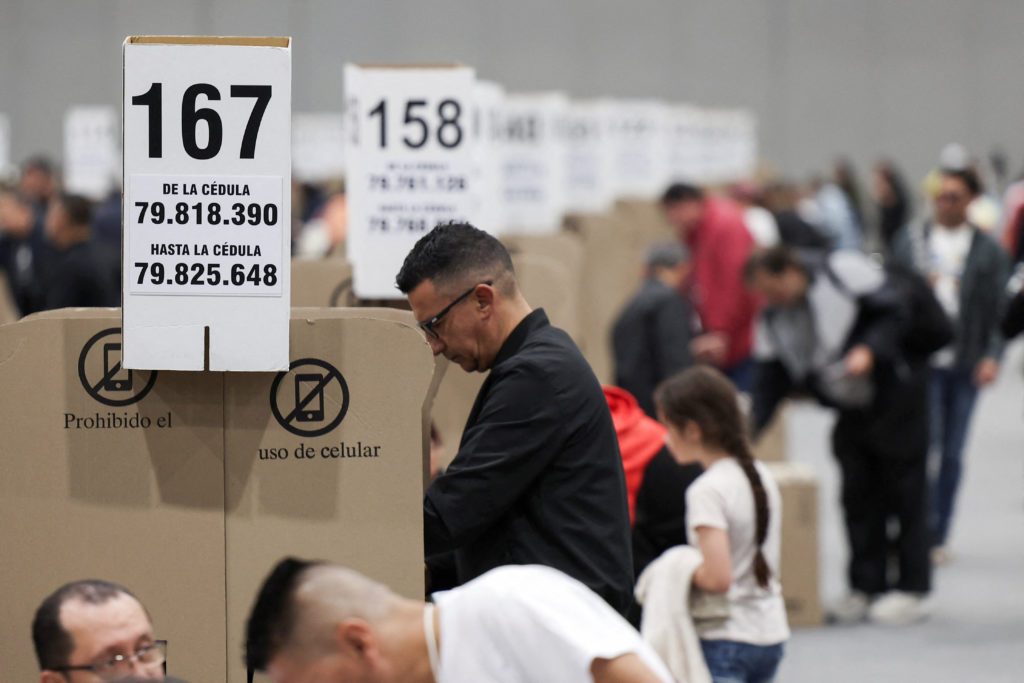
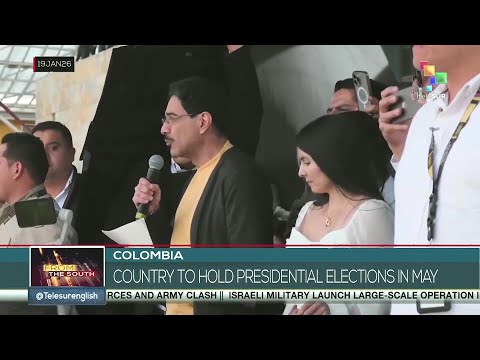
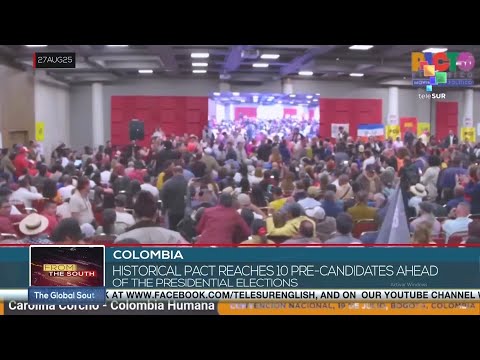
Colombia's 10-month election cycle ended June 21 when conservative lawyer Abelardo de la Espriella defeated leftist senator Iván Cepeda in the presidential runoff, 49.65% to 48.70% — a margin of fewer than 250,000 votes. His 12.9 million votes set a record for any Colombian presidential candidate. He takes office August 7.
De la Espriella, backed openly by US President Donald Trump, had already upended polls in the May 31 first round, taking 43.74% to Cepeda's 40.9% when surveys had favored Cepeda to lead. After both rounds, outgoing president Gustavo Petro alleged fraud and ultimately accused Israel of hacking election servers. The EU's Electoral Observation Mission dismissed both sets of claims, calling the process transparent and finding no data manipulation.
Why it matters
Colombia's rightward shift under a Trump-backed president reshapes its anti-narcotics partnership with the US and puts four years of Petro's reforms at risk.
Questions about this story
Free account needed to ask — your question is kept and asked for you right after sign-up. Answers are public.
No questions yet — be the first to ask.
Key Indicators
49.65%
De la Espriella runoff vote share
Won the June 21 runoff over Cepeda's 48.70% by fewer than 250,000 votes
12.9M
Record votes for de la Espriella
The most votes ever received by a Colombian presidential candidate
43.74%
De la Espriella first-round share
Led the May 31 first round over Cepeda's 40.9%, upending polls that had favored Cepeda
25
Historic Pact Senate seats
Up from 20 in 2022 — the largest bloc in the upper chamber, now in opposition to the new president
16 events
Latest: June 21st, 2026 · 3 months ago
Showing 8 of 16
JK to step
Tap a bar to jump to that date
Jump to
June 2026
Trump congratulates de la Espriella; Petro accuses Israel of hacking; EU clears runoff count
LatestDiplomatic
Hours after preliminary results, de la Espriella spoke with Trump by phone; Secretary of State Marco Rubio offered close cooperation on counter-narcotics and immigration. Petro accused Israel of hacking election server IP addresses to manufacture votes for de la Espriella. EU observers dismissed the claim, saying they could 'discard any manipulation of data' after comparing physical ballots against tally sheets.
Petro raises first-round fraud allegations; EU monitors call vote transparent
Election
Outgoing President Petro alleged irregularities in the May 31 count. The EU's Electoral Observation Mission dismissed the claims, calling the process 'transparent, orderly and fluid' and finding no inconsistencies in a random sample check of tally sheets.
Trump endorses de la Espriella on Truth Social after first-round results
Campaign
US President Donald Trump posted on Truth Social the day after Colombia's first-round results, endorsing de la Espriella and calling him a man who 'will fight Crime, Drug trafficking, Illegal Immigration.' Trump framed the runoff as a battle between 'Law + order and 21st century Marxism.'
May 2026
Colombia's House Commission opens 10 investigations against Petro for election interference
Legal
Four days before the presidential vote, the House Investigation and Accusation Commission opened 10 cases against Petro on its own initiative. The charges cited use of public resources during campaign season: 35,000 new government jobs, subsidies to 1.36 million older adults, an ICETEX interest-rate freeze, and toll reductions — all allegedly to boost Cepeda's chances.
March 2026
DEA names Petro 'priority target' in US drug trafficking probe
Legal
US federal prosecutors in Brooklyn and Manhattan designated President Petro a DEA 'priority target,' probing alleged ties to drug traffickers including the Sinaloa cartel and claims that his representatives solicited bribes to block extraditions. Petro denied all allegations; Colombia's embassy called the reports 'unverified.'
Colombia holds congressional elections and three presidential primaries
Election
Roughly 36 million eligible voters cast ballots in a combined election day. Historic Pact wins a projected 25 Senate seats, Democratic Center takes 17, and three coalition primaries produce winners: Paloma Valencia on the right, Claudia Lopez in the center, and Roy Barreras on the left. Turnout falls sharply from 2022 levels.
Electoral council approves merger of Historic Pact and Human Colombia
Legal
The National Electoral Council clears the merger of Petro's two political vehicles into a single left-wing party, consolidating the left's institutional infrastructure four days before congressional elections.
February 2026
Electoral council bars Cepeda from left-wing primary
Legal
The National Electoral Council votes 6-4 to exclude Ivan Cepeda from the Front for Life primary, ruling he had already participated in a party primary. The deciding vote comes from a judge with past ties to rival candidate de la Espriella, sparking accusations of bias.
Petro meets Trump in Washington, de-escalating year-long feud
Diplomatic
After a year of tariffs, sanctions, and mutual accusations, Petro travels to Washington for a meeting with Trump following a cordial phone call that reversed months of hostility.
December 2025
De la Espriella skips right-wing primary, runs independently
Campaign
Polling frontrunner Abelardo de la Espriella announces he will bypass the right-wing coalition primary and compete directly in the May 31 first round through his Defensores de la Patria movement.
October 2025
US imposes sanctions on Petro over drug policy dispute
Diplomatic
The US Treasury sanctions Petro personally, accusing him of links to the drug trade. The State Department revokes his visa. Bilateral relations hit their lowest point in decades.
August 2025
Ivan Cepeda launches presidential campaign for Historic Pact
Campaign
Senator Cepeda begins his presidential bid, quickly rising to the top of opinion polls alongside conservative lawyer Abelardo de la Espriella.
January 2025
Petro blocks US deportation flights, triggering tariff standoff
Diplomatic
Petro revokes landing rights for US military deportation aircraft mid-flight. Trump announces 25% emergency tariffs on Colombian imports, rising to 50%. Colombia backs down within days.
June 2024
Congress approves pension reform, Petro's only major legislative win
Legislative
After prolonged debate, Congress passes pension reform 86-32, making it the only one of Petro's five flagship reforms to clear the legislature. Health and labor reforms remain blocked.
June 2022
Petro elected as Colombia's first left-wing president
Election
Gustavo Petro defeats Rodolfo Hernandez in the presidential runoff, promising ambitious social reforms including health, pension, and labor overhauls.
March 2022
2022 congressional elections establish new left-right balance
Election
Historic Pact wins 20 Senate seats, becoming the largest party for the first time but falling short of a majority. Democratic Center wins 13 seats as the main opposition force.
Scenarios
1
Cepeda and de la Espriella advance to a polarized runoff
The most likely scenario based on current polling. With both frontrunners at roughly 31-32%, they would advance past the May 31 first round to a June runoff, reproducing the left-right polarization of 2022. Cepeda would seek to inherit Petro's voter base while positioning himself as more pragmatic, while de la Espriella would campaign on security and anti-corruption. The fragmented Congress elected on March 8 would make governing difficult for either winner, as neither left nor right commands a legislative majority.
If Claudia Lopez or Sergio Fajardo consolidates the centrist vote, one could displace either Cepeda or de la Espriella from the runoff. Fajardo polled at 7.6% and Lopez's primary turnout was low, making this a stretch. However, Colombian runoffs have historically rewarded moderates, and a centrist entering the second round would likely draw crossover voters from both sides. This scenario requires one centrist to drop out early and the other to capitalize on voter fatigue with polarization.
3
Valencia consolidates the right, splitting de la Espriella's base
Unlikely
Discussed by: Democratic Center strategists, Colombia Reports, Latin America Reports
Paloma Valencia's primary victory gives her institutional backing and a party with 17 Senate seats. If she secures a strong vice-presidential running mate and de la Espriella's support erodes, she could claim the right-wing lane. However, with only 1.1% in polls versus de la Espriella's 32%, this would require a dramatic collapse in his support. More likely, the split right-wing vote helps Cepeda advance to the runoff in first place.
4
Low turnout and voter apathy produce a surprise outcome
Possible
Discussed by: City Paper Bogota, Colombian political scientists, pre-election survey data
The sharp drop in primary turnout compared to 2022 signals widespread voter fatigue. A majority of voters remain undecided, and Colombia's recent history includes late-breaking swings, as when Rodolfo Hernandez surged from near-obscurity to the 2022 runoff. A new candidate or a scandal could reshape the race before May 31, particularly given the number of voters expressing dissatisfaction with all current options.
Historical Context
3 moments from history that rhyme with this story — and how they unfolded.
1 of 3
March-June 2022
Colombia's 2022 congressional and presidential elections
Colombia's Historic Pact won the most Senate seats in March 2022 congressional elections, then Gustavo Petro won the presidency three months later, becoming the country's first left-wing head of state. But his 20-seat Senate bloc fell short of a majority, and he never assembled a stable governing coalition.
Then
Petro entered office with congressional opposition that blocked his health and labor reforms, passing only pension reform after prolonged negotiation.
Now
The mismatch between executive ambition and legislative fragmentation defined Petro's presidency and set the pattern for 2026: winning the presidency is one thing, governing without a congressional majority is another.
Why this matters now
The 2026 results repeat this pattern. Historic Pact grew to 25 seats but still lacks a majority, meaning the next president, whether from the left or right, will face the same legislative arithmetic that constrained Petro.
2 of 3
May 2021 - September 2022
Chile's 2021 constitutional convention and subsequent political fragmentation
Chile elected a left-dominated constitutional convention in May 2021, followed by leftist Gabriel Boric winning the presidency in December. But the proposed constitution was overwhelmingly rejected in a September 2022 referendum, and Boric's legislative agenda stalled in a fragmented Congress.
Then
Boric moderated his agenda and reshuffled his cabinet after the constitutional defeat, shifting toward centrist coalition-building.
Now
Chile's experience showed that left-wing electoral victories in Latin America do not automatically translate into durable legislative power, particularly when voter enthusiasm fades between elections.
Why this matters now
Colombia's sharp drop in primary turnout and the left's inability to consolidate behind a single candidate echo Chile's trajectory: initial enthusiasm followed by fragmentation and voter fatigue.
3 of 3
March-June 2014
Colombia's 2014 congressional elections and Santos re-election
President Juan Manuel Santos's Unity Party won the most Senate seats with 21 of 102, while Uribe's newly formed Democratic Center won 19. Santos won re-election in June by building a broad coalition, but the fragmented Congress slowed his peace agreement with the FARC guerrillas.
Then
Santos secured a second term but faced constant legislative horse-trading to advance the peace process.
Now
Congressional fragmentation became a permanent feature of Colombian politics. The 2016 peace deal narrowly lost a referendum before being revised and passed through Congress, demonstrating how legislative arithmetic shapes even transformative policy.
Why this matters now
Twelve years later, Colombia's Congress remains structurally fragmented. The 2026 results, with at least five parties holding 10 or more Senate seats, guarantee that coalition-building will again be the central challenge for whoever wins the presidency.