

Pull to refresh
Logo
Daily Brief
Following
Why
Haiti's governance collapse and the fight for control

Haiti's governance collapse and the fight for control

Force in Play
By Newzino Staff |

Gang Violence, Political Dysfunction, and the Long Road to Elections

February 7th, 2026: Council Dissolves, Fils-Aimé Takes Full Power

Overview

Haiti has not held elections since 2016. Its last elected president was assassinated in 2021. On February 7, 2026, the Transitional Presidential Council created to fill that vacuum officially dissolved, transferring all executive authority to Prime Minister Alix Didier Fils-Aimé—a businessman who survived an ouster attempt two weeks earlier and now governs alone with no electoral mandate.

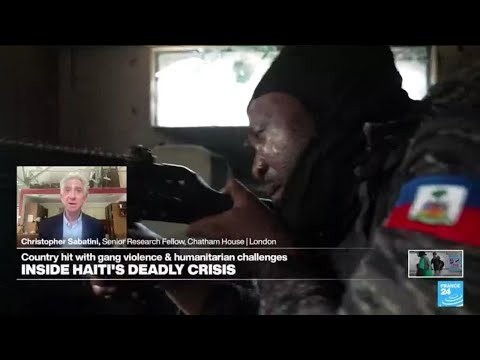
The country he inherits is controlled more by gangs than by government. Armed groups hold an estimated 90% of Port-au-Prince and have killed nearly 5,000 people in the past nine months alone. A newly authorized UN Gang Suppression Force of 5,500 troops is deploying to confront what earlier missions could not contain, while elections tentatively scheduled for August 2026 remain dependent on security conditions that do not yet exist.

Key Indicators

90%
Port-au-Prince Gang Control
Estimated share of the capital under armed gang control as of mid-2025
1.4M
Internally Displaced
Haitians displaced by violence, tripling from 315,000 in December 2023
6.4M
Need Humanitarian Aid
More than half of Haiti's population requires emergency assistance in 2026
5,550
Gang Suppression Force Size
New UN-authorized force, five times larger than its predecessor

Interactive

Exploring all sides of a story is often best achieved with Play.

Ever wondered what historical figures would say about today's headlines?

Sign up to generate historical perspectives on this story.

Sign Up

Debate Arena

Two rounds, two personas, one winner. You set the crossfire.

People Involved

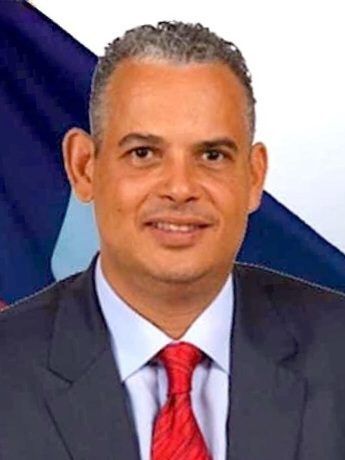
Alix Didier Fils-Aimé
Prime Minister and Acting Head of State (Sole executive authority since February 7, 2026)
Jimmy Chérizier (Barbecue)
Gang Leader, Head of Viv Ansanm Coalition (US-designated terrorist with $5 million bounty)
Ariel Henry
Ariel Henry
Former Prime Minister (2021-2024) (Resigned March 2024, stranded in Puerto Rico)

Organizations Involved

TR
Transitional Presidential Council (CPT)
Transitional Government Body
Status: Dissolved February 7, 2026

Nine-member body created to exercise presidential powers until elections could be held.

Viv Ansanm (Living Together)
Gang Coalition
Status: US-designated terrorist organization

Coalition of Haiti's two largest gang factions controlling most of Port-au-Prince.

Gang Suppression Force (GSF)
UN-Authorized International Military Force
Status: Deploying, 12-month mandate from September 2025

UN-authorized 5,550-strong force replacing the underfunded Kenya-led mission.

Timeline

  1. Council Dissolves, Fils-Aimé Takes Full Power

    Political

    Transitional Presidential Council's mandate expires. Prime Minister Fils-Aimé becomes sole head of state with no parliamentary oversight.

  2. Council Votes to Oust PM Fils-Aimé

    Political

    Five council members vote to remove the prime minister. The US announces visa revocations for four council members and a minister in response.

  3. UN Authorizes Gang Suppression Force

    Security

    Security Council approves 5,550-strong force with 12-month mandate, replacing the underfunded Kenya-led mission.

  4. Council Fires PM Garry Conille

    Political

    After six months in office, the Transitional Council dismisses Conille and appoints businessman Alix Didier Fils-Aimé as replacement.

  5. Corruption Scandal Hits Council

    Investigation

    Anti-corruption investigators accuse three council members of demanding $750,000 in bribes from a bank director.

  6. Kenyan Police Arrive in Haiti

    Security

    First contingent of 400 Kenyan officers lands in Port-au-Prince to lead the UN-backed Multinational Security Support Mission.

  7. Transitional Presidential Council Sworn In

    Political

    Nine-member council takes power at National Palace, mandated to govern until elections or February 7, 2026.

  8. Prime Minister Henry Resigns

    Political

    Stranded in Puerto Rico and unable to return, Henry announces resignation. Kenya pauses its planned security deployment.

  9. Gang Attacks Paralyze Port-au-Prince

    Security

    While PM Henry is abroad, Viv Ansanm launches coordinated attacks on prisons, police stations, and the airport. Over 4,000 prisoners escape in Haiti's largest jailbreak.

  10. Viv Ansanm Gang Coalition Formed

    Security

    Rival gang factions G-9 and G-Pèp unite under Jimmy Chérizier, creating an armed force of 12,000-20,000 members.

  11. Ariel Henry Assumes Power

    Political

    After weeks of disputed claims, Henry—appointed by Moïse days before the assassination—takes control as Prime Minister with no electoral mandate.

  12. President Jovenel Moïse Assassinated

    Assassination

    Foreign mercenaries, mostly Colombian, kill Moïse at his residence in Port-au-Prince. His wife Martine is wounded. Haiti enters constitutional vacuum with no clear successor.

Scenarios

1

Elections Held, New Government Inaugurated by 2027

Discussed by: Haiti's Electoral Council, US State Department, CARICOM officials

The official plan: first-round voting August 30, 2026, second round December 6, new president inaugurated February 2027. This requires the Gang Suppression Force to secure enough territory for nationwide voting, adequate international funding, and Fils-Aimé to credibly organize polls. The Electoral Council warns that 23 communes remain under gang control, and the budget shortfall could derail the calendar.

2

Fils-Aimé Consolidates Power, Elections Delayed Indefinitely

Discussed by: Human Rights Watch, International Crisis Group, Haitian civil society organizations

With no parliament and sole executive authority, Fils-Aimé governs without checks. If security conditions remain inadequate, elections could be postponed repeatedly as they were under Henry. Critics warn this cements rule by an unelected leader indefinitely, while US backing provides international legitimacy.

3

Gang Suppression Force Reclaims Territory, State Authority Restored

Discussed by: UN officials, Kenya defense ministry, Standing Group of Partners

The GSF's larger size and stronger mandate succeed where the MSS failed. Security improves enough to enable humanitarian access, refugee returns, and electoral preparations. This scenario requires sustained troop contributions, adequate funding, and avoiding the scandals that plagued MINUSTAH.

4

State Collapse Continues, Gangs Formalize Control

Discussed by: Americas Quarterly, Chatham House analysts, UN human rights office

The GSF proves insufficient against entrenched gang coalitions. Viv Ansanm or successor groups expand control beyond Port-au-Prince, effectively governing territory the state cannot reach. Haiti becomes a de facto partition between nominal government authority and criminal governance, with regional and international consequences for migration and trafficking.

Historical Context

MINUSTAH UN Mission (2004-2017)

June 2004 - October 2017

What Happened

After President Jean-Bertrand Aristide's ouster, the UN deployed a 13-year stabilization mission with up to 9,000 peacekeepers. MINUSTAH helped restore police control of gang-held neighborhoods and organized elections, but was plagued by cholera introduced by Nepalese peacekeepers—killing over 9,000 Haitians—and sexual abuse scandals involving peacekeeping personnel.

Outcome

Short Term

The mission reduced gang violence and helped organize several elections, including the 2010 presidential vote held months after the devastating earthquake.

Long Term

UN peacekeeping reputation was severely damaged. After MINUSTAH's departure, the state security capacity it helped build proved insufficient to prevent the current gang takeover.

Why It's Relevant Today

The new Gang Suppression Force faces similar challenges: can external military force build lasting state capacity, or does it merely delay the same underlying collapse?

US Occupation of Haiti (1915-1934)

July 1915 - August 1934

What Happened

After political instability and the lynching of President Vilbrun Guillaume Sam, US Marines occupied Haiti for 19 years. The occupation took control of Haiti's finances, built infrastructure, and installed compliant governments, while suppressing a peasant insurgency that killed thousands.

Outcome

Short Term

The US stabilized Haitian finances and built roads and hospitals while centralizing power in Port-au-Prince.

Long Term

The occupation entrenched a pattern of foreign intervention, weakened provincial governance, and left deep resentment that shapes Haitian politics today.

Why It's Relevant Today

Current international involvement—US-backed prime minister, UN-authorized force, visa sanctions on political figures—echoes a century of external actors shaping Haitian governance without creating durable institutions.

Somalia State Collapse (1991-present)

January 1991 - present

What Happened

The fall of dictator Siad Barre left Somalia without a functioning central government for decades. Armed factions controlled territory, the African Union deployed peacekeepers, and a transitional federal government struggled for legitimacy while warlords held real power.

Outcome

Short Term

Multiple failed international interventions, including the 1993 US withdrawal after the Black Hawk Down incident, and years of humanitarian catastrophe.

Long Term

Somalia gradually rebuilt fragmented state authority but remains fragile 30+ years later. Al-Shabaab controls significant territory. The precedent warns that state collapse can persist for generations.

Why It's Relevant Today

Haiti risks a similar trajectory: gang coalitions controlling territory, external forces unable to impose order, and a government that exists on paper but lacks effective sovereignty.

12 Sources: